Why Oil Pulling on an Empty Stomach Works Best
For most adults, oil pulling is best done first thing in the morning on an empty stomach. That single timing choice covers three things at once: it sidesteps nausea, fits naturally into a pre-breakfast ritual, and lets the oil work on a mouth that hasn’t been loaded with food particles or drink residue.
A few things to keep in mind before you start:
- Oil pulling is an adjunct to brushing and flossing, not a substitute. The American Dental Association and major dental organizations do not endorse it as a replacement for standard oral hygiene.
- It works best as part of a consistent morning routine, not as an occasional fix.
- If you have active gum disease, a dental abscess, or any oral infection, talk to your dentist before starting.
Pro Tip: If you’re new to oil pulling, try 5 minutes first. You can build up to 15–20 minutes over a week or two without the jaw fatigue that kills the habit early.
Table of Contents
- How oil pulling actually works in your mouth
- Why the empty stomach and morning timing matter
- What the research actually shows, and where it falls short
- How to oil pull safely and effectively
- Risks and side effects to know before you start
- What to do immediately after oil pulling
- The Selfwisebrand routine and recommended product
- Key Takeaways
- A grounded take on oil pulling and natural oral care
- Selfwisebrand Nano Hydroxyapatite Oil Pulling Mouthwash
- Useful sources
- FAQ
How oil pulling actually works in your mouth
The mechanism is simpler than most people expect. You swish a tablespoon of oil around your mouth and the viscous liquid physically dislodges biofilm and bacteria from tooth surfaces, gum lines, and the spaces between teeth. Think of it as a slow, gentle scrub that reaches places a toothbrush misses.
The emulsification process is the visible part of this. As the oil mixes with saliva, it thins out and turns milky white. That color change is a practical indicator that the oil has picked up debris, bacteria, and salivary proteins. If the oil is still clear and thick after 15 minutes, your technique or duration needs adjusting.
Beyond the mechanical action, researchers have proposed several biochemical theories:
- Saponification: Oils may undergo a soap-like reaction in the mouth, creating a surfactant effect that disrupts bacterial membranes.
- Lipid attraction: Bacterial cell walls contain lipid components that may bind to the oil, pulling microbes out of the biofilm.
- Antioxidant activity: Some oils, particularly sesame, contain lignans and tocopherols with antioxidant properties that could reduce oxidative stress in gum tissue.
A review published in MDPI Healthcare notes that none of these mechanisms alone fully explains the observed effects. They likely work together. The bacteria most consistently targeted in trials is Streptococcus mutans, the primary driver of tooth decay, along with other plaque-forming species linked to gingivitis.
Why the empty stomach and morning timing matter
The empty-stomach recommendation comes from two places: Ayurvedic tradition and practical patient experience. Both point in the same direction, even if the reasoning differs.

In Ayurvedic practice, the tongue is considered an active site of digestive and systemic activity. Morning oil pulling is thought to interact with salivary enzymes at their most concentrated state, before food dilutes or alters the oral environment. Everyday Health’s integrative guide notes that practitioners often recommend pulling after waking and sometimes after an initial water rinse, but always before eating.
The practical reasons are arguably more persuasive for most people:
- Nausea reduction: Swishing oil on a full stomach is genuinely unpleasant. An empty stomach makes 15–20 minutes of swishing manageable.
- Higher bacterial load in the morning: Overnight, bacteria multiply in the mouth without the clearing effect of eating, drinking, or swallowing. Morning pulling targets that peak accumulation.
- Habit anchoring: Attaching oil pulling to an existing morning cue (waking up, making coffee) dramatically improves consistency compared to trying to fit it in after meals.
From a mechanical standpoint, an empty mouth also means the oil isn’t competing with food residue. The emulsification process may be more efficient when saliva is the primary fluid present, though direct comparative studies on this specific point are limited.
What the research actually shows, and where it falls short
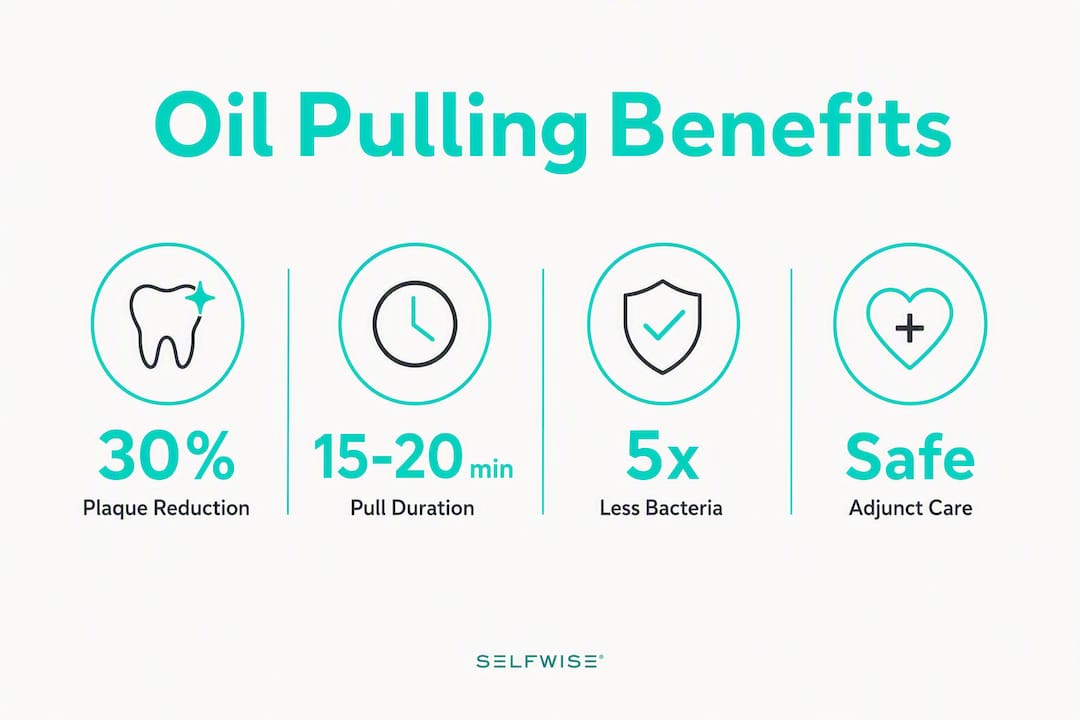
The evidence for oil pulling is real but modest. A meta-analysis published in PMC found consistent reductions in plaque index scores and salivary Streptococcus mutans counts across multiple randomized controlled trials. Some trials showed gingival index improvements comparable to chlorhexidine mouthwash for certain endpoints.
| Outcome Measured | Finding | Comparison |
|---|---|---|
| Salivary S. mutans count | Reduced in multiple RCTs | Comparable to chlorhexidine in some trials |
| Plaque index | Reduced vs. water control | Less effective than chlorhexidine in most studies |
| Gingival index | Modest improvement | Mixed results across studies |
| Systemic detox effects | No credible evidence | Not supported by any peer-reviewed data |
A randomized controlled trial in Clinical Oral Investigations using sesame oil found plaque regrowth reductions compared to a water control, but chlorhexidine outperformed oil pulling on plaque index reduction. That pattern holds across most of the literature.
The limitations are worth being direct about. Most studies use small sample sizes, run for short periods (often 2–4 weeks), and use inconsistent protocols in terms of oil type, volume, and duration. Blinding participants in oil-pulling trials is essentially impossible, which introduces performance bias. Participants who know they are in the treatment group may also brush more carefully, inflating apparent benefits.
The Cleveland Clinic’s guidance reflects the mainstream dental position: oil pulling is an acceptable addition to a routine, not a standalone treatment. The science behind why oil pulling works is plausible and partially supported, but the evidence base needs larger, longer trials before stronger claims can be made.
How to oil pull safely and effectively
Clinical trial protocols and practitioner guidance align closely on the core steps. Here’s the routine that matches both:
- Wake up, drink nothing yet. Start before any food or drink, including coffee.
- Measure about 1 tablespoon (10–15 mL) of oil. Sesame and coconut are the most studied options. For sesame oil technique specifics, the traditional choice, the lignans may add mild antioxidant benefit.
- Swish gently for 10–20 minutes. Pull the oil through your teeth and around your gums. Avoid vigorous gargling — that increases the risk of accidentally swallowing. The oil should turn milky white within a few minutes, which confirms successful emulsification.
- Spit into a trash can or paper towel. Not the sink. Oil solidifies in pipes and causes clogs.
- Rinse with warm water or saline. This clears residual oil and bacteria from your mouth.
- Brush your teeth as normal. Most clinical protocols position oil pulling before brushing, not after.
- Eat breakfast. Now you’re done.
For children over 5, use a teaspoon of oil rather than a tablespoon, and supervise closely to prevent swallowing. Children below the age of 5 should not practice oil pulling due to safety concerns such as aspiration risk.
Pro Tip: If you’re choosing between sesame and coconut oil, both work as gentle whitening options that can complement your routine without irritation, as detailed in this Whitening Without Irritation guide. Coconut oil has a milder taste that most beginners find easier to tolerate for a full 15–20 minutes. For a comparison of the best oils for oil pulling, the evidence is roughly equivalent between the two.
Risks and side effects to know before you start
Oil pulling is low-risk for most healthy adults, but a few precautions matter:
- Aspiration risk: Never oil pull if you have difficulty swallowing or a condition that increases aspiration risk. Children under 5 should not do it at all.
- Nausea: Doing it after eating is the most common cause. Stick to the empty-stomach timing.
- Jaw fatigue: Twenty minutes is a long time. Start with 5 minutes and build up gradually. Shorter sessions still provide some benefit and are far better for adherence than skipping entirely.
- Never swallow the used oil. By the end of a session, the oil contains dislodged bacteria, debris, and salivary waste. Swallowing it defeats the purpose entirely.
- Dental work: If you have crowns, bridges, or recent fillings, check with your dentist. The pulling motion is generally gentle enough, but it’s worth confirming for your specific situation.
- Active infection: A dental abscess or active gum infection needs professional treatment. Oil pulling is not a substitute and could delay care you actually need.
What to do immediately after oil pulling
The aftercare sequence is short and takes under two minutes:
- Spit the used oil into a trash can or onto a paper towel. Avoid the sink.
- Rinse your mouth with warm water or a saline solution to remove residual oil and loosened debris.
- Brush your teeth using your regular toothpaste or a fluoride-free alternative if that’s your preference.
- Scrape your tongue if you use a tongue scraper. This is a good moment for it, since the oil session will have loosened surface bacteria.
- Floss as part of your normal routine.
That’s the full sequence. The oil pulling morning routine guide from Selfwisebrand walks through each step in more detail if you want a structured reference to follow.
The Selfwisebrand routine and recommended product
A research-aligned morning oil-pulling routine looks like this: wake up, pull for 10–15 minutes on an empty stomach, spit, rinse, then brush. That’s it. The consistency matters more than the duration on any given day.
Selfwisebrand’s Nano Hydroxyapatite Oil Pulling Mouthwash is formulated to fit directly into that sequence. It combines edible oils with nano hydroxyapatite, a biocompatible form of the mineral that makes up tooth enamel, to support remineralization alongside the mechanical cleaning action of oil pulling. It’s fluoride-free, which suits readers building a natural oral-care routine.
Key reasons it fits the routine:
- Nano hydroxyapatite for enamel support: — The remineralizing effect complements oil pulling’s plaque-reduction role, covering two oral-health goals in one step.
- Fluoride-free formulation: — Designed for people who prefer natural alternatives without synthetic additives.
Key Takeaways
Oil pulling is a safe, evidence-supported adjunct to brushing and flossing when done consistently in the morning on an empty stomach, but it does not replace standard dental care.
| Point | Details |
|---|---|
| Timing recommendation | Pull in the morning on an empty stomach, before breakfast and before brushing. |
| Dose and duration | Use about 1 tablespoon (10–15 mL) of oil and swish gently for 10–20 minutes. |
| Evidence strength | RCTs show plaque and bacterial reductions; results are real but modest, and study quality varies. |
| Key safety rule | Never swallow used oil; spit into trash, not the sink, to avoid plumbing clogs. |
| Selfwisebrand option | The Nano Hydroxyapatite Oil Pulling Mouthwash adds enamel-support ingredients to the standard oil-pulling routine. |
A grounded take on oil pulling and natural oral care
The conversation around oil pulling tends to split into two camps: enthusiasts who credit it with curing everything, and skeptics who dismiss it as pseudoscience. Both miss the point.
The evidence is clear enough to take seriously. Consistent morning oil pulling reduces plaque-forming bacteria, produces measurable gingival improvements in controlled settings, and has a safety profile that makes it a reasonable addition to a daily routine. That’s not nothing. The problem is the overclaiming. When people position oil pulling as a detox protocol or a replacement for brushing, they’re not just wrong on the evidence — they’re setting up new practitioners for disappointment and potentially delaying real dental care.
What actually works is treating oil pulling the way the research treats it: as an adjunct. A 15-minute morning session before breakfast, followed by rinsing and brushing, adds a layer of mechanical and biochemical cleaning that standard brushing doesn’t fully replicate. Over weeks of consistent use, that adds up. The Ayurvedic tradition got the timing right for practical reasons that modern research now supports, even if the original explanations were different. That’s a reasonable place to land.
Selfwisebrand Nano Hydroxyapatite Oil Pulling Mouthwash
If you want a cleaner way to build this habit, Selfwisebrand’s Nano Hydroxyapatite Oil Pulling Mouthwash takes the friction out of the morning routine. It’s pre-formulated with natural oils and nano hydroxyapatite for enamel support, fluoride-free, and designed to drop straight into the sequence described in this article: pull for 10–15 minutes, spit, rinse, brush.
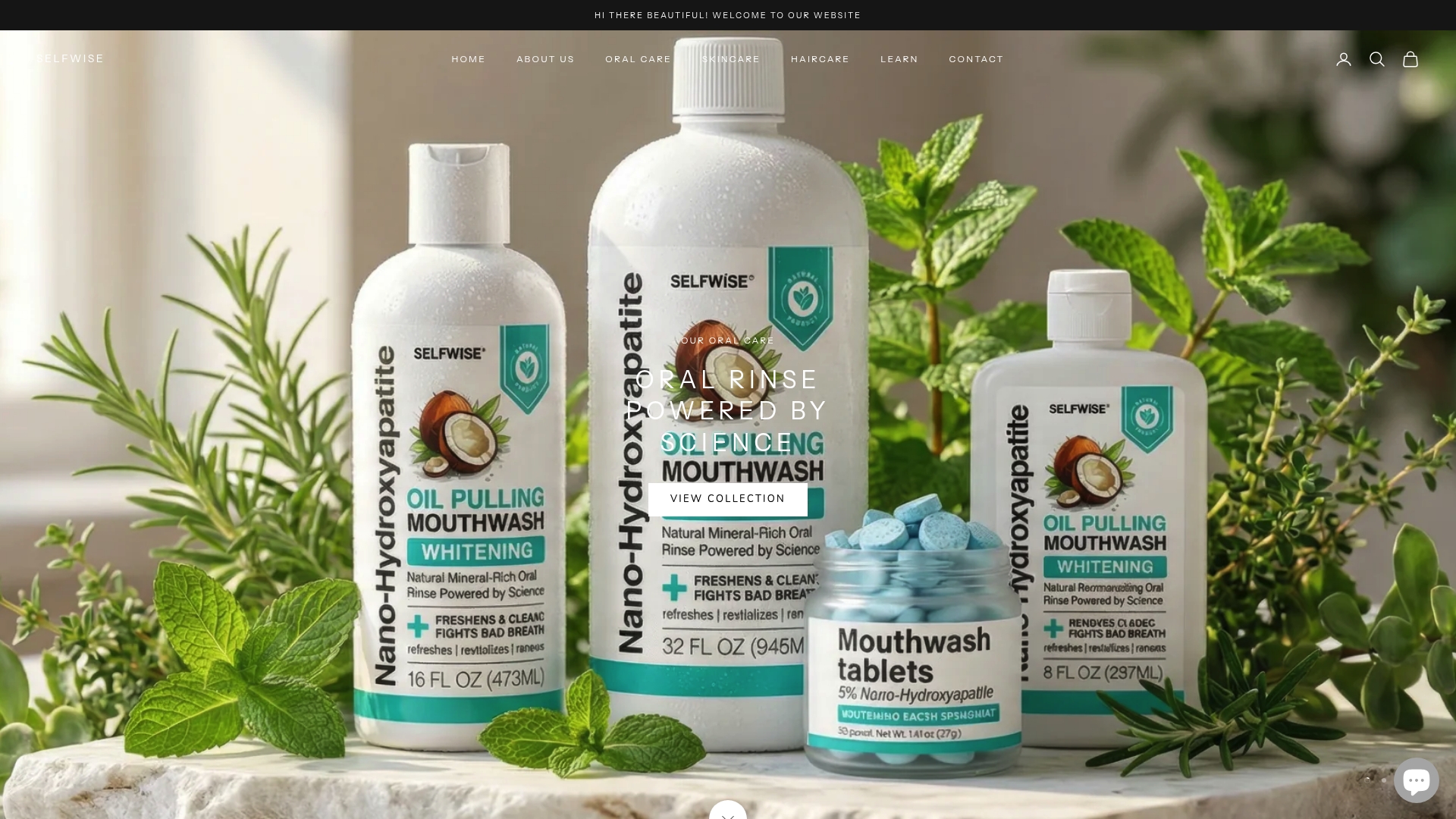
For readers who want to pair it with a complementary rinse, the full Selfwisebrand mouthwash collection includes xylitol and nano hydroxyapatite options that work alongside oil pulling without harsh chemicals or alcohol. Use the oil-pulling mouthwash first, then follow with your usual brushing routine. Consistent daily use over several weeks is where the results show up. Browse the collection and pick the routine that fits.
Useful sources
- Oil pulling for maintaining oral hygiene: A review (PMC)
- The effect of oil pulling with coconut oil to improve dental hygiene and oral health: A systematic review (PMC)
- Effectiveness of Oil Pulling for Improving Oral Health: A Meta-Analysis (PMC)
- Is oil pulling your best choice for dental health? (Cleveland Clinic)
- British Dental Journal editorial on pseudoscientific claims in oral care
- Oil pulling for maintaining oral hygiene: A review (ScienceDirect)
- Selfwisebrand natural oral care guides
FAQ
Is it necessary to oil pull on an empty stomach?
Not strictly necessary, but strongly recommended. An empty stomach reduces nausea risk and means the oil works on a mouth with peak overnight bacterial accumulation rather than food residue.
Why do dentists not recommend oil pulling as a primary treatment?
Major dental organizations, including guidance aligned with the American Dental Association’s position, do not endorse oil pulling as a replacement for brushing, flossing, or professional care because the evidence base, while promising, lacks large-scale, long-term trials.
Does oil pulling actually remove toxins from the body?
No credible peer-reviewed evidence supports systemic detox claims. Oil pulling works mechanically in the mouth, removing bacteria and biofilm from oral surfaces. It does not draw toxins from the bloodstream or organs.
What should you do immediately after oil pulling?
Spit the used oil into a trash can (not the sink), rinse with warm water or saline, then brush your teeth as normal. Tongue scraping at this point is also a good addition to the sequence.
Can you oil pull with a product instead of plain oil?
Yes. Selfwisebrand’s Nano Hydroxyapatite Oil Pulling Mouthwash combines natural oils with nano hydroxyapatite for enamel support, offering a pre-formulated fluoride-free option that fits the same morning routine described in this article.
This article is for general informational purposes only and is not a substitute for professional dental advice. Consult a licensed dentist for guidance specific to your oral health condition.