What makes a product organic? Standards, labels, benefits
Most people assume that if a label says “organic,” the product is automatically cleaner, safer, and better regulated. That assumption is understandable but often wrong. The word “organic” carries very different legal weight depending on whether it appears on a food package, a shampoo bottle, or a face oil. For health-conscious shoppers investing in skincare, haircare, and oral care, this distinction is not a technicality. It directly affects what goes on your skin, scalp, and into your mouth every single day. This article breaks down exactly what organic certification requires, how it differs from “natural,” and how to use that knowledge to shop smarter.
Table of Contents
- Organic means certified: Standards and what they cover
- How organic products are certified: Steps and safeguards
- Organic vs. natural: What’s the real difference?
- Why certification matters: Health, safety, and real-world impact
- Why ‘organic’ is more than a buzzword: Our perspective
- Discover truly organic personal care options
- Frequently asked questions
Key Takeaways
| Point | Details |
|---|---|
| Certified organic means regulated | Only products certified by organizations like USDA or COSMOS are truly organic. |
| Natural and organic are not the same | The term ‘natural’ is not regulated, but ‘organic’ follows strict standards. |
| Certification protects your health | Organic certification limits your exposure to pesticides and synthetic chemicals, especially in skincare and oral care. |
| Check labels for proof | Always look for official certification marks and ingredient lists to verify organic claims. |
Organic means certified: Standards and what they cover
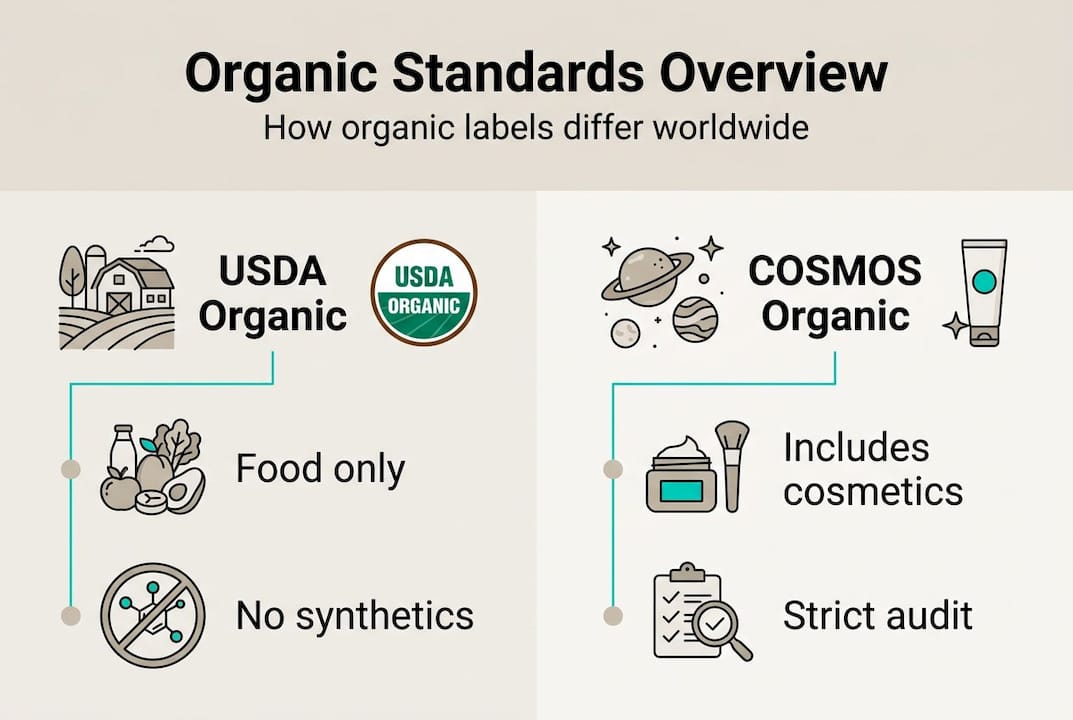
The word “organic” only carries real meaning when it is backed by a recognized certifying body. In the United States, the USDA organic certification governs food and agricultural products. For cosmetics and personal care, the COSMOS standard is widely used across Europe and increasingly recognized globally. Both systems share a core principle: organic is not a vibe or a marketing angle. It is a verified production method.
According to 7 CFR Part 205, a product qualifies as organic only when it meets certification standards from recognized bodies, prohibiting synthetic pesticides, GMOs, and certain chemicals while requiring specific percentages of certified organic ingredients. That last point is critical. It is not enough for one or two ingredients to be organic. The overall formula must hit defined thresholds.
Organic standards also prohibit over 700 synthetic substances, including many commonly used preservatives, emulsifiers, and fragrance compounds. That is a significant filter that most conventional personal care products would not pass.
Here is how the two major systems compare:
| Criteria | USDA Organic | COSMOS Organic |
|---|---|---|
| Scope | Food and agricultural products | Cosmetics and personal care |
| GMO prohibition | Yes | Yes |
| Synthetic pesticide ban | Yes | Yes |
| Organic ingredient threshold | 95% or more for “Organic” label | 95% of plant-based ingredients must be organic |
| Third-party audit required | Yes, annually | Yes, annually |
| Synthetic fragrance allowed | No | No |
Brands that claim “organic” without a certifier logo are operating in a gray zone. The certification is what separates a genuine commitment from a label strategy. When you are choosing natural skincare ingredients for your daily routine, certification is the clearest signal that the sourcing and formulation actually meet a defined standard.
Ingredients excluded by organic standards include:
- Synthetic pesticide residues
- Genetically modified organisms (GMOs)
- Petroleum-derived ingredients
- Artificial preservatives like parabens and formaldehyde releasers
- Synthetic fragrances and colorants
- Sewage sludge-derived compounds
This list matters because many of these excluded substances are routine in conventional personal care. Organic certification draws a hard line around them.
How organic products are certified: Steps and safeguards
Knowing the standards is one thing. Understanding how products earn and keep their organic label is another. The process is more rigorous than most people expect, and that rigor is exactly what makes the label trustworthy.
Here is what brands and producers must do to earn organic certification:
- Submit an Organic System Plan (OSP). This document outlines every practice used in growing, handling, and processing ingredients. It covers soil management, pest control, water use, and more.
- Establish buffer zones. Fields or facilities must be physically separated from non-organic operations to prevent contamination from synthetic chemicals or GMO drift.
- Maintain detailed records. Every batch, every supplier, every input must be documented. Auditors review these records to verify that what is claimed matches what is practiced.
- Pass an on-site inspection. A certified organic audit involves a third-party inspector visiting the facility, reviewing records, and checking that practices match the submitted plan.
- Renew certification annually. Organic status is not permanent. Brands must re-apply and re-inspect every year.
“Annual third-party inspection is non-negotiable for organic certification. No brand can self-certify. An independent certifying agent must verify every claim before the label is approved.”
This process applies not just to farms but to handlers and processors too. A brand sourcing certified organic castor oil must also ensure that its own manufacturing process does not introduce prohibited substances. That is why a certified organic beauty oil is not just about where the plant was grown. It is about every step from field to bottle.
Pro Tip: When evaluating a product, look for the certifier’s name or logo on the packaging, not just the word “organic” in the product name. Logos from bodies like USDA, COSMOS, or Ecocert are the actual proof. The word alone is not.
The breadth of this system is what makes it meaningful. Organic certification is not a one-time test. It is an ongoing commitment to a documented, inspected, and verified way of doing things.
Organic vs. natural: What’s the real difference?
Many shoppers see “natural” and “organic” used interchangeably on product labels. They are not the same thing, and the difference has real consequences for what you are actually buying.

“Natural” is not a regulated term in the United States for personal care products. There is no certifying body, no required ingredient percentage, and no annual audit. A brand can call a product “natural” and still include synthetic preservatives, petroleum derivatives, or pesticide-treated plant extracts. As Mayo Clinic notes, “natural” typically means no artificial additives were introduced after harvest, but it says nothing about how the ingredients were grown or processed.
“Organic,” by contrast, requires certified production methods at every stage. That is a fundamentally different standard.
| Feature | Natural | Organic |
|---|---|---|
| Regulated term | No | Yes |
| Certification required | No | Yes |
| Farming standards | Not specified | Strictly defined |
| Synthetic ingredient ban | Varies by brand | Defined by certifier |
| Third-party verification | No | Yes |
| Greenwashing risk | High | Low (with logo) |
Common misleading claims to watch for on personal care labels:
- “Made with natural ingredients” (no standard for what counts)
- “Free from harsh chemicals” (vague and unverified)
- “Plant-based formula” (plants can still be conventionally farmed)
- “Pure and clean” (marketing language with no regulatory meaning)
- “Eco-friendly” (no certification required to use this term)
This is where understanding natural haircare and natural skincare labels becomes genuinely useful. A product can be both natural and organic, but only if it carries the certification to prove it. Without that proof, “natural” is a story the brand tells about itself.
Pro Tip: Flip the bottle over and read the full ingredient list. If a product claims to be organic but lists ingredients without the “organic” prefix and shows no certifier logo, the claim is likely cosmetic, not substantive.
Why certification matters: Health, safety, and real-world impact
For most people, the motivation to choose organic personal care comes down to one thing: what goes on your body matters. Skin absorbs compounds from topical products. Scalp treatments sit close to hair follicles and skin. Oral care products are used near mucous membranes. The stakes for ingredient purity are real.
Organic certification helps limit exposure to pesticide residues and synthetic chemicals that accumulate in conventionally farmed ingredients. Research linked to Mayo Clinic shows that organic products reduce pesticide exposure and that this reduction is associated with a lower risk of non-Hodgkin lymphoma, among other health outcomes. That is a meaningful finding, even if organic products are not proven to be more nutritious than conventional ones.
For personal care specifically, the focus is on avoiding residues in the ingredients themselves, not on nutrient density. You are not eating your face oil. But you are absorbing what is in it.
“Choosing organic for personal care is less about adding something beneficial and more about removing something potentially harmful. The value is in what is not there.”
Reasons health-conscious consumers prioritize certified organic personal care:
- Skin absorption: The skin is permeable. Pesticide residues and synthetic chemicals in topical products can enter the bloodstream.
- Allergy and sensitivity reduction: Synthetic fragrances and preservatives are among the most common causes of contact dermatitis. Organic formulas typically exclude them.
- Scalp health: The scalp is more absorptive than most body skin. What goes into your hair products matters more than people realize.
- Oral exposure: Ingredients in mouthwash and toothpaste are used near sensitive tissue. Organic sourcing reduces the residue load in these formulas.
- Environmental impact: Organic farming practices protect soil health, reduce chemical runoff, and support biodiversity.
Exploring safer ingredients for your skincare routine, checking out natural oral care options, or browsing organic haircare options are all practical ways to apply this knowledge. Certification gives you a verified starting point rather than a guess.
Why ‘organic’ is more than a buzzword: Our perspective
Here is something most guides will not tell you: the real value of organic certification is not in the ingredients themselves. It is in the accountability structure behind them.
When a brand goes through annual audits, submits an Organic System Plan, and earns a certifier’s logo, it is doing something that most personal care companies never do. It is opening its sourcing and production to external scrutiny. That transparency is rare. And it is exactly what the personal care industry needs more of.
We see a lot of products that use the word “organic” as decoration. One certified extract buried in a long ingredient list does not make a product organic. But it does make the label feel premium. That is greenwashing, and it is more common than most shoppers realize.
The uncomfortable truth is that building long-term organic routines requires prioritizing certification over marketing language. Focus on the areas where your exposure is highest: your face, your scalp, and your mouth. Those are the places where ingredient purity pays off most directly.
Pro Tip: If a product says “organic” but lists no certifying body anywhere on the label or website, treat that claim with skepticism. Legitimate certification is always traceable.
Discover truly organic personal care options
If you have made it this far, you already know more about organic certification than most shoppers. Now the question is: where do you find personal care products that actually live up to the standard?
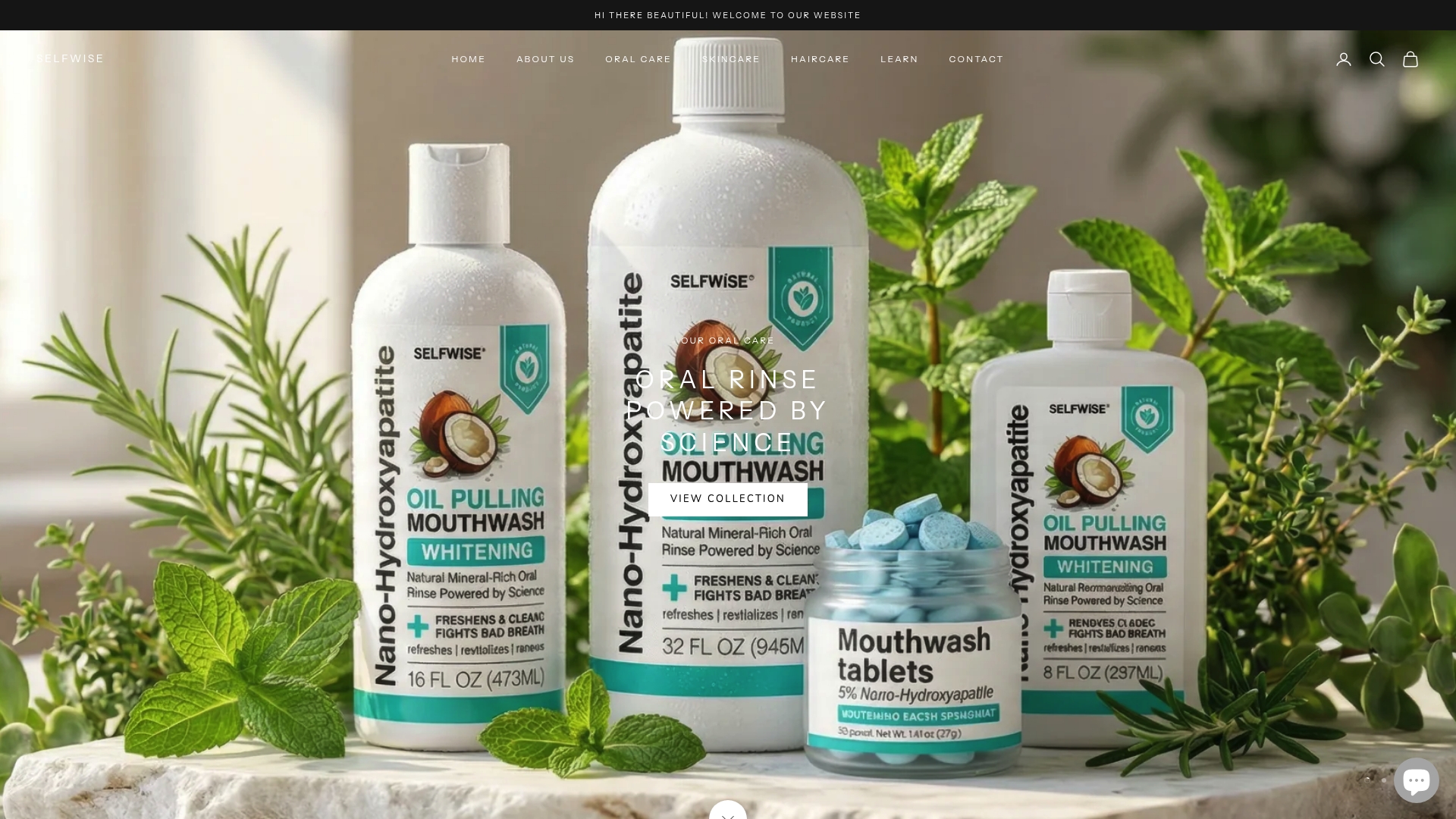
At Selfwise, we source and formulate with transparency as a baseline, not an afterthought. Whether you are looking for rigorously sourced organic skincare ingredients, genuinely clean organic oral care, or plant-based organic hair oils, every product we carry is selected with ingredient integrity in mind. We believe you deserve to know exactly what is in your routine and why it is there. Explore our collections and see the difference that real sourcing standards make.
Frequently asked questions
How do I know if a product is truly organic?
Look for certification logos from recognized bodies like USDA or COSMOS on the packaging, and check the ingredient list to confirm organic percentages are listed. The certifier’s name should always be traceable.
Does ‘organic’ mean a product is healthier or safer?
Organic reduces exposure to pesticides and synthetic chemicals, which research associates with lower risk of certain health outcomes, but it does not necessarily mean more nutrients. For personal care, the benefit is ingredient purity.
Is there a difference between ‘natural’ and ‘organic’ on labels?
Yes. “Natural” is unregulated and carries no farming or production standards, while “organic” requires third-party certification and annual verification of every step in the process.
What are the main agencies certifying organic products?
In the U.S., the USDA certifies food and agricultural products under the National Organic Program. COSMOS is the leading certification body for cosmetics and personal care products across many regions worldwide.
Recommended
- Natural Skincare Ingredients
- Organic Castor Oil Face Moisturizer | For Lashes, Brows & Dry Skin | Selfwise
- Natural Skincare | Selfwise
- All Products
Article generated by BabyLoveGrowth
Related Selfwise natural care
For Selfwise products and categories built around simple ingredient-led personal care:
- Organic Castor Oil Face Moisturizer
- Organic Castor Oil for Face with Roller
- Natural skincare collection
- Natural hair care collection
Note: Selfwise products are designed for personal care routines and should not be described as diagnosing, treating, curing, or preventing medical conditions.