Article: Oil Pulling With Fillings: What's Safe and How to Do It

Oil Pulling With Fillings: What's Safe and How to Do It
Yes, in most cases you can oil pull with fillings. Dentists who have written on the topic say that properly placed amalgam and composite fillings are not loosened by swishing oil. The real cautions are mechanical (swishing too hard or too long), the condition of the tooth under the filling, and any temporary work. This guide covers what happens to each filling type, how to adjust your routine, and when to call your dentist.
TL;DR
- Well-placed fillings, whether amalgam, composite or crowns, are not expected to loosen from oil pulling, according to several US dental practices.
- The risk sits with fillings that are already compromised: decay underneath, a poor seal, or an older restoration.
- Keep sessions gentle, swish for about 5 to 10 minutes at first, and stop if a tooth feels loose or sensitive.
- Oil pulling goes alongside brushing, flossing and dental visits, never in place of them.
- Ask your dentist first if you have temporary work, a recent filling, or sensitivity around a restoration.
Table of Contents
- Do fillings and oil pulling mix?
- What oil does to different filling materials
- When a filling can be affected
- How to oil pull gently if you have fillings
- What oil pulling can and cannot do for your mouth
- Caring for gums around restorations
- Our perspective
- Making it easy with Selfwise
- Quick checklist before you start
- FAQ
- Sources
Do fillings and oil pulling mix?
For most people, yes. A dental practice in Concord, California states that oil pulling does not cause amalgam fillings, composite fillings or crowns to become loose and that people with several fillings can still do it. Another practice makes the same point, with a condition: filling and crown types are unaffected as long as they are properly placed and the tooth is not badly broken down or decayed underneath.
That condition is the heart of the matter. A sound filling is a sealed, bonded piece of material. Oil is not a solvent for it, and a gentle swish does not pry it loose. A filling with decay beneath it is different, and the problem there is the decay, not the oil.

One caution about the evidence. These statements come from individual dental practices, not from large clinical trials on oil pulling and restorations. Treat them as reasonable professional guidance, and let your own dentist have the final say about your teeth.
What oil does to different filling materials
Not every restoration is the same, so it helps to look at the common ones.
| Restoration | What to know | Practical takeaway |
|---|---|---|
| Amalgam (silver) | A practice in Concord reports no loosening of amalgam from oil pulling | Fine to continue with gentle swishing |
| Composite (tooth-colored) | Can be more porous, and one dental office notes oil may affect the adhesive bond over time if the seal is poor | Keep sessions short and gentle |
| Crowns | Not loosened when properly placed, per this practice | See our crown-specific routine |
| Temporary fillings or crowns | Placed with cement meant to come off more easily | Ask your dentist before oil pulling at all |
| Glass ionomer (GIC) | A 2018 lab study found coconut oil had no effect on the restorative material | Coconut oil appears compatible |
Composite fillings
Composite is the tooth-colored material most people have today, and it is the subject of the most questions. Chemical damage from oil is not the concern. The more plausible issue is mechanical: a bond that was already weak, or a margin that does not seal fully, can be stressed by long, vigorous swishing. If you have composite fillings that are well sealed and checked regularly, a gentle routine is a reasonable choice. If a composite filling is old, chipped or has a visible gap at the edge, have your dentist look at it first.
Amalgam fillings
Amalgam is the older silver-colored material. The dental practices quoted above do not single it out as a problem. Their guidance is the same as for other restorations: a sound filling is not loosened by oil, and a failing one is a dental issue that needs treatment regardless of whether you oil pull.
A note on oil type
The lab study mentioned above is worth a closer look. In that 2018 in vitro work, coconut oil had no effect on the glass ionomer restoration, while olive oil caused it to turn brown. The authors themselves noted that the setup does not accurately recreate oil pulling in the mouth, so it is a hint, not a verdict. If you have visible tooth-colored restorations and want to avoid any risk of staining, a neutral, light oil is a sensible pick. Our guide to the best oils for oil pulling compares the options.
When a filling can be affected
The sources agree on a short list of situations where oil pulling and a filling are a poor match.
- Decay under the filling. One practice explains that oil pulling can affect a restoration only when the tooth underneath is decayed and infected, leaving a foundation that cannot hold the material. Another says that with extensive infection, swishing may loosen a filling by clearing debris and bacteria from underneath. In both cases the filling was already failing.
- A poorly sealed or deficient bond. Oil can seep into gaps if fillings or crowns are not well sealed, which can weaken the bond over time.
- Temporary work. Temporary fillings and crowns use weaker cement by design. Skip oil pulling until your dentist has placed the permanent restoration, or ask them directly.
- A brand-new filling that feels off. If a recent restoration is sensitive, high when you bite, or rough, that is a reason to call the dentist, not to swish.
In all of these, the practical rule is the same. If something feels loose, sensitive or uncomfortable, stop and see your dentist.
How to oil pull gently if you have fillings
The aim is to keep the benefits of a swishing habit while minimizing mechanical stress. Here is a routine built from the dental guidance above.
- Start small. Use about a teaspoon of oil. Our own routine suggestions for restored teeth are 5 to 10 minutes, which sits below the 15 to 20 minutes often cited. One dental office advises no more than 15 to 20 minutes so you do not put unnecessary strain on fillings or crowns.
- Swish softly. Let the oil move through and around your teeth rather than forcefully pushing it through them. Think of a slow, relaxed rinse, not a workout for your cheeks.
- Space it out. The same practice suggests two to three times a week instead of daily, to avoid overuse.
- Spit in the trash. Oil can build up in plumbing, and you should not swallow it. Swallowing a large amount can cause an upset stomach or diarrhea.
- Rinse and brush. Rinse with water, then brush with your regular toothpaste and floss. Whether to use a mouthwash afterward is covered in our guide on mouthwash after oil pulling.
- Watch for signals. Looseness, new sensitivity or discomfort around a filling means you should stop and book a visit.
If 15 to 20 minutes feels impractical, you are not alone. A dentist at UTHealth Houston told Consumer Reports that studies typically involve swishing for 10 to 20 minutes daily, which isn’t practical for most people. A shorter, gentler session is a more realistic habit anyway.
What oil pulling can and cannot do for your mouth
It helps to set expectations, particularly if you have fillings because of past cavities.
The American Dental Association says there are no reliable scientific studies showing oil pulling reduces cavities, whitens teeth or improves oral health. That is a statement about the quality of the research. It is not a finding that oil pulling is harmful. The same professional world is fairly relaxed about the practice itself. A dentist quoted by ADA News said oil pulling is not harmful and may provide some benefits, and that trouble starts only when people give up proven treatments. Cleveland Clinic says it hasn’t been found to be harmful, so it is fine to add to your routine alongside brushing and flossing.
There is research on the positive side, with honest limits:
- A 2024 systematic review of 25 trials with 1,184 participants found that oil pulling significantly improved gingival index scores compared with non-chlorhexidine mouthwash, though chlorhexidine reduced plaque more and the certainty of the evidence was very low.
- A 2020 review of four randomized trials with 182 participants found lower salivary bacterial counts and plaque scores with coconut oil pulling, while noting the data were not strong enough for firm conclusions.
The reasonable takeaway: gums may be where the habit does the most, and the evidence is still developing. Fillings are not a reason to avoid it, and they are not a reason to expect it to repair what a dentist should treat.
Oil pulling does not fix cavities
If you already have fillings, you know cavities are structural. Oil cannot rebuild a hole in enamel. Our article on whether oil pulling can cure cavities goes through what the research does and does not show. For early, microscopic enamel changes, remineralizing ingredients such as nano hydroxyapatite are a separate topic, and they belong in your routine next to, not instead of, professional care.
It sits next to your basics
Cleveland Clinic’s Dr. Clemons stresses that the foundation is fluoride toothpaste twice a day for two minutes and flossing once or twice a day. Our comparison of oil pulling vs flossing explains why swishing does not replace cleaning between teeth, which matters even more around fillings, where margins collect plaque.
Caring for gums around restorations
Fillings and crowns have edges where tooth meets material. Plaque likes those edges, and irritated gums there are a common reason for sensitivity and recurrent decay. A calm, regular routine does more for your restorations than any single product: brush gently along the gumline, clean between teeth daily, and keep your checkups so your dentist can inspect the margins.
If you like adding soothing, optional steps to a routine, a soothing aloe oral care gel for gums is one example of a gentle extra some people layer in beside the basics.
Our perspective
We hear this question constantly, and we understand why. If you have invested in fillings, crowns or other dental work, you want to protect it, and you do not want a wellness habit to undo it.
Our view is practical. Gentle oil pulling is a low-risk habit for people with sound restorations, and the way you do it matters more than whether you do it. Short sessions, a soft swish, spacing, and never skipping brushing and flossing are the whole formula. Selfwise products are positioned for a wide range of users, including people with dental work, and we formulate them without harsh chemicals, fluoride or alcohol, with simple ingredients such as nano hydroxyapatite and xylitol.
We also think a dentist should know what you are doing. Tell yours about your routine at your next visit. A good dentist will tell you whether your particular fillings are in good shape, and that is advice no article can give.
Viktor
Making it easy with Selfwise
If the hardest part of oil pulling is the time and the texture, our natural oral care range is built around that problem. Our oil pulling mouthwash, nano hydroxyapatite rinse, xylitol mouthwash and mouthwash tablets are made without fluoride, alcohol or harsh chemicals, for people who want a natural routine that fits around dental work.
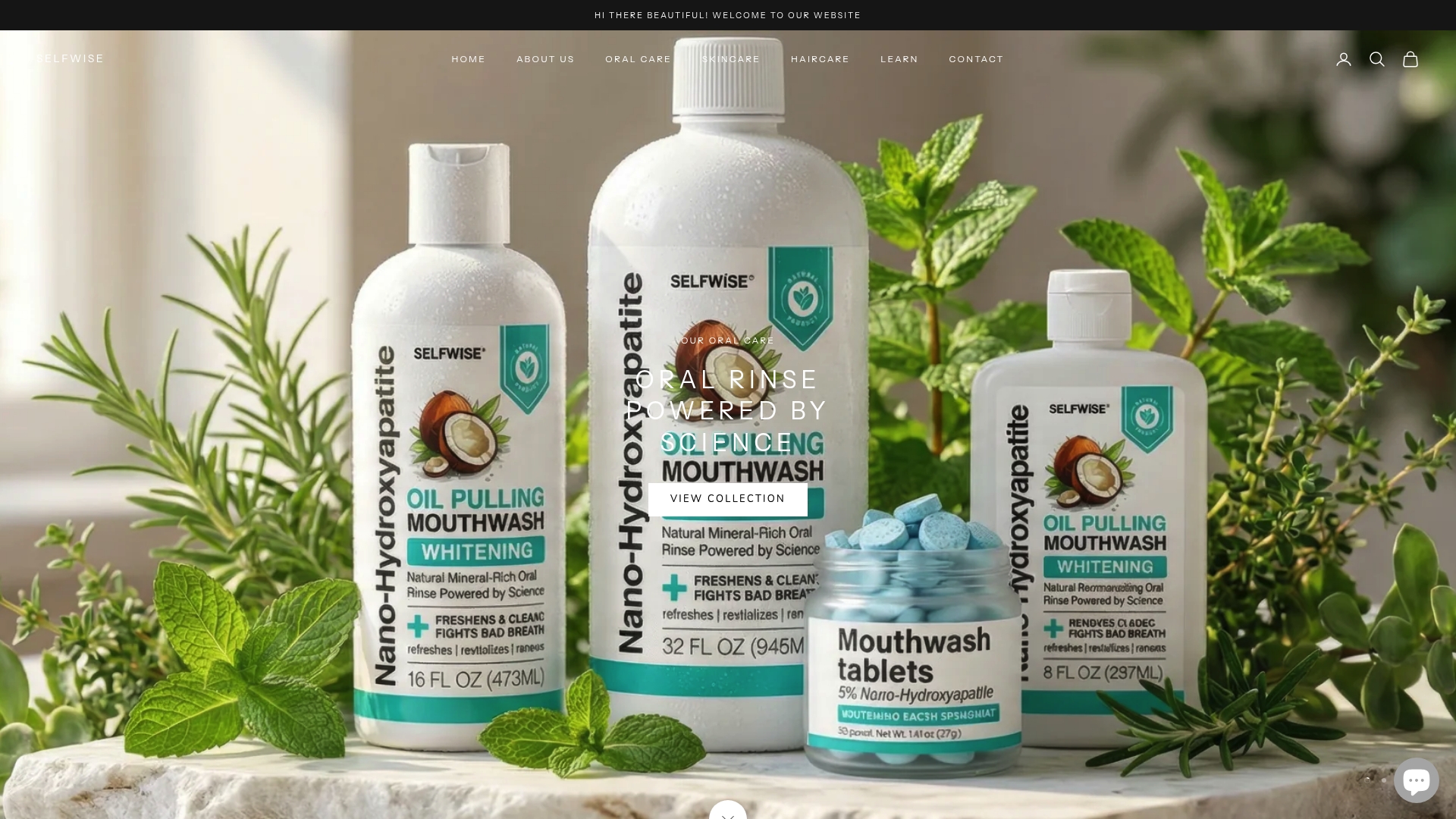
Browse the Selfwise mouthwash collection or the full oral care range to find what suits your routine. If you are not sure where to start, our natural oral care guide walks through it step by step.
Quick checklist before you start
- Your fillings are permanent, not temporary.
- No teeth feel loose, sensitive or sore around a restoration.
- You have had a dental checkup recently, or have one booked.
- You will brush with toothpaste and floss after, as you normally do.
- You will keep sessions short and gentle at first, then adjust.
If you cannot tick all of these, talk to your dentist before you begin. Mention any restoration that is old, chipped or has been bothering you.
FAQ
Can you oil pull with fillings?
Yes, in most cases. Dental practices report that properly placed amalgam and composite fillings and crowns are not loosened by oil pulling. Keep the swish gentle and the session short, and stop if a tooth feels loose or sensitive.
Is oil pulling safe for composite fillings?
It is generally considered safe for well-sealed composite. Composite can be more porous, and one dental office notes that a poor seal could let oil weaken the bond over time. Gentle sessions two to three times a week are a sensible approach, and your dentist can check the seal.
Should I brush my teeth after oil pulling?
Yes. Oil pulling is meant as an addition to your routine, not a substitute. Dentists quoted by Tufts say it is acceptable as a pre-brushing rinse as long as brushing and flossing follow.
Can oil pulling heal a cavity so I avoid a filling?
No. The ADA notes that there are no reliable studies showing oil pulling reduces cavities. If you suspect a cavity, see a dentist, who can treat it before it grows.
When should I ask my dentist before oil pulling?
Ask first if you have a temporary filling or crown, a recent restoration that feels odd, tooth sensitivity, gum disease or signs of infection. A dentist can judge the state of your teeth and any decay underneath.
Sources
- Does Oil Pulling Lead to Dental Pain? (Coliseum Dental Concord)
- 10 FAQs About Oil-Pulling (Love Bites Dental)
- Does Oil Pulling Hurt Fillings or Crowns? (LP Dentistry)
- Try Coconut Oil Pulling for Healthier Teeth and Gums (Elevate Dental Dayton)
- Effects of Coconut and Olive Oil on Tooth and Restoration (Journal of Academy of Dental Education, 2018)
- Oil Pulling (MouthHealthy, American Dental Association)
- Debunking dental trends (ADA News)
- Oil Pulling Benefits for Oral Health (Cleveland Clinic)
- Oil Pulling for Oral Health: To Swish or Not to Swish? (Tufts Now)
- Does Oil Pulling Really Help Your Teeth? (Consumer Reports)
- The effect of oil pulling in comparison with chlorhexidine (International Journal of Dental Hygiene)
- The effect of oil pulling with coconut oil (Woolley et al., 2020)