Article: Castor Oil and Low Porosity Hair: Light Oils and Oil Pulling
Castor Oil and Low Porosity Hair: Light Oils and Oil Pulling
Castor oil is usually a poor fit for low porosity hair. It is thick, it sits on a tight cuticle, and it tends to build up rather than soak in. If you still want to try it, use a few drops, dilute it with a lighter oil, and keep it to a pre-wash treatment. Hair care is a side topic for us, because Selfwise is an oral care brand. The reason is that the same lesson, thick oil versus light oil, decides whether an oil routine feels pleasant or miserable in your mouth too.
This guide gives you the short hair answer first. Then it shows how to apply that thinking to natural oral care: oil pulling, oil-based rinses, and remineralizing, alcohol-free mouthwash.
TL;DR
- Low porosity hair has a tight cuticle, so heavy oils like castor tend to coat the surface instead of absorbing, and they can weigh hair down.
- If you use castor oil on hair anyway, dilute it with a lighter oil, use only a few drops, treat it as a pre-wash step and shampoo it out thoroughly.
- Evidence that castor oil grows hair is thin, so judge it on how your hair feels, not on promises.
- In the mouth, texture matters as much as in hair. A light, easy-to-swish formula is far easier to use consistently than a thick oil.
- If your goal is a fresh mouth and healthy gums, a gentle natural rinse without alcohol or fluoride is the simpler place to start.
Table of Contents
- What low porosity actually means
- Is castor oil good for low porosity hair?
- How to use castor oil on low porosity hair, if you want to
- The lesson that carries over: weight and texture decide whether you stick with it
- Oil pulling: a traditional practice, explained plainly
- Light-oil logic, side by side
- Building a natural oral care routine that you will keep
- Our perspective
- Find your natural oral care starting point
- Common mistakes with oils, in hair and in the mouth
- FAQ
- Sources
What low porosity actually means
Porosity describes how easily your hair takes in and releases moisture. With low porosity, the outer layer (the cuticle) lies flat and tight. A trichologist quoted by Allure describes it as a tight, compact cuticle that repels moisture and products, so hair can feel dry yet resist water and take a long time to absorb treatments.
A simple way to picture it: a tightly tiled roof sheds rain. Water and thick oils tend to run off or pool on top rather than getting underneath. That is why products that suit other hair types can feel greasy and heavy on low porosity strands.
Is castor oil good for low porosity hair?
For most people with low porosity hair, it is not an obvious match. One explainer on porosity says castor oil’s heavy, occlusive formula is likely to sit on top of the tight cuticle, which can add buildup and weigh hair down without delivering moisture deeper into the shaft.
A dermatology practice makes a related point: castor oil is probably most useful when combined with other moisturizing agents, and it suits thicker, coarser hair better, because the heavy oil may weigh down thin hair.
High porosity hair is a different story. Hair with a raised, open cuticle loses moisture quickly, so a heavy oil can act as a temporary seal. A hair-care publication recommends heavier oils for high porosity hair and lighter ones for low porosity hair. Even then, sealing is a surface fix. It does not repair the cuticle.

What about hair growth?
This is where the claims get ahead of the evidence. A 2022 systematic review of coconut, castor and argan oil found weaker evidence for improved luster and no strong evidence for hair growth. Cleveland Clinic likewise says there is no data showing that pure castor oil promotes hair growth.
So the realistic expectation is texture, not transformation: a smoother feel on dry, porous hair when it is diluted and rinsed well.
How to use castor oil on low porosity hair, if you want to
The consistent advice from the sources we reviewed comes down to five rules.
- Use very little. A few drops is enough. Low porosity hair has little room for extra product.
- Dilute it. One hair-oil guide suggests mixing castor oil with a lighter oil at 1:3 or 1:4 for a pre-wash mask, using something like argan or avocado oil.
- Keep it pre-wash. Apply it for 20 to 30 minutes before shampooing, then wash with a clarifying, sulfate-free shampoo. A double shampoo helps remove sticky residue.
- Don’t make it daily. The same guide calls it a treatment oil, not an everyday care oil, and says daily use quickly leads to buildup.
- Clear buildup first. If your hair already feels coated, remove the residue before adding another rich oil.
Safety notes
Patch test first. A scientific review summarized by Prevention found that topical castor oil can occasionally cause contact dermatitis or hair felting. If an itchy rash develops, stop using it, and see a dermatologist if the rash is severe or doesn’t improve within a few weeks. Cleveland Clinic also notes that in rare cases castor oil can cause acute hair felting, where hair becomes so matted it has to be cut off.
Our own guides cover the hair side in more depth, including a 48-hour patch test routine and a safe scalp massage routine.
The lesson that carries over: weight and texture decide whether you stick with it
The reason heavy oils frustrate people with low porosity hair is not that oil is bad. It is that thickness works against the way the strand behaves. The same logic applies to anything you put in your mouth on a regular basis.
A routine only helps if you actually repeat it. Three things tend to decide that:
- Texture. If a product feels thick, coating or hard to swish, people quit within days.
- Taste and sensation. Harsh, burning formulas make daily use a chore.
- Time. A routine that takes ten minutes of effort rarely survives a busy week.
For natural oral care, that means choosing formulas that are light, pleasant and simple to fit into your mornings.
Oil pulling: a traditional practice, explained plainly
Oil pulling is an old practice from traditional Ayurvedic care. You swish a spoonful of oil in your mouth for a few minutes, spit it out (never swallow it, and never spit it in a sink where it can clog the drain), then rinse and brush as usual.

People reach for it because they want a chemical-free habit that supports a fresher-feeling mouth. It is a complement to brushing and flossing, not a replacement for them or for regular dental visits.
Why castor oil is a awkward choice for oil pulling
Hair and mouth are different, but the physical problem is the same. Castor oil is viscous. Swishing a thick, sticky oil for several minutes is harder work than swishing a thin one, and many people give up before the habit sticks. If you are curious about oil pulling, the practical choice is an oil or oil-based formula that feels light in the mouth.
That is the thinking behind our oil pulling mouthwash: we designed the formula around a texture you can comfortably use as part of your routine, without alcohol, fluoride or harsh chemicals.
Light-oil logic, side by side
The table below applies the same “match the weight to the job” thinking to both areas. It describes general principles, not product claims.
| Situation | Heavy, thick option | Lighter option | Why it matters |
|---|---|---|---|
| Low porosity hair | Undiluted castor oil | Lightweight oil, or castor diluted in one | Tight cuticle resists thick oil and builds up |
| High porosity hair | Castor, avocado, butters | Lighter oils alone | Open cuticle can use extra sealing |
| Daily mouth routine | Thick, sticky oil swished for minutes | Light, pleasant-tasting formula | Easier to repeat, so more likely to become a habit |
| Sensitive gums | Harsh, alcohol-based rinse | Gentle alcohol-free rinse | Comfort keeps you consistent |
Building a natural oral care routine that you will keep
Here is a straightforward framework. Adjust it to what your dentist tells you about your own teeth and gums.
Step 1: Start with the basics
Brush twice a day, clean between your teeth daily, and keep your dental check-ups. Natural products fit around these habits. They do not replace them.
Step 2: Add a rinse you enjoy
An alcohol-free rinse is a gentle way to add a freshening step. Our mouthwash collection includes oil pulling mouthwash, a nano hydroxyapatite oral rinse, xylitol mouthwash and mouthwash tablets, all made without fluoride or alcohol.
Step 3: Choose by what you want
- Fresh breath and a clean feel: a xylitol-based rinse is designed to taste pleasant and feel light. Xylitol is a naturally occurring sweetener that is widely used in oral care products.
- Traditional, oil-based habit: an oil pulling formula built for easy swishing.
- Support for enamel care: nano hydroxyapatite is a mineral form that matches the mineral found in teeth. Our rinse is designed for people who want a remineralizing approach to their routine.
Step 4: Keep it short and regular
A two-minute routine you do every day beats a twenty-minute routine you do twice. Put the rinse next to your toothbrush so the step is visible.
Step 5: Notice how your mouth feels over a few weeks
Look for simple, personal signals: how your mouth feels in the morning, whether the routine is comfortable, and whether your gums feel calmer. If you notice bleeding, pain, swelling or sensitivity that persists, see your dentist rather than relying on any home routine.
Our perspective
We started Selfwise because many people want oral care they can understand. They read an ingredient list and want to recognize what is on it. They also want a routine that feels good enough to do every day.
What we see again and again, in hair care and in oral care, is that products fail when they ignore how the body actually behaves. A heavy oil on tight, low porosity hair sits there. A harsh, burning rinse gets abandoned. A thick oil swished for ten minutes gets skipped.
That is why we pair tradition with modern ingredients. Oil pulling gives you a gentle, time-tested habit. Nano hydroxyapatite and xylitol give you ingredients that suit a remineralizing, alcohol-free approach. Our products are designed to be compatible with a wide range of people, including those with dental work, and we formulate without fluoride, alcohol or harsh chemicals.
Simple ingredients, a texture you will actually use, and a routine you can keep. That is the whole idea.
Viktor
Find your natural oral care starting point
If you came here for hair advice and left curious about a gentler mouth routine, start with our natural oral care collection. It brings together our oil pulling, nano hydroxyapatite and xylitol formulas, designed for people who want to move away from harsh chemicals without complicating their day.
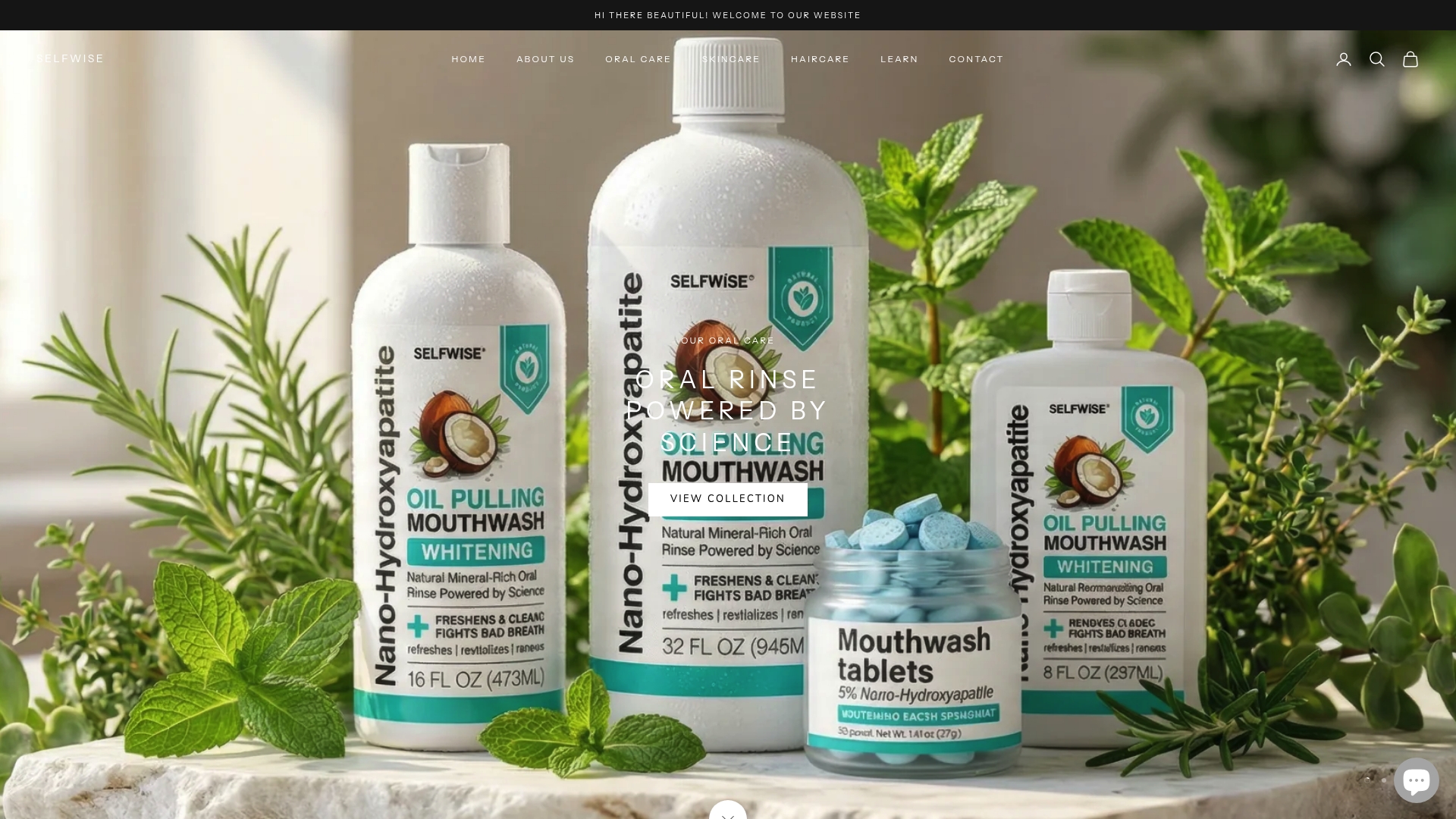
Not sure where to begin? Our natural oral care guide walks you through the ingredients and how they fit together, and the Selfwise store shows the full range.
Common mistakes with oils, in hair and in the mouth
A few patterns repeat across both areas.
- Using too much. More is not better. On hair, extra oil means buildup. In the mouth, a large amount makes swishing harder and shorter.
- Skipping the rinse-out. Hair needs thorough shampooing after a heavy oil. Your mouth needs a proper rinse and your normal brushing after oil pulling.
- Expecting dramatic change. Evidence for castor oil and hair growth is limited, and any natural oral routine is a supporting habit, not a cure. Honest expectations keep you from quitting too early.
- Ignoring reactions. A rash, persistent irritation or bleeding means stop and ask a professional.
- Changing five things at once. Add one new step at a time so you know what suits you.
FAQ
Is castor oil good for low porosity hair?
Usually not on its own. It is heavy and tends to sit on a tight cuticle, which can cause buildup and weigh hair down. If you try it, use a few drops, dilute it with a lighter oil, and wash it out thoroughly.
What hair porosity is castor oil best for?
High porosity hair is the better match. An open cuticle loses moisture quickly, so a heavy oil can act as a temporary seal and help with dryness between washes. It does not repair the cuticle itself.
Can I use castor oil on my hair every day?
It is better treated as an occasional treatment than a daily oil. Daily use leads to buildup, especially on low porosity hair. A weekly pre-wash step, followed by a clarifying shampoo, is a more practical pattern.
Can I use castor oil for oil pulling?
It is not the easiest choice, because the oil is thick and hard to swish for several minutes. A lighter formula made for oil pulling is simpler to use regularly. Oil pulling should never replace brushing, flossing or dental visits.
What should I do if castor oil irritates my skin?
Stop using it. An itchy rash is a known possible reaction, and a dermatologist is the right person to see if it is severe or does not improve within a few weeks.
Sources
- Allure: Healthier high porosity hair and deeply conditioning oils
- Viori: Can castor oil help with hair porosity issues?
- U.S. Dermatology Partners: Can castor oil make your hair grow?
- Shape: Hair oil 101
- PubMed: Coconut, castor and argan oil for hair in skin of color
- Cleveland Clinic: Castor oil benefits and uses
- More Natural: Castor oil for hair and scalp
- Viori: Why does my hair feel sticky after castor oil?
- Prevention: Dermatologists explain castor oil benefits