Article: Mouthwash Swish Time: How Long to Rinse for Best Results
Mouthwash Swish Time: How Long to Rinse for Best Results
Swish most mouthwashes for 30 seconds to 1 minute, then spit. The Academy of General Dentistry says many rinses suggest swishing for 30 seconds or more, and the label on your bottle has the final say. Some rinses ask for a full minute, and prescription rinses follow their own schedule. This guide shows how to time a rinse, what changes the number, and how to build the habit with a natural, alcohol-free rinse such as the ones in our mouthwash collection.
TL;DR
- 30 seconds is the practical minimum for most mouthwashes. 30 to 60 seconds covers nearly every over-the-counter product.
- Read the label first. Dose, frequency and time in the mouth all come from the directions, and the American Dental Association says therapeutic rinses should be used as directed.
- Swish with force, reach every surface, then spit. Never swallow mouthwash.
- Wait 30 minutes before eating or drinking so the ingredients keep working.
- Children under 6 should not use mouthwash unless a dentist directs it.
Table of Contents
- How long should you swish mouthwash?
- Swish time by type of rinse
- How to swish for the full time
- Should you wait before eating or drinking?
- Before or after brushing?
- How often should you swish?
- Safety: who should be careful with mouthwash
- Why we make alcohol-free swishing easier
- Find a rinse you will swish for the full time
- A simple habit to lock in the time
- FAQ
- Sources
How long should you swish mouthwash?
The short answer is 30 seconds at the least. The longer answer depends on what is in the bottle and who wrote the directions.
Three trusted sources agree on the range:
- The Academy of General Dentistry (AGD) advises measuring the amount on the container, swishing with as much force as possible for 30 seconds or more, and then thoroughly spitting it out.
- Northwell Health’s The Well says to rinse for 30 to 60 seconds after brushing and flossing, depending on the manufacturer’s instructions.
- The American Dental Association (ADA) says therapeutic mouthrinses should be used as directed, including the specific dose, frequency and time in the mouth.
So there is no single magic number. There is a floor (30 seconds), a common ceiling for everyday rinses (about a minute), and a label that overrides both.
Why timing matters at all
A rinse works by contact. Active ingredients need to touch teeth, gum lines and the soft tissue long enough to do their job. The ADA describes therapeutic rinses as containing active ingredients meant to help control or reduce bad breath, gingivitis, plaque and tooth decay. A five-second splash gives those ingredients almost no time on the surface. Thirty seconds gives the liquid time to move between teeth and along the gum line.

That is why timing beats guesswork. Most people think they swish for 30 seconds. When they count, many stop around 10 or 15.
Swish time by type of rinse
Different rinses have different jobs, and the directions reflect that. Here is a practical overview.
| Type of rinse | Typical swish time | Where the time comes from |
|---|---|---|
| Most over-the-counter mouthwash | 30 to 60 seconds | Product label; AGD and Northwell guidance |
| Daily fluoride rinse (0.05% sodium fluoride) | 1 minute | Standard guidance unless the label says otherwise |
| Weekly fluoride rinse (0.2% sodium fluoride) | 1 minute | Standard guidance unless the label says otherwise |
| Prescription chlorhexidine (0.2% or more) | About 30 seconds, twice daily, in 10 to 15 ml amounts | Prescriber’s directions |
| Natural or alcohol-free rinse | Follow the label | Manufacturer’s directions |
The fluoride and chlorhexidine figures come from The Pharmaceutical Journal, a UK publication, so treat them as general clinical guidance and let your dentist or the label set your exact routine in the US. It states that daily and weekly fluoride rinses should be used for one minute and spat out, unless the manufacturer’s directions say differently. It also states that chlorhexidine rinses of 0.2 percent or more are normally prescribed in 10 to 15 ml amounts for about 30 seconds, twice daily, for two weeks to one month.
A quick note on categories. The U.S. Army Public Health Command groups rinses into antibacterial or antiseptic types, anti-cavity types with 0.05% sodium fluoride, and other cosmetic-style rinses. If you are not sure which kind you own, our guide to cosmetic vs therapeutic mouthwash explains how to tell.
What about natural and alcohol-free rinses?
The rule is the same as for any rinse: the directions on the package set the time. Natural formulas differ in texture and ingredients, and so the instructions differ too. An oil-based rinse is generally used for longer than a water-based one, while a tablet or a liquid xylitol or nano hydroxyapatite rinse follows its own label. Whatever you use, set a timer for the first week so the habit matches the instructions.
If you use tablets, our guide on how to use mouthwash tablets safely walks through dosing and rinsing step by step.
How to swish for the full time
Thirty seconds feels long the first time. These steps make it easy.
- Brush and floss first. The AGD recommends brushing and flossing well before a mouth rinse so the liquid reaches clean surfaces.
- Measure the dose. Use the cap or cup, and match the amount on the label. Most bottles call for around 20 ml, or about 4 teaspoons, according to common dental guidance. Your label is the authority.
- Start a timer. Use your phone, a bathroom clock, or count slowly. Do not guess.
- Swish with force. The AGD says to swish with as much force as possible. Push the liquid between teeth, along the gum line, and around the back molars.
- Move it around. Split the time: about 10 seconds on each side, 10 seconds across the front teeth, then a short gargle if the label allows it.
- Spit, do not swallow. Spit thoroughly into the sink.
- Wait before eating or drinking. Give the ingredients time to stay in place.
Common mistakes
- Stopping too early. Anything under 30 seconds is a rinse, not a treatment.
- Swishing gently. Soft movements leave the gum line and back teeth untouched.
- Using too little. A half dose does not coat the whole mouth.
- Rinsing with water right after. Rinsing straight away removes what you just applied.
- Swallowing. Mouthwash is not meant to be swallowed.
Should you wait before eating or drinking?
Yes. The Well recommends not rinsing or drinking again for at least 30 minutes after mouthwash. The Pharmaceutical Journal gives the same 30-minute window after a fluoride rinse and notes that it helps maximize effectiveness, as covered in its review of how to select a mouthwash.
There is a practical reason. Ingredients that stay on the teeth and gums have more time to work. Food and drink wash them away.
Before or after brushing?
The order depends on the rinse you use. The ADA notes that vigorous water rinsing may be recommended after brushing and before mouthrinse when some toothpaste ingredients can complex with fluoride ions. The Well says that if you are not using a fluoride rinse, it is best to wait 30 minutes after brushing, so you do not immediately rinse off the fluoride from your toothpaste, as described in its mouthwash routine guide.
The AGD, by contrast, suggests brushing and flossing before you rinse. Both approaches share one idea: keep the active ingredient in contact with your teeth for the full swish time. For a deeper look, read our science-backed guide on using mouthwash before or after brushing.
After coffee, a quick plain-water swish helps clear the surface first. Our guide to using mouthwash after coffee covers the routine.
How often should you swish?
Most mouthwashes are used once or twice a day, depending on their purpose. Prescription rinses can follow a very different schedule. If you want to match frequency to what the rinse is designed to do, our article on once or twice daily mouthwash use breaks it down. The label, or your dentist, sets the frequency.
Safety: who should be careful with mouthwash
- Young children. The ADA says mouthrinse is not recommended for children younger than 6 unless a dentist directs it. Their swallowing reflexes may not be well developed, and swallowing large amounts can cause nausea, vomiting and, with alcohol-containing rinses, intoxication. The U.S. Army Public Health Command gives the same age cutoff and says older children who use a rinse should be supervised by an adult. Our page on kids’ mouthwash and age 6 covers alcohol-free options for older children.
- Fluoride rinses. The AGD notes that most anti-cavity rinses contain sodium fluoride, which can lead to fluoride toxicity if taken excessively or swallowed. Always spit.
- Prescription rinses. If your dentist or doctor prescribed a rinse, use their schedule and amount.
- Burning or irritation. The AGD says habitual use of antiseptic rinses with high alcohol levels (18 to 26 percent) may produce a burning sensation in the cheeks, teeth and gums. If a rinse stings, ask your dentist, and consider an alcohol-free formula.
If you have dental work, gum disease, a dry mouth, or a medical condition, ask your dentist which rinse and swish time suit you.
Why we make alcohol-free swishing easier

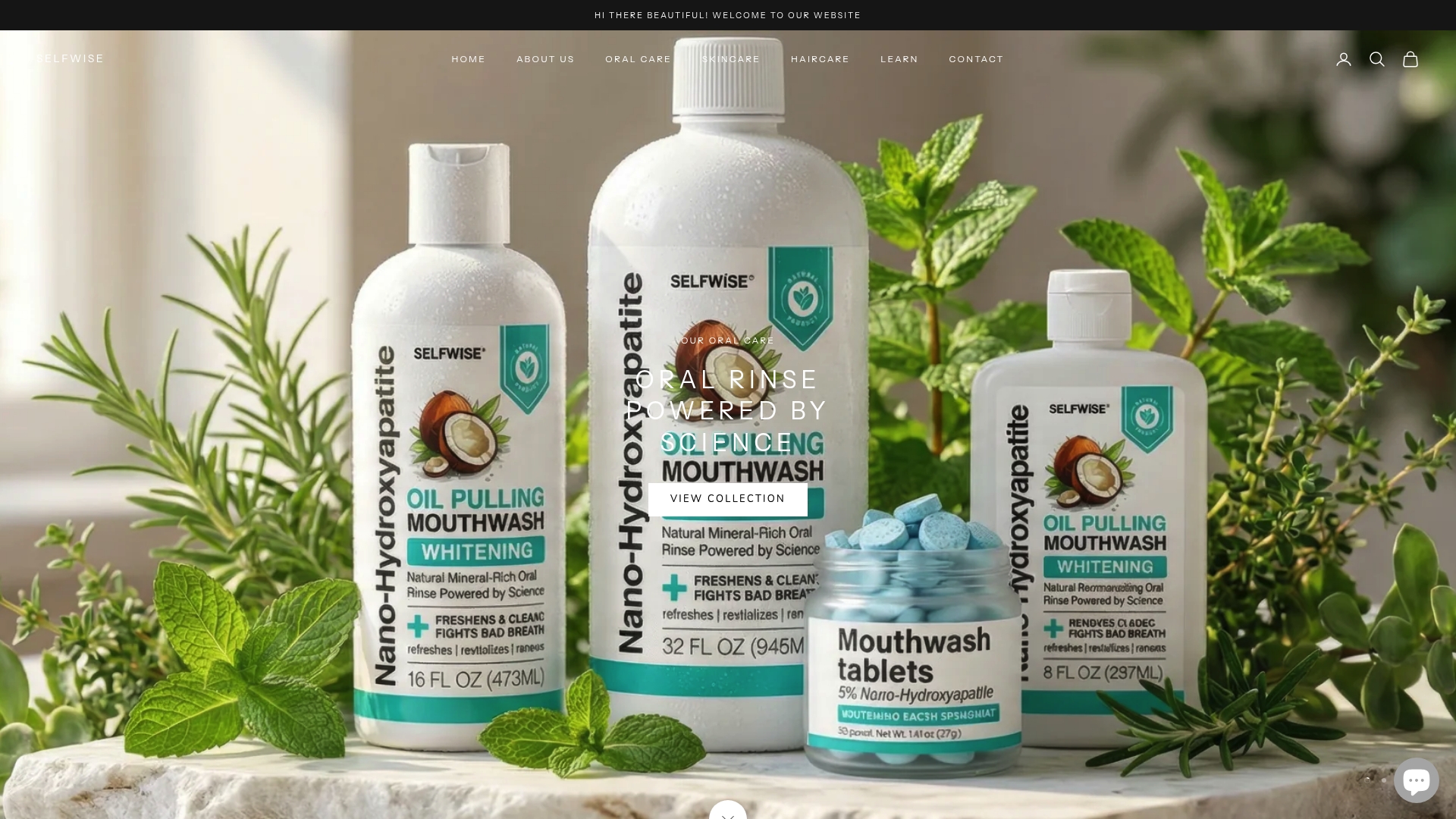
Swishing for 30 seconds or more is much easier when the rinse does not burn. That is a practical reason many people choose an alcohol-free formula. Our oral care range is formulated without harsh chemicals, fluoride or alcohol, and includes an oil pulling mouthwash, a nano hydroxyapatite oral rinse, a xylitol mouthwash and mouthwash tablets.
If you want to know how the ingredients fit together, our guide on prebiotics in mouthwash explains one of the newer additions to natural rinses.
Our view on swish time
We think the best swish time is the one you will actually repeat every day. Thirty seconds, done with force, twice a day, beats a two-minute rinse you skip. That is why we formulate our rinses with simple ingredients such as nano hydroxyapatite and xylitol, without alcohol or fluoride, so that a full swish is comfortable.
We also think a rinse belongs inside a routine, not on top of one. Brush, floss, rinse for the time on the label, spit, then give it 30 minutes. Timing it takes a week to learn and a few seconds a day to keep.
Viktor
Find a rinse you will swish for the full time
If you want a natural, alcohol-free rinse, start with our oral care collection. It includes liquid rinses and nano hydroxyapatite mouthwash tablets, a fluoride-free solid mouthwash. Our natural oral care guide helps you choose between oil pulling, nano hydroxyapatite and xylitol.
Whichever you pick, follow the directions on the package for the dose and the swish time.
A simple habit to lock in the time
Timing a swish is a habit problem more than a knowledge problem. Three small tricks help.
- Pair it with something you already do. Swish while the shower warms up or while you check the day’s calendar.
- Use a timer for one week. After seven days, your internal clock will be much closer to 30 seconds.
- Keep the bottle visible. A rinse you can see is a rinse you use.
If you find 30 seconds uncomfortable, the cause is often the formula. A strong burn makes people spit early. Switching to a gentler, alcohol-free rinse removes that barrier.
FAQ
How long are you supposed to swish mouthwash in your mouth?
Swish for at least 30 seconds, and up to 60 seconds if the label says so. The AGD says many rinses suggest 30 seconds or more, and The Well gives a range of 30 to 60 seconds. Always follow the specific directions on your bottle or from your dentist.
Is it bad to swish mouthwash for too long?
There is no benefit in going well past the label’s time, and a long swish can be tiring or irritating if the rinse is strong. Stick to the time on the package. If you want a longer routine, ask your dentist what suits your needs.
Can I eat or drink right after using mouthwash?
Wait at least 30 minutes. Northwell’s The Well and The Pharmaceutical Journal both give this window, so the ingredients are not washed away.
Should I rinse with water after mouthwash?
Generally no. Spit out the mouthwash and leave the residue in place, then wait 30 minutes before drinking. Some products, such as oil-based rinses, may call for a water rinse afterward, so read the label.
Can children swish mouthwash?
The ADA says mouthrinse is not recommended for children under 6 unless a dentist directs it. Older children who use a rinse should be supervised by an adult.
Sources
- Academy of General Dentistry: Mouth Rinses fact sheet
- American Dental Association: Mouthrinse (Mouthwash)
- The Well by Northwell: The Best Mouthwash Routine For Your Needs
- The Pharmaceutical Journal: How to select the right mouthwash
- U.S. Army Public Health Command: Mouth Rinse