The Real Role of a pH-Balancing Oral Rinse
A pH-balancing oral rinse quickly neutralizes acid in the mouth, cuts the time your enamel spends below the critical demineralization threshold of 5.5, and creates the conditions your teeth need to remineralize. If you drink coffee, eat acidic foods, deal with acid reflux, or have a dry mouth, a pH-balancing rinse used right after those exposures is one of the simplest, most evidence-backed additions to your oral care routine.
Here is the short version of what you need to know:
- Normal salivary pH sits between 6.2 and 7.6. Below 5.5, enamel starts dissolving.
- Rinsing after an acidic exposure raises pH immediately and shortens the window of demineralization.
- The effect is transient, so timing matters: rinse right after the acid hit, not an hour later.
- Rinses work best as adjuncts, not replacements, for brushing, saliva stimulation, and dental checkups.
Table of Contents
- Why does oral pH matter so much for your teeth?
- How do pH-balancing rinses actually protect your teeth?
- When should you use a pH-balancing rinse, and how often?
- Who benefits most from pH-balancing rinses?
- What ingredients should you look for (and avoid) in a balancing rinse?
- What rinses cannot do, and when to see a dentist
- What does the research actually say about pH-targeted oral care?
- Key Takeaways
- pH care done right: a perspective worth sharing
- Selfwisebrand pH-supporting rinses: natural formulas that match the science
- Useful sources
- FAQ
Why does oral pH matter so much for your teeth?
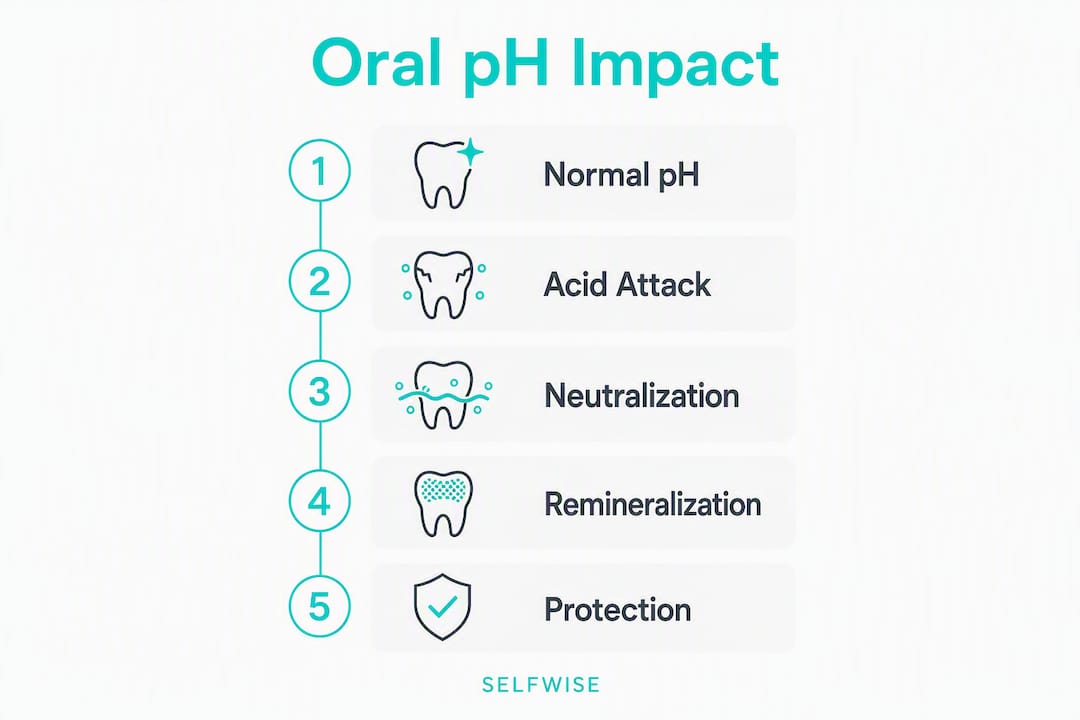
Healthy salivary pH ranges from 6.2 to 7.6, and that range is not arbitrary. Below 5.5, the mineral structure of enamel begins to dissolve in a process called demineralization. Above that threshold, the reverse process, remineralization, becomes possible. Your teeth are constantly cycling between these two states depending on what you eat, drink, and how well your saliva keeps up.
Saliva is your mouth’s built-in buffer. It contains bicarbonate, phosphate, and proteins that neutralize acids and push pH back toward neutral after a meal or drink. Stimulated saliva raises bicarbonate concentration and increases buffering power, which is why chewing increases your natural defenses. The problem is that stimulated flow is not always enough, especially between meals, in areas where saliva clearance is slow (like between teeth), or in people with reduced salivary flow.
The Stephan’s curve describes what happens after a sugar or acid challenge: pH drops sharply, then recovers gradually over 20–40 minutes as saliva buffers the acid. If you snack frequently or sip acidic drinks throughout the day, your mouth never fully recovers before the next dip. That repeated cycling below 5.5 is where cumulative enamel damage builds.
| pH Level | Oral Condition | Implication |
|---|---|---|
| 6.2–7.6 | Neutral to slightly alkaline | Remineralization favored |
| 6.2–7.6 | Low-normal salivary range | Buffering active, enamel stable |
| 5.5 | Critical threshold | Enamel demineralization begins |
| Below 5.5 | Acidic challenge | Active enamel dissolution |
How do pH-balancing rinses actually protect your teeth?
The core mechanism is straightforward: a pH-balancing rinse introduces alkaline or buffering compounds that neutralize residual acids and push oral pH back above 5.5. Research confirms that mouthwashes raise salivary pH immediately after an acidic challenge, though the effect returns to baseline by around 15 minutes. That 15-minute window is exactly when the damage would otherwise be happening.

Beyond simple neutralization, the better-formulated rinses deliver mineral donors directly to the tooth surface. Nano hydroxyapatite, calcium, and phosphate compounds give enamel the raw materials it needs to repair early lesions when pH is favorable. Remineralization requires a neutral or slightly alkaline environment and adequate calcium and phosphate ion availability, so a rinse that both raises pH and supplies minerals addresses both sides of the equation simultaneously.
There is also a microbiome angle that most people overlook. Persistent oral acidity shifts bacterial communities toward acid-tolerant pathogens associated with erosion and caries. Keeping pH in the neutral range does not just protect enamel directly; it makes the oral environment less hospitable to the bacteria that cause decay in the first place. The goal is not extreme alkalinization, just preventing prolonged dips below 5.5.
Key mechanisms at a glance:
- Acid neutralization: raises pH above 5.5 within seconds of rinsing
- Buffering: bicarbonate-based formulas extend the window of neutral pH
- Mineral delivery: nano hydroxyapatite and calcium/phosphate support remineralization
- Microbiome support: neutral pH discourages acid-tolerant cariogenic bacteria
Pro Tip: Formulations that combine a buffering agent with a mineral donor, like nano hydroxyapatite, align best with the underlying biology. Buffering alone raises pH; mineral donors give enamel something to rebuild with.
When should you use a pH-balancing rinse, and how often?
Timing is everything with pH-balancing rinses because the benefit is transient. Use them closest to the acid exposure, and you interrupt the demineralization window directly.
- After acidic meals or drinks (citrus, soda, wine, coffee, vinegar-based dressings): rinse within a few minutes of finishing.
- After a reflux episode: gastric acid is highly erosive; rinsing immediately neutralizes residual acid before it contacts enamel for an extended period.
- Between meals for high-risk individuals (frequent snackers, dry mouth, high caries history): a midday rinse helps reset pH when saliva alone is insufficient.
- Before brushing after an acidic exposure: wait at least 30 minutes before brushing after an acid challenge. Rinse with a pH-balancing mouthwash first to neutralize the acid, then brush later once enamel has had time to reharden.
- As part of a natural daily oral care routine: morning and evening use adds a consistent buffering step around your brushing routine.
Swish for 20–30 seconds and make sure the rinse reaches all tooth surfaces, including the backs of lower front teeth where saliva clearance is often slowest.
Pro Tip: If you cannot rinse immediately after an acidic drink, chewing sugar-free gum stimulates saliva flow and bicarbonate production, which partially mimics the buffering effect. Rinse when you can, but gum is a solid backup.
Who benefits most from pH-balancing rinses?
Not everyone needs a dedicated pH-balancing rinse. Healthy adults with good saliva flow, a low-acid diet, and no history of erosion will get most of what they need from saliva alone. But several groups see a meaningful difference.
High-acid diet or frequent snacking. Every acidic exposure triggers a Stephan’s curve dip. Multiple dips per day without full recovery is how erosion accumulates over years.
GERD or acid reflux. Gastric acid reaching the mouth has a pH well below 5.5. Reduced salivary flow correlates with slower pH recovery, and reflux patients often have compromised buffering capacity on top of the acid load.
Dry mouth (xerostomia). Saliva is the primary natural buffer. When flow is reduced by medications, medical conditions, or aging, the mouth’s ability to recover from acid challenges drops significantly. A rinse steps in where saliva cannot.
Early enamel lesions or dentin sensitivity. These are signs that demineralization has already begun. A rinse with mineral donors can support the remineralization process that may slow or reverse early lesions.
People building a mindful personal care routine who want to address oral health proactively rather than reactively.
Expected outcomes are real but modest: shorter acidic exposure windows, improved conditions for remineralization, possible reduction in sensitivity over time, and a microbiome environment that favors health-associated bacteria. Rinses are adjuncts. They do not replace fluoride therapy when clinically indicated, and they do not arrest advanced decay.
What ingredients should you look for (and avoid) in a balancing rinse?
Labels on oral rinses can be confusing. Here is a practical breakdown.
Ingredients that support pH balance and remineralization
| Ingredient | What it does | Notes |
|---|---|---|
| Sodium bicarbonate | Neutralizes acids, raises pH | Gentle, well-studied buffering agent |
| Nano hydroxyapatite | Delivers calcium/phosphate to enamel | Supports remineralization at neutral pH |
| Xylitol | Reduces cariogenic bacteria, non-fermentable | Does not lower pH; inhibits Streptococcus mutans |
| Calcium/phosphate compounds | Mineral donors for enamel repair | Commonly found in commercial rinses |
| Fluoride (optional) | Strengthens enamel, inhibits demineralization | Effective but not necessary for all users |
Ingredients to avoid for a gentle, natural approach
- High alcohol content: dries mucosa, can lower pH over time, and irritates sensitive tissues
- Strong acids (citric acid as a primary ingredient): counterproductive in a rinse meant to raise pH
- Harsh surfactants: can disrupt the mucosal barrier and alter taste perception
- Unnecessary high concentrations of essential oils: essential oils appear in many commercial mouthwashes and can irritate mucosa at high doses
The combination of nano hydroxyapatite and xylitol is particularly well-matched to the biology. Nano hydroxyapatite supplies the minerals enamel needs when pH is favorable; xylitol reduces the acid-producing bacteria that cause pH to drop in the first place. Together, they address both the supply side and the demand side of the remineralization equation. For readers interested in removing harsh chemicals from their routine, alcohol-free, bicarbonate-based formulas are the natural starting point.
What rinses cannot do, and when to see a dentist
pH-balancing rinses are genuinely useful, but they have clear limits.
- They do not reverse established cavities or arrest active decay without professional intervention.
- The pH benefit is transient. Without repeat use after each acid exposure, the effect dissipates within 15 minutes.
- They do not replace professionally recommended fluoride therapy for high-risk patients.
- They cannot compensate for a diet that delivers acid exposures dozens of times per day.
Potential side effects worth knowing: some individuals experience mild mucosal irritation, especially with bicarbonate-heavy formulas used at high frequency. Taste changes are occasionally reported. Rinses with certain compounds may interact with composite restorations over time, though this is more relevant to prescription-strength formulas than gentle natural rinses.
See a dentist if you notice: persistent sensitivity that does not improve, visible white spots or pitting on enamel, frequent reflux that is not managed, or any sign of active decay. A rinse is a daily maintenance tool, not a clinical treatment.
Children should use only products specifically labeled for their age group, and parents should confirm appropriate use with a pediatric dentist.
What does the research actually say about pH-targeted oral care?
The evidence base for pH-balancing rinses is solid on the core mechanisms and appropriately cautious about the magnitude of benefit.
“Remineralization depends on saliva supersaturation with calcium and phosphate; this process works only when pH is at or above neutral. Lowering pH stops remineralization and promotes demineralization. Rinsing after acidic episodes reduces enamel exposure to low pH and may reduce erosion risk, but effects are transient without repeat use.” — Synthesized from saliva and oral health research and clinical mouthwash trials
The microbiome evidence adds another layer. The oral microbiome is a complex ecosystem where persistent acidity selects for dysbiotic bacterial communities linked to both caries and erosion. Maintaining pH in the neutral range is not just about protecting enamel chemistry; it is about keeping the bacterial community balanced. Microbiologists are clear that the target is the 6.2–7.6 window, not aggressive alkalinization above pH 8.0, which can itself disrupt microbial balance.
The practical implication is straightforward: pair a buffering rinse with mineral donors, use it right after acid exposures, and repeat consistently. A single rinse is not a cure; a habit of rinsing after every significant acid challenge is where the cumulative benefit accumulates.
Key Takeaways
pH-balancing oral rinses neutralize acid immediately after exposure, support remineralization when paired with mineral donors, and help maintain the neutral pH range that keeps the oral microbiome balanced.
| Point | Details |
|---|---|
| Critical pH threshold | Enamel demineralization begins below 5.5; normal salivary pH is 6.2–7.6. |
| Timing is the variable | Rinse within minutes of an acidic exposure; the pH benefit returns to baseline by ~15 minutes. |
| Best ingredients | Look for sodium bicarbonate, nano hydroxyapatite, and xylitol; avoid alcohol and strong acids. |
| Rinses are adjuncts | They reduce acidic exposure time but do not replace brushing, saliva stimulation, or dental care. |
| Selfwisebrand option | Selfwisebrand’s nano hydroxyapatite and xylitol mouthwashes deliver mineral donors in an alcohol-free, gentle formula aligned with this guidance. |
pH care done right: a perspective worth sharing
Most oral care advice focuses on what to remove from the mouth: bacteria, plaque, staining. The pH conversation flips that framing. It is about creating conditions where the mouth can repair itself.
What I find underappreciated in mainstream oral health messaging is how much the timing and frequency of acid exposures matter compared to the total amount of acid consumed. Two people can drink the same amount of citrus juice per day and have radically different erosion outcomes depending on whether they sip it over three hours or drink it in five minutes. A pH-balancing rinse used immediately after the exposure addresses the actual mechanism of damage, not just a downstream symptom.
The natural ingredient angle is not just marketing. Alcohol-free, bicarbonate-based formulas with nano hydroxyapatite genuinely align with the biology better than alcohol-heavy antiseptic rinses that were designed for a different purpose entirely. The evidence for nano hydroxyapatite as a mineral donor is strong, and xylitol’s effect on acid-producing bacteria is well-documented. Combining them in a gentle, pH-supporting formula is not a compromise between “natural” and “effective.” It is what the science actually points toward.
The one caveat I would press: do not use a rinse as a reason to delay seeing a dentist about persistent sensitivity or visible lesions. Rinses maintain; they do not treat. Know the difference, and use both.
Selfwisebrand pH-supporting rinses: natural formulas that match the science
The guidance in this article points to a specific ingredient profile: bicarbonate or gentle buffering, nano hydroxyapatite for mineral delivery, xylitol for cariostatic support, and no alcohol or harsh acids. That is exactly what Selfwisebrand formulates around.
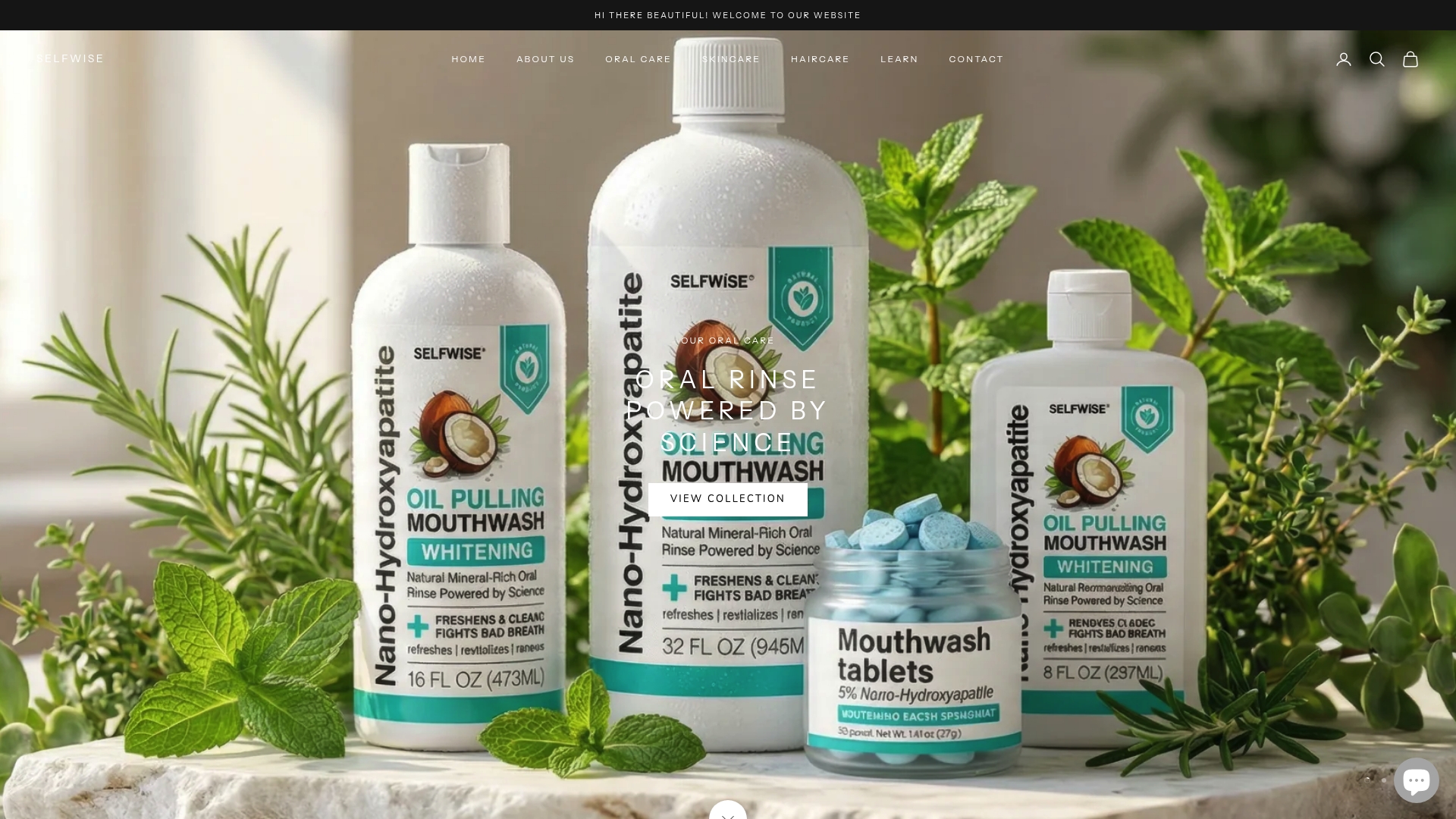
The Selfwisebrand xylitol mouthwash with nano hydroxyapatite combines both key mineral and cariostatic ingredients in a single alcohol-free rinse. The nano hydroxyapatite mouthwash tablets are a travel-friendly option that delivers the same mineral support without any liquid waste. Both are fluoride-free, free of harsh surfactants, and designed to be used right after acidic exposures, exactly when the research says a rinse does the most good.
Browse the full Selfwisebrand mouthwash collection to find the format that fits your routine, and start using it after your next acidic meal.
Useful sources
- A Fresh Look at Mouthwashes: What Is Inside and What Is It For?
- The role of saliva in maintaining oral health and as an aid to diagnosis
- BDJ Team: saliva’s role in maintaining oral health and preventing dental disease
- Oral Microbiome: A Review of Its Impact on Oral and Systemic Health
- Effect of Sodium Bicarbonate Mouthwash on Salivary pH and Interleukin-1β Levels among Smokers
- Selfwisebrand Natural Oral Care Guide
- Selfwisebrand Oral Care Collection
FAQ
Should mouthwash be pH balanced?
Yes, particularly if you consume acidic foods or drinks regularly, have dry mouth, or experience acid reflux. A pH-balancing mouthwash neutralizes residual acids and supports the remineralization process that standard antiseptic rinses do not address.
Why do some dentists advise against daily mouthwash use?
The concern is usually about alcohol-based rinses, which can dry out oral tissues and disrupt the natural oral microbiome with overuse. Alcohol-free, pH-supporting rinses like those formulated with sodium bicarbonate or nano hydroxyapatite do not carry the same risks and are generally considered safe for daily use.
How do you know if your mouth pH is off?
Common signs include frequent cavities, tooth sensitivity, a dry or sticky feeling in the mouth, and persistent bad breath. You can also use pH test strips designed for saliva, though a dentist can give a more complete picture through a clinical assessment.
What is the 3-3-3 rule for oral hygiene?
The 3-3-3 rule is not a formally established clinical guideline with a single canonical definition; it appears in various forms across patient education materials. A common version suggests brushing for 3 minutes, 3 times a day, within 3 minutes of eating. If you follow a version of this, pairing it with a pH-balancing rinse after acidic meals adds a remineralization step the brushing alone does not provide.