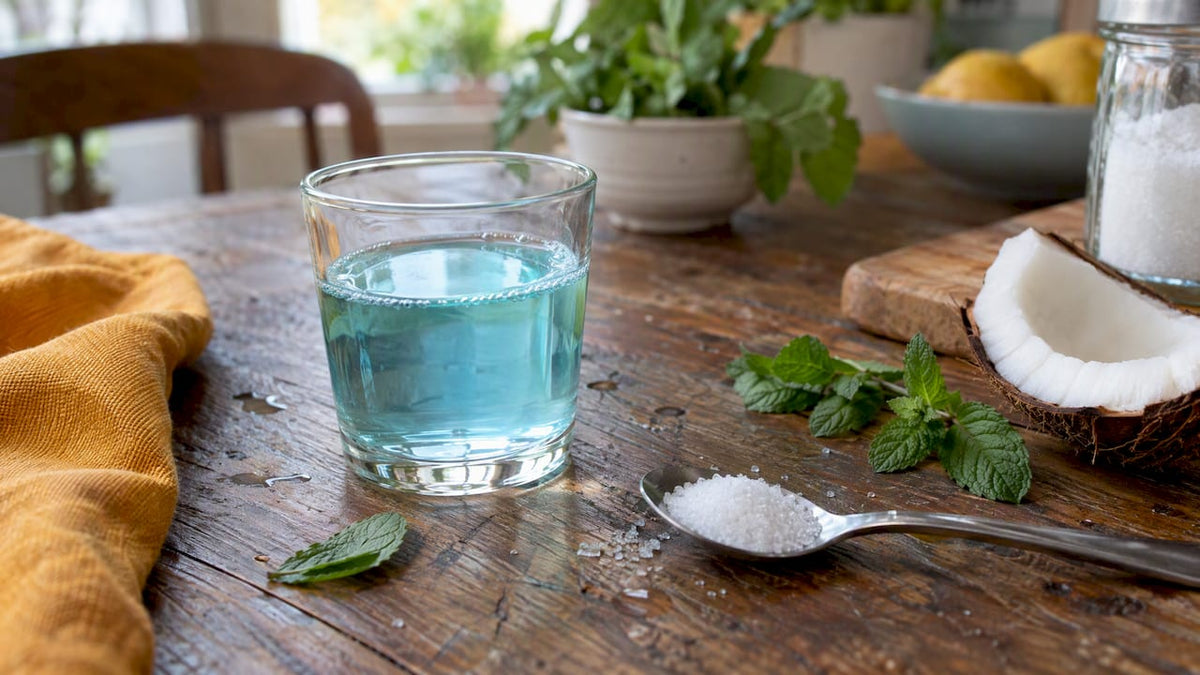
Why Oil Pulling Works: The Science Behind the Swish
Oil pulling reduces total oral bacterial counts. That’s the finding that holds up across meta-analyses of randomized controlled trials, and it’s the most honest summary of where the science stands in 2026. The practice, rooted in Ayurvedic tradition, involves swishing roughly one tablespoon of edible oil (coconut and sesame are the most studied) between your teeth for several minutes, then spitting it out. The oil turns milky white and thin as it mixes with saliva, a visible sign that something physical is happening in your mouth.
What the science does not confirm is equally worth knowing upfront:
- Bacterial reduction: Meta-analyses show a statistically significant drop in salivary bacterial colony counts compared to controls.
- Plaque and gingival scores: Results are mixed. Most meta-analyses find no significant difference in plaque index or gingival index versus controls.
- Cavity prevention and whitening: The American Dental Association does not recommend oil pulling as a dental hygiene practice, citing a lack of reliable clinical evidence for these claims.
- Detoxification: No biological mechanism supports the idea that oil pulling removes systemic toxins.
- Duration: Most studies run an average of 20.7 days, with participants who have no existing oral health problems, which limits how far the findings generalize.
The science behind oil pulling is real but narrow. It does something measurable to oral bacteria. Whether that translates into long-term dental health gains comparable to brushing and flossing is a different question, and the research hasn’t answered it yet.
Table of Contents
- How does oil pulling work? The scientific mechanism explained
- What does the research actually show about oil pulling effectiveness?
- What are the real benefits and limitations of oil pulling?
- How to do oil pulling correctly for the best results
- What Selfwisebrand’s approach to oil pulling and natural oral care is built on
- Selfwisebrand’s natural oil pulling mouthwash takes the practice further
- FAQ
- Key Takeaways
How does oil pulling work? The scientific mechanism explained
The most likely explanation for why oil pulling works is mechanical, not chemical. When you swish oil vigorously for several minutes, the turbulent flow created by your tongue, cheeks, and lips physically dislodges bacteria and loosens plaque from tooth surfaces. Clinical studies have found similar bacterial reductions when participants swish with distilled water, which points strongly to the swishing action itself as the primary driver.
That said, three biochemical theories have been proposed, and none of them are mutually exclusive:
- Saponification: The fats in oil may undergo alkaline hydrolysis when they contact bicarbonate ions in saliva. This reaction theoretically produces soap-like substances that increase the oil’s surface area and cleaning power. The saponification theory is plausible but has not been clinically proven.
- Viscosity and adhesion: Oil is thicker than water or saliva. Its viscous properties may coat tooth surfaces and physically prevent bacteria from adhering to enamel and forming new plaque.
- Antioxidant and antimicrobial activity: Coconut oil contains lauric acid, a medium-chain fatty acid with documented antimicrobial potential against Streptococcus mutans and Candida albicans in vitro. Antioxidants in the oil may also reduce lipid peroxidation and produce antibiotic-like compounds that lower bacterial viability.
The mechanical and chemical effects probably work together, but the mechanical side carries more weight in the current evidence. Think of it this way: the oil acts as a carrier that traps bacteria and pulls them away from surfaces, while the sustained swishing creates enough turbulence to detach biofilm that a simple rinse would miss. The emulsification that occurs as oil mixes with saliva may further disrupt bacterial cell membranes, though emulsification’s role in the overall effect is still being studied.
Pro Tip: If you find the full 15–20 minutes difficult, the mechanical benefit begins accumulating from the first few minutes of active swishing. Shorter sessions may still provide meaningful bacterial reduction, even if the research on exact optimal duration remains unsettled.

What does the research actually show about oil pulling effectiveness?
The strongest finding in the literature is consistent: oil pulling reduces salivary bacterial colony counts compared to controls, a statistically significant result. The problem is that bacterial counts in saliva are a proxy measure. They don’t directly tell you whether teeth are getting cleaner or gums are getting healthier.

On the harder clinical outcomes, the picture gets murkier:
| Outcome | Oil pulling result | Comparison |
|---|---|---|
| Salivary bacterial colony counts | Significant reduction | Statistically confirmed in meta-analysis |
| Plaque index | Mixed results | No significant difference vs. controls in most meta-analyses |
| Gingival index | Mixed results | No significant difference vs. controls in most meta-analyses |
| Streptococcus mutans reduction | Some positive findings | Inconsistent across studies |
| Cavity prevention | Not confirmed | No reliable clinical evidence |
| Teeth whitening | Not confirmed | No reliable clinical evidence |
A 2021 meta-analysis of 21 randomized controlled trials found that most studies ran for an average of 20.7 days and enrolled participants without existing oral health problems. That’s a short window with a low-risk population, which makes it hard to draw conclusions about people dealing with active gingivitis, periodontitis, or high cavity risk.
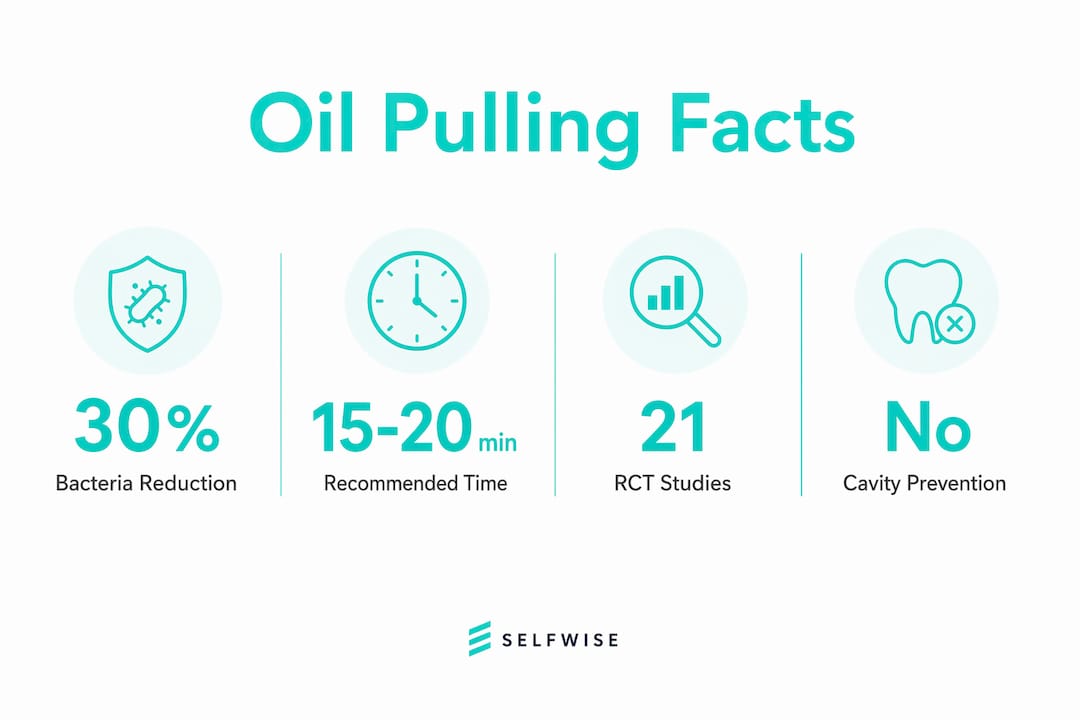
Study limitations compound the picture further. Sample sizes tend to be small, follow-up periods are brief, and at least one meta-analysis flagged potential publication bias from multiple studies sharing the same lead author. Sesame oil and essential oil blends have shown plaque index reductions in recent RCTs, but the microbiological changes in those same studies were not significant, reinforcing the mechanical-over-chemical interpretation.
The dental community’s skepticism isn’t irrational. It comes from the absence of large-scale, long-term trials that compare oil pulling head-to-head with brushing and flossing in people who actually have oral health problems. Until those trials exist, the evidence base stays narrow.
What are the real benefits and limitations of oil pulling?
Oil pulling does a few things reasonably well, and several things not at all. Getting clear on the difference saves you from both dismissing it entirely and expecting too much.
What the evidence supports
- Reduced total oral bacteria: The bacterial count reduction is the most replicated finding across studies. Fewer bacteria in saliva means less microbial load overall, even if the clinical downstream effects aren’t fully mapped.
- Potential plaque reduction: Some studies, particularly with sesame oil, show plaque index improvements. The effect isn’t consistent, but it’s not zero either.
- Fresh breath: Reduced bacterial load logically connects to reduced volatile sulfur compounds, the main driver of bad breath. This is one of the most commonly reported benefits among regular practitioners.
- Mild anti-inflammatory effects: Coconut oil’s lauric acid has shown anti-inflammatory properties in vitro. Whether that translates to measurable gum health improvement in clinical settings is less clear.
What the evidence does not support
The ADA’s position is direct: oil pulling does not prevent cavities, does not whiten teeth, and should not replace brushing and flossing. These aren’t fringe opinions. They reflect the absence of credible clinical trials showing those effects.
The detoxification claim deserves specific attention. The idea that swishing oil “pulls toxins” from the bloodstream through oral tissue has no biological basis. Oral mucosa does not function as a filtration membrane for systemic toxins. The observed benefits are mechanical, not detoxifying. Dental researchers have addressed this directly, and the consensus is clear.
Safety considerations
Oil pulling is generally safe for healthy adults, but two risks are worth knowing:
- Lipid pneumonia: If oil is accidentally aspirated into the lungs, it can cause lipid pneumonia. This is rare but documented in clinical safety reviews. People with swallowing difficulties or a strong gag reflex should be cautious.
- Oral irritation: A small number of people report mild irritation, particularly with coconut oil. Switching oils usually resolves it.
For anyone curious about oil pulling’s effects on gum health specifically, the evidence is more nuanced than most wellness content suggests.
How to do oil pulling correctly for the best results
The technique matters more than most people realize. Done carelessly, you’re just holding oil in your mouth. Done properly, you’re creating the mechanical turbulence that the research attributes most of the benefit to.
What you need
- 1 tablespoon (about 10 mL) of edible oil, coconut or sesame are the most studied options
- An empty stomach, traditionally first thing in the morning
- A trash can or toilet to spit into (not the sink, as oil can clog drains over time)
Step-by-step
- Measure one tablespoon of oil and place it in your mouth.
- Swish continuously, pushing and pulling the oil between your teeth. Keep your jaw moving. The goal is active turbulence, not passive holding.
- Continue for 10–20 minutes. Traditional guidance and most clinical protocols use 15–20 minutes, though compliance drops significantly at the longer end. Ten minutes of active swishing likely captures most of the mechanical benefit.
- Spit the oil out completely. It will have turned white and thin from mixing with saliva and bacteria.
- Rinse your mouth thoroughly with warm water.
- Brush your teeth as normal.
Key safety rules
- Never swallow the oil after pulling. It contains the bacteria and debris you just removed.
- Do not oil pull if you have a strong tendency to aspirate liquids, or if you are recovering from oral surgery.
- Start with 5 minutes if 15–20 feels unmanageable. Building the habit matters more than hitting a specific time target from day one.
For a more detailed walkthrough, including timing tips and what to expect in the first week, the beginner’s guide to oil pulling technique covers the practical side thoroughly.
Pro Tip: Coconut oil solidifies below 76°F. If you’re pulling in a cool room, let the oil melt in your mouth for the first 30 seconds before starting active swishing. Starting with a solid chunk makes the first minute uncomfortable and reduces compliance.
What Selfwisebrand’s approach to oil pulling and natural oral care is built on
Selfwisebrand’s position on oil pulling is grounded in the same evidence reviewed above: the mechanical action is the primary driver of bacterial reduction, and that finding is corroborated by clinical research. The brand doesn’t overstate what oil pulling does. It works as a complementary practice, not a replacement for brushing and flossing, and the formulations Selfwisebrand develops reflect that honest framing.
Where Selfwisebrand extends beyond traditional oil pulling is in the ingredient layer. Natural oils provide the mechanical and mild antimicrobial base, but adding nano hydroxyapatite to the formulation addresses something oil alone cannot: enamel remineralization. Nano hydroxyapatite is a biocompatible form of the mineral that makes up tooth enamel. It integrates into enamel surfaces and supports remineralization at a structural level, which is a different mechanism entirely from bacterial removal.
Xylitol plays a supporting role in the same direction. It disrupts Streptococcus mutans metabolism, reducing the bacteria’s ability to produce the acids that erode enamel. Together, these ingredients address the oral environment from multiple angles simultaneously.
- Mechanical bacterial removal: provided by the swishing action and oil viscosity
- Antimicrobial support: lauric acid in coconut oil, xylitol’s effect on S. mutans
- Enamel remineralization: nano hydroxyapatite integrating into enamel surfaces
- Evidence-based formulation: no detox claims, no whitening promises without clinical backing
The broader trend in oral care research points toward sustainable lifestyle changes affecting the oral microbiome rather than single-remedy approaches. Selfwisebrand’s product development follows that direction: oil pulling as one component of a complete natural routine, not a standalone cure. The same philosophy that drives fewer, cleaner ingredients in personal care applies directly to what goes in your mouth every morning.
Pro Tip: Oil pull before brushing, not after. You want to remove the loosened bacteria and debris with your toothbrush, not redeposit them. The sequence matters: pull, spit, rinse, then brush.
Selfwisebrand’s natural oil pulling mouthwash takes the practice further
Oil pulling works. The bacterial reduction is real, the mechanical action is well-documented, and the practice has a legitimate place in a natural oral care routine. What traditional oil pulling can’t do is remineralize enamel or deliver targeted antimicrobial compounds in a consistent dose. That’s the gap Selfwisebrand fills.
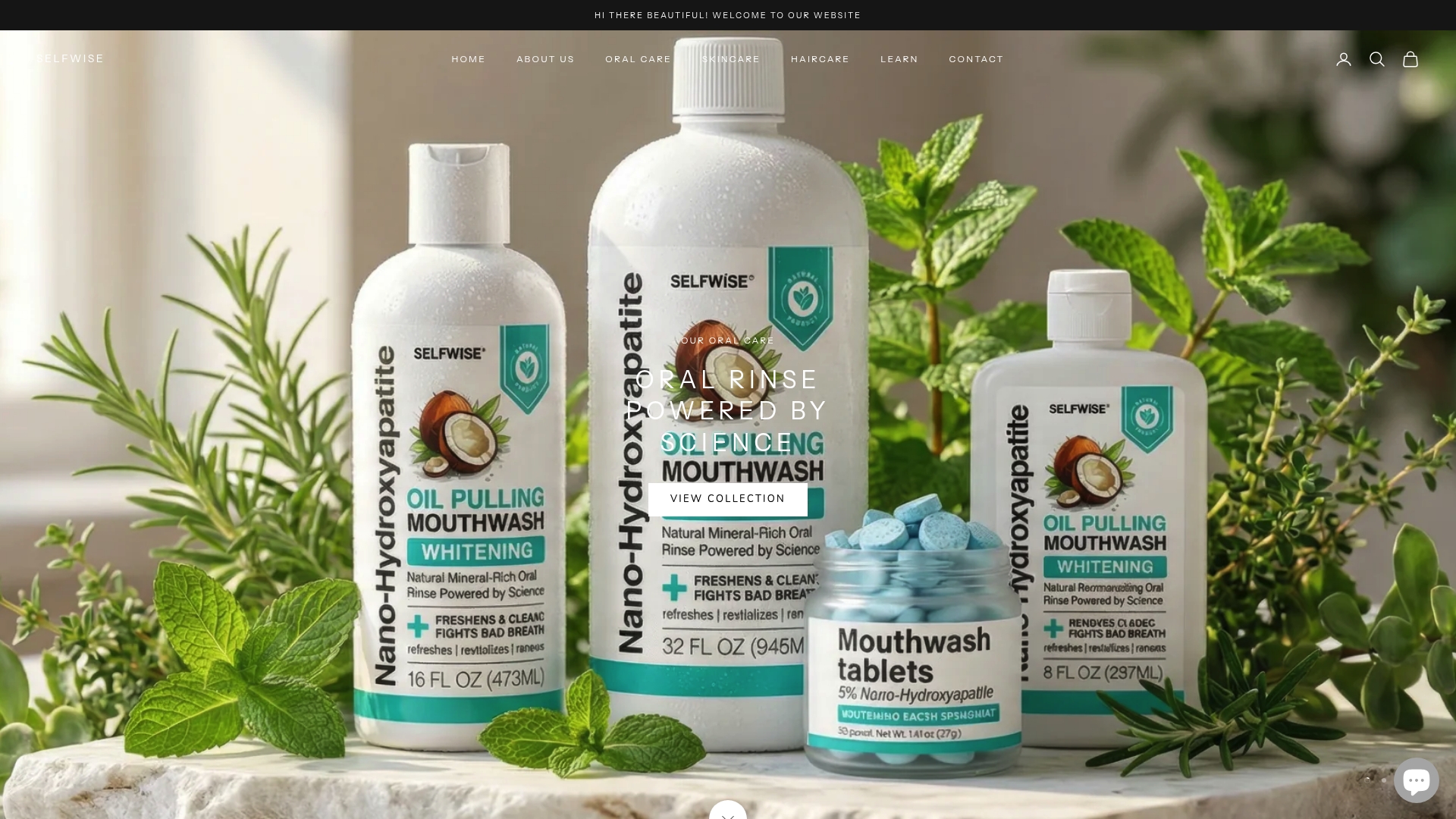
The Nano Hydroxyapatite Oil Pulling Mouthwash combines the proven mechanical benefits of oil pulling with nano hydroxyapatite for enamel support and xylitol for S. mutans disruption. No fluoride, no harsh chemicals, no ingredients you need a chemistry degree to recognize. It’s built for people who want the science-backed version of a traditional practice, not a wellness trend dressed up with vague claims.
If you’re building a complete natural routine, the fluoride-free oral care collection includes complementary products that work alongside oil pulling rather than duplicating it. Start with the oil pulling mouthwash and see what a formulation built on actual mechanisms feels like.
FAQ
Is oil pulling scientifically proven to work?
Oil pulling is proven to reduce salivary bacterial colony counts in meta-analyses of randomized controlled trials, but evidence for plaque reduction, gingival improvement, cavity prevention, and whitening remains inconsistent or unsupported.
Why don’t dentists recommend oil pulling?
The American Dental Association does not recommend oil pulling because large-scale, long-term clinical trials confirming its efficacy compared to brushing and flossing do not yet exist. The current evidence base relies on short studies with small, healthy populations.
What happens if you do oil pulling every day?
Daily oil pulling may gradually reduce oral bacterial load and support fresher breath, but it does not replace brushing and flossing. No evidence shows that daily practice prevents cavities or reverses gum disease on its own.
Do you really have to oil pull for 20 minutes?
Traditional and most clinical protocols recommend 15–20 minutes, but compliance drops at the longer end. Shorter sessions of around 10 minutes likely capture most of the mechanical benefit, and the research on exact optimal duration is not yet settled.
Key Takeaways
Oil pulling reduces total oral bacterial counts through mechanical swishing action, but it does not replace brushing and flossing, and claims about detoxification or cavity prevention lack clinical support.
| Point | Details |
|---|---|
| Bacterial reduction is real | Meta-analyses confirm a statistically significant reduction in salivary bacterial colony counts versus controls. |
| Mechanism is mostly mechanical | Distilled water swishing produces similar results, indicating turbulent flow drives most of the benefit. |
| Plaque and gum scores are mixed | Most meta-analyses find no significant difference in plaque index or gingival index versus controls. |
| Detox claims have no basis | No biological mechanism supports toxin removal through oral tissue; benefits are mechanical. |
| Selfwisebrand adds remineralization | The Nano Hydroxyapatite Oil Pulling Mouthwash pairs oil pulling’s bacterial removal with enamel-rebuilding nano hydroxyapatite. |