Emulsification in Oil Pulling: What the Science Says
Emulsification in oil pulling is defined as the physical process where oil and saliva mix during swishing to form a milky, frothy emulsion that traps oral bacteria and debris for removal. This is the core mechanical action behind oil pulling’s oral health benefits, not a chemical reaction. The emulsion physically binds microbes, biofilm components, and plaque, then removes them when you spit. Understanding this process separates fact from fiction and explains why oil pulling works as an adjunctive cleaning method rather than a detox ritual.
What is emulsification in oil pulling, exactly?
Emulsification is the suspension of one liquid in another when they do not naturally mix. In oil pulling, oil and water-based saliva are the two liquids. Swishing forces them together under mechanical pressure, breaking the oil into tiny droplets suspended throughout the saliva. The result is a temporary emulsion, visibly milky and frothy, that carries oral bacteria and debris.
This process increases surface area dramatically. More surface area means more contact between the oil droplets and the bacteria, biofilm, and plaque lining your teeth and gums. The oil physically traps hydrophobic bacterial cells, which are naturally attracted to oil rather than water, pulling them away from oral surfaces.
One critical distinction: emulsification here is entirely physical. It requires no heat, no alkali, and no chemical transformation. The emulsion is also temporary. If you let the spat-out oil sit in a cup, it separates back into layers within minutes. That separation confirms no chemical reaction occurred during swishing.
How does emulsification work during oil pulling?
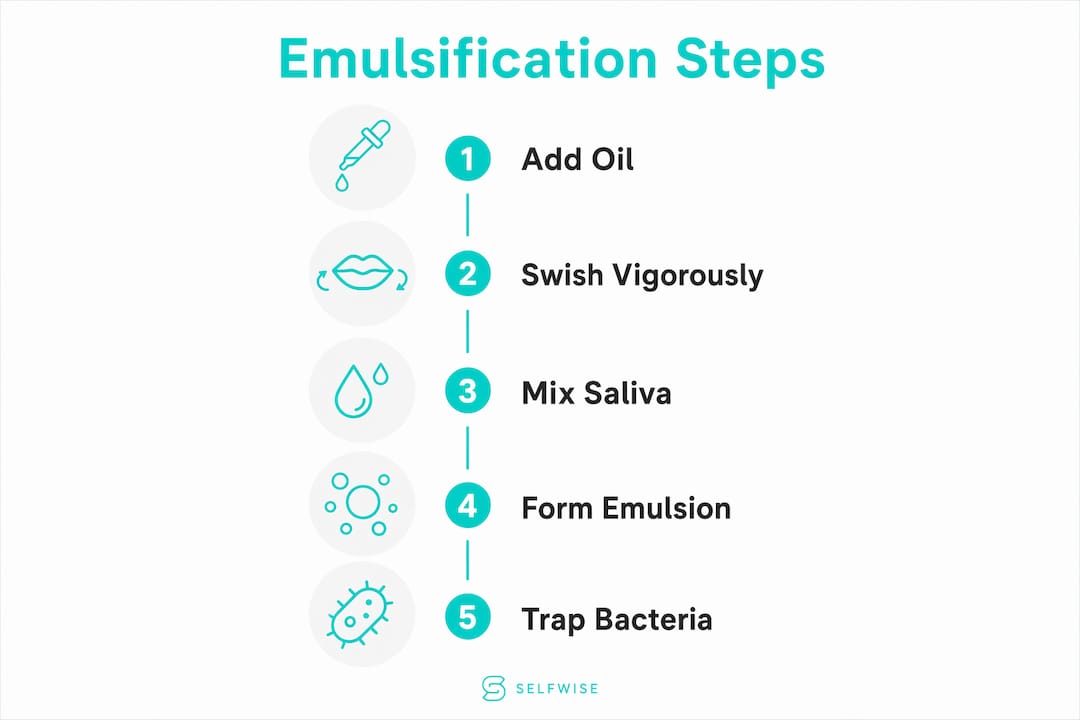
The mechanics are straightforward. You place a tablespoon of oil in your mouth and swish it vigorously. That swishing action is mechanical agitation, the same force that shakes a salad dressing bottle to temporarily mix oil and vinegar.

The agitation breaks the oil into microscopic droplets. Those droplets disperse through your saliva, creating the emulsion. As the emulsion moves around your mouth, the oil droplets contact bacteria, plaque, and debris on tooth surfaces and along the gumline. Hydrophobic bacterial membranes bind to the oil droplets. When you spit, those trapped microbes leave with the oil.
Key factors that affect how well emulsification works:
- Swishing force: Gentle rocking does little. Active, forceful swishing drives droplet formation and maximizes surface contact.
- Duration: Shorter sessions produce less emulsification. Most clinical protocols use 10–20 minutes.
- Oil volume: Too little oil limits the emulsion’s reach. One tablespoon is the standard starting point.
- Saliva production: Saliva is the water phase of the emulsion. Dry-mouth conditions reduce emulsification efficiency.
A common misconception is that oil pulling causes saponification, the chemical process that makes soap. True saponification requires alkali conditions, heat, and a sustained chemical reaction. None of those conditions exist in the human mouth. Oil pulling creates a temporary physical emulsion, not soap.
Pro Tip: Swish actively for the full duration. The emulsion becomes noticeably thinner and more liquid as saliva mixes in. That change in texture is a sign that emulsification is occurring and the oil has picked up debris.
What does the research say about emulsification and oral health?
Clinical evidence supports emulsification’s role in reducing oral bacteria and plaque, though the research base is still growing. Studies consistently show measurable improvements in oral health markers after oil pulling interventions.
Oil pulling disrupts bacterial biofilm adhesion and reduces Streptococcus mutans counts, the primary bacteria responsible for tooth decay. Virgin coconut oil is particularly effective because it contains lauric acid, a medium-chain fatty acid that disrupts the membranes of Gram-positive bacteria like S. mutans. The emulsification process delivers this fatty acid directly to bacterial surfaces.
| Outcome measured | Finding |
|---|---|
| Plaque reduction | Significant improvement in plaque indices over 7–45 days |
| S. mutans counts | Measurable drops after coconut oil pulling interventions |
| Gingival health | Improvements comparable to chlorhexidine mouthwash in some trials |
| Bacterial debris removal | Physical emulsification confirmed as primary removal mechanism |
Meta-analysis of randomized controlled trials reports improvements in gingival health indices from oil pulling, sometimes comparable to chlorhexidine mouthwash. That is a meaningful benchmark. Chlorhexidine is the clinical gold standard for chemical antimicrobial rinsing.
The evidence has real limits. Most trials are short-term, involve small sample sizes, and vary in methodology. The physical mechanism of emulsification is well-established, but the long-term clinical significance needs larger, better-controlled studies. The science supports oil pulling as a useful adjunct to standard oral care, not a replacement for it.
How does emulsification compare to other oral hygiene methods?
Emulsification is a mechanical cleaning process. That puts it in the same category as brushing and flossing, not chemical mouthwashes. Understanding that distinction helps you use oil pulling correctly.
Brushing physically dislodges plaque through abrasion. Flossing removes debris from between teeth through mechanical friction. Oil pulling’s emulsification physically traps and suspends bacteria and biofilm through oil-water mixing. All three methods work by physical removal, not by killing bacteria with chemicals.
Chemical mouthwashes, like those containing chlorhexidine or cetylpyridinium chloride, kill bacteria through direct antimicrobial action. Oil pulling acts primarily through mechanical agitation and emulsification rather than chemical antibacterial effects. Even plain water swishing removes some debris through physical action, though without the emulsification benefit that oil provides.
The practical takeaway is that oil pulling supplements your routine. It reaches areas that brushing misses, particularly along the gumline and between teeth, through the fluid movement of the emulsion. For a deeper look at how oil pulling compares to mouthwash, the differences in mechanism matter more than most people realize.
Pro Tip: Do your oil pulling before brushing, not after. You remove loosened bacteria and debris first, then brush away any residue. Reversing the order means brushing over an already-cleaned surface and potentially reintroducing debris.
One claim that does not hold up is that oil pulling removes systemic toxins from the bloodstream. The ‘toxin removal’ claim lacks scientific evidence. Emulsification removes oral bacteria and debris from the mouth. That is genuinely useful. Extending the claim to systemic detoxification goes well beyond what the mechanism can support.
Good oral hygiene practices combine multiple methods because no single technique covers every surface or every type of contamination. Oil pulling fits naturally into that framework.
Practical guidelines for maximizing emulsification benefits
Getting the most from oil pulling comes down to technique, oil choice, and consistency. These are the variables that directly affect how well emulsification occurs.
-
Choose the right oil. Coconut oil is the most researched option for oil pulling. Its lauric acid content adds an antimicrobial effect on top of the physical emulsification. Sesame oil has a long traditional history and clinical support. Both emulsify effectively with saliva during swishing.
-
Use one tablespoon. Too little oil limits the emulsion volume and reduces surface contact with oral tissues. Too much makes swishing uncomfortable and tires your jaw muscles before the session ends.
-
Swish for 10–20 minutes. This duration allows the emulsion to form fully and reach all oral surfaces. Starting with 5 minutes and building up is fine if 20 minutes feels too long at first.
-
Swish actively, not passively. Push and pull the oil through your teeth. Move it around the full mouth, including the back molars and along the gumline. Passive holding produces minimal emulsification.
-
Spit into a trash can, not the sink. Coconut oil solidifies below 76°F and can clog pipes over time.
-
Rinse with water after spitting. This removes any residual oil and expelled bacteria from oral surfaces before you brush.
-
Do not swallow the oil. The emulsion contains the bacteria and debris you just removed. Swallowing it defeats the purpose entirely.
A consistent morning oil pulling routine before breakfast and brushing gives you the best results. Morning saliva production is higher after sleep, which supports better emulsification from the first swish.
Key Takeaways
Emulsification in oil pulling is a physical process that traps oral bacteria in an oil-saliva emulsion, making it a legitimate mechanical cleaning method when used consistently alongside brushing and flossing.
| Point | Details |
|---|---|
| Emulsification is physical, not chemical | Oil and saliva mix through agitation to form a temporary emulsion with no chemical reaction. |
| Surface area drives bacteria removal | Breaking oil into droplets increases contact with bacteria and biofilm for physical trapping. |
| Coconut oil adds antimicrobial action | Lauric acid in coconut oil disrupts bacterial membranes, enhancing the emulsification benefit. |
| Duration and technique determine results | Active swishing for 10–20 minutes produces the most complete emulsification and debris removal. |
| Oil pulling supplements, not replaces, brushing | Emulsification reaches areas brushing misses but does not substitute for mechanical or chemical standard care. |
The part most people get wrong about oil pulling
People come to oil pulling with two very different misconceptions. The first group thinks it is pseudoscience with no mechanism. The second group thinks it is a full-body detox that pulls toxins from the blood through the mouth. Both are wrong, and the actual science sits in a more interesting place than either camp admits.
The emulsification mechanism is real and physically plausible. Oil does form a temporary emulsion with saliva. That emulsion does trap bacteria. Clinical trials do show reductions in S. mutans and plaque indices. This is not magic. It is fluid mechanics applied to oral hygiene.
What I find genuinely underappreciated is how well emulsification reaches the gumline. Brushing is abrasive and works best on flat tooth surfaces. The fluid movement of an oil emulsion gets into the sulcus, the small gap between tooth and gum, in a way that a toothbrush bristle cannot. For people with gum health concerns, that fluid access matters.
The limit I keep coming back to is evidence quality. The trials are short, the sample sizes are small, and the methodology varies enough that drawing firm conclusions is premature. Oil pulling is worth doing. The mechanism is sound. But treating it as a replacement for brushing, flossing, or professional dental care is a mistake the current evidence does not support.
My honest recommendation: use it as a first step in your morning routine, choose coconut oil for the added lauric acid benefit, and keep your expectations grounded in what physical emulsification can actually do. That is enough. It does not need to be more.
— Viktor
Selfwisebrand’s natural approach to oil pulling
Selfwisebrand builds products around the same principle that makes oil pulling work: simple ingredients with a clear mechanism. If you want to take your oral care further, the nano hydroxyapatite oil pulling mouthwash from Selfwisebrand is formulated to complement the emulsification process with enamel-supporting nano hydroxyapatite, fluoride-free and free of harsh chemicals.
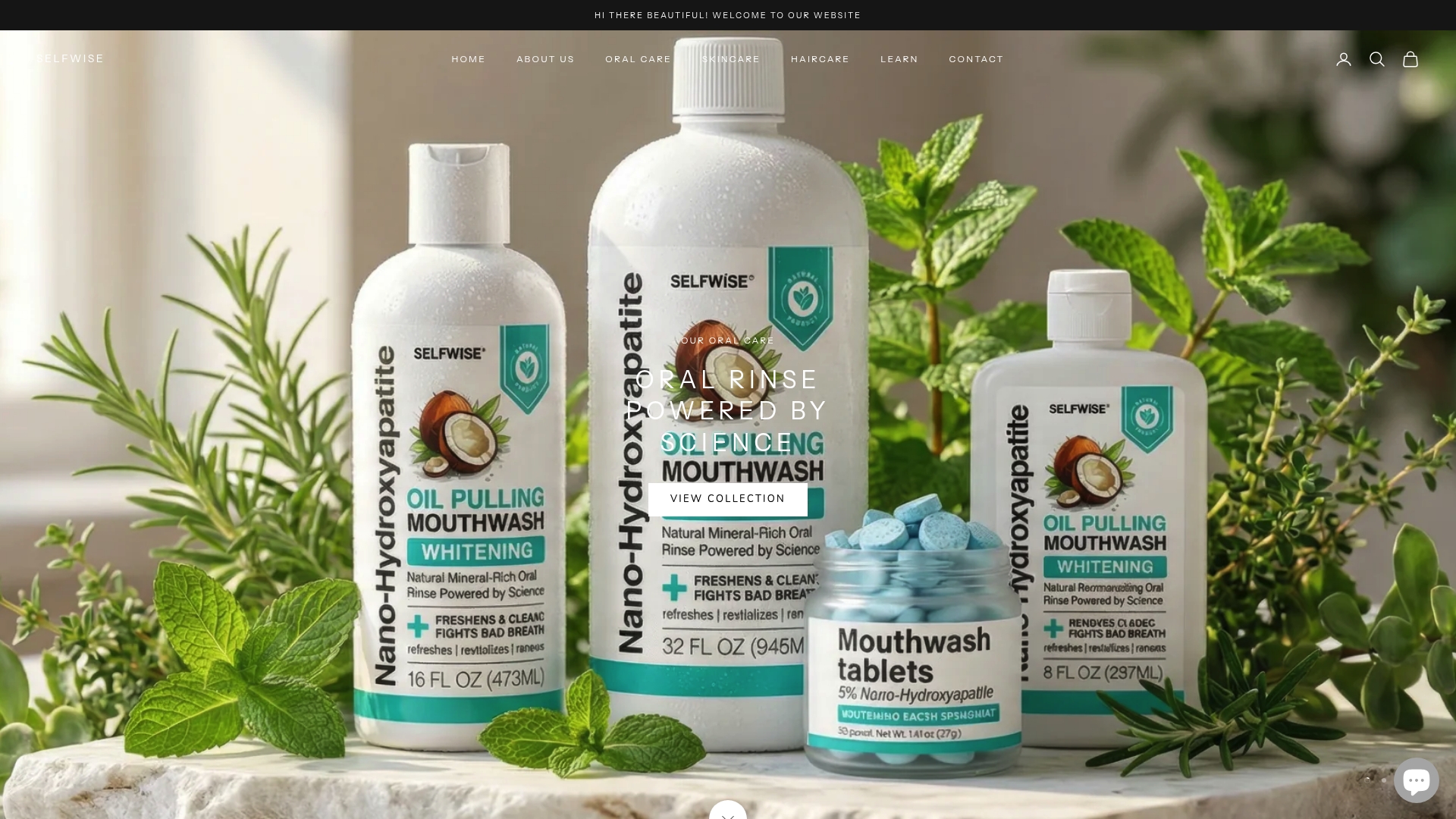
For people building a natural oral care routine, Selfwisebrand’s full natural mouthwash collection covers every step from oil pulling to remineralization. Every product uses ingredients backed by science and tradition, with nothing added that does not earn its place. Real ingredients. Real results.
FAQ
What is emulsification in oil pulling?
Emulsification in oil pulling is the physical mixing of oil and saliva during swishing that forms a milky emulsion. This emulsion traps oral bacteria and debris, which are then removed when you spit.
How long does it take for emulsification to occur during oil pulling?
Emulsification begins within the first minute of active swishing. Most clinical protocols recommend 10–20 minutes to allow the emulsion to fully form and reach all oral surfaces.
Does oil pulling actually kill bacteria through emulsification?
Emulsification physically traps and removes bacteria rather than killing them. Coconut oil adds a secondary antimicrobial effect through lauric acid, which disrupts bacterial membranes of Streptococcus mutans and similar pathogens.
Is emulsification in oil pulling the same as saponification?
No. Saponification requires alkali conditions and heat to form soap. Oil pulling produces only a temporary physical emulsion with no chemical transformation occurring in the mouth.
Which oil produces the best emulsification for oral health?
Coconut oil and sesame oil both emulsify effectively with saliva. Coconut oil is the most studied option and offers the added benefit of lauric acid, which disrupts the membranes of Gram-positive oral bacteria.