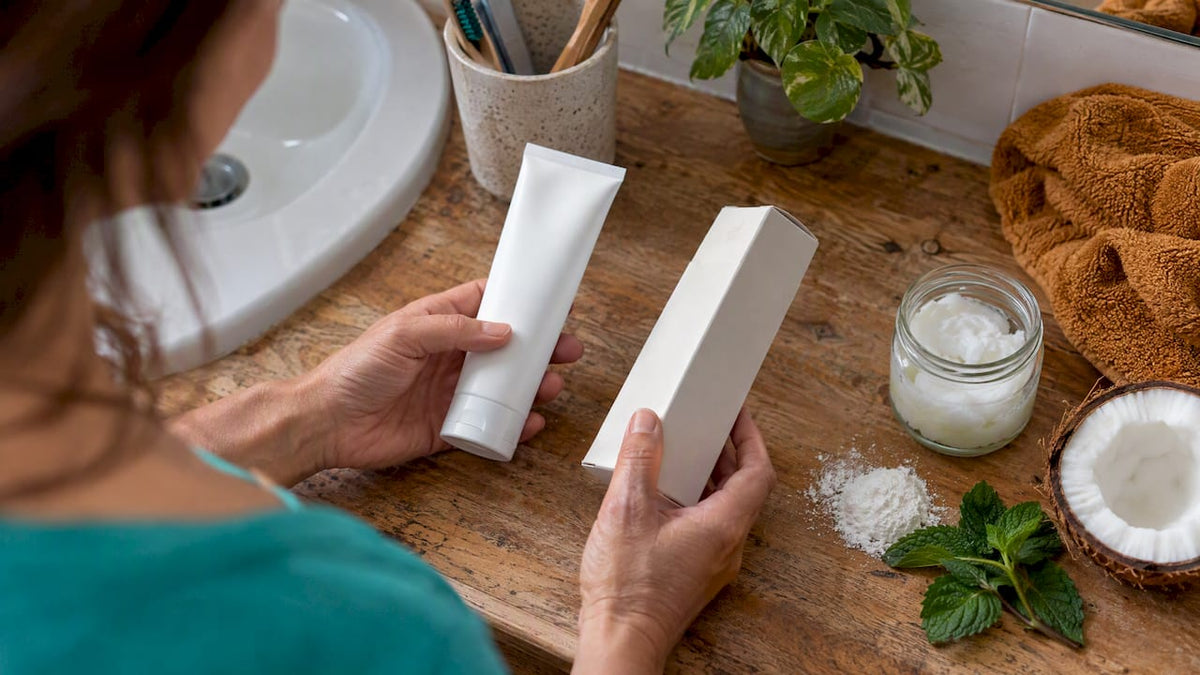
Fluoride Mouthwash Risks and Safer Options for Health Conscious People
When used as directed, meaning swish and spit rather than swallow, fluoride mouthwash is safe for most adults. The main risk sits with young children, whose swallowing reflexes are still developing and who can absorb enough fluoride during tooth formation to cause dental fluorosis. Follow label directions, keep the bottle away from small hands, and call Poison Control if a child swallows more than a rinse’s worth.
TL;DR:
- Fluoride mouthwash is safe for adults when used as directed, but children under 6 are at higher risk of fluorosis due to swallowing during tooth development.
- Most reported side effects, like staining, taste changes, and mucosal irritation, are mild and typically resolve within a few days.
- Large or repeated ingestion of mouthwash can cause toxicity symptoms such as nausea and vomiting, requiring immediate contact with Poison Control.
- People with kidney issues, pregnancy concerns, or fluoride sensitivities should exercise extra caution or consult a healthcare professional before use.
- Fluoride-free alternatives like oil pulling or xylitol rinses offer remineralization without ingestion risks and may suit those seeking to avoid fluoride altogether.
Table of Contents
- Common local and short-term side effects reported with fluoride mouthrinse
- Who faces higher risk from fluoride mouthwash
- Fluoride dose, ingestion risk, and what a toxic exposure looks like
- What the research actually shows about fluoride mouthrinse safety
- How to use fluoride mouthwash safely, and fluoride-free alternatives to consider
- When accidental ingestion or side effects call for medical help
- Contraindications and interactions with other dental products or medications
- Where Selfwise stands on fluoride mouthwash safety
- Try a fluoride-free routine built on simple, effective ingredients
- Sources
- FAQ
Common local and short-term side effects reported with fluoride mouthrinse
Most people who use fluoride mouthwash notice nothing beyond the product’s intended effect. When side effects do show up, they tend to be mild and local rather than systemic.
- Tooth staining, more often linked to chlorhexidine and other antimicrobial rinses than to fluoride itself
- Altered or metallic taste that fades after rinsing or eating
- Transient mucosal irritation, especially with alcohol-containing formulas
- Rare reports of mouth ulceration in sensitive individuals
A systematic review of adverse events tied to home mouthrinse use found that staining, taste changes, and mucosal irritation are the most frequently reported effects across formulations, but the review also flagged that reporting itself is inconsistent and many trials run for only a few weeks. If staining, soreness, or taste changes persist beyond a few days, or if you notice an open sore that doesn’t heal, that’s a reason to check in with a dentist rather than switch products on your own.
Who faces higher risk from fluoride mouthwash
Fluoride mouthwash isn’t equally risky for everyone. A few groups need to be more careful about exposure and supervision.
- Children under about 6 years old, whose enamel is still forming and who are more likely to swallow rinse reflexively
- Pregnant individuals, for whom avoiding ingestion is the sensible precaution even though topical rinse used correctly hasn’t been shown to harm a fetus
- People with chronic kidney disease, since slower fluoride clearance is a theoretical concern if rinse is swallowed regularly
- Anyone with a known fluoride sensitivity or history of oral irritation from mouthrinses
The American Dental Association advises against fluoride mouthrinse for children younger than 6 precisely because swallowing control isn’t reliable at that age, and mouthrinse is a concentrated topical product meant for spitting out, not drinking. For families navigating when a child is ready, our guide on starting kids’ mouthwash at age 6 walks through supervision and alcohol-free options in more detail.
Pro Tip: If you have kidney disease and use fluoride rinse daily, mention it at your next dental or nephrology visit so your clinician can weigh in on frequency.
Fluoride dose, ingestion risk, and what a toxic exposure looks like
Over-the-counter fluoride mouthrinses are formulated as topical products, which is why the instructions always say swish and spit. Daily-use rinses typically sit at a lower fluoride concentration than the higher-strength weekly rinses sometimes prescribed for cavity-prone patients, and both are designed to coat teeth briefly rather than be swallowed.
A small accidental swallow is rarely dangerous, but large ingestions can cause real toxicity. Poison Control explains that a small unintentional swallow of mouthwash is unlikely to cause serious harm in most people, while a large ingestion can produce nausea, vomiting, diarrhea, and more serious systemic effects that need medical attention. The toxicology principle here is simple: the dose makes the poison, so the amount swallowed matters far more than the fact that fluoride was involved at all.
If a large ingestion happens:
- Call Poison Control right away (in the United States, 1-800-222-1222)
- Offer milk or a calcium-containing food if a poison specialist advises it, since calcium can help limit fluoride absorption after ingestion
- Get emergency care immediately for repeated vomiting, tremors, or any sign of a serious reaction
- Never induce vomiting unless a poison control specialist or physician tells you to
Product labels are required to carry this emergency guidance. The FDA’s anticaries monograph mandates warnings like “keep out of reach of children” along with explicit directions to contact Poison Control if more than the recommended amount is swallowed.
What the research actually shows about fluoride mouthrinse safety
The evidence base for fluoride mouthrinse is stronger on benefits than on long-term side effects. A Cochrane-linked systematic review found that regular, supervised use of fluoride mouthrinse reduces cavities in children and adolescents, which is the main reason dentists recommend it for higher-risk patients. The same review noted that trials often report little detail on adverse effects or how well people tolerate the product over time.
That gap matters for anyone trying to judge long-term safety. The adverse-event review mentioned earlier called for longer trials and better reporting standards, since most existing studies run short and were not designed to catch rare or delayed effects. Public health summaries from the CDC confirm that dental fluorosis is a well-established consequence of excess fluoride ingestion during tooth development, while skeletal fluorosis from ordinary topical rinse use remains rare in places with typical fluoride exposure. In short, the fluorosis risk in children is well documented, but data on subtler, long-term effects from routine adult use is thinner than most people assume.
How to use fluoride mouthwash safely, and fluoride-free alternatives to consider
A short checklist covers most of the risk:
- Use only the amount printed on the label, typically a capful for adults
- Swish for the recommended time, then spit, never swallow
- Supervise any child using a fluoride rinse and skip it entirely under age 6
- Store the bottle somewhere children can’t reach it
- Stick to the labeled frequency rather than rinsing more often for a stronger effect
Pro Tip: Check the label for the fluoride concentration in ppm or percent, an age recommendation, and emergency contact instructions before you buy, not after.
Some people prefer to skip fluoride altogether, whether for a sensitive child, a personal preference, or simple peace of mind. Oil pulling, nano-hydroxyapatite rinses, and xylitol-based mouthwashes are common fluoride-free approaches that support remineralization and fresh breath without the ingestion concerns tied to fluoride. Our breakdown of xylitol paired with nano-hydroxyapatite covers how those ingredients work if you want to compare the approach to a fluoride rinse. If irritation from harsher actives like hydrogen peroxide is part of what’s pushing you to switch, our piece on hydrogen peroxide mouthwash risks is worth a look too.
When accidental ingestion or side effects call for medical help
Most swallowed mouthwash causes nothing worse than an upset stomach, but a few signs mean you shouldn’t wait it out at home.
- Repeated or severe vomiting, especially with visible blood
- Confusion, tremors, or any neurological symptom
- Trouble breathing or swelling of the face or throat
- Symptoms that don’t improve after calling Poison Control
Call Poison Control first for guidance on any concerning swallow, and go to an emergency department for severe symptoms. Persistent staining, ulcers, or taste changes that don’t resolve are a reason to see a dentist rather than an emergency room.
Contraindications and interactions with other dental products or medications
Fluoride mouthwash generally plays well with standard toothpaste and floss, but a few combinations deserve a second look. Layering a fluoride rinse right after brushing with a high-fluoride toothpaste can push total fluoride exposure higher than intended, particularly for children who are more likely to swallow small amounts of either product. Dentists sometimes advise separating fluoride toothpaste and fluoride rinse by time of day rather than using both back to back.
Combining fluoride rinse with chlorhexidine mouthwash is another common question. Some formulations can interact and reduce each other’s effectiveness or cause additional staining, so it’s worth checking with a dentist before running both in the same routine rather than assuming they layer neatly. People taking medications that affect kidney function, or managing a condition like chronic kidney disease, should mention regular fluoride rinse use to their prescriber, since reduced clearance is a theoretical factor even though topical rinse used correctly delivers a small dose. Anyone with a diagnosed fluoride allergy or a history of oral tissue reactions to rinses should avoid fluoride mouthwash entirely and ask a dentist for a fluoride-free option instead. If you’re managing multiple oral care products and want a simpler list of ingredients to watch for, our guide to oral care ingredients to avoid covers common irritants beyond fluoride.

Where Selfwise stands on fluoride mouthwash safety
We build our rinses around oil pulling, nano-hydroxyapatite, and xylitol because we’d rather help people avoid the ingestion question altogether. Whatever you choose, follow the label, supervise children closely, and let a dentist weigh in on anything that feels off.
— Viktor
Try a fluoride-free routine built on simple, effective ingredients
If reading through the swallowing warnings and label fine print has you leaning toward a fluoride-free routine, you’re not alone. Oral care products using oil pulling, nano-hydroxyapatite, and xylitol offer remineralization support and fresh breath without tracking milligrams per kilogram or worrying about a child’s swallow reflex. Browse our fluoride-free collection or check out the full oral care lineup to find a rinse that fits your routine.
This article is general information, not a substitute for advice from a qualified doctor. Consult a qualified healthcare professional about your own circumstances before acting on anything here.
Sources
- Fluoride: Topical and Systemic Supplements | American Dental Association
- Mouthwash: Swish and spit | Poison Control
- Adverse events associated with home use of mouthrinses: a systematic review
- OTC Monograph M021 — Anticaries Drug Products for OTC Human Use (FDA)
FAQ
Is mouthwash with fluoride safe?
Yes, for most adults and older children, fluoride mouthwash is safe when used exactly as labeled, meaning swished and spat out rather than swallowed. The main safety concern applies to young children, who risk dental fluorosis if they swallow fluoride rinse repeatedly during tooth development, according to ADA guidance.
Do dentists recommend fluoride mouthwash?
Dentists often recommend fluoride mouthrinse for patients at higher risk of cavities, since supervised regular use has been shown to reduce decay in children and adolescents in systematic reviews. It isn’t recommended for children under 6, who should stick to brushing under supervision instead.
Is it safe to use fluoride mouthwash daily?
Daily use is safe for most people when the product is a daily-strength rinse used at the labeled frequency and swallowed amounts stay minimal. Using it more often than directed, or layering it heavily with fluoride toothpaste, can push fluoride exposure higher than intended, so sticking to the label matters.
Which organ is affected by fluoride?
Excess fluoride ingestion primarily affects developing teeth, causing dental fluorosis, and can affect bone over long periods of very high exposure, according to CDC summaries. Large acute ingestions can also cause gastrointestinal symptoms like nausea and vomiting, per Poison Control.
What should I do if a child swallows fluoride mouthwash?
Call Poison Control right away, in the United States at 1-800-222-1222, and follow their guidance on whether milk or a calcium-containing food is appropriate. Seek emergency care immediately if the child has repeated vomiting, tremors, or any severe symptoms.