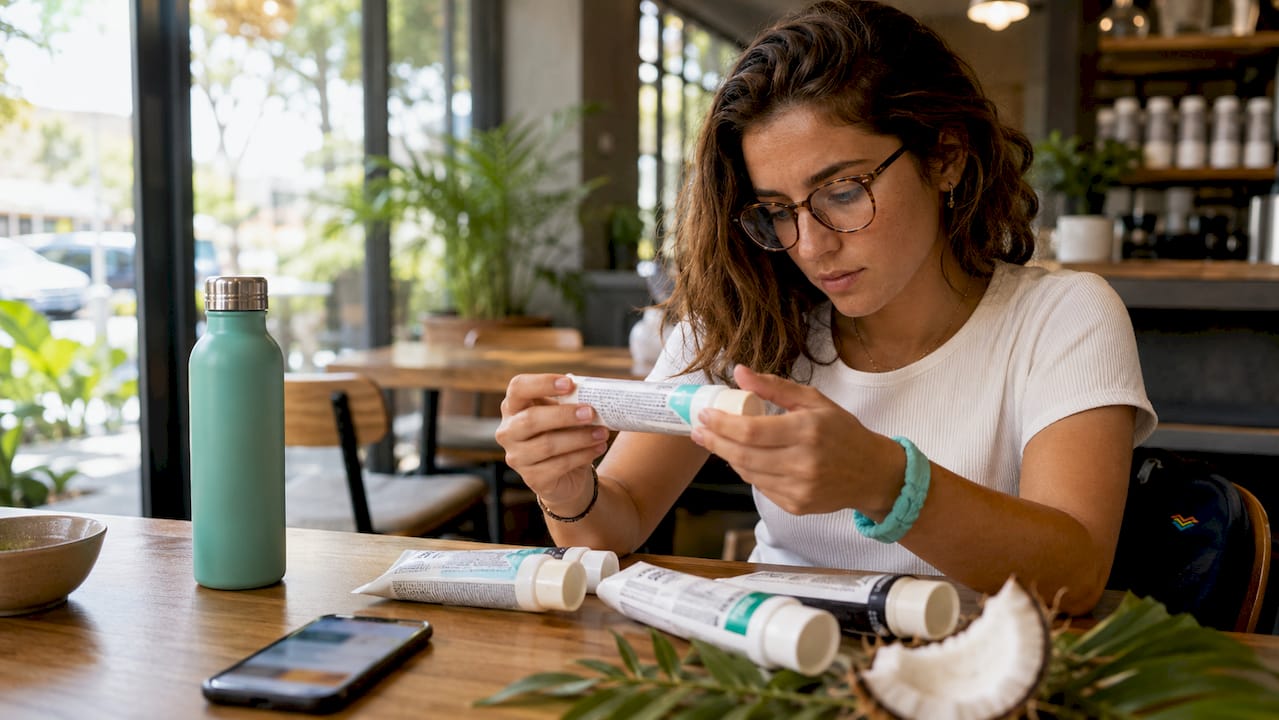
Oral Care Ingredients to Avoid for a Safer Routine
Some oral care ingredients cause mouth irritation, allergic reactions, or raise legitimate health concerns backed by regulatory action. The term “ingredient safety” in dentistry refers to the practice of identifying and eliminating compounds that disrupt oral tissue health, trigger sensitivity, or carry systemic risk. Knowing which dental care ingredients to skip puts you in control of your own oral hygiene. Products from major retailers routinely contain sodium lauryl sulfate (SLS), triclosan, and synthetic flavoring agents that the American Dental Association (ADA) and international regulators have flagged for various reasons. This guide breaks down the specific oral care ingredients to avoid, explains the science behind each concern, and points you toward safer alternatives.
1. Sodium lauryl sulfate: the foaming agent linked to irritation
Sodium lauryl sulfate (SLS) is the detergent responsible for the foam in most conventional toothpastes. SLS causes irritation and increases membrane permeability in gingival cells, meaning it makes oral tissues more vulnerable to other irritants. People who experience frequent canker sores often see a dramatic reduction after switching to SLS-free formulas.
SLS is a surfactant, not a cleaning agent. It contributes nothing to cavity prevention or plaque removal. Its only function is to create the foam that consumers associate with “clean.” If you have a history of mouth ulcers, cheilitis, or general oral sensitivity, SLS is the first ingredient to eliminate. Look for it under the name “sodium dodecyl sulfate” on some labels.

Pro Tip: Switch to an SLS-free toothpaste for 30 days and track canker sore frequency. Most sensitive users notice a measurable difference within two weeks.
2. Essential oil flavoring agents hidden under “flavors”
Peppermint, spearmint, and cinnamon are among the most common oral allergens in toothpaste and mouthwash. The problem is that manufacturers rarely list them by name. Instead, they appear under the catch-all term “flavors,” which gives no indication of which specific compounds are present. This is one of the most significant unsafe mouthwash ingredients issues for people with contact sensitivities.
The ADA specifically warns that “natural flavor” does not guarantee allergen-free status. Essential oil flavorings cause contact dermatitis, perioral dermatitis, and stomatitis in sensitive individuals. Clinicians who treat toothpaste hypersensitivity systematically remove suspected irritants and reintroduce them one at a time to confirm the trigger. If you develop redness or swelling around your mouth after brushing, flavoring agents are the first suspect.
3. Triclosan: the antimicrobial with a regulatory red flag
Triclosan is an antimicrobial agent once added to toothpaste to reduce gingivitis. Triclosan is banned in South Korea for toothpaste use and restricted in several other markets due to safety concerns, including potential disruption of microbial balance and links to antibiotic resistance. The U.S. FDA banned triclosan from hand soaps in 2016, though it remained in some toothpaste formulations longer.
The concern with triclosan goes beyond direct toxicity. Repeated low-level exposure may contribute to antibiotic-resistant bacterial strains, which is a public health issue that extends well beyond your bathroom. For a deeper look at how restricted substances like triclosan affect your health, the Selfwisebrand guide on endocrine disruptors in oral care covers the regulatory context in detail. Avoiding triclosan entirely is the safest position given the current evidence.
4. Fluoride: beneficial in the right dose, risky in excess
Fluoride is the most debated ingredient in oral care. The ADA and FDA both support its use for cavity prevention, and the science on that benefit is solid. However, fluoride toxicity from excessive exposure is a real concern, particularly for young children who swallow toothpaste. Dental fluorosis, which causes white spots or streaking on enamel, results from fluoride overexposure during tooth development.
“The risk with fluoride is not the ingredient itself but the dose and the population using it. Children under six should use only a rice-grain amount of fluoride toothpaste, and fluoride-free alternatives like nano hydroxyapatite are now clinically supported for enamel remineralization.” — ADA guidance summary
For adults with healthy enamel and no swallowing concerns, standard fluoride toothpaste remains effective. For parents of young children or anyone seeking a fluoride-free option, nano hydroxyapatite provides comparable remineralization without the toxicity risk at higher doses.
5. Titanium dioxide: the whitening agent under scrutiny
Titanium dioxide is added to toothpaste purely for cosmetic whitening effect. It makes the paste look bright white. Titanium dioxide safety is actively debated, with the EU banning it as a food additive while allowing it in cosmetics. The concern centers on nanoparticle absorption, particularly in children who are more likely to ingest toothpaste.
The FDA currently deems titanium dioxide safe at levels used in toothpaste, but the precautionary principle applies here. It adds no oral health benefit whatsoever. If you are choosing between two otherwise identical formulas and one contains titanium dioxide, the one without it is the better choice. This is especially true for children’s products.
6. Propylene glycol and PEG compounds
Propylene glycol is a humectant used to keep toothpaste moist and spreadable. PEG compounds (polyethylene glycols) serve as thickeners and surfactants. Both are synthetic chemical additives that have shown irritation potential in oral tissues, particularly in people with existing sensitivity. Variation in surfactant systems directly affects how biocompatible a toothpaste formula is with oral tissue.
Neither propylene glycol nor PEG compounds contribute to cleaning, whitening, or cavity prevention. They are functional excipients, meaning they exist to improve the texture and shelf life of the product. Formulas built around natural humectants like glycerin or aloe vera achieve the same texture without the irritation risk.
7. Parabens and cocamidopropyl betaine
Parabens are preservatives used to extend shelf life in toothpaste and mouthwash. Methylparaben and propylparaben are the most common. They are known endocrine disruptors at higher exposure levels, and while toothpaste concentrations are low, daily use adds up over time. People researching toothpaste allergies frequently identify parabens as a contributing factor in recurring oral irritation.
Cocamidopropyl betaine is a surfactant derived from coconut oil but heavily processed. It is a recognized contact allergen listed by the American Contact Dermatitis Society. It appears in “natural” toothpastes more often than consumers realize, which is why the “natural” label alone is not sufficient. Always read the full ingredient list.
8. How to read labels and identify hidden harmful ingredients
Reading a toothpaste label requires knowing the aliases. Here is a practical approach:
- Search for “SLS” under its full name: sodium lauryl sulfate or sodium dodecyl sulfate.
- Treat “flavors” or “natural flavors” as a flag. Contact the manufacturer to confirm whether essential oils are present.
- Scan for any ingredient ending in “-paraben” (methylparaben, propylparaben, butylparaben).
- Look for PEG followed by a number (PEG-8, PEG-40) as a signal of synthetic surfactant use.
- Check for triclosan, titanium dioxide (CI 77891), and propylene glycol by their INCI names.
Label ambiguity is one of the most persistent challenges for consumers trying to avoid allergens. Certifications like the NSF/ANSI 305 standard for personal care products or the EWG Verified mark provide a useful shortcut, but they do not replace reading the actual ingredient list.
Pro Tip: Use the EWG Skin Deep database to look up any toothpaste or mouthwash ingredient by name. It cross-references safety data from multiple regulatory bodies in seconds.
9. Safer natural alternatives that actually work
The good news is that effective, gentle alternatives exist for every problematic ingredient listed above. Natural alternatives like baking soda, coconut oil, nano hydroxyapatite, and xylitol provide remineralization and antimicrobial benefits with far fewer irritants.
| Harmful ingredient | Safer alternative | Key benefit |
|---|---|---|
| SLS (foaming agent) | Coco glucoside or no surfactant | Reduces canker sores and tissue irritation |
| Fluoride (for sensitive users) | Nano hydroxyapatite | Enamel remineralization without toxicity risk |
| Synthetic flavors | Essential oil-free formulas | Eliminates contact allergen exposure |
| Titanium dioxide | No whitening agent needed | Removes unnecessary cosmetic additive |
| Parabens | Vitamin E or rosemary extract | Natural preservation without endocrine disruption |
Xylitol deserves special mention. It actively inhibits Streptococcus mutans, the primary cavity-causing bacterium, by blocking its ability to metabolize sugar. Baking soda gently polishes enamel without abrasive damage. Coconut oil, used in oil pulling, reduces harmful oral bacteria through mechanical and antimicrobial action. These are not compromises. They are upgrades for anyone with sensitivity concerns.
For people with sensitive skin and oral tissues, the connection between gentle personal care products and reduced irritation extends beyond just toothpaste. The same principles apply across your entire routine.
Key takeaways
Avoiding specific oral care ingredients reduces irritation, allergic reactions, and long-term chemical exposure more effectively than switching to any single “natural” product.
| Point | Details |
|---|---|
| SLS is the top irritant to remove | Eliminating SLS reduces canker sores and tissue sensitivity for most users within weeks. |
| “Flavors” can hide allergens | Essential oils like peppermint and cinnamon cause stomatitis and are rarely named on labels. |
| Triclosan carries regulatory risk | Banned in South Korea and restricted elsewhere due to antimicrobial resistance concerns. |
| Nano hydroxyapatite replaces fluoride | Clinically supported for enamel remineralization without fluoride toxicity risk at higher doses. |
| Label reading is non-negotiable | Use INCI names and databases like EWG Skin Deep to verify every ingredient before purchasing. |
What I’ve learned from years of watching people switch their oral care routine
Most people approach ingredient safety as a binary: either a product is “natural and safe” or it is “chemical and dangerous.” That framing causes more confusion than it resolves. Baking soda is a chemical. Cinnamon essential oil is natural. Neither label tells you whether a product will irritate your mouth.
What I have found actually works is the elimination approach. Start by removing one suspected irritant at a time, beginning with SLS, then synthetic flavors. Individualized ingredient avoidance consistently outperforms blanket product swaps because oral sensitivity varies enormously between people. Someone with no history of stomatitis may tolerate peppermint oil without any issue. Someone with recurrent mouth ulcers may find that SLS alone is the culprit.
The other thing I would push back on is the idea that fluoride-free automatically means safer for everyone. For adults with active cavity risk and no sensitivity issues, fluoride remains a well-supported tool. The goal is not to avoid every conventional ingredient on principle. The goal is to identify what your mouth specifically reacts to and build a routine around that. Nano hydroxyapatite gives you a credible fluoride alternative when you need one, not a mandatory replacement.
— Viktor
Build a cleaner oral care routine with Selfwisebrand
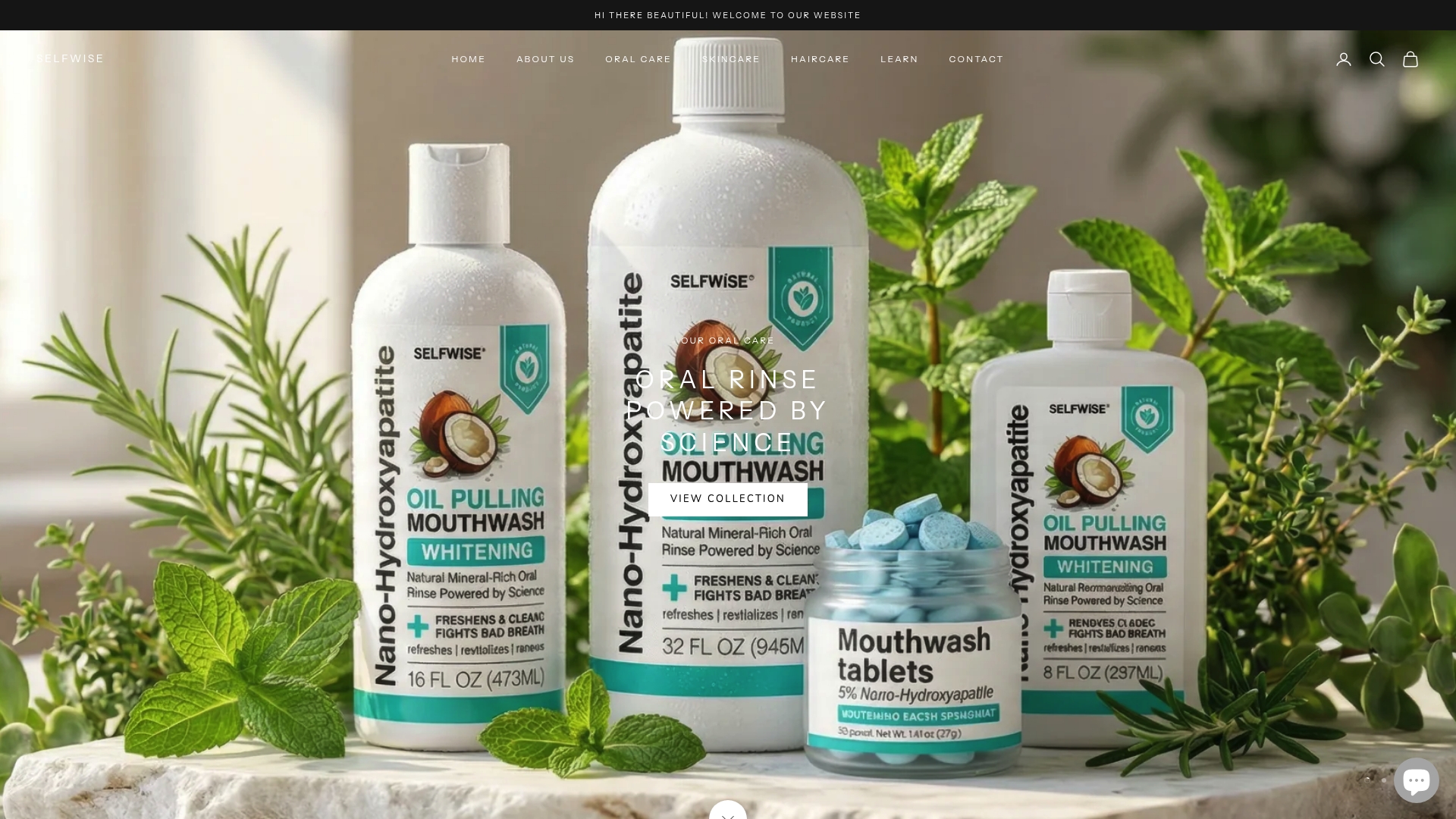
Selfwisebrand formulates every product around the principle that your mouth should not be a testing ground for unnecessary chemicals. The fluoride-free collection covers toothpaste alternatives and mouthwash built with nano hydroxyapatite and xylitol. These ingredients remineralize enamel and inhibit cavity-causing bacteria without SLS, synthetic flavors, parabens, or triclosan. For anyone dealing with oral sensitivity, the nano hydroxyapatite mouthwash tablets offer a zero-waste, gentle daily rinse that supports enamel without the chemical additives found in most conventional mouthwashes. Simple ingredients. Real results.
FAQ
What are the most common toxic ingredients in toothpaste?
Sodium lauryl sulfate, triclosan, synthetic flavoring agents, parabens, and titanium dioxide are the most frequently flagged toxic ingredients in toothpaste. SLS and synthetic flavors cause the most reported cases of oral irritation and allergic reactions.
Is SLS in toothpaste dangerous?
SLS is not acutely toxic but increases membrane permeability in oral tissues and is directly linked to canker sore frequency in sensitive individuals. Switching to an SLS-free formula is the most evidence-backed step for reducing oral irritation.
What unsafe mouthwash ingredients should I watch for?
Alcohol (ethanol), synthetic flavors containing essential oils, and triclosan are the primary unsafe mouthwash ingredients for sensitive users. Alcohol-based mouthwashes dry out oral tissues and can worsen sensitivity over time.
Is nano hydroxyapatite a safe fluoride alternative?
Nano hydroxyapatite is a biocompatible, calcium-based mineral that supports enamel remineralization without the toxicity concerns associated with fluoride overexposure. It is widely used in Japan and increasingly recognized by Western dental researchers as a clinically effective option.
How do I know if “natural flavor” in toothpaste contains allergens?
The ADA confirms that “natural flavor” can mask essential oils like peppermint, spearmint, and cinnamon, all of which are documented oral allergens. Contact the manufacturer directly or choose products that explicitly state “essential oil-free” on the label.