Swap Fluoride Safely: Nano Hydroxyapatite and Toothpaste Alternatives
Yes, there are real alternatives to conventional toothpaste, but most work best as supplements rather than replacements. Baking soda, oil pulling, activated charcoal, hydrogen peroxide rinses, and brushing with plain water all have a place. Nano-hydroxyapatite has the strongest clinical backing as a fluoride-free option for people who want to fully swap out traditional paste. For most people at normal cavity risk, the safest move is layering these in rather than dropping fluoride toothpaste cold.
TL;DR:
- Nano-hydroxyapatite has the strongest clinical evidence for fluoride-free remineralization and can be safely used as a full-time replacement or supplement.
- Oil pulling reduces bacterial counts but does not significantly improve plaque removal or gum health compared to brushing with toothpaste.
- Abrasive alternatives like baking soda and charcoal can damage enamel if used excessively, especially in people with thin enamel or dental work.
- Brushing alone, even without toothpaste, is effective in removing plaque due to the mechanical action of the brush, with no significant difference compared to using dentifrices.
- Most alternatives should be used in moderation and layered with remineralizing products, with professional advice recommended for those at high cavity or gum disease risk.
Table of Contents
- The Main Toothpaste Alternatives, Explained
- What the Research Actually Shows
- How to Try a Toothpaste Alternative Without Wrecking Your Enamel
- When These Alternatives Aren’t Enough
- Why Selfwisebrand Leans on Evidence, Not Trends
- How Taste and Texture Actually Compare
- What Toothpaste Alternatives Do for Gum Health
- The Environmental Case for Skipping Conventional Toothpaste
- Natural Herbal Alternatives Worth Knowing About
- Do DIY Toothpaste Recipes Actually Work?
- What This Actually Means for Your Routine
- A Productized Way to Try the Science-Backed Options
- Sources
- FAQ
The Main Toothpaste Alternatives, Explained
Every alternative on this list does something different. Some clean, some whiten, some just freshen breath while leaving the real cavity-fighting work undone. Here’s what each one actually does once you get past the marketing.
- Baking soda: Mildly abrasive sodium bicarbonate that lifts surface stains and neutralizes acid in the mouth. A pinch on a wet brush works, but daily heavy use over months can wear down enamel, especially if you scrub hard.
- Oil pulling (coconut or sesame): Swishing oil for several minutes is an old practice with a modern following. It does measurably lower bacterial counts in saliva, but it hasn’t shown a consistent benefit for plaque or gum inflammation in controlled research.
- Activated charcoal: Marketed hard for whitening, but the abrasive grit that lifts stains also scratches enamel and can wear away at existing dental work. It doesn’t remineralize anything, and stains between the teeth if used carelessly.
- Brushing without any paste: Sounds like it wouldn’t work, but the toothbrush bristles themselves do most of the plaque removal. A clinical trial comparing brushing with several dentifrices against brushing without any paste at all found no significant difference in plaque control between the two.
- Hydrogen peroxide rinses: A diluted rinse can help with minor gum inflammation and bad breath short term, but it’s not a cleaning agent for plaque and carries real risks if used at the wrong concentration.
- Nano-hydroxyapatite (nano-HAP): A mineral that mimics the natural structure of tooth enamel. It’s the one alternative on this list with genuine remineralizing evidence behind it, which is why it shows up in natural toothpaste options marketed as fluoride-free.
A quick note on homemade toothpaste recipes: most blend baking soda, coconut oil, and sometimes charcoal or essential oils. They can feel satisfying to make, but the abrasive ratios are rarely tested, and “natural” doesn’t mean “gentle on enamel.” Treat DIY toothpaste alternatives as an occasional experiment, not a daily habit, unless you know exactly how abrasive your mix is.
What the Research Actually Shows
The evidence on these alternatives is uneven, and that unevenness matters more than any single ingredient claim.
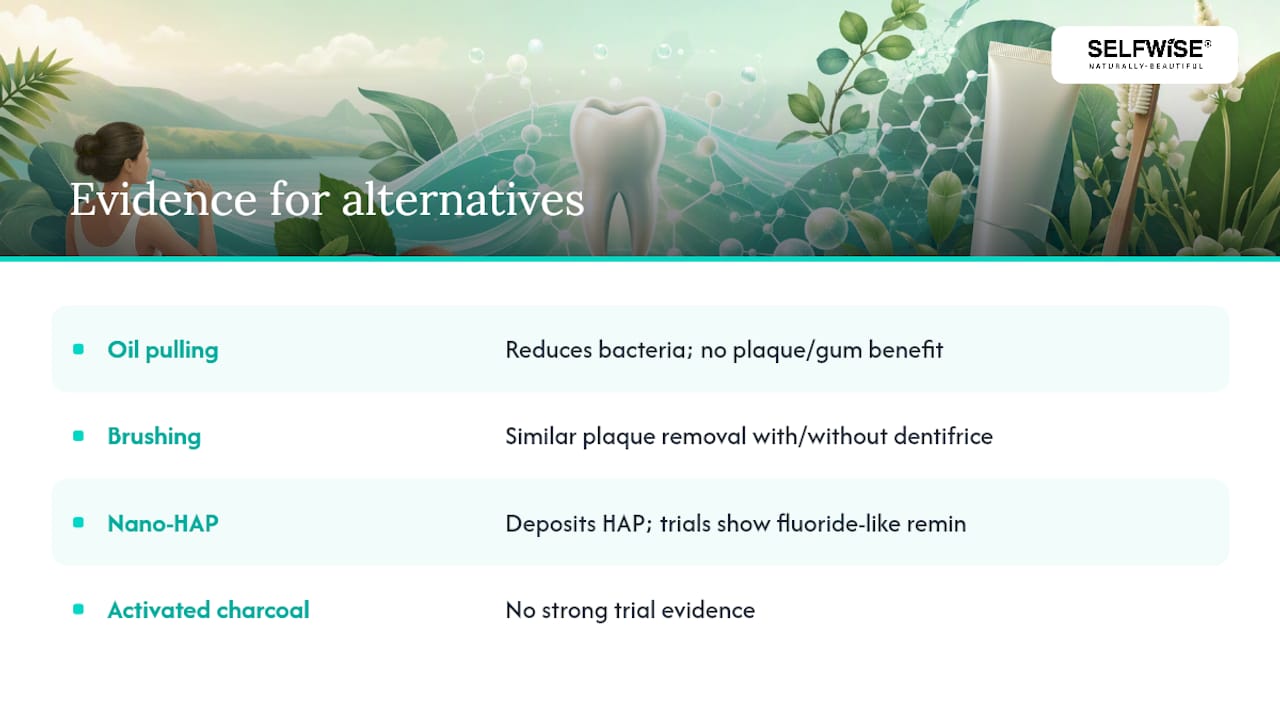
Oil pulling has been studied more than people realize. A meta-analysis of nine randomized controlled trials found that oil pulling reduces salivary bacterial colony counts but showed no significant difference in plaque index or gingival index compared with control groups. That’s a real effect on bacteria, just not one that translates into cleaner teeth or healthier gums in the studies reviewed. A separate review of oil-pulling trials flagged another problem: the studies vary widely in quality and duration, which makes it hard to say how strong the bacterial-reduction effect really is outside a lab setting.
Brushing mechanics tell a similar story. A systematic review examining whether dentifrice use helps remove plaque concluded that toothbrushing with or without dentifrice removes similar amounts of supragingival plaque. Toothpaste’s main job isn’t scrubbing power. It’s delivering fluoride and other therapeutic agents to the tooth surface.
Nano-hydroxyapatite is the outlier with genuinely encouraging data. A narrative review of the evidence found that hydroxyapatite toothpastes deposit HAP directly onto enamel, and some trials show remineralization results on par with fluoride for specific measures. Activated charcoal and most homemade recipes, by contrast, simply don’t have that kind of trial data behind them.
How to Try a Toothpaste Alternative Without Wrecking Your Enamel
Every one of these alternatives has a “right amount.” Here’s how to keep experimenting without doing damage.
- Baking soda: Use a small pinch, no more than a few times a week. Skip it entirely if you already have thin enamel or a lot of dental work.
- Oil pulling: Start with a few minutes of coconut or sesame oil, potentially increasing the duration if you continue the practice. Spit into the trash, never the sink. It’s a supplement to brushing, not a substitute for it.
- Activated charcoal: Use it once or twice a week at most, and never if you have veneers, crowns, or visible enamel wear.
- Hydrogen peroxide rinse: Dilute a 3% solution roughly 1:1 with water, swish briefly, and don’t swallow. This is a short-term fix, not a daily habit.
- Nano-HAP products: Use as directed, just like you would a regular paste, twice daily. This is the one alternative built to be a full-time replacement rather than an occasional add-on.
Pro Tip: If you’re experimenting with an abrasive option like baking soda or charcoal, alternate it with a remineralizing product to help offset any mineral loss, and pay attention to sensitivity. Sudden tooth pain or white spots are your enamel asking you to back off.
If you notice bleeding gums, new sensitivity, or visible white or brown spots after switching routines, stop and see a dentist before continuing.
When These Alternatives Aren’t Enough
Abrasive options like baking soda and charcoal carry real enamel-wear risk with frequent use, and once enamel wears down, it doesn’t grow back. Hydrogen peroxide rinses can irritate the soft tissue in your mouth if left undiluted, and swallowing concentrated solutions is genuinely dangerous. Oil pulling’s benefits are real but limited, so it should never be your only oral hygiene practice, and always spit oil into the trash to avoid clogging pipes over time.
Some groups need extra caution. Young children face a fluorosis-versus-cavity tradeoff that’s worth discussing with a pediatric dentist rather than deciding alone. People at high risk for cavities, orthodontic patients, and anyone with chronic dry mouth should talk to a dentist before dropping fluoride toothpaste altogether. The ADA’s position is direct: there’s no reliable evidence to recommend oil pulling as a substitute for brushing and flossing.
Why Selfwisebrand Leans on Evidence, Not Trends
We built Selfwisebrand around the idea that “natural” and “proven” shouldn’t be separate categories. Nano-hydroxyapatite and xylitol made the cut because the research backs them, not because they’re trendy. We’re cautious about overstating what any ingredient does, and we treat traditional practices like oil pulling as a supplement worth doing well rather than a miracle cure. That’s the whole point of pairing tradition with evidence instead of picking one over the other.
— Viktor
How Taste and Texture Actually Compare
Texture is where most people quit an alternative before giving it a fair shot. Baking soda has a gritty, salty mouthfeel that some people genuinely enjoy and others find abrasive on the tongue within seconds. It foams almost nothing on its own, which throws people used to the sudsy feel of conventional paste.
Oil pulling has the steepest learning curve. Coconut oil starts solid and melts into a thin liquid that thins further as you swish, and the first few sessions can trigger a gag reflex simply from the sensation of oil coating the mouth. Sesame oil has a heavier, more savory taste that some find harder to tolerate than coconut’s mild sweetness.
Activated charcoal tastes like almost nothing, which is part of its appeal, but the texture is chalky and turns your saliva black for the duration, which understandably puts some people off.
Nano-hydroxyapatite pastes and rinses tend to feel closest to a conventional paste. Most formulations include a mild flavor and a smooth, non-gritty texture since HAP particles are engineered to be fine rather than abrasive. That similarity to what people already know is one reason it’s easier to stick with long term than an oil-pulling routine or a charcoal scrub.
What Toothpaste Alternatives Do for Gum Health
Gum health depends more on plaque removal than on any single ingredient, which is why brushing technique tends to matter more than the product in your hand. Oil pulling’s own research bears this out: reduced bacterial counts in saliva didn’t translate into a measurable drop in gingival index scores in the meta-analysis of nine trials covering the practice. Fewer bacteria floating in saliva is not the same as less inflammation at the gumline.
Abrasive alternatives can actively work against gum health if used aggressively. Scrubbing with baking soda or charcoal along the gumline can cause recession over time, exposing root surfaces that are more sensitive and more prone to decay. Hydrogen peroxide rinses, used at the wrong strength or too often, can irritate gum tissue rather than help it.
Nano-hydroxyapatite doesn’t have gum-specific trial data as strong as its enamel remineralization evidence, but its low abrasiveness means it’s not adding mechanical stress to already inflamed tissue, which matters for anyone managing early gum disease. Xylitol, often paired with HAP in rinses, has a separate track record of reducing the bacteria linked to both cavities and gum inflammation. If gum health is your main concern, the honest answer is that consistent brushing technique and flossing outperform any single toothpaste swap, and that’s true whether you’re using conventional paste or an alternative.
The Environmental Case for Skipping Conventional Toothpaste
Most toothpaste tubes are made from mixed plastics and foil laminate that most municipal recycling programs can’t process, so they end up in landfill by default. Switching to eco-friendly oral care options changes that equation in a few concrete ways.
Mouthwash tablets and powders, including nano-HAP tablet formats, typically ship in glass or recyclable packaging instead of a laminate tube, cutting down on the mixed-material waste that recycling facilities can’t sort. Oil pulling requires no packaging waste beyond the oil bottle itself, which is often glass and genuinely recyclable. Baking soda bought in bulk cardboard boxes avoids the tube problem entirely, though it’s worth checking that any added ingredients don’t reintroduce plastic packaging.
The bigger environmental factor is often overlooked: toothpaste tubes are typically discarded every one to three months per household, while a bulk box of baking soda or a bottle of oil pulling mouthwash can last considerably longer per use. Fewer discarded containers over a year adds up, especially across a household with multiple people brushing twice daily. None of these swaps eliminates packaging waste completely, but each one trims it compared to a squeeze tube that’s rarely recyclable.
Natural Herbal Alternatives Worth Knowing About
Beyond the mainstream list, several herbal ingredients show up repeatedly in natural oral care formulations for good reason. Clove has been used for centuries as a topical numbing agent for tooth pain, and its active compound, eugenol, has mild antibacterial properties. Neem, common in traditional Ayurvedic oral care, has a bitter taste but a long history of use for gum health in parts of South Asia.
Myrrh extract shows up in some natural mouth rinses for its astringent effect on gum tissue, and peppermint and tea tree oil are common flavoring and antibacterial additions to natural formulations, though tea tree oil should never be swallowed. None of these herbal options have the kind of large-scale trial evidence behind them that nano-hydroxyapatite does, so think of them as flavor and comfort additions layered onto a solid brushing routine rather than stand-ins for it.
The appeal of herbal alternatives is largely about avoiding synthetic additives and strong artificial flavoring, not about outperforming fluoride or HAP on cavity prevention. If you’re drawn to a natural toothpaste option specifically for the ingredient list, herbal additions are a reasonable way to get there, as long as the core cleaning and remineralizing job is still being handled by something with actual evidence behind it.
Do DIY Toothpaste Recipes Actually Work?
The most common homemade blend, coconut oil, baking soda, and a few drops of essential oil, does have some functional logic behind it. Coconut oil carries mild antibacterial properties, baking soda handles light abrasive cleaning, and the oil helps the paste hold together. The problem isn’t the concept. It’s the lack of quality control.
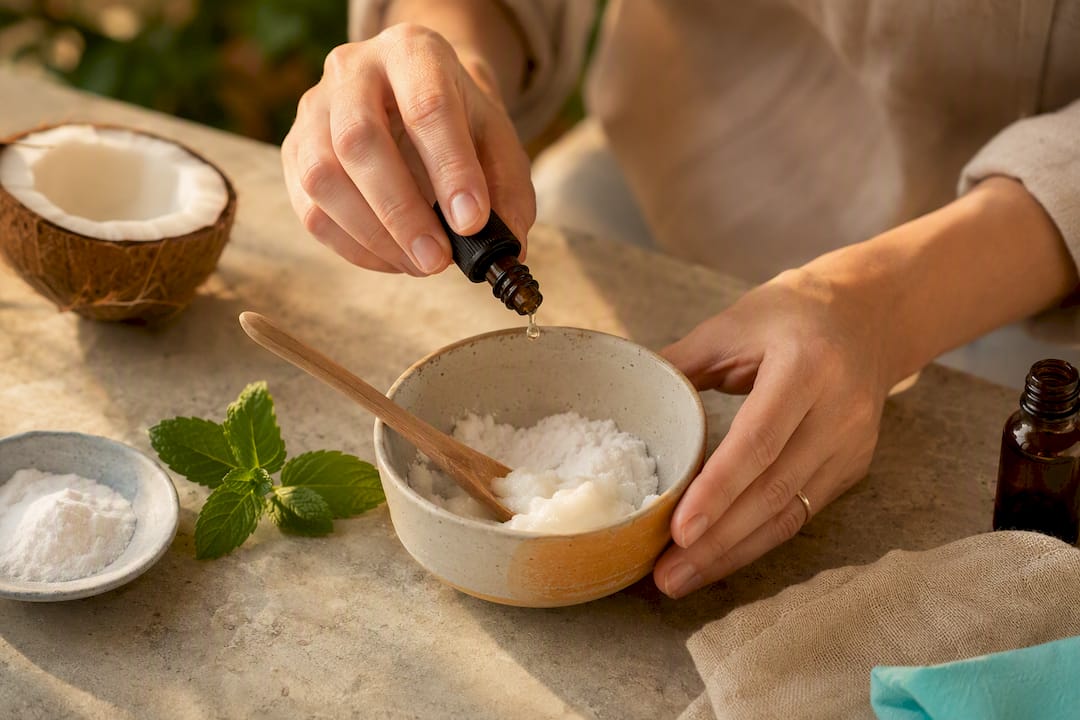
Nobody testing a homemade batch in their kitchen is measuring abrasiveness with a lab instrument, and that’s exactly the gap that matters for enamel safety. A recipe that’s slightly too heavy on baking soda one week and lighter the next means inconsistent abrasion exposure, which makes it hard to predict long-term effects on enamel. There’s also no fluoride or HAP delivery mechanism in most DIY recipes, so even a well-balanced batch is handling cleaning and freshening without touching remineralization at all.
If you want to make your own, keep the recipe simple, use it a few times a week rather than daily, and pair it with a remineralizing product the rest of the time. DIY toothpaste alternatives are a reasonable weekend project. They’re a shakier full-time replacement for anything with tested abrasive ratios and mineral delivery built in.
What This Actually Means for Your Routine
The conventional advice on toothpaste alternatives tends to swing to extremes: either “never touch anything but ADA-approved fluoride paste” or “throw out the tube, oils and baking soda will handle it.” Neither holds up well against the actual research. Oil pulling reduces bacterial counts but doesn’t move the needle on gum inflammation or plaque scores in controlled trials. Abrasive scrubs whiten but chip away at enamel you can’t get back. Nano-hydroxyapatite is the one alternative with a real remineralization case behind it, which is exactly why it deserves more attention than it gets in most “natural toothpaste” roundups that lump every option together as equally valid.
If you’re prioritizing anything first, prioritize mechanical brushing technique over any product swap, since the research consistently shows technique and time matter more than what’s on the brush. From there, layer in nano-HAP if you want a fluoride-free daily option with actual trial support, and treat oil pulling, baking soda, and charcoal as occasional supplements rather than replacements.
— Viktor
A Productized Way to Try the Science-Backed Options
If reading through abrasive ratios and dilution math feels like more effort than you signed up for, Selfwisebrand builds that homework into the product instead of leaving it to guesswork. The brand’s nano-hydroxyapatite mouthwash tablets and oil-pulling mouthwash are formulated to simplify use without measuring baking soda by eye or diluting hydrogen peroxide on a hunch.
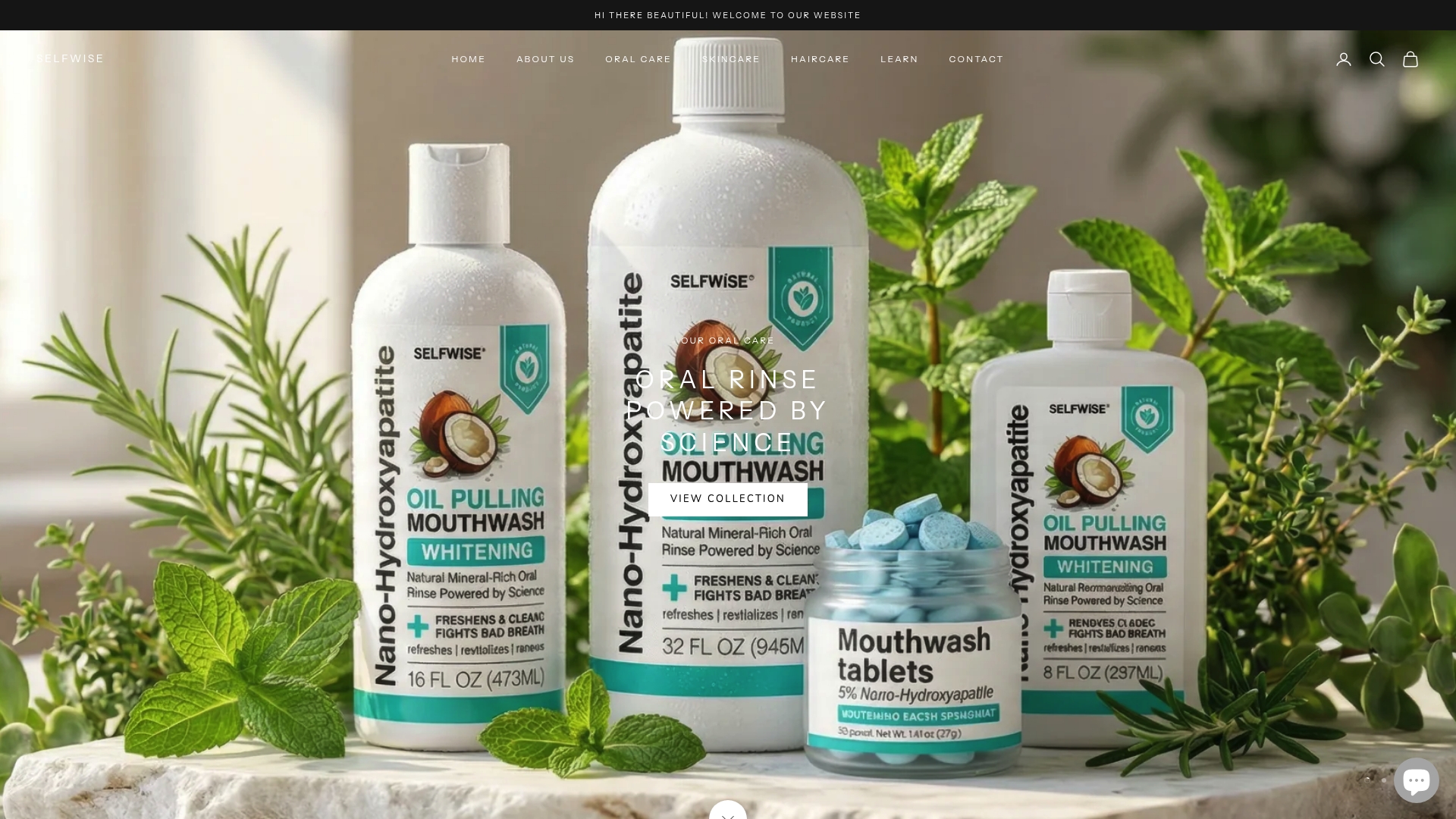
The nano-hydroxyapatite mouthwash tablets are fluoride-free and built around the same remineralizing mineral the research points to, with no measuring or mixing required. If you’re drawn to oil pulling but want the coconut and sesame oil ratios already worked out, the nano-hydroxyapatite oil pulling mouthwash pairs the traditional practice with the same enamel-support mineral For a broader look at how these pieces fit into a daily routine, the natural oral care guide walks through where each product fits. Browse the full oral care collection to find your starting point.
Sources
- Oil pulling: a meta-analysis of randomized controlled trials (PMC9602184)
- Does dentifrice use help to remove plaque? A systematic review (Journal of Clinical Periodontology)
- Mouthhealthy
FAQ
What is the best alternative toothpaste?
Nano-hydroxyapatite products currently have the strongest clinical support among fluoride-free options, with research showing they can deposit minerals directly onto enamel and support remineralization.
Is brushing without toothpaste still effective?
Yes, to a degree. A clinical trial found that brushing without any paste removed plaque effectively as brushing with several commercial toothpastes, since the mechanical bristle action does most of the cleaning work.
What did people use instead of toothpaste before modern products existed?
Historically, people used chewed sticks, charcoal, salt, baking soda, and oils like sesame for oil pulling, practices that predate fluoride toothpaste by centuries and still show up today as natural toothpaste options.
Can oil pulling replace brushing and flossing?
No. The American Dental Association states there isn’t reliable evidence to recommend oil pulling as a substitute for brushing and flossing, even though it can reduce bacterial counts in saliva.
Is baking soda safe to use every day?
Occasional use is generally fine, but daily heavy use can wear down enamel over time due to its abrasiveness, so most dental guidance suggests limiting it to a few times a week rather than a daily swap.