Once or Twice Daily: Match Mouthwash to Its Purpose and Microbiome
Most people benefit from using mouthwash once or twice daily as an adjunct to brushing and flossing, never as a replacement for them. The right frequency depends heavily on what kind of rinse you are using. Cosmetic rinses can be used on demand, while therapeutic or antiseptic formulas often call for a specific schedule set by a dentist. Strong antiseptic rinses also deserve extra caution if you monitor your blood pressure.
TL;DR:
- Prescription-strength rinses follow specific schedules set by a clinician and should not be adjusted without professional advice.
- Natural, alcohol-free rinses with ingredients like xylitol or nano-hydroxyapatite are suitable for daily use and support oral health gently.
- Using strong antiseptic mouthwash daily may impair nitrate reduction, potentially raising blood pressure in hypertensive individuals.
- For fluoride rinses, spacing out from brushing enhances enamel strengthening, while after-brushing rinses better target plaque and bacteria.
- For short-term therapeutic needs, follow your dentist’s guidance, and reserve routine daily rinsing for gentler, over-the-counter options.
Table of Contents
- Recommended mouthwash frequency and when it changes
- What order should you brush, floss, and rinse in?
- Cosmetic, therapeutic, and natural rinses need different routines
- What are the real risks of using mouthwash too often?
- How to use mouthwash correctly for the best results
- How to choose a mouthwash that fits your routine
- Why gentler daily rinses often make more sense
- A gentler daily option worth considering
- Where to go for more guidance
- Sources
- FAQ
Recommended mouthwash frequency and when it changes
For most healthy adults, rinsing morning and evening, timed around brushing, covers the basics of fresh breath and plaque control. This twice-daily pattern lines up with how most people already structure their oral care, which makes it easy to stick with.
That said, frequency is not one-size-fits-all. The American Dental Association describes mouthrinse as an optional adjunct to brushing and flossing, with the right frequency depending on the product and your individual dental needs.
- Prescription-strength or high-fluoride rinses often follow a specific daily or weekly regimen set by a clinician, and that schedule should override generic habit.
- Cosmetic rinses, meant only for temporary breath freshening, do not need routine daily use and can be reserved for when you need them.
- Cut back or pause use if you notice irritation, taste changes, or if a dentist advises against continued use.
Matching frequency to purpose, rather than defaulting to twice a day for every product, is the practical takeaway here.
What order should you brush, floss, and rinse in?
The right sequence depends on your goal. If you are using a fluoride rinse to strengthen enamel, rinsing with water right after brushing can wash away the fluoride left on your teeth. Some products instead suggest using the fluoride rinse at a separate time from brushing, so the fluoride has a chance to sit on tooth surfaces. Always check your specific product’s instructions, since ADA guidance on fluoride rinses notes that timing recommendations vary by formulation and concentration.
If your priority is reaching plaque and bacteria that brushing misses, using mouthwash after brushing and flossing tends to work better, since it can access areas already loosened by mechanical cleaning.
- For fluoride retention: separate rinsing from brushing per the label, or use the fluoride rinse at a different time of day.
- For breath control: rinse whenever convenient, since cosmetic effects are short-lived regardless of timing.
- For gingivitis management: rinse after brushing and flossing so the active ingredient reaches gum margins.
Pro Tip: When a product label and general advice disagree, follow the label or your dentist’s direction, since formulations differ in how they interact with fluoride and plaque.
For a deeper walkthrough of sequencing choices, see this guide to mouthwash timing.
Cosmetic, therapeutic, and natural rinses need different routines
Not all mouthwash serves the same purpose, and frequency should follow function.
- Cosmetic rinses mask odor temporarily and can be used as needed without a fixed schedule.
- Therapeutic antiseptics such as chlorhexidine, cetylpyridinium chloride, or essential oil blends are often prescribed for a short course rather than indefinite daily use; the ADA’s clinical overview notes these work as adjuncts for plaque and gingivitis control, not substitutes for brushing.
- Fluoride rinses come in low-dose daily versions for general use and higher-strength prescription versions reserved for people at high risk of cavities.
- Natural, gentle options with xylitol or nano-hydroxyapatite, free of alcohol, tend to suit daily maintenance without the harsher effects of strong antiseptics. You can read more about how alcohol-free rinses fit a gentler daily routine.
Identifying which category your mouthwash falls into is the first step to using it correctly.
What are the real risks of using mouthwash too often?
Antiseptic mouthwash is not risk-free, especially with heavy or prolonged use. Short-term trials have found that antibacterial mouthwash can reduce the mouth’s ability to convert nitrate to nitrite, a process tied to blood pressure regulation.
Clinical trials have reported that short-term use of antibacterial mouthwash may be associated with an increase in systolic blood pressure among treated hypertensive participants, alongside reduced oral nitrate-to-nitrite reduction, according to research published on PubMed. This does not mean occasional use is dangerous, but it does suggest daily reliance on strong antiseptic rinses deserves more thought than most people give it.
- Staining, taste changes, and mucosal irritation are commonly reported with chlorhexidine and alcohol-based formulas.
- Mouthwash is not recommended for children under 6 because of swallowing and fluorosis risks, a point the ADA addresses directly.
- If you have hypertension or another cardiovascular concern, check with a clinician before making a strong antiseptic rinse a daily habit.
Parents weighing when to introduce mouthwash to a child can find more detail in this guide to starting kids on mouthwash at age 6.
How to use mouthwash correctly for the best results
Getting the technique right matters as much as picking the right product.
- Measure the amount stated on the label, commonly around 10 to 20 milliliters, and avoid diluting it unless the label says you can.
- Swish for the time specified, typically 30 seconds, though some products call for anywhere from 10 to 60 seconds.
- Spit the rinse out. Never swallow it.
- Check the label before eating or drinking, since some medicated rinses ask you to wait afterward for the active ingredient to work.
- For prescription rinses, follow your prescriber’s directions exactly and report any side effects promptly.
Pro Tip: Set a timer the first few times you use a new rinse. Most people swish for far less than the recommended duration without realizing it.
How to choose a mouthwash that fits your routine
Start by naming your goal: fresher breath, cavity prevention, gum health, or simply a gentle daily habit that supports your oral microbiome. That goal should drive the product you pick, not the other way around.
- Look for the ADA Seal when a product makes therapeutic claims about cavity prevention or gingivitis control.
- Check active ingredients and their concentrations, since higher-strength antiseptics are not automatically better for everyday use.
- For daily use, alcohol-free formulas with xylitol or nano-hydroxyapatite tend to be gentler on the oral microbiome while still supporting fresh breath and remineralization.
- If you have high caries risk or diagnosed periodontal disease, talk to a dentist about whether a prescription-strength rinse fits your case.
The Selfwise mouthwash collection breaks down these differences by formula, which can help if you are comparing cosmetic and therapeutic options side by side.
Why gentler daily rinses often make more sense
The evidence points toward a simple principle: match the intensity of your mouthwash to your actual need, not to habit. For most people using a rinse purely for daily freshness and light plaque control, a gentle, alcohol-free formula makes more sense than a high-intensity antiseptic used indefinitely. Reserve stronger rinses for the specific, time-limited situations a dentist identifies. If you have a therapeutic need, an individual consultation with a dentist remains the most reliable way to set the right frequency for you.
— Viktor
A gentler daily option worth considering
If your goal is simple: fresher breath and a supportive daily habit without leaning on high-intensity antiseptics, there are natural mouthwash options built around that use case. Some natural mouthwash options include alcohol-free formulas with xylitol and nano-hydroxyapatite, ingredients chosen to support daily maintenance without the harsher edge of strong antiseptic rinses.
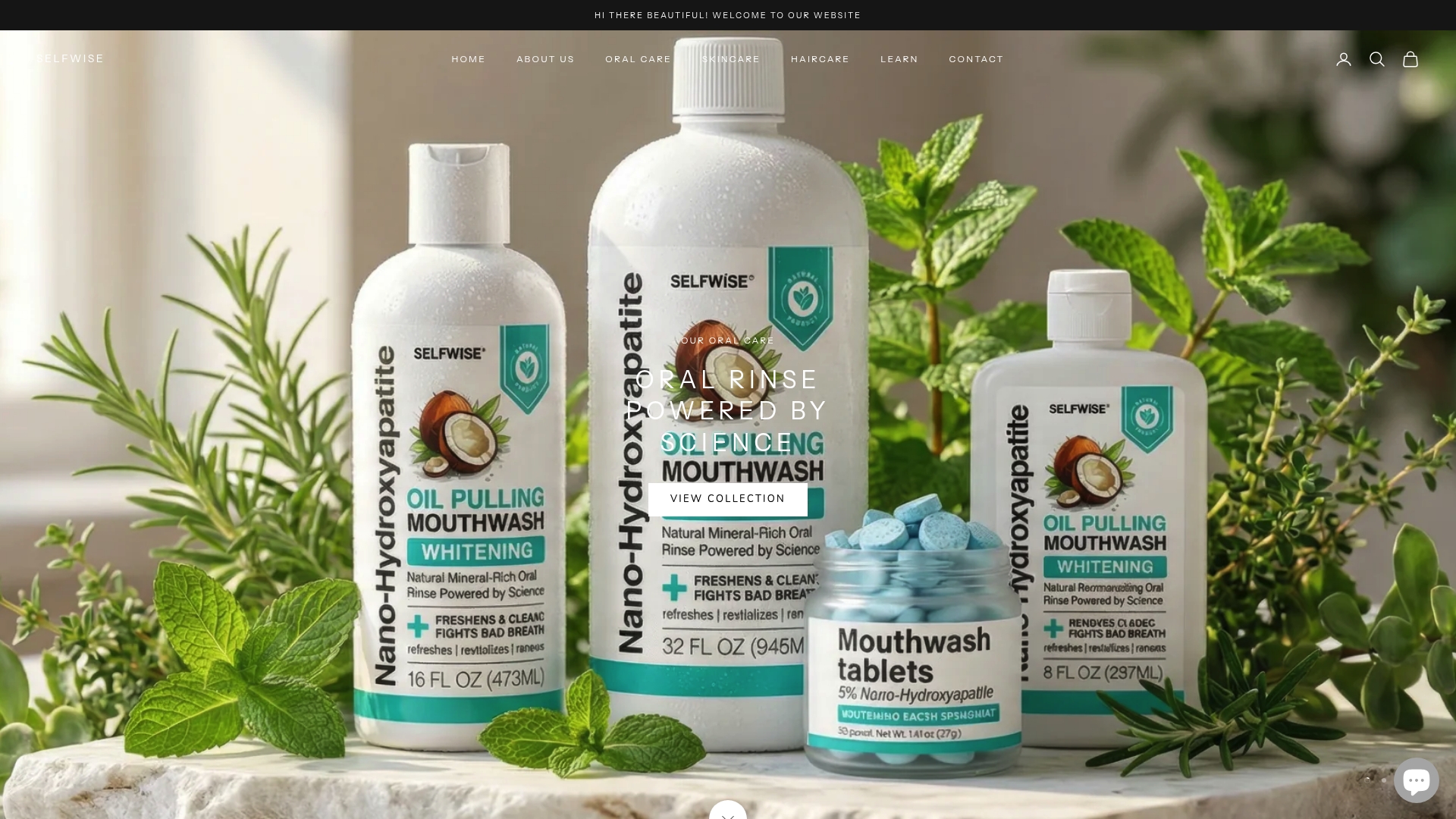
These formulas are meant for the everyday routine described throughout this article: a rinse you can use morning and evening alongside brushing and flossing, without worrying about the tradeoffs that come with habitual antiseptic use. If a therapeutic need arises, that is a conversation for your dentist, but for daily maintenance, you can browse the Selfwise mouthwash collection to see which formula fits your routine.
Where to go for more guidance
For further reading, the American Dental Association’s mouthrinse guidance and MouthHealthy’s mouthwash overview cover adjunctive use and age safety in more detail. For anything specific to your health history, a dentist remains your best resource.

This article is general information, not a substitute for advice from a qualified doctor. Consult a qualified healthcare professional about your own circumstances before acting on anything here.
Sources
- Mouthrinse (Mouthwash) | American Dental Association
- Effect of antibacterial mouthwash on oral nitrate and blood pressure - PubMed
- Mouthwash - MouthHealthy (ADA)
FAQ
What is the 3-3-3 rule for teeth?
Definitions vary across sources, and no ADA or MouthHealthy source in this article defines a standardized “3-3-3 rule.” If you have seen this phrase, treat it as informal advice rather than an official guideline, and check with a dentist for a routine tailored to your needs.
Do dentists recommend using mouthwash daily?
The American Dental Association describes mouthrinse as an optional adjunct to brushing and flossing, not a required daily step for everyone. Daily use can be appropriate for cosmetic or gentle maintenance rinses, while therapeutic rinses should follow a dentist’s specific direction.
Why do cardiologists warn against mouthwash?
Concerns focus on antiseptic mouthwash specifically, not mouthwash in general. Research shows that short-term antibacterial mouthwash use can reduce the oral bacteria that help convert nitrate to nitrite and has been linked to a small rise in systolic blood pressure in some treated hypertensive participants, which is why people managing blood pressure are often advised to check with a clinician before daily antiseptic use.
Is it better to use mouthwash before or after you brush?
It depends on the product’s purpose. Fluoride rinses often work best when used separately from brushing so rinsing does not wash away residual fluoride, while antiseptic rinses aimed at plaque and gum health are commonly used after brushing and flossing to reach areas mechanical cleaning missed. Always defer to your product’s label, as detailed in this guide to mouthwash sequencing.