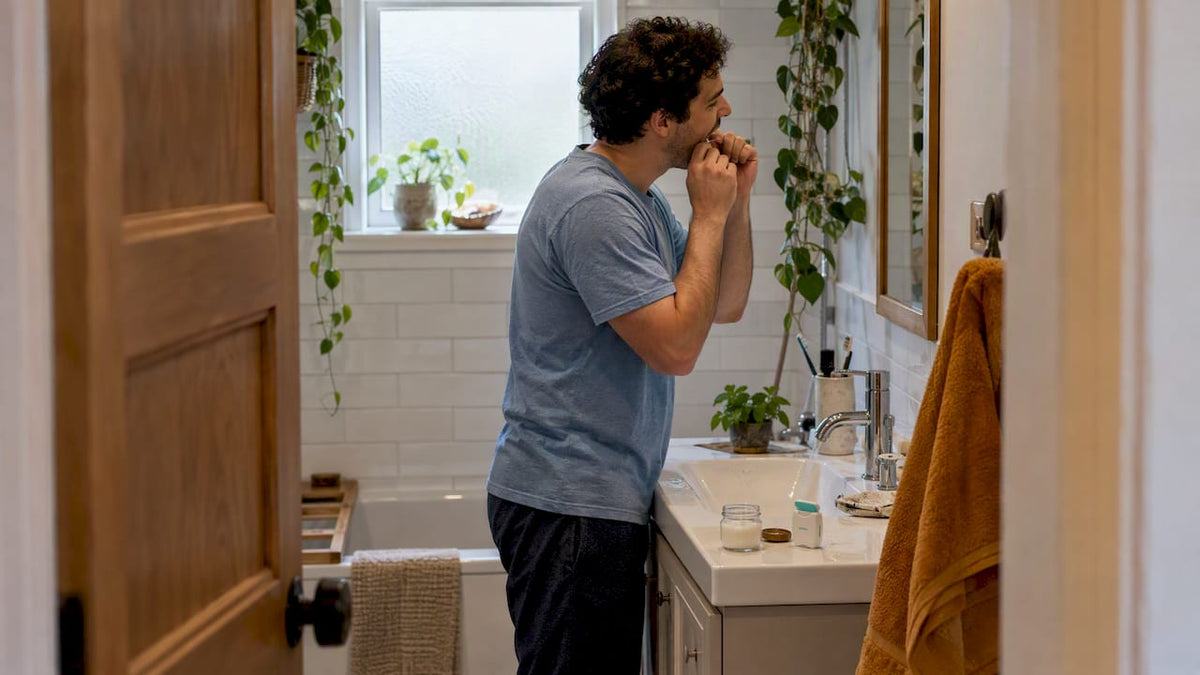
Hydrogen Peroxide Mouthwash: Limit Use to 7 Days, Try Gentler Options
Diluted hydrogen peroxide, at 1.5% or lower, can be used safely for short stretches, but it was never meant to be a daily rinse. Stick to seven days or less unless a clinician tells you otherwise, and never use undiluted 3% drugstore peroxide as a routine swish. Swallowing it, or using it long term at high strength, can cause chemical burns, gum tissue damage, and in severe cases, a trip to the emergency room.
TL;DR:
- Hydrogen peroxide at 1.5% can be used safely for up to four times daily for short periods, but higher concentrations and longer use increase tissue irritation risks.
- Swallowing or prolonged use of undiluted 3% peroxide can cause severe damage, including burns and emergency medical issues.
- Individuals with active mouth ulcers, recent dental surgery, or sensitivity should avoid peroxide rinses or consult their dentist first.
- Alternative daily oral care options like fluoride rinses, nano hydroxyapatite, or xylitol provide safer, long-term benefits without irritation risks.
- The maximum safe duration for self-directed peroxide use is seven days unless guided by a healthcare professional.
Table of Contents
- Hydrogen Peroxide Mouthwash Risks: How to Use It Correctly
- What Are the Real Risks and Side Effects?
- Who Should Avoid Peroxide Rinses Entirely?
- Safer Alternatives for Everyday Oral Care
- What Does the Research and Labeling Actually Say?
- Should Peroxide Have a Place in Your Routine at All?
- Where to Go From Here for Gentler Daily Care
- Primary Sources
- Sources
- FAQ
Hydrogen Peroxide Mouthwash Risks: How to Use It Correctly
Most of the danger with peroxide rinses comes down to two variables: concentration and how long you keep using it. Get either one wrong and a product meant for occasional relief turns into a source of irritation or worse.
There are really two products people reach for. The first is a commercial 1.5% oral solution, labeled for direct use, no mixing required.
Here’s the safe sequence if you’re using either one:
- Check the label concentration. If it’s 1.5%, you can use it undiluted. If it’s 3%, mix it half and half with water first.
- Measure it out. DailyMed’s consumer labeling specifies 10 mL, about two teaspoons, for a standard swish.
- Swish or gargle for 30 to 60 seconds. Don’t go longer thinking it’ll work better. It won’t. It just raises your irritation risk.
- Spit, don’t swallow. This isn’t a rinse you drink or hold in your cheek for minutes at a time.
- Limit frequency. Labeled 1.5% products can be used up to four times a day; diluted 3% solutions should be capped at three to seven days max.
- Stop and reassess if anything feels off. Burning, white patches, or unusual sensitivity mean it’s time to quit, not push through.
Store any leftover concentrated peroxide out of reach of children, in its original container, away from heat. If you have old, higher-strength peroxide you no longer need, don’t pour it down the drain in large amounts. Dilute it heavily with water first, or check your local hazardous waste disposal guidelines.
Pro Tip: Before committing to a week of rinsing, try one single application and wait 24 to 48 hours. If your mouth feels normal, that’s a reasonable signal to continue on the same schedule. If it stings or looks red, stop there.
What Are the Real Risks and Side Effects?
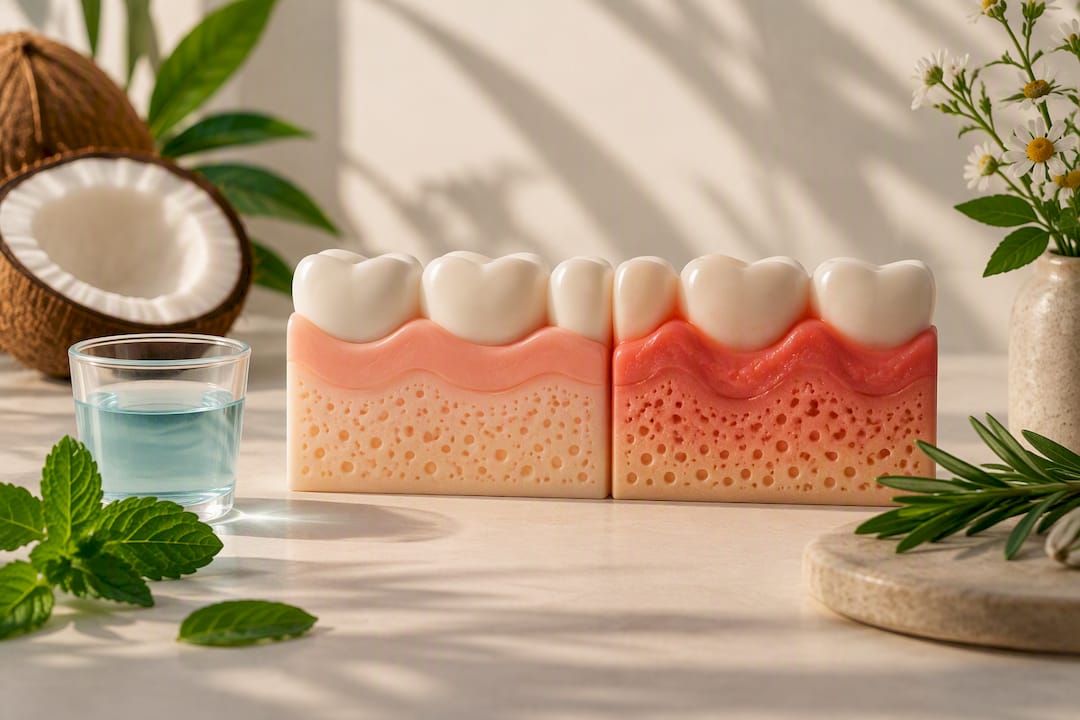
The side effects most people experience are mild and reversible. The ones that aren’t mild show up almost exclusively at higher concentrations or with careless, prolonged use.
On the common end, you’re looking at:
- Temporary oral irritation or a burning sensation along the gums and inner cheeks
- Redness or soreness in the soft tissue lining the mouth
- A metallic or altered taste that fades once you stop
- Increased tooth sensitivity, especially to hot or cold
- “Hairy tongue,” a harmless but odd-looking overgrowth of tongue papillae linked to peroxide use
These happen because your saliva contains catalase, an enzyme that breaks peroxide down into water and oxygen fairly quickly at low concentrations. Repeated exposure, or a higher concentration than your tissue can handle, overwhelms that defense and the irritation follows.
Push the concentration higher and the picture changes. A randomized trial found that hydrogen peroxide-based whitening products alter inflammatory and tissue-damage proteins in gingival fluid, with effects that scale up and last longer as concentration increases. That’s the same mechanism behind chemical burns and pulp inflammation seen with careless use of stronger solutions.
By the numbers: Professional monographs and drug labeling consistently draw the line at seven days of use without clinician guidance for standard oral solutions, and flag concentrations above 20% as strongly irritating to tissue on contact.
Ingestion is the scenario that turns a minor annoyance into a medical emergency. If that happens, contact Poison Control or go to the emergency room immediately rather than waiting to see how you feel.
Who Should Avoid Peroxide Rinses Entirely?
Some people should skip peroxide rinses altogether, or at least run it by a provider first.
- Young children, since supervision needs and swallowing risk vary by product and age.
- Pregnant or breastfeeding people, who should check with their provider before adding it to a routine.
- Anyone with active mouth ulcers or sores, where peroxide will sting and can slow healing.
- Recent dental surgery patients, including extractions or implant placement.
- People with exposed dentin or gum recession, who are already prone to sensitivity.
- Immunocompromised patients or those in cancer treatment, where tissue healing and infection risk change the calculus.
Stop immediately and get medical attention if you notice worsening swelling, fever, or any systemic symptoms after using a peroxide rinse. And if you have chronic gum disease or just had dental work done, call your dentist before adding peroxide to your routine. It’s a two-minute conversation that can save you a much worse one later.
Safer Alternatives for Everyday Oral Care
If your goal is fresher breath, gum support, or occasional whitening, peroxide isn’t your only option, and for daily use, it’s rarely the best one.
- Fluoride mouthrinses remain a solid daily choice for cavity prevention in people without fluoride sensitivities.
- CPC or chlorhexidine rinses work well for short-term, clinician-directed control of gingivitis, but aren’t meant for indefinite daily use either.
- Saline rinses are a gentle option for general soreness or after minor procedures.
- Whitening strips or professional in-office whitening address cosmetic goals without the same swallow risk as a peroxide swish.
- Nano hydroxyapatite rinses support remineralization without the irritation profile of oxidizing agents, making them a gentler daily fit.
- Xylitol-based rinses and oil-pulling-inspired formulations work with your oral microbiome rather than against it, which matters if your priority is long-term gum and enamel health rather than a quick fix.
If you’re curious how oil-based rinsing stacks up against a peroxide or standard mouthwash routine, this comparison of oil pulling versus conventional mouthwash walks through the practical differences.
What Does the Research and Labeling Actually Say?
The safety guidance on peroxide rinses isn’t guesswork. It comes from a consistent set of clinical labeling and peer-reviewed sources.
- DailyMed’s product labeling specifies a 10 mL swish held for at least one minute, up to four times daily, for standard 1.5% oral solutions.
- The Drugs.com professional monograph sets the seven-day cap on self-directed use and warns that concentrations of 20% to 35% are strongly irritating, with 35% not approved for any medicinal purpose.
- Peer-reviewed trial data confirms inflammation and tissue effects scale with concentration, a finding echoed in broader review-level evidence on oral peroxide safety.
The threshold that matters: Nearly every authoritative source converges on the same number: seven days is the outer limit for unsupervised use, and anything above 20% concentration crosses from “irritating” into “hazardous.”
Should Peroxide Have a Place in Your Routine at All?
Peroxide isn’t the villain some headlines make it out to be, but it’s also not a daily oral care product, and treating it like one is where most people run into trouble. It has a legitimate, narrow job: short-term relief for a canker sore, a temporary post-procedure rinse, an occasional whitening boost. Used that way, at the right concentration, for a few days, the risk is low.
The mistake is reaching for it as a substitute for a real daily routine. Your mouth’s long-term health depends on consistent, low-irritation habits, remineralization, gum support, and a microbiome you’re not constantly disrupting with an oxidizing agent. If you’re rinsing with peroxide every day because it feels like it’s “working,” you’re probably just masking a problem that gentler, sustained care would actually fix. Save peroxide for the rare occasion. Build your daily routine around something your mouth can tolerate indefinitely.
— Viktor
Where to Go From Here for Gentler Daily Care
There are daily rinses available that do not require rationing to seven days or concern about swallowing, formulated without peroxide, fluoride, or alcohol, and that use ingredients like nano hydroxyapatite and xylitol for remineralization and a microbiome-friendly approach to fresh breath and gum support.
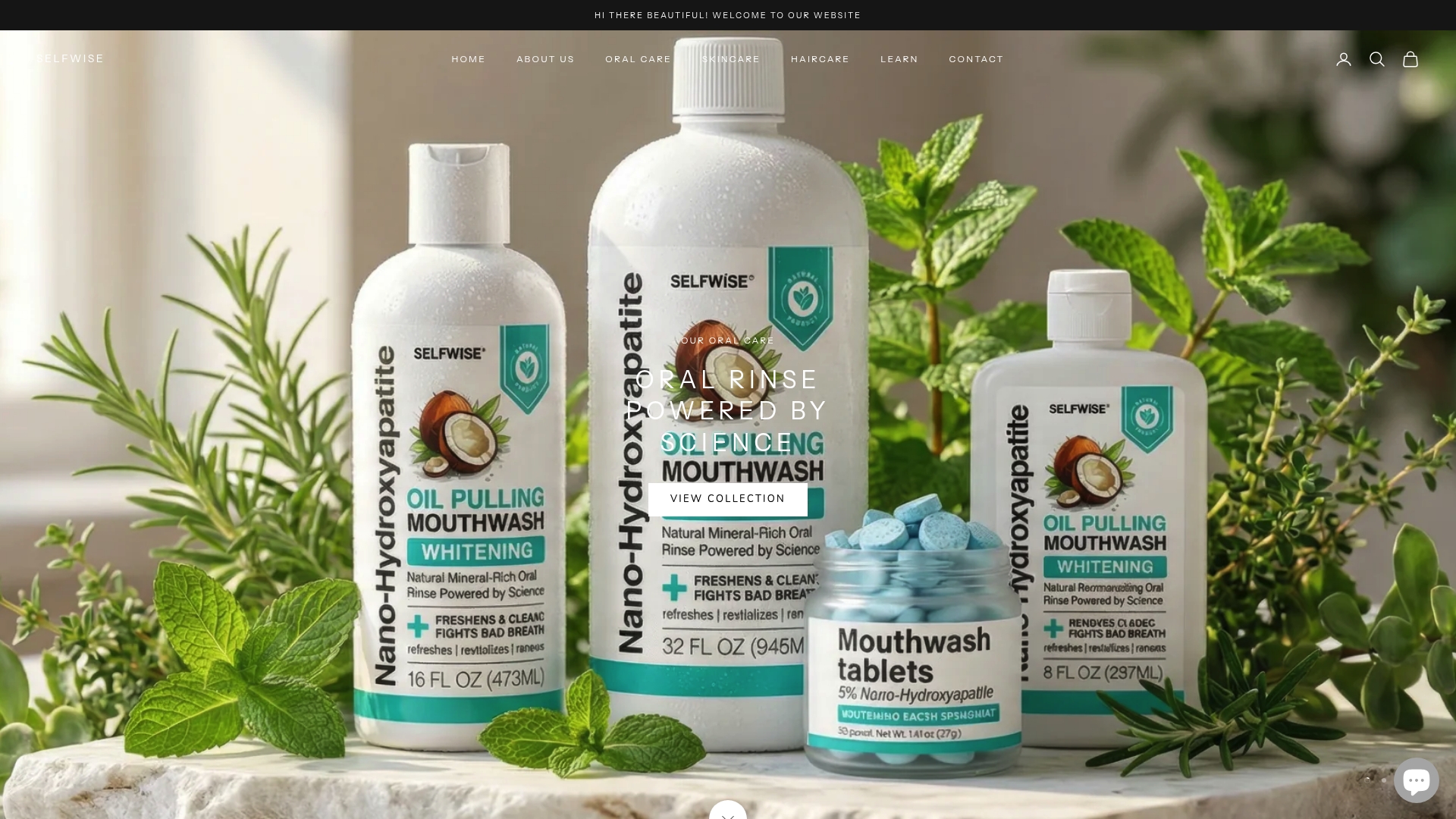
If you liked the oil pulling comparison above, our nano hydroxyapatite oil pulling mouthwash combines both approaches into one daily step. For a broader look at where the rest of your routine fits, browse the full oral care collection or start with our Natural Oral Care Guide to build a routine that doesn’t rely on a seven-day countdown.
Primary Sources
- Hydrogen Peroxide Monograph for Professionals — Drugs.com
- Hydrogen Peroxide Dental Solution Labeling — DailyMed
- Hydrogen Peroxide Dental Solution Guidance — Cleveland Clinic
- Randomized Trial on Gingival Inflammation — Nature Scientific Reports
- Review Article on Oral Peroxide Safety — PMC
This article is general information, not a substitute for advice from a qualified doctor. Consult a qualified healthcare professional about your own circumstances before acting on anything here.
Sources
- Drugs
- Hydrogen Peroxide Dental Solution - DailyMed
- Hydrogen peroxide-based products alter inflammatory and tissue damage-related proteins in the gingival crevicular fluid of healthy volunteers: a randomized trial
- PMC review article (safety and effects of hydrogen peroxide in oral care)
- Hydrogen Peroxide Dental Solution - Cleveland Clinic
FAQ
Is 3% Hydrogen Peroxide Safe to Use in the Mouth?
Even diluted, it’s meant for short-term use, three to seven days at most, not a daily habit.
Why Do Doctors and Cardiologists Warn Against Certain Mouthwashes?
Concerns about mouthwash generally center on ingredients that disrupt oral bacteria involved in nitric oxide production, which plays a role in blood pressure regulation, and on peroxide specifically, the warnings focus on tissue irritation and the risks of prolonged or concentrated use. Neither concern applies to occasional, correctly diluted, short-term use.
Is It Okay to Use Peroxide Mouthwash Every Day?
No. Labeling and clinical guidance both cap self-directed use at seven days without a clinician’s direction. Daily long-term use raises the risk of oral irritation, sensitivity, and hairy tongue.
What Should I Use Instead of Peroxide for Daily Oral Care?
Fluoride rinses, CPC or chlorhexidine (short-term, as directed), and microbiome-friendly options like nano hydroxyapatite or xylitol rinses are better suited to everyday use. Selfwisebrand’s mouthwash collection is built specifically around these gentler ingredients.
What Happens if You Swallow Hydrogen Peroxide?
Contact Poison Control or seek emergency care immediately rather than waiting for symptoms to resolve on their own.