Fluoride-free mouthwash: is it a real alternative?
The fluoride debate sits at an uncomfortable intersection of settled science and legitimate personal choice. The evidence for fluoride's effectiveness at preventing cavities is robust. The evidence that topical fluoride in toothpaste and mouthwash is harmful is much weaker. And yet a growing number of people — for reasons ranging from concern about systemic intake to a general preference for mineral-based rather than chemical interventions — are choosing fluoride-free oral care. This guide gives you an honest picture of both sides, and explains where nano hydroxyapatite fits in.
Quick summary
- Fluoride works — decades of evidence support its effectiveness for cavity prevention through topical application.
- The concern about fluoride is primarily about systemic intake (swallowed toothpaste, water fluoridation) — not topical mouthwash use in adults.
- Nano hydroxyapatite (nHAp) is the most evidence-supported fluoride-free alternative for remineralisation — it works through a different mechanism but multiple studies show comparable effectiveness.
- Key fact: nHAp is the same mineral tooth enamel is made from. Applying it topically adds more of the same material — not a foreign ion.
- Where to find it: Selfwise Nano Hydroxyapatite Oil Pulling Mouthwash and Mouthwash Tablets
Best for: Adults who prefer fluoride-free oral care and want a daily mouthwash with real remineralising evidence behind it.
Not for: Children in high-caries-risk areas where fluoride supplementation is recommended by a dentist — always follow professional guidance for children's oral health.
What fluoride actually does
Fluoride's primary mechanism in oral care is topical, not systemic. When fluoride ions are present at the tooth surface, they are incorporated into the enamel crystal lattice during remineralisation, forming fluorapatite — a harder, more acid-resistant form of the mineral than natural hydroxyapatite. This makes remineralised enamel more resistant to subsequent acid attack.
The evidence for topical fluoride is strong: systematic reviews and decades of population data show communities with water fluoridation and high toothpaste fluoride use have meaningfully lower rates of dental caries. This is not disputed in mainstream dentistry.
Why people choose fluoride-free
The reasons people seek fluoride-free oral care products fall into several categories:
- Concern about fluorosis — excessive fluoride intake during childhood (primarily from swallowed toothpaste) can cause dental fluorosis — white spots or brown mottling on developing teeth. This is a real concern for young children, not adults.
- Concern about systemic intake — some people are uncomfortable with cumulative fluoride exposure from multiple sources: water, toothpaste, mouthwash, certain foods. The evidence that this causes harm at typical exposure levels in adults is not strong, but the preference is legitimate.
- Ingredient minimalism — some people simply prefer products whose ingredients are recognisable minerals rather than synthetic compounds, independent of any safety concern.
- Existing high fluoride exposure — people in areas with naturally high fluoride in water may reasonably choose to reduce additional sources.
Nano hydroxyapatite: the evidence-based alternative
Of all the fluoride-free alternatives available, nano hydroxyapatite has the strongest scientific foundation. It is not a new ingredient — it has been approved for use in oral care products in Japan since the 1980s, where it is a mainstream toothpaste ingredient.
Nano hydroxyapatite is a synthetic form of hydroxyapatite — the calcium phosphate mineral that makes up approximately 97% of tooth enamel and 70% of dentine. "Nano" refers to particle size: nHAp particles are engineered small enough to enter the microscopic pores and lesions in enamel where demineralisation has occurred.
Multiple peer-reviewed studies have examined nHAp's remineralisation effectiveness. A study published in the Journal of Dentistry (Amaechi et al.) found nHAp comparable to fluoride for reducing enamel lesion depth in an artificial caries model. A systematic review in the Journal of Evidence-Based Dental Practice concluded nHAp shows promise as a fluoride substitute with a strong safety profile. The mechanism is additive rather than substitutive: rather than changing the mineral structure of enamel (as fluoride does), nHAp adds more of the same material enamel is already made from.
Side-by-side comparison
| Factor | Fluoride | Nano hydroxyapatite |
|---|---|---|
| Mechanism | Forms fluorapatite — more acid-resistant enamel | Deposits into lesions — restores natural enamel structure |
| Evidence base | Very strong — decades of clinical and population data | Good and growing — 40+ years in Japan, increasing RCT data |
| Safety profile | Safe topically; concern about swallowed amounts in children | Biocompatible; same mineral as enamel; no toxicity concerns |
| Whitening effect | Indirect — via remineralisation | Indirect — smoother enamel reflects light better |
| Availability | Widely available in all standard oral care products | Growing — specialist natural oral care products |
| Suitable for children | Yes (age-appropriate concentration) | Yes — no swallowing risk concern |
What doesn't work as a fluoride alternative
Not all "natural" oral care ingredients marketed as fluoride alternatives have meaningful remineralisation evidence:
- Activated charcoal — no remineralisation mechanism. Abrasive. Not a substitute for fluoride.
- Coconut oil alone — no remineralisation mechanism. Useful for bacterial reduction but does not protect enamel.
- Calcium carbonate — mildly abrasive. Some evidence for surface polishing but not comparable to nHAp for remineralisation.
- Essential oils — antimicrobial function, not remineralising. Useful alongside nHAp, not as a substitute.
What the Selfwise products contain
Both Selfwise oral care products are fluoride-free and built around nano hydroxyapatite as the primary remineralising ingredient:
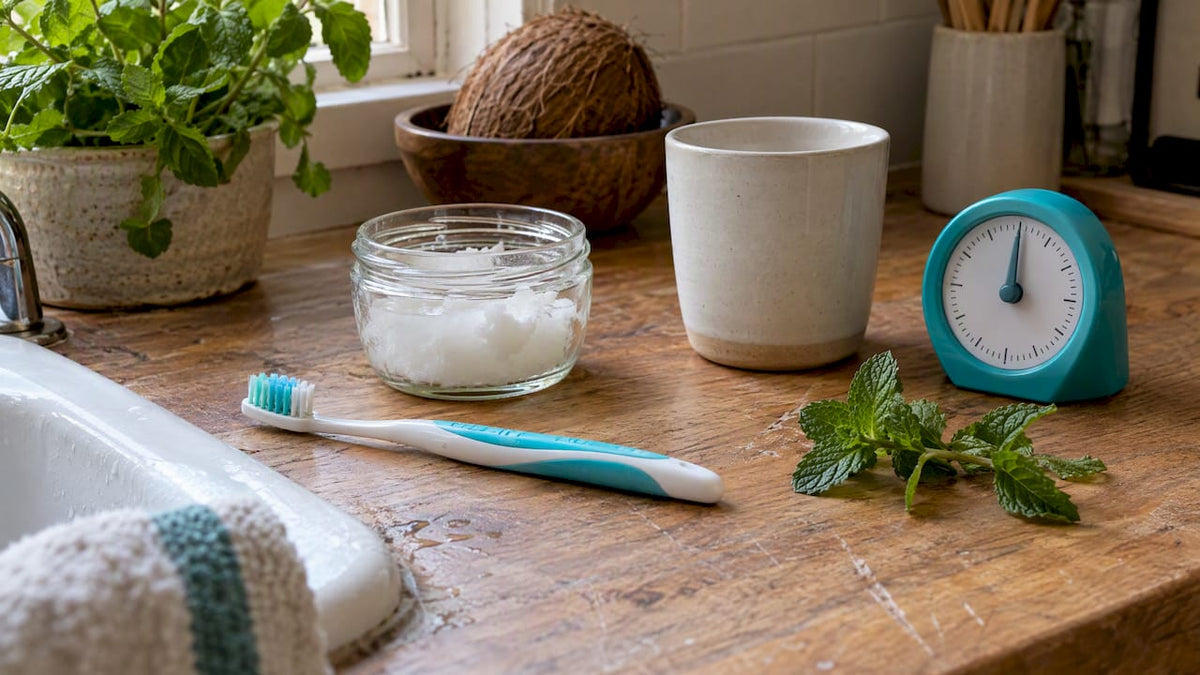
- The Nano Hydroxyapatite Oil Pulling Mouthwash combines nHAp with an emulsified coconut oil base, peppermint, spearmint, and tea tree oil. Alcohol-free. Compatible with all dental work.
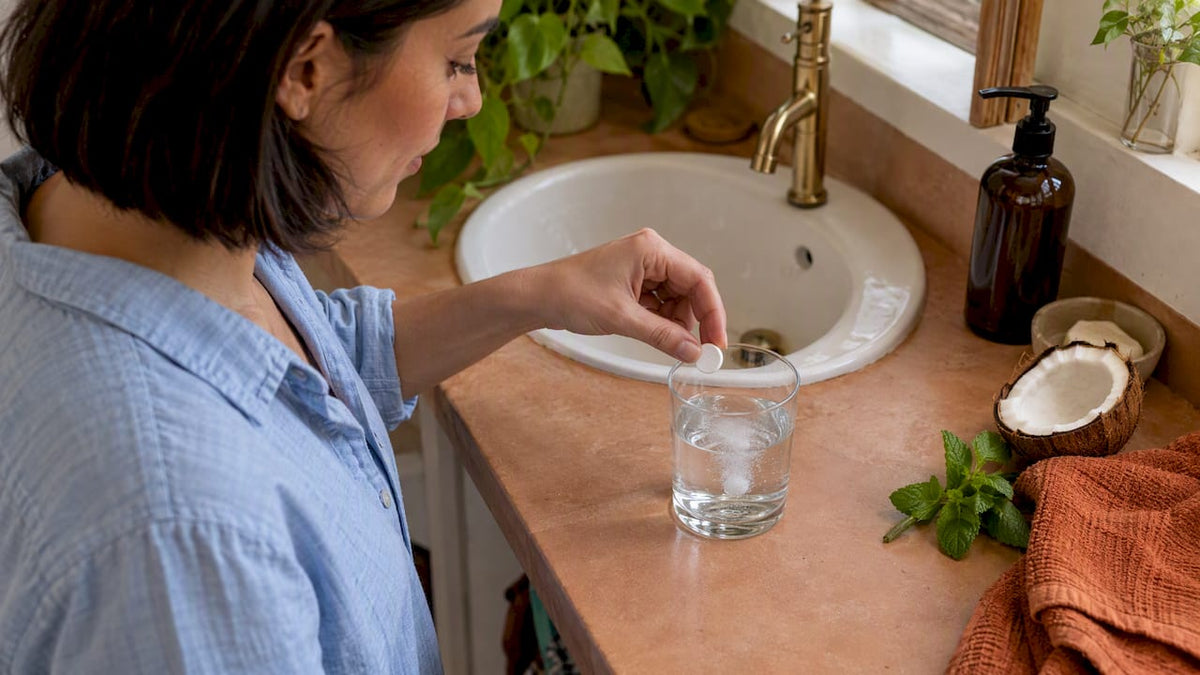
- The Nano Hydroxyapatite Mouthwash Tablets add xylitol and zinc to the nHAp base for a convenient, travel-ready format.
Frequently asked questions
Is fluoride-free mouthwash less effective than fluoride mouthwash?
For an adult with a well-balanced diet, low sugar intake, good brushing habits, and no high cavity-risk factors, a quality nHAp mouthwash is a reasonable alternative to fluoride. For someone with active decay, high caries risk, or a dentist's recommendation for fluoride, fluoride mouthwash has a stronger evidence base. This is a personal decision best made with input from your dentist if you have specific concerns.
Can I use a fluoride toothpaste and fluoride-free mouthwash together?
Yes. Many people combine a fluoride toothpaste with a fluoride-free mouthwash. This approach maintains fluoride's cavity-prevention benefits during brushing while using a gentler, non-chemical rinse for daily freshening and remineralisation support.
Is nano hydroxyapatite safe for daily use?
Yes. Nano hydroxyapatite is biocompatible — it is the same mineral your teeth are made from. It has been used in daily oral care products in Japan for over 40 years with an excellent safety record. It does not accumulate systemically or cause any known adverse effects at concentrations used in oral care products.
Is fluoride-free mouthwash safe for children?
nHAp-based mouthwash has no fluorosis risk — swallowing small amounts does not carry the same concern as swallowed fluoride in young children. The Selfwise oil pulling mouthwash is suitable for children aged 8 and older. For younger children, consult your dentist about appropriate oral care products.
Does fluoride-free mouthwash prevent cavities?
nHAp mouthwash supports remineralisation of early enamel lesions, which is the primary mechanism by which fluoride prevents cavities. The evidence suggests it can be effective at this, though the fluoride evidence base is larger. Combined with good brushing, flossing, and a low-sugar diet, fluoride-free nHAp mouthwash can be part of an effective cavity-prevention routine.
Related reading
- Selfwise natural oral care guide
- Nano Hydroxyapatite Oil Pulling Mouthwash
- Nano Hydroxyapatite Mouthwash Tablets
Written by: Selfwise Editorial Team | Published: April 2026 | Disclosure: This article is published by Selfwise, a brand that sells fluoride-free oral care products. This content is informational and does not constitute dental or medical advice. Consult your dentist for personalised guidance on cavity prevention.
Sources: Amaechi BT et al. Efficacy of nano-hydroxyapatite for remineralisation. Journal of Dentistry. Epple M et al. A critical review of modern concepts for teeth whitening. Dentistry Journal. Cochrane fluoride review data from Cochrane Database of Systematic Reviews.