Protect Enamel: Choose Remineralizing Mouthwash, Avoid Acidic pH
Mouthwash can raise salivary pH after you eat or drink something acidic, and rinsing with the right formula often neutralizes acid faster than water alone. Neutral-to-alkaline, remineralizing formulas are generally the safer daily choice. Low-pH, fluoride-free rinses with high titratable acidity can raise erosion risk in lab testing, so what you rinse with matters as much as whether you rinse at all.
TL;DR:
- Mouthwashes with high titratable acidity and low buffering capacity can increase erosion risk, especially if they contain flavor acids like citric acid.
- Rinsing with neutral or alkaline formulas that include remineralizing actives like nano-hydroxyapatite or fluoride supports enamel recovery after acid exposure.
- Products with the same pH can behave very differently in the mouth depending on their composition and buffering properties, making lab testing a better guide than pH alone.
- People with dry mouth, acid reflux, or exposed dentin should prioritize low-acidity, remineralizing rinses and avoid alcohol-based formulas.
- Checking ingredient lists for active remineralizers, xylitol, and independent testing reports improves the safety and effectiveness of mouthwash selection.
Table of Contents
- How Oral pH Works: Saliva, Critical pH, and Why Duration Matters
- What the Studies Show: Mouthwash, pH Recovery, and Erosion Risk
- Formulation Factors: Which Ingredients Support pH Balance and Which Increase Risk
- How to Choose a pH-Friendly Mouthwash: A Shopping Checklist
- How to Use Mouthwash to Rebalance pH Safely
- Risks and Special Cases: Who Should Be Cautious and Why
- Selfwise’s Approach: Natural, Remineralizing Mouthwash That Supports pH Balance
- Quick Takeaway and Immediate Next Steps
- Typical Mouthwash pH Range Reported in Studies
- Evidence on Erosive Potential of Fluoride-Free Mouthwashes
- A Natural Oral Care Perspective on pH Balance
- Selfwise Mouthwash Options and How to Start
- Sources
- FAQ
How Oral pH Works: Saliva, Critical pH, and Why Duration Matters
Your saliva sits close to neutral most of the day, though the exact number drifts depending on the person, the time of day, and what you last ate. The moment you drink coffee, soda, or orange juice, that number drops. Bacteria in plaque also produce acid as they break down sugars, which pulls pH down even further after meals.
What actually damages enamel is not one dip but the accumulated time your teeth spend below what dental researchers call the critical pH, roughly 5.5. Below that threshold, the mineral structure of enamel starts to dissolve. Above it, saliva’s natural buffering systems (bicarbonate, phosphate, and proteins) work to pull pH back up before real damage happens. The American Dental Association’s resource on saliva notes that this buffering capacity, and how quickly it kicks in, matters more for long-term enamel health than any single acidic snack.
A few factors change how fast that recovery happens:
- Frequency of acid exposure. Sipping soda over two hours keeps your mouth below critical pH far longer than drinking it in five minutes.
- Saliva flow. Chewing stimulates saliva production, which speeds neutralization. Dry mouth slows it dramatically.
- Hydration. Dehydration thickens saliva and reduces its buffering power.
- Temperature and composition. Warmer liquids and higher sugar or acid content tend to extend the time your mouth spends in the erosive zone.
This is why a single glass of wine or grapefruit juice rarely causes visible damage, but a habit of nursing acidic drinks all day, every day, adds up over years. The duration below 5.5, not the occasional dip itself, is the variable worth managing.
What the Studies Show: Mouthwash, pH Recovery, and Erosion Risk
Clinical research backs up the basic claim: rinsing with an appropriately formulated mouthwash after an acidic challenge raises salivary pH faster, and often higher, than rinsing with plain water. Trials measuring immediate post-rinse pH found that the right formula restores or even exceeds baseline pH more effectively than water alone. That is a meaningful finding for anyone who reaches for mouthwash after a soda or a glass of wine expecting it to help.
Statistic callout: A screening of 81 commercial mouthwashes found baseline pH values ranging from 3.00 to 9.47, an enormous spread for products marketed under the same category. Some samples showed unexpected pH shifts when mixed with calcium phosphate buffers meant to simulate saliva, according to erosion-potential testing on fluoride-free mouthwashes.
That spread is the real story here. A mouthwash sitting at pH 3 is roughly as acidic as vinegar, while one at pH 9.5 is closer to baking soda. Both get sold on the same shelf, often with nearly identical marketing language about “freshness” and “clean feel.” The same screening work found that most of the 81 products tested showed no erosive potential in lab conditions, but a meaningful minority did, and those tended to be fluoride-free formulas with acidic pH and weak buffering.
Separate erosion-simulation work backs this up at the tissue level. Lab models exposing enamel and dentin to various mouthwashes found that some fluoride-free, acidic formulations caused measurable surface loss, while others with similar starting pH caused little to none. The deciding factor wasn’t the pH number on its own. It was composition: what acids were present, how strong the buffering system was, and whether protective minerals were part of the formula.
That distinction matters for how you should read a product label:
- Initial pH tells you where a product starts, not how it behaves in your mouth over the following minutes.
- Titratable acidity, meaning how much base it takes to neutralize the product, predicts erosive potential more reliably than pH alone.
- A mouthwash advertised as “pH balanced” can still carry meaningful titratable acidity if it relies on citric acid or other flavor acids for taste.
- ISO-style buffering assays, the kind used in the erosion studies above, are becoming the more useful benchmark for comparing products, even though most consumer labels don’t report this figure.
The practical takeaway: two mouthwashes can list the same “neutral pH” claim and behave completely differently once they hit enamel already softened by an acidic meal.
Formulation Factors: Which Ingredients Support pH Balance and Which Increase Risk
Not all ingredients pull in the same direction, and reading past the front-of-bottle claims is where you actually protect your enamel.
Xylitol works differently than a simple pH adjuster. It stimulates saliva flow and reduces the ability of cavity-causing bacteria to produce acid in the first place, which supports pH balance from the source rather than just neutralizing acid after the fact. A review of xylitol’s oral health effects points to both mechanisms as meaningful contributors to long-term decay prevention, not just a short-term rinse benefit.
Nano-hydroxyapatite and fluoride work on the mineral side. Both help remineralize enamel that has already started to soften, giving teeth a better shot at recovering from acid exposure before it becomes permanent loss. A review of mouthwash formulation effects on enamel found that remineralizing actives reduce demineralization risk during acid challenges compared to rinses without them.
Citric acid and other flavor acids are the quiet problem ingredients. They show up in mouthwashes marketed for freshness or a “clean” taste, and they can drag titratable acidity up even when the label lists a neutral pH. This is the gap between what a bottle claims and how it performs in an erosion-simulation model.
Alcohol doesn’t directly acidify your mouth, but it dries oral tissue and reduces saliva flow, which indirectly extends how long your mouth stays in acidic territory after eating or drinking. Less saliva means slower buffering, full stop.
- Xylitol: reduces bacterial acid output, supports saliva flow
- Nano-hydroxyapatite / fluoride: remineralizes softened enamel
- Citric acid / flavor acids: can raise titratable acidity despite a neutral pH label
- Alcohol: dries tissue, slows saliva-driven pH recovery
Pro Tip: Don’t judge a mouthwash by pH alone. A product with a “neutral 7” label can still carry high titratable acidity from citric acid, while a mildly acidic one with strong buffering and remineralizing actives may protect enamel better in practice.
Neutral or alkaline starting pH is a decent first filter, but it’s not a guarantee. Pair it with a look at what’s actually driving the taste and preservation of the product, since that’s usually where the erosive risk hides.
How to Choose a pH-Friendly Mouthwash: A Shopping Checklist
Reading a mouthwash label takes about thirty seconds once you know what to scan for. Here’s the order to check things in:
- Look for remineralizing actives. Nano-hydroxyapatite or fluoride near the top of the ingredient list signals a formula built to support enamel, not just mask odor.
- Check for xylitol. It supports saliva-driven pH recovery and works against the bacteria that cause the acid problem in the first place.
- Favor neutral-to-alkaline pH when it’s disclosed. Not every brand lists this, but when it’s on the packaging or product page, treat it as a meaningful data point.
- Read the full ingredient list, not just the front label. If citric acid or another flavor acid sits high on the list, ask whether the brand also discloses buffering or erosion testing.
- Choose low-sugar or sugar-free formulas. Sugar feeds the bacteria that produce acid, undercutting whatever pH benefit the rinse provides.
- Prioritize brands that reference independent testing. ISO-style titratable-acidity screening or third-party lab work is a stronger signal than marketing copy alone.
- When information is missing, default to water or sugar-free gum. If a product discloses nothing about pH or acidity, rinsing with water or chewing sugar-free gum is a safe, evidence-backed fallback.
- Ask a dental professional when you’re at elevated risk. Anyone managing existing enamel wear, sensitivity, or frequent acid exposure benefits from a direct recommendation rather than guesswork at the store shelf.
The pH-balancing oral rinse guide walks through how these criteria interact in more depth if you want to go beyond the checklist version.
How to Use Mouthwash to Rebalance pH Safely
Timing changes whether a rinse helps or accidentally causes harm.
Rinse with mouthwash after an acidic meal or drink, not immediately before brushing. Acid softens the outer layer of enamel temporarily, and brushing that softened surface can wear it away faster than brushing normal enamel. Dental guidance generally recommends waiting about 30 minutes after acidic food or drink before brushing, whether or not you rinse in between. The science-backed guide to mouthwash timing covers this sequencing in detail if you want the reasoning behind the wait.
For the rinse itself, most consumer products call for about 20 to 30 seconds of swishing with the volume specified on the bottle. Spit it out afterward. Do not swallow, even with natural formulas, since mouthwash is designed for oral use only.
A few simple backups when you’re not sure what’s in reach:
- Rinse with plain water first if you don’t have your usual mouthwash on hand.
- Chew sugar-free gum to stimulate saliva flow, which speeds natural buffering.
- Storing rinses at a cooler temperature has shown modestly reduced enamel softening in lab observations, though this is a minor factor compared to formulation.
Pro Tip: If dry mouth makes chewing gum uncomfortable or ineffective, skip it and lean on a remineralizing rinse plus water instead. Xylitol-based products can help here since they support saliva stimulation without requiring the mechanical act of chewing.
If you have chronic dry mouth or can’t tolerate gum, ask a dentist about saliva-substitute products designed for xerostomia. They address the underlying buffering problem more directly than any rinse can.
Risks and Special Cases: Who Should Be Cautious and Why
Most people can rinse after acidic meals without much thought. A few groups need to be more deliberate about which products they use.
GERD or frequent acid reflux exposes teeth to stomach acid, which sits well below the critical pH threshold and does so unpredictably. Frequent vomiting, whether from illness or other causes, creates the same risk. Dry mouth (xerostomia), common with certain medications and some medical conditions, removes much of the natural buffering that protects everyone else. Exposed dentin or a history of high caries or erosion means enamel is already compromised, so acidic or high-titratable-acidity rinses carry more consequence than they would for someone with healthy enamel.
Children need age-appropriate formulations, and alcohol-containing rinses should be avoided outright for kids, both for the drying effect and the basic safety concern of a young child swallowing an alcohol-based product.
- Reflux, frequent vomiting, or dry mouth: use remineralizing, low-acidity formulas and avoid alcohol
- Exposed dentin or high erosion risk: consult a dentist before adopting a daily acidic rinse
- Children: age-appropriate, alcohol-free formulas only
Watch for the clinical signs of enamel erosion: increased sensitivity to hot or cold, a glassy or translucent look near the edges of teeth, or visible rounding of tooth edges. Any of these warrants a dental exam rather than a wait-and-see approach. If a mouthwash triggers new sensitivity or you notice visible changes to enamel texture, stop using it and get a professional opinion before continuing.
Selfwise’s Approach: Natural, Remineralizing Mouthwash That Supports pH Balance
The mouthwash formulations often build around two ingredients that show up repeatedly in the research above: nano-hydroxyapatite and xylitol. That’s not a coincidence. Nano-hydroxyapatite supports remineralization of enamel that’s been softened by acid exposure, while xylitol works on the bacterial side, reducing the acid production that drives pH down in the first place.
The brand formulates without fluoride, alcohol, or harsh chemicals, aiming for a natural rinse that still addresses the mechanics of pH support rather than just masking odor. For readers who want the deeper science behind why pH-focused rinses matter for enamel, the pH-balancing oral rinse breakdown covers the reasoning in more detail.
What this approach does and doesn’t claim:
- Supports remineralization through nano-hydroxyapatite, aligned with the lab findings on protective actives
- Supports saliva-driven pH recovery through xylitol
- Formulated without fluoride, alcohol, or harsh synthetic chemicals
- Does not claim to reverse advanced enamel erosion or replace professional dental care
Quick Takeaway and Immediate Next Steps
Mouthwash can genuinely help neutralize acid when it’s formulated with buffering capacity and remineralizing actives in mind. Skip low-pH, fluoride-free rinses with high titratable acidity for everyday use, especially if you already deal with reflux, dry mouth, or sensitive enamel. Pick a neutral or remineralizing formula, or lean on water and sugar-free gum after acidic meals. Anyone at elevated risk should loop in a dentist. For a deeper look at ingredient-driven routines, the natural oral care guide is a solid next stop.
Typical Mouthwash pH Range Reported in Studies
The spread is wider than most people assume. Screening of 81 commercial mouthwashes found baseline pH values ranging from 3.00 to 9.47, covering everything from vinegar-level acidity to mildly alkaline. That’s not a niche outlier finding either. It reflects how differently brands approach flavor, preservation, and shelf stability, all of which influence where a formula lands on the pH scale.
Fluoride-containing mouthwashes tend to cluster closer to neutral, generally in a narrower band designed to avoid interfering with fluoride’s remineralizing action. Fluoride-free products show far more variation, in part because they often rely on citric acid or other flavor acids for taste, which pushes pH downward even in products marketed as gentle or natural.
Separate work measuring fluoride content, pH, and titratable acidity across commercially available mouthwashes reinforces the same pattern: pH alone doesn’t sort products into safe and unsafe categories cleanly. Two products at nearly identical pH readings showed different titratable acidity values, meaning one required far more neutralizing capacity from saliva than the other.
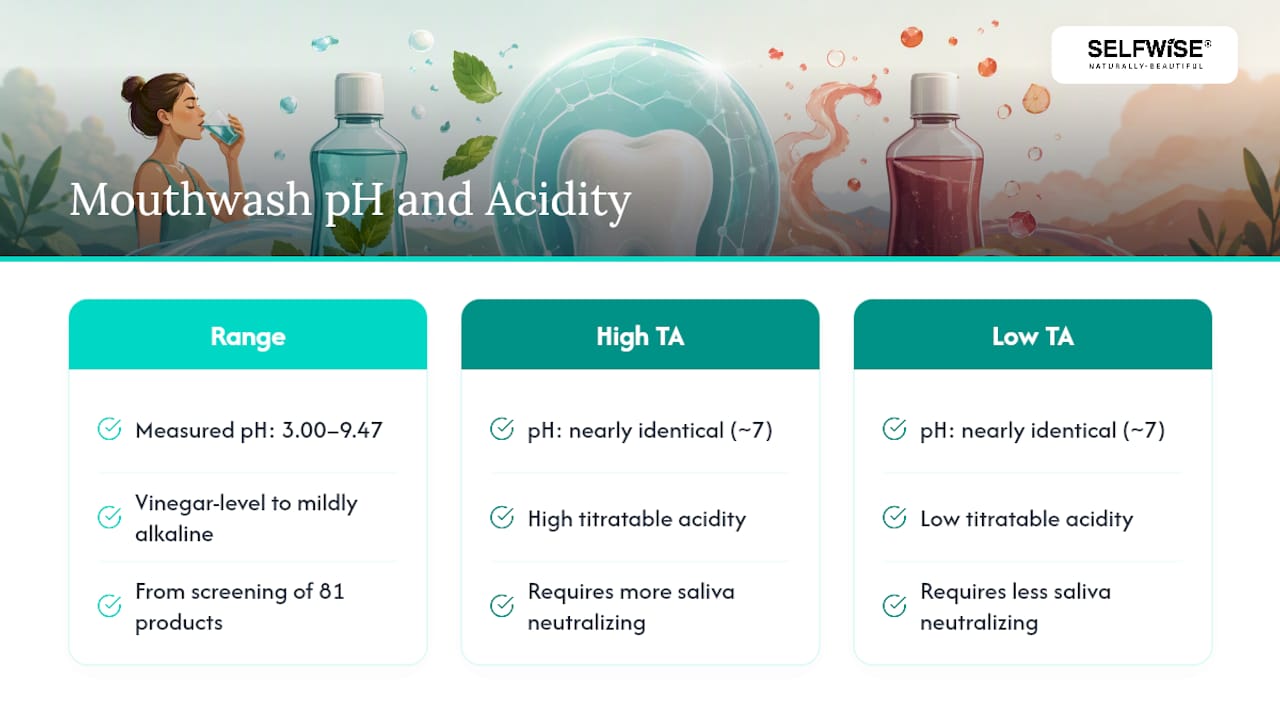
The practical lesson is that pH range on its own is a starting filter, not a final answer. A product sitting at pH 6.5 with low titratable acidity may be gentler on enamel than one at pH 7 with high acidity and weak buffering. Brands that disclose both figures, rather than just one flattering number, are giving you the fuller picture.
Evidence on Erosive Potential of Fluoride-Free Mouthwashes
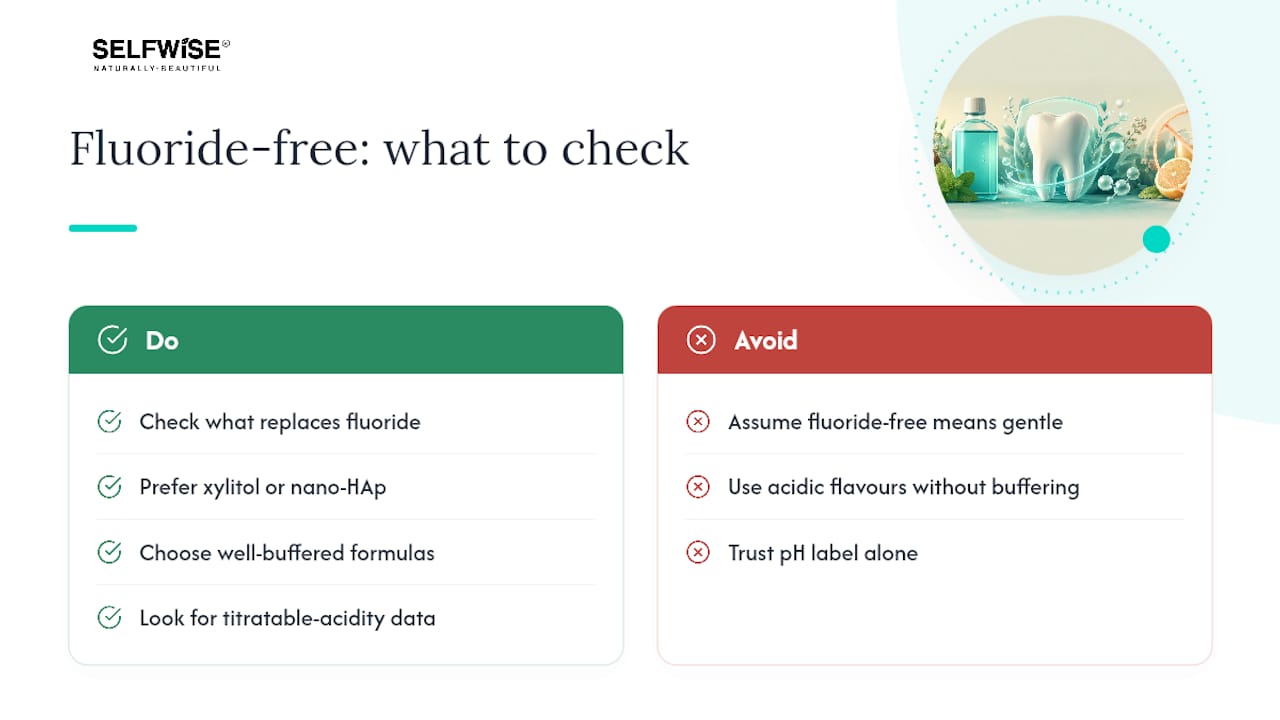
Fluoride-free doesn’t automatically mean gentle, and the lab data backs that up clearly. In erosion-simulation testing, some fluoride-free, acidic mouthwashes caused measurable enamel or dentin surface loss, while formulations at similar starting pH with different compositions caused little to none. Composition, not pH labeling, was the stronger predictor.
The screening of commercial fluoride-free mouthwashes found that most of the 81 products tested showed no erosive potential in ISO-style assays, which is reassuring. But a meaningful minority did, and those products tended to combine low pH with weak buffering capacity, exactly the combination that titratable-acidity testing is designed to catch.
This doesn’t mean every fluoride-free mouthwash is a risk. It means fluoride-free formulas rely more heavily on other protective mechanisms, xylitol, nano-hydroxyapatite, or careful pH engineering, to offset the absence of fluoride’s remineralizing action. When those protective ingredients are missing and an acidic flavor profile is present, erosion risk climbs. When they’re included deliberately, fluoride-free rinses can perform comparably to fluoride-containing ones in supporting enamel health.
The honest reading of the evidence: skip the assumption that “fluoride-free” and “gentle” are synonyms, and check what’s actually replacing fluoride’s protective role in the formula before trusting it for daily use.
A Natural Oral Care Perspective on pH Balance
The mouthwash aisle sells pH as a marketing word more than a scientific one, and that’s the real problem. A bottle can say “balanced” without disclosing titratable acidity, and most shoppers have no way to check. What convinces me the ingredient-first approach holds up is how consistently the lab data points back to composition over pH labels alone: xylitol and nano-hydroxyapatite show up again and again as the variables that actually change outcomes, not the number printed on a bottle. Insert Viktor’s credentials or bio to establish expertise] If you want to go deeper on how these ingredients work together, the [natural oral care guide is worth your time.
— Viktor
Selfwise Mouthwash Options and How to Start
If you’ve read this far, you already know the formula that matters: remineralizing actives plus xylitol, without the fluoride, alcohol, or flavor acids that muddy the erosion picture. The formulations build around that combination, rather than chasing a flashy pH number on the label.
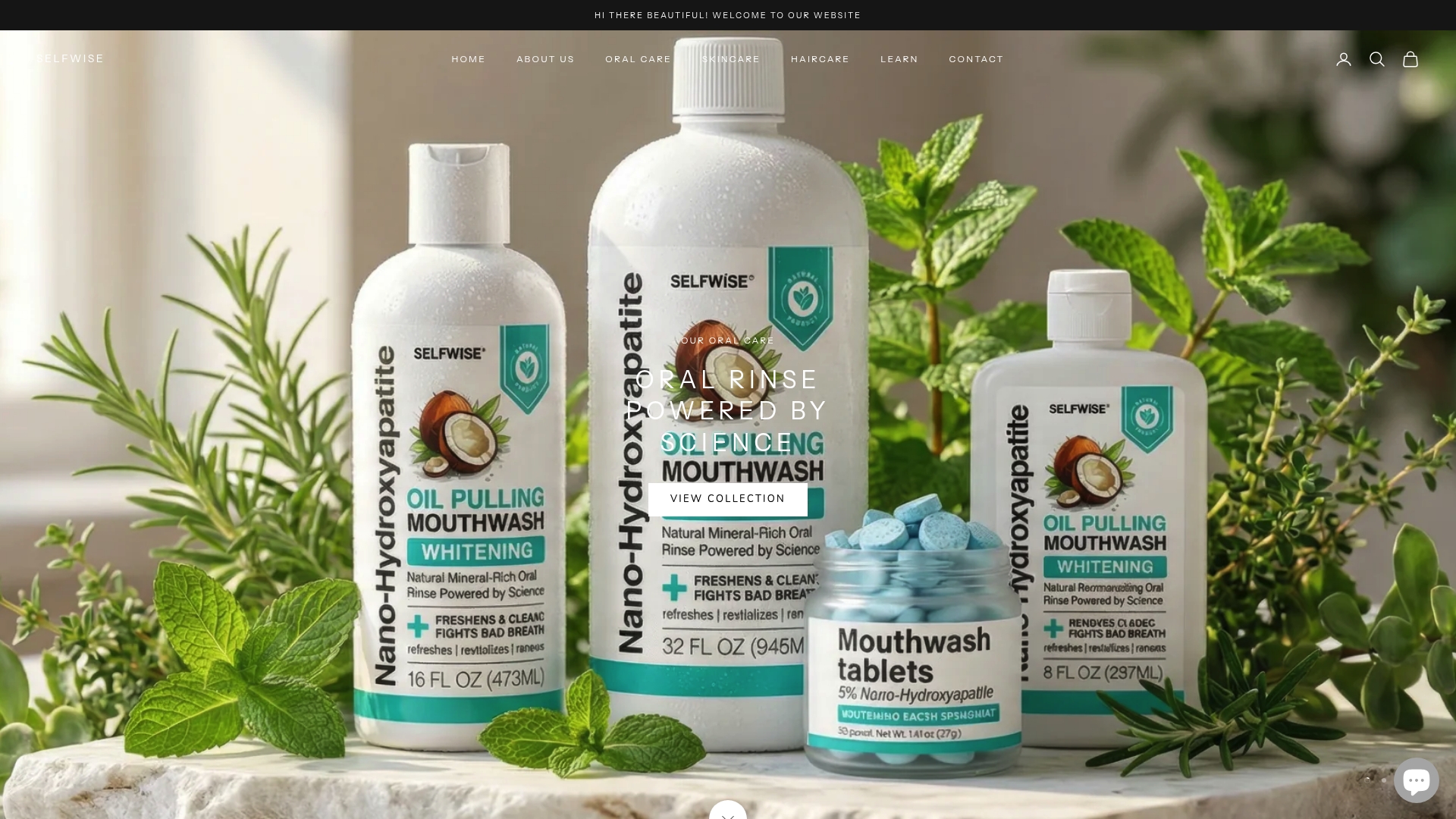
The nano-hydroxyapatite mouthwash tablets are formulated fluoride-free, aimed at supporting enamel remineralization after acid exposure, and skip the alcohol and synthetic additives found in many drugstore rinses. The xylitol mouthwash options in the same line target the bacterial side of the equation, reducing acid production at its source rather than just reacting to it after a meal. Both fit the checklist covered earlier in this article: remineralizing actives, xylitol, no harsh chemicals, and a formula built around enamel support rather than short-term flavor tricks.
Browse the full mouthwash collection to compare formats and find the one that fits your routine, whether that’s a rinse or the tablet format for travel and daily convenience.
This article is general information, not a substitute for advice from a qualified doctor. Consult a qualified healthcare professional about your own circumstances before acting on anything here.
Sources
- Neutralizing salivary pH by mouthwashes after an acidic challenge
- Erosion Potential of Commercial Fluoride‐Free Mouthwashes on Dental Hard Tissues
- Enamel/dentin surface loss caused by acidic fluoride-free mouthwashes (2026 study)
- Xylitol and oral health (review)
FAQ
How do you know if your mouth pH is off?
Common signs include increased sensitivity to hot, cold, or sweet foods, a rough or dull feeling on tooth surfaces, and more frequent cavities despite regular brushing. A dentist can measure salivary pH directly if you want a precise reading rather than relying on symptoms alone.
How can I neutralize the pH in my mouth?
Rinse with a remineralizing, low-acidity mouthwash after acidic food or drink, or use plain water and sugar-free gum if you’re unsure about a product’s formulation. Chewing gum stimulates saliva flow, which speeds up your mouth’s natural buffering process.
What is the best pH for mouthwash?
Neutral to mildly alkaline pH is generally the safer choice for daily use, though titratable acidity matters as much as the starting number. A formula with nano-hydroxyapatite or xylitol at a near-neutral pH tends to support enamel better than an acidic rinse marketed as “balanced.”
Why do dentists say don’t use mouthwash?
Dentists caution against certain mouthwashes, not the category as a whole, mainly because some fluoride-free, acidic formulas have shown measurable enamel erosion in lab testing. The concern is usually about alcohol content, added sugar, or high titratable acidity, not mouthwash use in general.