Why Rinsing After Brushing Matters: Spit, Don't Rinse
Spit, don’t rinse. Leaving a thin film of fluoride toothpaste on your enamel is beneficial for most people, but guidance varies for children: use a pea-sized amount for ages 3–6 and supervise spitting, minimizing rinsing as recommended by pediatric dental guidelines. Adults should follow spit-don’t-rinse unless a specific clinical scenario or dentist instruction applies. Leaving a thin film of fluoride toothpaste on your enamel keeps topical protection working for minutes after you put down the brush. The American Dental Association recommends spitting out excess toothpaste and skipping the water rinse, and the American Academy of Pediatric Dentistry echoes that guidance for children. If you prefer fluoride-free products, Selfwisebrand’s nano hydroxyapatite and xylitol formulas follow a different mechanism, covered below.
Two things to do right now:
- Spit out the excess toothpaste thoroughly after brushing.
- Skip the water rinse and wait at least 10–30 minutes before eating, drinking, or using a non-fluoride mouthwash.
Key Takeaways
Skipping the post-brush rinse is the single easiest habit change for preserving topical fluoride and reducing cavity risk.
| Point | Details |
|---|---|
| Spit, don’t rinse | Leave fluoride on your teeth after brushing; rinsing washes away the protective film. |
| Wait 10–30 minutes | Avoid eating, drinking, or using non-fluoride mouthwash for at least 10–30 minutes post-brushing. |
| Children need supervision | Use a pea-sized amount for ages 3–6 and supervise spitting; minimize rinsing per AAPD guidance. For children under 3, use a rice-grain-sized smear and always supervise to reduce ingestion risk. |
| Mouthwash timing matters | A non-fluoride mouthwash used immediately after brushing reduces salivary fluoride retention. |
| Selfwisebrand fluoride-free option | Nano hydroxyapatite and xylitol mouthwashes offer a natural alternative for fluoride-free routines. |
Table of Contents
- Why rinsing after brushing matters: how fluoride actually protects your teeth
- What the studies show about skipping the rinse
- How to build the spit-don’t-rinse routine into your day
- When rinsing is appropriate and child safety rules
- Does “spit, don’t rinse” apply to fluoride-free products?
- The evidence is clear, but your dentist knows your mouth
- Selfwisebrand’s fluoride-free alternatives for a natural routine
- Sources
- FAQ
Why rinsing after brushing matters: how fluoride actually protects your teeth
Fluoride works in two distinct ways. Systemic fluoride, absorbed through food and water, incorporates into developing teeth from the inside. Topical fluoride, the kind in your toothpaste, works directly on the tooth surface you just brushed. That distinction is why the rinse question matters at all.
When you brush, fluoride ions from the paste sit against your enamel and drive a process called remineralization. Acid from bacteria dissolves tiny amounts of mineral from enamel constantly; fluoride helps replace those minerals with a harder, more acid-resistant compound called fluorapatite. The catch: that ion exchange takes time, and it requires fluoride to stay in contact with the tooth surface.
Standard over-the-counter toothpastes contain a fluoride concentration sufficient to create a meaningful reservoir on your teeth after brushing, but only if you don’t wash it away immediately.
- Topical fluoride acts on the surface; contact time is the key variable.
- Remineralization depends on fluoride ions being available at the enamel surface for minutes after brushing.
- Toothpaste formulation changes how long fluoride stays available. Research shows that amine fluoride formulas can sustain higher salivary fluoride concentrations at later timepoints than some sodium fluoride formulas.
- Salivary flow affects retention too. Higher flow dilutes the fluoride reservoir faster, which is one reason individual results vary.
Pro Tip: Brush last thing at night, when salivary flow drops naturally. Lower flow means fluoride lingers on your enamel longer, giving remineralization more time to work while you sleep.
What the studies show about skipping the rinse

The clinical evidence is consistent, if modest in scale. A small crossover trial (n=10) measured salivary fluoride after brushing with and without rinsing. The no-rinse group showed higher salivary fluoride immediately after brushing and for up to 30 minutes afterward. Importantly, systemic fluoride absorption, measured in urine and plasma, showed no significant difference between groups.
A randomized controlled trial published in BMC Oral Health compared rinsing and non-rinsing across multiple toothpaste formulas and time points. Non-rinsing consistently produced higher salivary fluoride concentrations, though the size of the difference varied by formula and measurement window.
Elevated salivary fluoride was observed for up to 30 minutes post-brushing in the no-rinse group — a finding from a crossover study of 10 participants. Small sample size means this should be treated as a directional signal, not a definitive benchmark.
The evidence base has real limits, and it’s worth being honest about them:
- Most trials are small (often under 20 participants), limiting statistical power.
- Toothpaste formulations vary widely, making cross-study comparisons difficult.
- Follow-up periods rarely extend beyond two hours.
- Rinsing protocols differ between studies (volume of water, number of rinses), adding noise to comparisons.
The practical takeaway: the direction of evidence is clear and consistent across studies. Rinsing accelerates fluoride clearance. The exact magnitude of benefit from skipping it depends on your toothpaste, your saliva, and your habits.
How to build the spit-don’t-rinse routine into your day
A simple sequence makes this easy to stick to. Follow these brushing tips for technique, then apply the routine below.
- Floss first. Removing debris before brushing gives fluoride better contact with clean tooth surfaces.
- Use the right amount. Adults: a small, pea-sized amount is plenty. More paste doesn’t mean more protection.
- Brush for two full minutes. Cover all surfaces: outer, inner, and chewing.
- Spit thoroughly. Get rid of the excess paste. Do not rinse.
- Wait 10–30 minutes before eating, drinking, or using a non-fluoride mouthwash.
Dos and don’ts:
- Do spit out excess paste completely.
- Do supervise children and use only a pea-sized amount for ages 3–6.
- Don’t rinse with water immediately after brushing.
- Don’t use a non-fluoride mouthwash right after brushing. A randomized study found that rinsing with a non-fluoride mouthwash after brushing reduced salivary fluoride retention significantly. A fluoride mouthwash, by contrast, maintained higher fluoride levels. If you use mouthwash, delay it by at least 20 minutes, or use it at a separate time of day.
- Don’t eat or drink for at least 10 minutes after brushing, and 30 minutes is better if you can manage it.
Pro Tip: Floss before you brush, not after. This is the sequence most dental professionals prefer: floss loosens debris, brushing sweeps it away, and the fluoride film is the last thing touching your teeth.
When rinsing is appropriate and child safety rules
The no-rinse recommendation has real exceptions. Knowing when to rinse is as useful as knowing when not to.
For children:
- Use a rice-grain-sized smear for children under 3; a pea-sized amount for ages 3–6.
- Supervise spitting until children can reliably spit without swallowing.
- The AAPD recommends minimizing rinsing after brushing to maximize topical benefit while keeping ingestion risk low. Supervision is the primary safety strategy, not routine rinsing.
- Acute fluoride toxicity from normal toothbrushing is rare in adults using standard OTC toothpaste. For young children, the AAPD’s guidance on probable toxic doses underscores why pea-sized amounts and supervised spitting matter more than rinsing.
When adults should rinse:
- Accidental ingestion of a large amount of toothpaste (rinse and contact Poison Control if the amount was significant).
- Severe gag reflex that makes retaining paste uncomfortable or unsafe.
- Immediate need to clear a strong taste before an appointment or social situation.
- After a clinical fluoride treatment at the dentist, follow your dentist’s specific instructions. Clinical fluoride treatments are typically applied without immediate rinsing, with patients advised to avoid eating, drinking, or rinsing for at least 30 minutes.
A systematic review on mouthrinses found that certain rinses used as adjuncts can reduce plaque and gingivitis, but the evidence for routine post-brushing rinsing as a gum-health strategy is less clear. When a dentist prescribes a specific rinse, follow that instruction over the general no-rinse guidance.
Does “spit, don’t rinse” apply to fluoride-free products?
The short answer: not in the same way. The “spit, don’t rinse” recommendation exists specifically to preserve topical fluoride. If you’re using a fluoride-free product, the fluoride-retention mechanism doesn’t apply, but contact time can still matter depending on the active ingredients.
- Nano hydroxyapatite (nHA): This mineral compound remineralizes enamel by a different pathway, depositing calcium and phosphate directly onto the tooth surface. Leaving an nHA-based product in contact with teeth longer may support that process, but follow the manufacturer’s directions since formulations vary. For more on how nHA works, see this explainer on hydroxyapatite’s oral care benefits.
- Xylitol: Works by disrupting the bacteria that produce acid, not by direct mineral exchange. Contact time still helps, but the mechanism is bacteriostatic rather than remineralizing.
- Oil pulling: A pre-brush or standalone practice. Follow product directions for hold time and spitting.
For readers who prefer to avoid fluoride entirely, the Selfwisebrand fluoride-free collection offers nano hydroxyapatite and xylitol-based options formulated without harsh chemicals. The natural oral care routine guide walks through how to build a complete daily routine around these ingredients.
Pro Tip: With fluoride-free remineralizing products, maximize contact time by applying after flossing and avoiding food or drink for 15–20 minutes. Check the product label for specific guidance, since nHA concentration and formulation affect the recommended contact window.
The evidence is clear, but your dentist knows your mouth
The research on post-brushing rinsing points in one direction: skipping the rinse preserves more fluoride on your teeth, and that matters most if you’re prone to cavities. The NHS advises against rinsing with water immediately after brushing for exactly this reason, and the ADA’s guidance aligns with it.
That said, general advice has limits. If you have a history of decay, dry mouth, wear orthodontic appliances, or take medications that affect saliva, the standard routine may need adjusting. A dentist who knows your history can tell you whether a prescription-strength fluoride toothpaste, a specific mouthwash timing, or a different brushing schedule makes more sense for you. The habit change is simple; the personalization is where a professional adds real value.
Selfwisebrand’s fluoride-free alternatives for a natural routine
Not everyone wants fluoride in their routine, and that’s a legitimate choice. Selfwisebrand’s nano hydroxyapatite mouthwash tablets and xylitol mouthwash with nano hydroxyapatite are formulated without fluoride, alcohol, or harsh chemicals, using ingredients that support remineralization and freshen breath through a different mechanism.
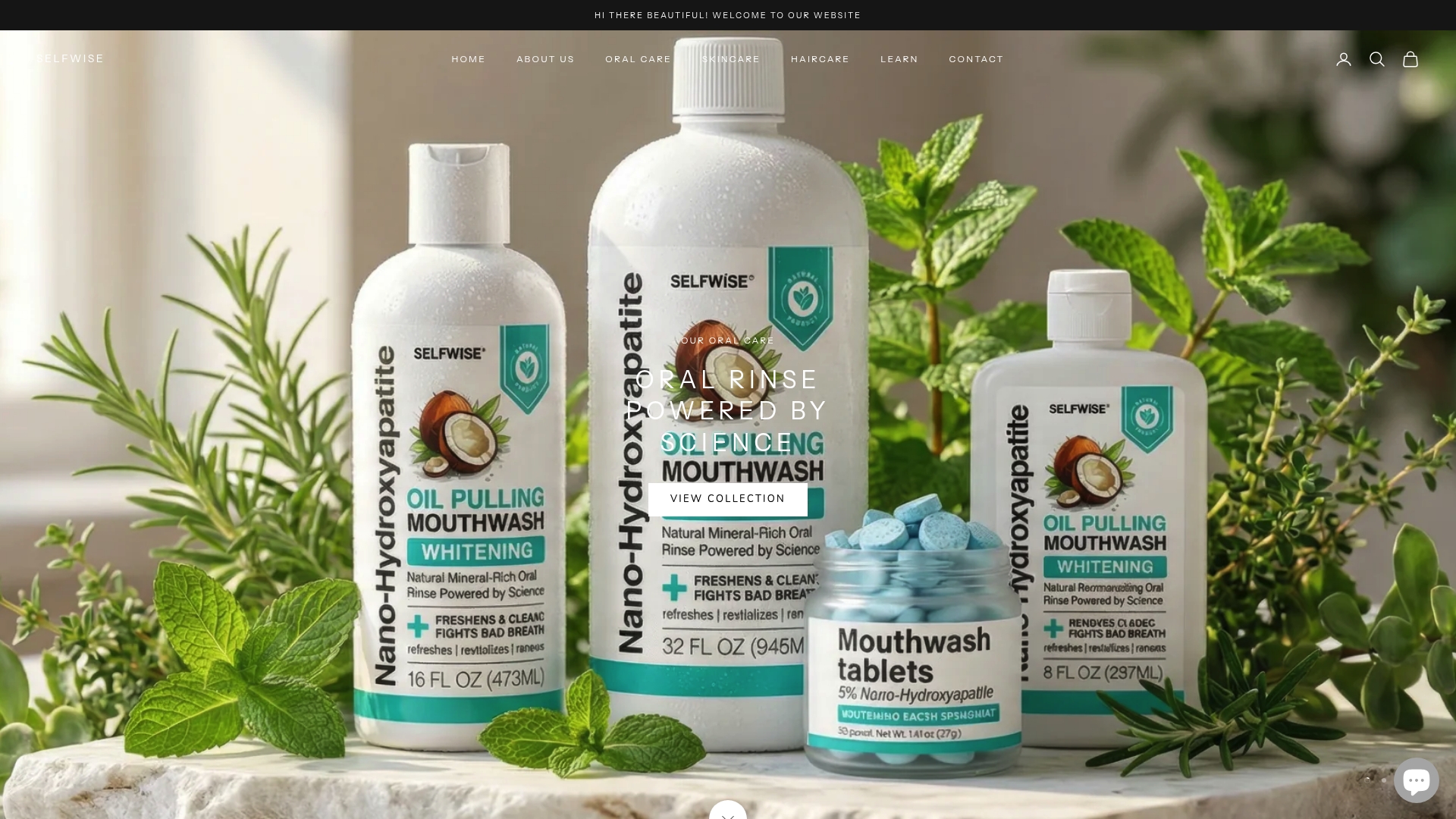
These products are designed for health-conscious people who want a clean, simple routine without the trade-offs of conventional formulas. They’re not a medical replacement for fluoride if your dentist has prescribed it, but for readers building a natural oral care routine from scratch, they’re a strong starting point. Browse the full mouthwash collection to find the right fit for your routine.
Sources
- Kinetics of fluoride after brushing with the no-rinse method
- Study comparing fluoride formulations and salivary fluoride retention
- Fluoride Therapy
- Should you Rinse After Brushing? | American Dental Association
- Effect of rinsing with mouthwashes after brushing with a fluoridated toothpaste on salivary fluoride concentration
- How to keep your teeth clean - NHS
This article is general information, not a substitute for advice from a qualified doctor. Consult a qualified healthcare professional about your own circumstances before acting on anything here.
FAQ
Should you rinse after brushing your teeth?
No. The ADA and NHS both recommend spitting out excess toothpaste and skipping the water rinse to preserve the fluoride film on your teeth.
How long should you wait before eating after brushing?
Wait at least 10–30 minutes. This gives topical fluoride time to work on your enamel before food or drink dilutes or removes it.
Does rinsing with mouthwash after brushing reduce fluoride?
Yes, if the mouthwash is non-fluoride. Research shows that using a non-fluoride mouthwash immediately after brushing significantly lowers salivary fluoride retention. Delay it by at least 20 minutes, or use it at a separate time.
Is it safe for children to skip rinsing after brushing?
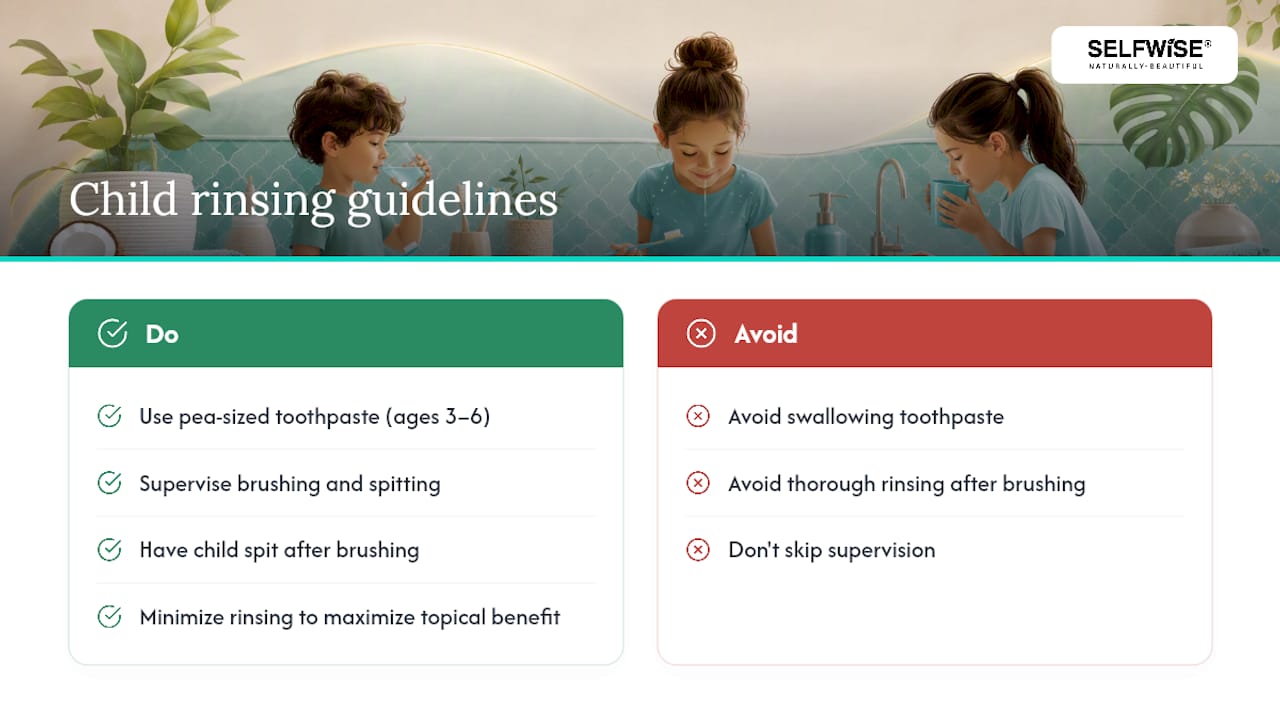
Yes, with supervision. The AAPD recommends a pea-sized amount of toothpaste for ages 3–6 and supervised spitting. Minimizing rinsing maximizes topical benefit while keeping ingestion risk low.
Does “spit, don’t rinse” apply to fluoride-free toothpaste?
Not in the same way. The recommendation targets fluoride retention specifically. With fluoride-free products like nano hydroxyapatite or xylitol formulas, follow the manufacturer’s directions for contact time and rinsing.