Why a Salt Water Rinse Is Effective for Oral Health
Salt water rinses work. A growing body of clinical evidence confirms that saline is an effective, low-cost adjunct for reducing oral bacteria, lowering gingival inflammation, and supporting soft-tissue healing after dental procedures. A systematic review of randomized and controlled trials found consistent improvements in plaque index, gingival index, and bleeding on probing — making saline a genuinely useful part of a natural oral care routine, not just folk wisdom.
Use a salt water rinse for daily gum maintenance, after tooth extractions, and for canker sore relief. If you have persistent bleeding, spreading swelling, or signs of infection, see a dentist rather than rinsing and waiting.
Basic recipe:
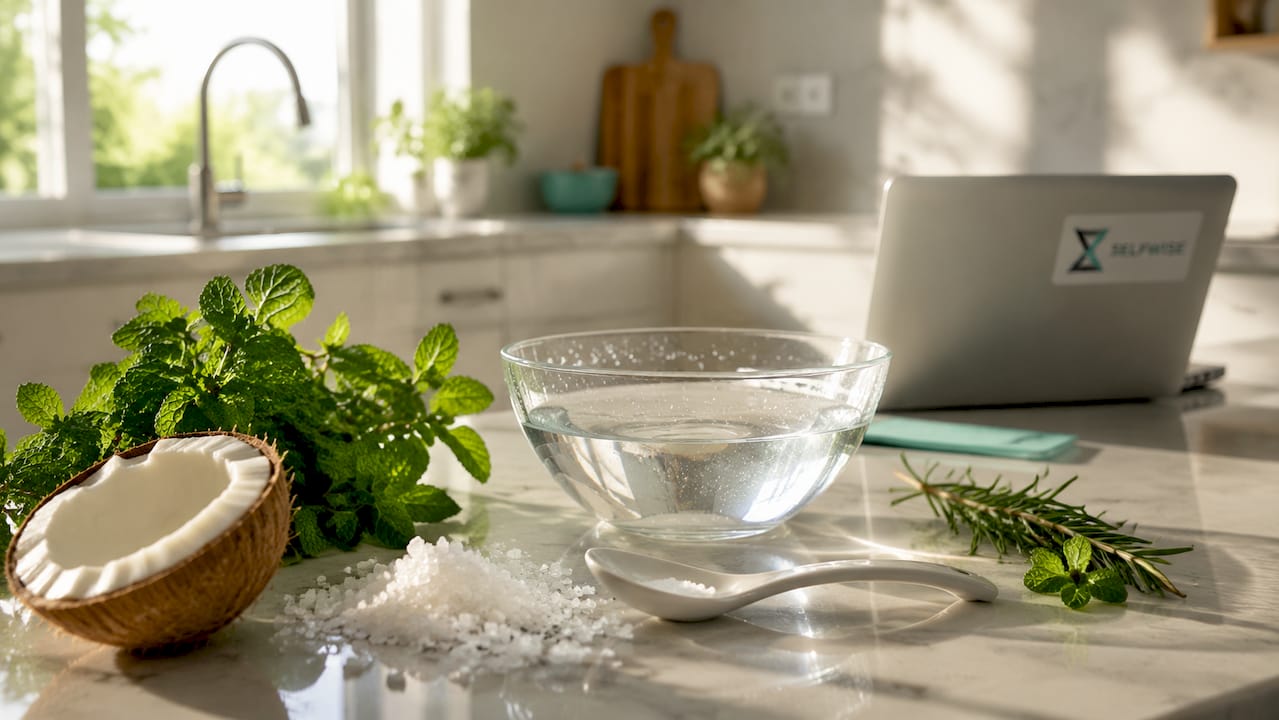
- ½ to 1 teaspoon of non-iodized salt dissolved in 8 oz of warm (not hot) water
- Swish gently for 30–60 seconds, then spit
- Repeat up to 3 times daily, or as directed after a dental procedure
Table of Contents
- Why a salt water rinse is effective: the biology behind it
- What the clinical research actually shows
- How to make and use a salt water rinse correctly
- Who should be cautious and what daily use actually means
- What a salt rinse cannot fix and when you need a dentist
- When a formulated natural rinse adds more than plain saline
- Key Takeaways
- The case for keeping it simple — and knowing when simple isn’t enough
- Ready for a natural rinse that goes further than saline?
- Useful sources
- FAQ
Why a salt water rinse is effective: the biology behind it
Three distinct mechanisms explain why saline outperforms plain water and holds its own against chemical antiseptics for many oral health applications.
Osmotic dehydration of bacteria. Hypertonic saline creates an osmotic pressure gradient that pulls water out of bacterial cells. The cells dehydrate, lose structural integrity, and can no longer function or replicate. This is not a chemical reaction — it is pure physics, which is why bacteria cannot develop resistance to it the way they can to antibiotics or chlorhexidine.
Adhesion to the plaque matrix. Researchers note that saline’s lasting antibacterial effect is partly due to adhesion to the glycoprotein plaque matrix, which extends activity well beyond the moment you spit. A plain water rinse washes away immediately; saline lingers in the biofilm environment and keeps working.
Anti-inflammatory and wound-healing effects. Saline promotes fibroblast migration and extracellular matrix activity, both of which are critical for soft-tissue repair. It also reduces edema by drawing excess fluid out of swollen tissue. Dentists recommend it after extractions specifically because it supports clot stability and lowers the risk of dry socket, while also easing pain and swelling.
Statistic callout: A Brazilian systematic review reported that saline rinses reduced plaque index by 38–57% across multiple included trials, with colony-forming unit reductions of 30–70% depending on concentration and exposure time.
What the clinical research actually shows
The evidence base for saline is solid for several specific outcomes, though it has real limits worth knowing.
| Outcome metric | Saline result | Typical chlorhexidine result | Clinical implication |
|---|---|---|---|
| Plaque index reduction | 38–57% across trials | Generally higher in direct comparisons | Saline is meaningful but not maximum potency |
| Colony-forming unit reduction | 30–70% by concentration | Comparable at matched time points | Concentration matters; 5.8% approaches CHX efficacy |
| Antibacterial duration (2% saline) | ~3 hours | Longer with CHX formulations | Rinse more frequently for sustained effect |
| Antibacterial duration (5.8% saline) | ~5 hours | Similar to 0.1% CHX at ~5 hours | Clinically comparable for short-term use |
| Post-extraction healing | Supported; reduces dry socket risk | Not indicated post-op | Saline is preferred after extractions |
| Side effects | Minimal; temporary sting on ulcers | Tooth staining, taste disruption, mucosal irritation | Saline wins on tolerability |
A controlled trial comparing saline concentrations and chlorhexidine found that 5.8% saline produced antibacterial activity lasting roughly 5 hours — comparable to 0.1% chlorhexidine — while 2% saline lasted about 3 hours. The 23% concentration lasted longer still but caused significant taste problems and mucosal irritation, making it impractical for routine home use.
Statistic callout: A crossover clinical trial found that 5.8% saline reduced oral flora by ~50%, with home-made 2% saline producing antibacterial effects lasting approximately 3 hours.
What the evidence supports strongly:
- Post-extraction wound healing and dry socket prevention
- Adjunctive reduction of gingival inflammation (gingivitis)
- Short-term bacterial load reduction in the oral cavity (with reductions of about 30–70% in colony-forming units seen in clinical studies)
- Canker sore comfort and healing support
Where the evidence is thinner:
- Long-term periodontal disease management as a standalone therapy
- Deep pocket disinfection (saline cannot reach subgingival biofilm effectively)
- Study heterogeneity across trials makes precise effect-size comparisons difficult; longer, standardized trials are still needed
Clinicians consistently recommend isotonic saline for soothing and wound healing, reserving higher concentrations for short-term antibacterial use when clinically indicated.
How to make and use a salt water rinse correctly
Getting the recipe right matters. Too weak and you lose the osmotic effect; too strong and you irritate tissue.
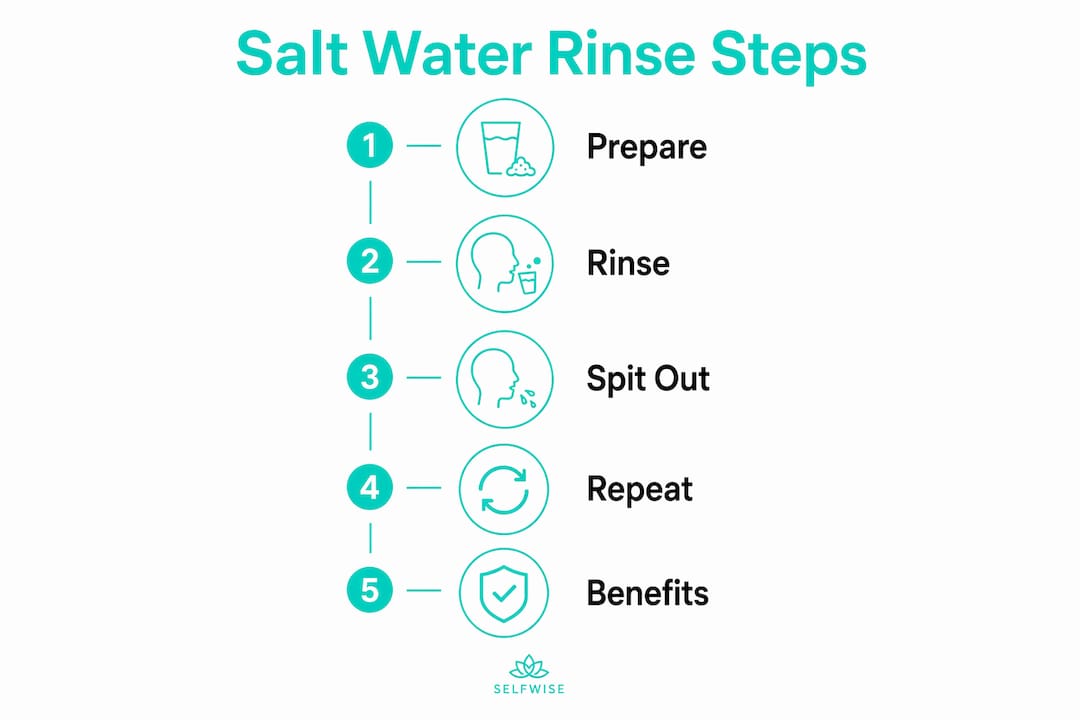
Step-by-step instructions:
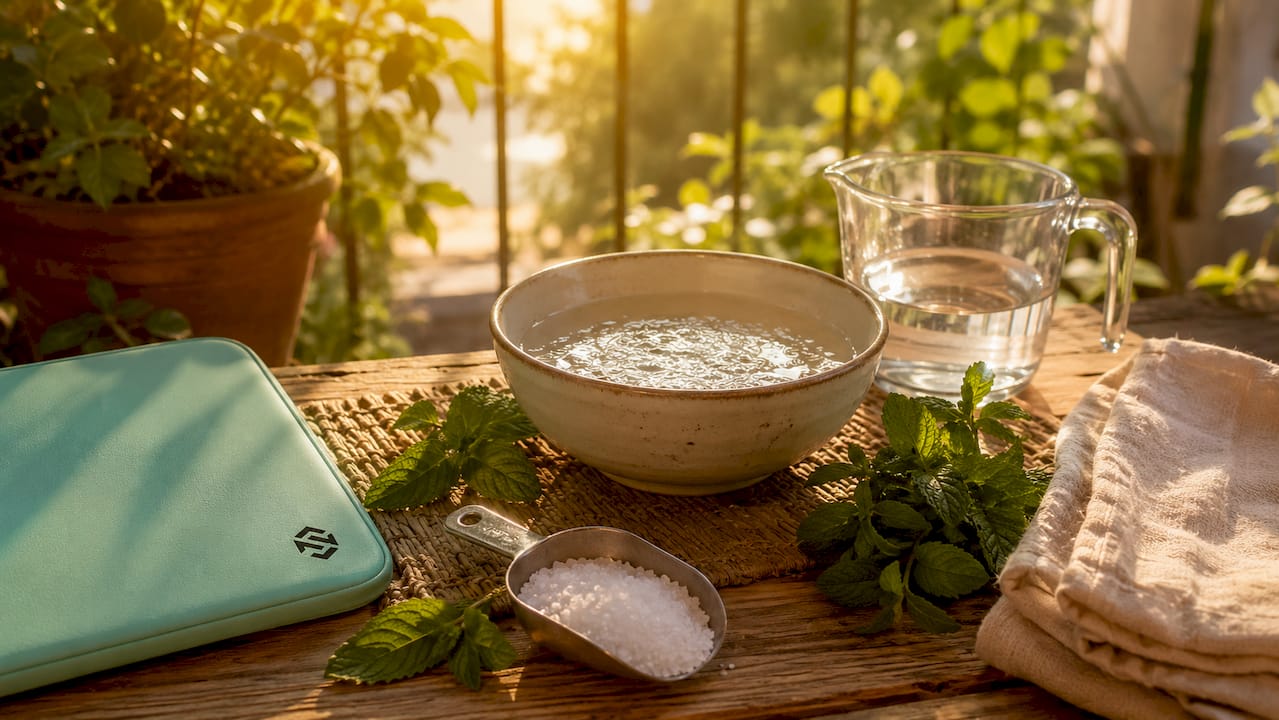
- Measure 8 oz (about 240 mL) of warm water — warm enough to dissolve the salt easily, not so hot it burns.
- Add ½ teaspoon of non-iodized salt for a mild isotonic-range rinse, or up to 1 teaspoon for a mildly hypertonic solution. The ½-teaspoon version is gentler and better for daily use or fresh wounds; 1 teaspoon provides a stronger antibacterial effect for short-term use.
- Stir until the salt fully dissolves.
- Take a mouthful, swish gently for 30–60 seconds, and spit. Repeat until you have used the full glass, or rinse in two to three rounds.
- For a sore throat or post-nasal drip, tilt your head back and gargle for 15–30 seconds before spitting.
- Rinse up to 3 times daily for acute situations; once daily is appropriate for general maintenance.
Timing relative to brushing: Rinse after brushing, not before. Brushing first removes loose debris and plaque, so the saline contacts the tissue directly. After an extraction, wait at least 24 hours before rinsing and then use only gentle swishing — no vigorous gargling that could dislodge the clot.
Dos and don’ts:
- ✓ Use warm, not boiling, water
- ✓ Spit completely after every rinse
- ✓ Use non-iodized salt (iodized salt can irritate sensitive tissue)
- ✗ Do not swallow the rinse — especially at higher concentrations
- ✗ Do not use concentrations above 1 teaspoon per 8 oz for routine daily rinsing
- ✗ Do not rinse vigorously in the first 24 hours after an extraction
Pro Tip: If the sting on a fresh canker sore is too sharp, drop to ¼ teaspoon of salt per 8 oz for the first day or two. You still get the osmotic and anti-inflammatory benefit at a lower concentration, and the tissue tolerates it better as it starts to heal.
For more on building a full gum health routine around saline, Selfwisebrand has a practical step-by-step guide worth bookmarking.
Who should be cautious and what daily use actually means
For most healthy adults, a daily salt water rinse is safe. The caveats are real but manageable.
Common minor effects include a temporary sting on open sores or ulcers (which fades quickly) and a mild salty taste that lingers. Both are normal and not a reason to stop unless the discomfort is severe.
Populations who should be careful:
- People on sodium-restricted diets (heart failure, kidney disease, hypertension): even though you spit the rinse out, some sodium is absorbed through the oral mucosa. Check with your physician before making saline rinsing a daily habit.
- Small children under 6: they cannot reliably spit, which means swallowing risk is real. Saline rinses are not appropriate for young children without direct supervision and clinician guidance.
- People with swallowing difficulties (dysphagia): same swallowing risk applies; avoid unsupervised use.
- People with open oral wounds or mucositis from chemotherapy: higher concentrations can irritate already-compromised tissue. Stick to very mild solutions and consult your care team.
On the mouthwash-and-blood-pressure question: research has found that certain antiseptic mouthwashes used twice daily can transiently raise blood pressure in some participants. Saline does not carry this risk, making it a reasonable alternative for people with cardiovascular concerns who want an oral rinse without the systemic effects of chlorhexidine or alcohol-based products.
When to call your provider:
- Oral pain that worsens after 48–72 hours of saline rinsing
- Swelling that spreads to the jaw, neck, or face
- Fever accompanying oral symptoms
- Numbness, difficulty swallowing, or difficulty opening the mouth
If you want to avoid the ingredients found in conventional mouthwashes, Selfwisebrand’s guide on oral care ingredients to avoid is a useful reference for building a cleaner routine.
What a salt rinse cannot fix and when you need a dentist
Saline is a support tool, not a treatment. Knowing the difference protects you from letting a real problem go unaddressed.
Hard limits of saline rinsing:
- Cannot remove calculus (hardened tartar). Only a dental scaler can do that.
- Cannot repair cavities or remineralize enamel on its own.
- Cannot reach deep periodontal pockets (generally 4 mm or deeper) where pathogenic bacteria live.
- Cannot substitute for professional debridement when active periodontal disease is present.
- Does not whiten teeth or reverse existing staining.
Red flags that require professional care:
- Bleeding gums that persist for more than two weeks despite improved hygiene
- A tooth or socket that becomes more painful, not less, after 72 hours
- Visible pus, foul odor that does not resolve, or a visible abscess
- Swelling that spreads beyond the immediate area
- Fever, chills, or difficulty swallowing alongside oral symptoms
- A sore or lesion that has not healed in three weeks
Saline buys time and reduces discomfort. It does not diagnose or treat the underlying cause of serious oral disease.
When a formulated natural rinse adds more than plain saline
Plain saline handles acute situations well. For daily enamel support, chronic dry mouth, or sustained antibacterial activity, a formulated natural rinse often does more.
Isotonic saline (home recipe, ~0.9%) is best for:
- Post-extraction wound care
- Canker sore relief
- Mild gingival soothing during illness or stress
Mildly hypertonic saline (~2%) is best for:
- Short-term bacterial load reduction
- Gingivitis adjunct therapy (alongside brushing and flossing)
- Sore throat gargling
Formulated remineralizing rinse (nano hydroxyapatite or xylitol blend) adds value when:
- You want to actively rebuild enamel mineral density, not just reduce bacteria
- Dry mouth is a recurring issue (xylitol stimulates saliva and inhibits Streptococcus mutans)
- You prefer a ready-made, consistent formula with stable active concentrations
- You want sustained antibacterial activity beyond what a single saline rinse provides
The two approaches complement each other. Saline is the right call immediately after an extraction or during an acute flare. A formulated natural rinse with nano hydroxyapatite or xylitol is the better daily driver for long-term enamel and gum health. For readers who want to understand the distinction between cosmetic freshening and therapeutic action, Selfwisebrand’s breakdown of cosmetic vs. therapeutic mouthwash is worth a read.
Key Takeaways
Salt water rinses are clinically supported for reducing oral bacteria, lowering gingival inflammation, and accelerating soft-tissue healing — with plaque index reductions of 38–57% documented across multiple trials.
| Point | Details |
|---|---|
| Osmosis is the core mechanism | Hypertonic saline dehydrates bacterial cells and adheres to plaque matrix, extending antibacterial action for hours. |
| Concentration determines duration | 2% saline lasts ~3 hours; 5.8% lasts ~5 hours and approaches the efficacy of 0.1% chlorhexidine. |
| Standard home recipe | ½ to 1 teaspoon of non-iodized salt in 8 oz of warm water; spit completely, do not swallow. |
| Safety caveats apply | People on sodium-restricted diets, young children, and those with dysphagia should consult a clinician before daily use. |
| Selfwisebrand for daily enamel support | For remineralization and sustained antibacterial activity beyond saline, Selfwisebrand’s nano hydroxyapatite and xylitol rinses are the recommended next step. |
The case for keeping it simple — and knowing when simple isn’t enough
Salt water’s reputation as a home remedy has outlasted almost every pharmaceutical trend of the past century, and the clinical data explains why. The osmotic mechanism is elegant: no proprietary chemistry, no resistance risk, no staining. For post-extraction care especially, saline is not just “good enough” — it is often the clinician’s first recommendation precisely because it does not interfere with clot formation the way alcohol-based rinses can.
Where I think people go wrong is treating saline as a complete oral care strategy. It is not. It reduces bacterial load temporarily and supports healing, but it does nothing for enamel mineral density, does not address the root causes of chronic gum disease, and has no lasting effect on the biofilm once the osmotic gradient dissipates. The readers who get the most from saline are the ones who use it for what it is genuinely good at — acute care, post-op support, and gum maintenance — while pairing it with a formulated rinse that handles the remineralization and sustained antibacterial work.
The other thing worth saying plainly: “natural” does not mean unlimited. High-concentration saline used daily can irritate mucous membranes, and anyone with cardiovascular or kidney conditions needs to factor in sodium exposure. The science supports saline as a safe, effective adjunct. It does not support using it as a substitute for professional dental care when real pathology is present.
Ready for a natural rinse that goes further than saline?
Salt water is a genuinely effective starting point, but it has a ceiling. If you want daily enamel remineralization, sustained antibacterial activity, and the convenience of a ready-made formula, Selfwisebrand’s natural mouthwash collection is built for exactly that.
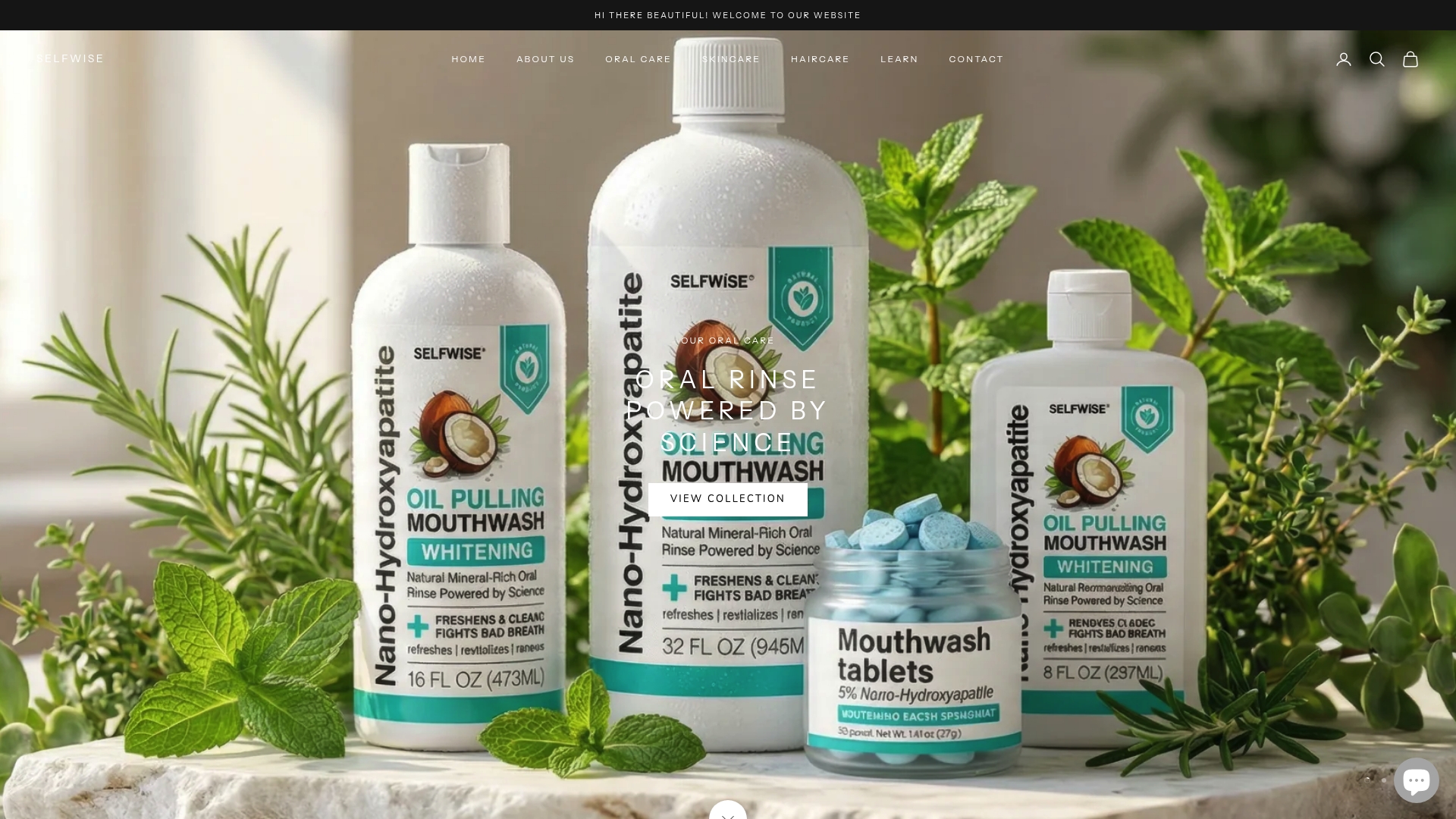
The nano hydroxyapatite mouthwash tablets give you fluoride-free enamel support in a portable, dissolvable format — no mixing, no measuring. The xylitol mouthwash with nano hydroxyapatite adds bacterial control and saliva stimulation for people dealing with dry mouth or a higher cavity risk. Both are formulated without alcohol, harsh chemicals, or artificial additives. Browse the full mouthwash collection to find the right fit for your routine.
Useful sources
The clinical findings in this article draw from the following primary sources:
- Plaque and gingival index reductions; systematic review of saline efficacy: Efficacy of saline or salt-based solution mouthrinse in improving periodontal health — Brazilian systematic review covering multiple RCTs; the primary source for the 38–57% plaque index and 30–70% CFU reduction figures.
- Concentration-dependent duration and comparison with chlorhexidine: Comparison of the effect of saline mouthwash versus chlorhexidine on oral flora — controlled trial establishing the 2%, 5.8%, and 23% saline duration-of-action data.
- Crossover trial on oral flora reduction: Effect of Saline Mouthwash on the Oral Flora — 10-participant crossover study confirming concentration-dependent bacterial reductions and plaque matrix adhesion.
- Broader systematic review of periodontal outcomes: Efficacy of saline or salt-based solution mouthrinse in improving periodontal health (ICT UNESP) — review of randomized and controlled trials confirming improvements in PI, GI, bleeding on probing, and probing depth.
- Clinician commentary and post-extraction guidance: How Salt Water Rinse Benefits Oral Health (Healthline) — patient-facing summary with dentist commentary on osmotic disinfection, wound healing, and dry socket prevention.
- Mouthwash and cardiovascular effects: Is mouthwash bad for the heart? (The Conversation) — overview of research linking certain antiseptic mouthwashes to transient blood pressure increases; context for why saline is preferred for some patients.
FAQ
Do salt water rinses actually work?
Yes. Multiple randomized trials and systematic reviews confirm that saline rinses reduce plaque index, lower gingival inflammation, and support wound healing after extractions. They are most effective as an adjunct to brushing and flossing, not a replacement.
Is it good to do a salt water rinse every day?
For most healthy adults, once-daily saline rinsing is safe and beneficial for gum maintenance. People on sodium-restricted diets or with kidney or heart conditions should check with their physician first, since some sodium is absorbed through the oral mucosa even when you spit.
Do I brush before or after a salt water rinse?
Brush first, then rinse with saline. Brushing removes loose debris and plaque so the saline contacts the gum tissue directly. The one exception is the first 24 hours after a tooth extraction, when you should avoid brushing near the socket entirely and rinse only very gently.
Why do some cardiologists flag certain mouthwashes?
Research has found that some antiseptic mouthwashes used twice daily can transiently raise blood pressure in certain individuals, likely by disrupting oral bacteria involved in nitric oxide production. Plain saline does not carry this risk, making it a safer choice for people with cardiovascular concerns who still want an effective oral rinse.