Hydroxyapatite Calcium: Natural Oral Care Benefits Explained
Fluoride has held the top spot in oral care for decades, and for most people, it’s simply “what toothpaste does.” But that assumption is getting a serious challenge. A growing body of research points to nano hydroxyapatite calcium as a remineralizing agent that can hold its own against fluoride in several key areas, without the chemical concerns that push so many health-conscious consumers toward natural alternatives. This article breaks down what hydroxyapatite calcium actually is, how it works at the surface of your teeth, what the latest clinical evidence shows, where it genuinely helps and where it doesn’t, and what to look for when picking a product that actually delivers.
Table of Contents
- What is hydroxyapatite calcium and how does it work?
- Evidence for enamel remineralization and sensitivity relief
- Beyond fluoride: Key nuances when choosing hydroxyapatite products
- Are there proven gum health benefits? What science says
- Safety and long-term use: Current knowledge and open questions
- Our perspective: How to approach hydroxyapatite calcium for oral health
- Try hydroxyapatite calcium for a science-backed, natural smile
- Frequently asked questions
Key Takeaways
| Point | Details |
|---|---|
| Natural enamel support | Hydroxyapatite calcium mimics your tooth’s natural structure for gentle protection and repair. |
| Comparable to fluoride | Nano-hydroxyapatite can match fluoride’s performance in some enamel and sensitivity outcomes. |
| Not a gum cure-all | Direct gum health benefits from nano-HAP are unproven, so stick with proven hygiene basics. |
| Choose the right product | Effectiveness depends on particle size, formulation, and scientific model—not all products are equal. |
| Monitor safety trends | Nano-hydroxyapatite appears safe but long-term studies are still needed for all ages. |
What is hydroxyapatite calcium and how does it work?
Hydroxyapatite calcium is not a lab invention. It’s the primary mineral that makes up your teeth and bones, accounting for roughly 97% of tooth enamel by weight. Your enamel is, in a very real sense, built from it. So when a toothpaste puts hydroxyapatite calcium back in contact with your teeth, it’s offering your enamel something it already recognizes.
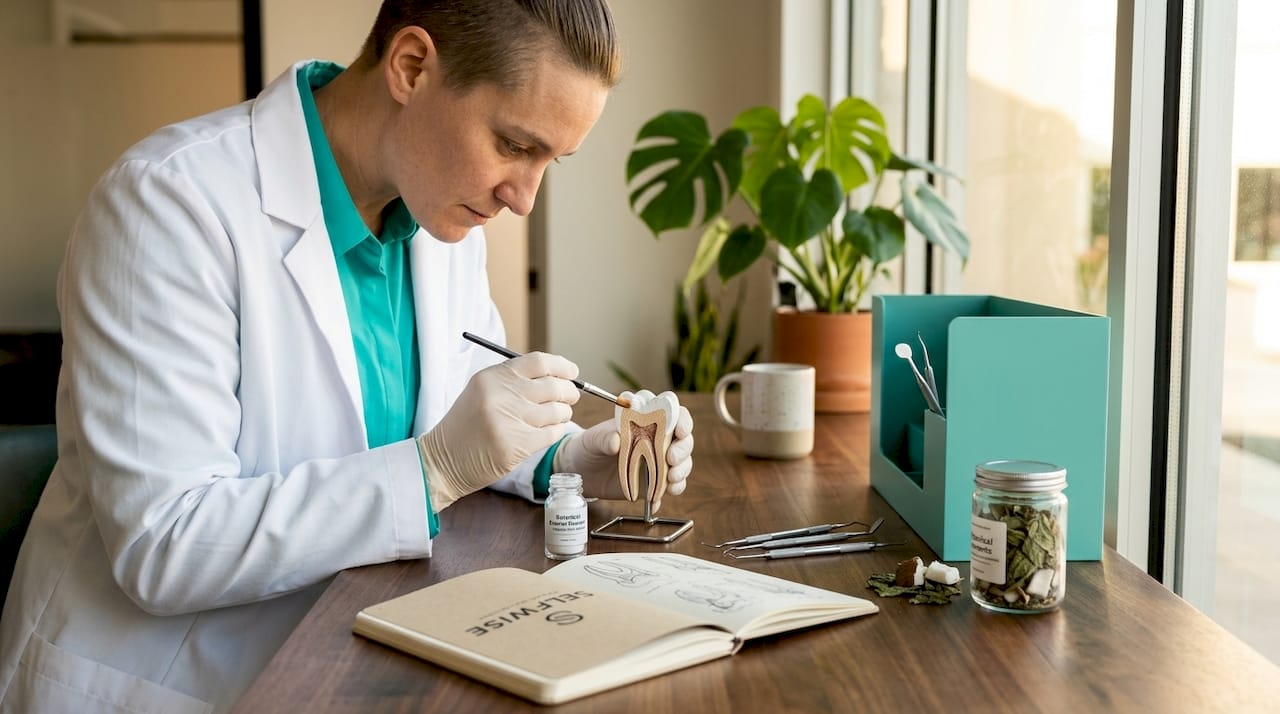
The version used in modern oral care products is nano-hydroxyapatite (nano-HAP). The “nano” refers to the particle size, typically measured in nanometers. These ultra-fine particles are small enough to physically integrate into the surface layer of enamel and dentin (the layer beneath enamel), filling in microscopic pits and cracks created by acid erosion. Regular (non-nano) hydroxyapatite particles are too large to interact meaningfully at that level, which is why particle size matters so much in this category.
Here’s how nano-HAP interacts with your tooth surfaces:
- Nano-sized particles adhere to the outer enamel layer through electrostatic attraction
- They deposit calcium and phosphate ions directly into demineralized zones
- Over time, new mineral layers form that mimic the natural crystal structure of enamel
- On dentin surfaces, nano-HAP can physically occlude (block) the exposed tubules responsible for sensitivity
Nano-HAP has mechanistic rationale as a calcium-phosphate source that can deposit in demineralized enamel and dentin, forming and occluding mineral layers in a process closely aligned with how natural remineralization works.
This concept is often called biomimicry, meaning the ingredient mimics a natural biological process. Understanding enamel structure and care gives you a clearer picture of why this matters so much: once enamel is gone, the body cannot fully regenerate it without support.
Evidence for enamel remineralization and sensitivity relief
Once you know what hydroxyapatite calcium does at a molecular level, the next question is: Does it really work for teeth and gums? Here’s what the research shows.
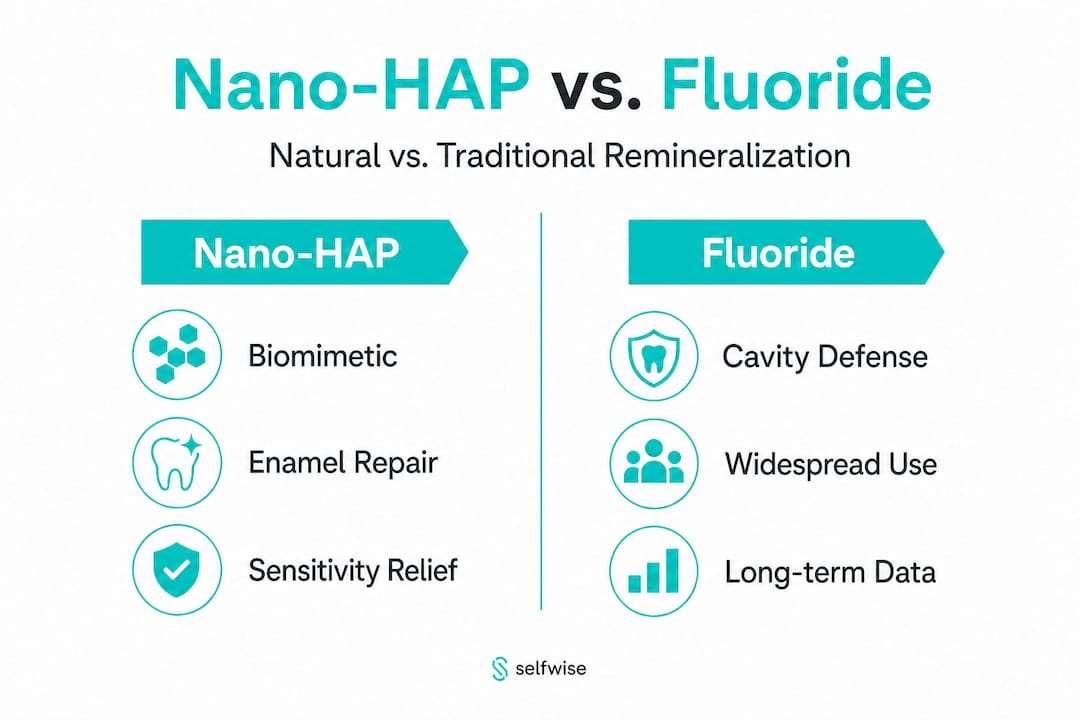
The short answer is yes, especially for early lesion management and sensitivity. Nano-HAP products show evidence for reducing and preventing enamel demineralization in caries-relevant settings and can perform comparably to fluoride in several key outcomes. That’s a meaningful statement, particularly for people who want to move away from fluoride without compromising their enamel health.
For tooth sensitivity specifically, the data is also encouraging. Clinical evidence exists for nano-HAP toothpastes in treating dentin hypersensitivity, including randomized controlled comparisons against an established desensitizing agent. Patients reported meaningful reductions in pain triggered by cold, heat, and pressure.
Side-by-side comparison: nano-HAP vs. fluoride
| Outcome | Nano-HAP | Fluoride |
|---|---|---|
| Enamel remineralization (early lesions) | Comparable in multiple studies | Well-established standard |
| Dentin sensitivity relief | Strong clinical support | Moderate (depends on formulation) |
| Cavity prevention (advanced lesions) | Limited evidence | Established gold standard |
| Biocompatibility/safety profile | High, no toxicity at use levels | Generally safe, concerns at high doses |
| Suitable for children and sensitive users | Yes, especially fluoride-avoiders | Yes, but age-specific dosing required |
Here are the main steps in the remineralization process as the current evidence supports them:
- Nano-HAP particles contact the tooth surface during brushing or rinsing
- Electrostatic attraction pulls particles toward negatively charged demineralized zones
- Calcium and phosphate ions are released and begin filling mineral gaps
- Repeated exposure (twice daily use) builds up the deposited mineral layer
- The restored surface becomes more acid-resistant over time
Pro Tip: Nano-HAP delivers the most reliable outcomes for early-stage enamel lesions and sensitivity. If you already have significant decay or active cavities, no natural ingredient alone is a replacement for dental treatment. Use hydroxyapatite as part of prevention, not as a fix for existing damage.
Understanding the full picture of natural remineralization steps helps you see how nano-HAP fits into a broader protective strategy. For those with specific sensitivity concerns, a targeted look at natural toothpaste for sensitivity may also be worth exploring.
Beyond fluoride: Key nuances when choosing hydroxyapatite products
Seeing that results depend on more than just the ingredient itself, it’s critical to understand the subtle differences among hydroxyapatite products now flooding the market.
Not all hydroxyapatite products are created equal. Formulation, particle size, and whether the evidence behind a claim comes from lab models versus actual human trials can significantly change what you get. Buying a product just because it says “hydroxyapatite” on the label without knowing more is a bit like buying a supplement because it says “vitamin C” without checking the dose or bioavailability.
Key differences between hydroxyapatite product types
| Product variable | What it means | Why it matters |
|---|---|---|
| Particle size (nano vs. micro) | Nano particles are 20-100nm; micro are much larger | Nano particles penetrate better and bond to enamel more effectively |
| Concentration (%) | Typically ranges from 5% to 15%+ in toothpastes | Higher isn’t always better; formulation balance matters |
| Delivery format | Toothpaste, mouthwash, tablets | Mouthwash and tablets may provide more even surface coverage |
| Evidence type | In vitro (lab), in situ (mouth model), in vivo (human trial) | Human trial evidence is the most clinically relevant |
| Additive compatibility | Some formulas combine with xylitol or fluoride | Synergy with xylitol may enhance remineralization outcomes |
When reading product labels, here’s what to check:
- “Nano” in the ingredient name is a meaningful distinction, not just marketing
- Concentration should ideally be listed or available from the brand
- Supporting ingredients like xylitol, which reduces bacterial acid production, enhance nano-HAP effectiveness
- No competing abrasives that could counteract surface deposition
- Third-party testing or clinical references show a brand is serious about evidence
Pro Tip: A product labeled “hydroxyapatite” without specifying nano-sized particles or citing clinical evidence may offer little more than surface-level marketing. Ask the brand directly about particle size and concentration before buying.
For those actively looking to cut fluoride from their routine, exploring fluoride-free oral care options built around nano-HAP is a practical starting point. And if you want a broader framework for making smart daily choices, the natural oral care tips guide is worth bookmarking.
Are there proven gum health benefits? What science says
With nuances emerging about remineralization and sensitivity, many readers still wonder: can hydroxyapatite support gum health as well? Let’s see what science actually says.
Here’s where honesty matters more than enthusiasm. The current evidence base for nano-HAP is strongest around enamel and dentin. Gum health is a different story. Gingival (gum) inflammation involves bacterial biofilm, immune response, and tissue biology that nano-HAP particles don’t directly address in the same way they address mineral loss.
At least one nano-HAP dentin hypersensitivity review explicitly excluded studies about gingival inflammation, meaning gum health outcomes were outside the scope of even favorable nano-HAP research reviews.
That doesn’t mean nano-HAP is useless for gum-adjacent health. A smoother, better-mineralized enamel surface creates fewer places for plaque to stick, which indirectly supports gum health. But relying on nano-HAP alone for healthy gums would mean ignoring well-supported approaches that are far more directly effective.
For solid gum health, these practices remain foundational:
- Daily flossing to remove plaque from below the gumline where brushing can’t reach
- Proper brushing technique, especially at the gumline using a soft-bristled brush
- Diet modifications to reduce sugar frequency, since constant acid exposure is a major driver of gum stress
- Oil pulling as a supplementary practice with evidence for reducing bacteria and inflammation
- Regular professional cleanings to manage tartar buildup, which no at-home product can remove
Overestimating what nano-HAP can do for gums can lead you to skip steps that genuinely matter. Browse products for teeth and gum health to see how a complete routine addresses both concerns, and check out the oral care collection to build out the rest of your routine.
Safety and long-term use: Current knowledge and open questions
Before you change your routine or try a new natural solution, it’s important to weigh potential safety considerations based on current knowledge.
Nano-HAP has a strong short-term safety profile. It’s biocompatible, it’s derived from a material the body already makes, and at the concentrations used in oral care products, no significant toxicity has been documented. That’s a meaningful starting point. But it’s not the whole picture.
Safety concerns for nanoparticles are primarily theoretical rather than documented in clinical populations, and regulatory discussions are often product- and particle-specific. Long-term real-world data is still limited across the nano-oral care category.
Here’s what you should practically know:
- Accidental ingestion of small amounts (as happens with toothpaste) is generally considered low-risk based on current data
- Use in children should follow the same caution you’d apply to any oral care product: avoid ingestion, use age-appropriate products
- Regulatory oversight for nano products varies by country; the FDA and EU have not issued specific nano-HAP approval or prohibition for toothpaste
- “No known risk” is not the same as “proven safe over 30 years”, and that distinction matters for long-term users
- Transparency from brands matters: companies using nano-HAP should disclose particle size, source, and any available safety data
The honest position is this: nano-HAP is among the best-supported natural oral care ingredients available today, but it’s still a relatively young category in terms of long-term clinical data. Using it as directed, from reputable brands with transparent formulations, is a reasonable and well-informed choice.
Our perspective: How to approach hydroxyapatite calcium for oral health
Let’s be direct about something the wellness internet often glosses over: no single ingredient fixes oral health. Not fluoride. Not nano-HAP. Not oil pulling. Not xylitol alone.
What frustrates us about the surge in hydroxyapatite hype is that it tends to swing between two extremes. Either people dismiss it as unproven because it isn’t fluoride, or they treat it as a miracle mineral that makes everything else optional. Both views miss the point. Nano-HAP is genuinely effective, particularly for early enamel protection and sensitivity, but it works best when it’s part of a routine, not a replacement for one.
The health-conscious consumers who see the best results are the ones who use nano-HAP products consistently, not just when they remember. They pair them with oil pulling, which reduces bacterial load and supports the oral environment where remineralization happens. They eat in a way that limits acid attacks throughout the day, because even the best remineralizing ingredient can’t keep up with a diet heavy in constant sugar and acid. And they still see their dentist.
There’s also a practical wisdom worth naming here: the “natural” label is earned through formulation, not marketing. We’ve seen products use hydroxyapatite as a minor ingredient buried at the bottom of a list, while leading with the term in their branding. Check the label, ask the brand about concentration, and look for third-party references.
For practical, evidence-based oral care tips that go beyond ingredient spotlighting, building your full routine around science and simplicity is where real results live.
Pro Tip: Don’t neglect brushing technique, diet patterns, or professional evaluation. Nano-HAP is an excellent tool, but a tool used incorrectly, or in isolation, rarely delivers the results you’re hoping for.
Try hydroxyapatite calcium for a science-backed, natural smile
If you’ve made it this far, you’re already thinking about oral care differently. The evidence for nano-HAP is real, the limitations are honest, and the path forward is clear: choose products built with the right formulation, use them consistently, and pair them with a routine that covers all the bases.
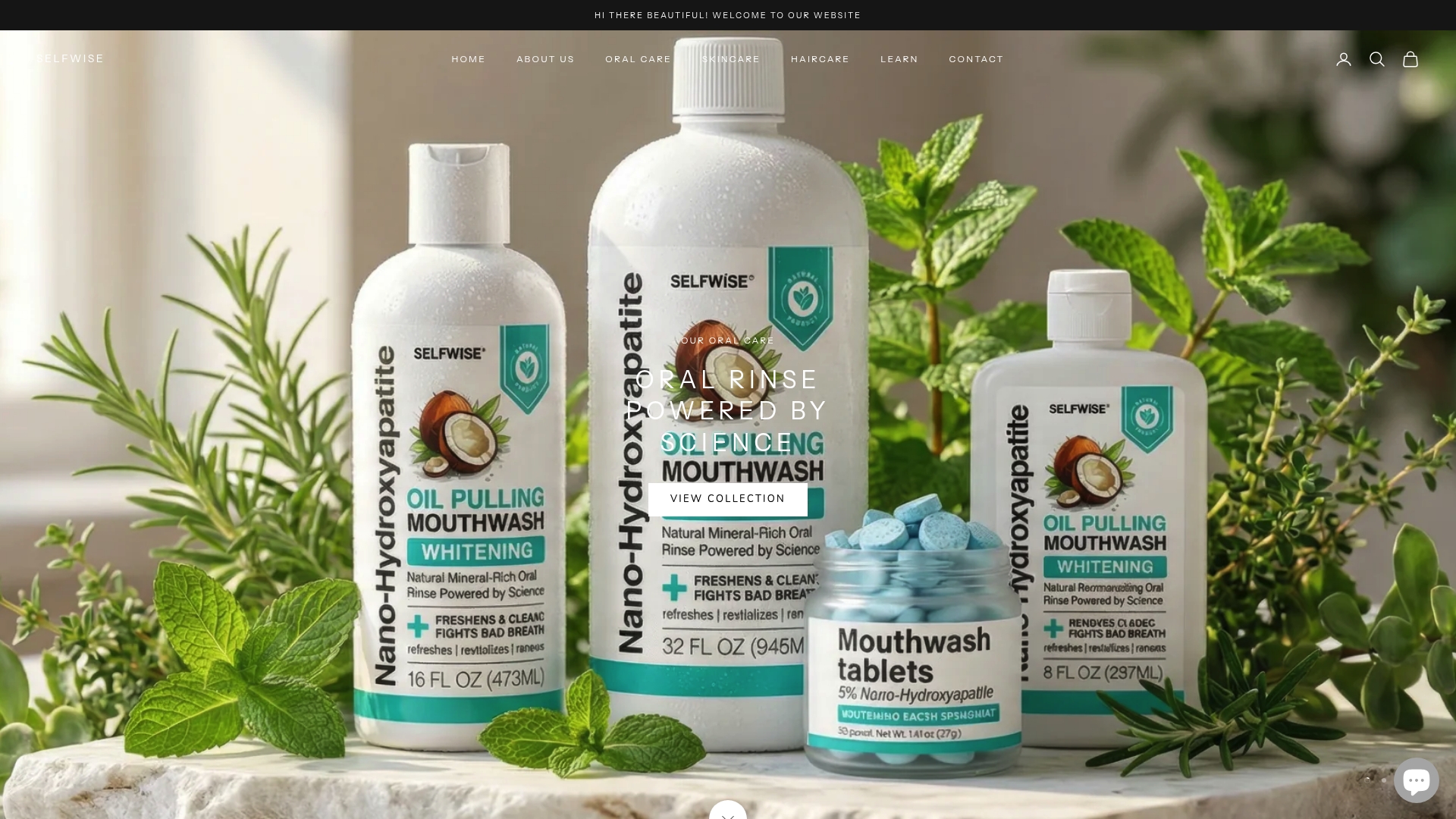
At Selfwise, we’ve built our oral care line around exactly this kind of thinking. Simple ingredients. Transparent formulations. Science you can actually look up. Our nano hydroxyapatite mouthwash tablets give you an easy, on-the-go format for consistent nano-HAP exposure, while our oil pulling mouthwash combines the bacterial-reduction benefits of oil pulling with the remineralizing power of nano-HAP in one daily step. Ready to explore the full range? Browse all fluoride-free options and find the right fit for your routine.
Frequently asked questions
Is hydroxyapatite calcium safe to use every day?
Current evidence suggests nano-hydroxyapatite is safe when used as directed, though long-term real-world data remains limited, and safety discussions are still largely product-specific.
Can hydroxyapatite calcium replace fluoride for cavity prevention?
Nano-HAP can perform comparably to fluoride for enamel protection in several study outcomes, but it is not yet a guaranteed replacement for everyone, especially those at high cavity risk.
Does hydroxyapatite calcium help with gum disease?
At least one significant review explicitly excluded gingival inflammation studies, meaning direct evidence for gum disease is still limited, and standard hygiene practices remain important.
How do I know if a hydroxyapatite product is effective?
Look for confirmed nano-sized particles, clear concentration disclosure, and evidence-backed claims. Formulation and particle size significantly affect how a product actually performs versus what the label suggests.