The Role of Probiotics in Oral Rinse and Mouth Health
Probiotic oral rinses shift the oral ecology toward beneficial bacteria, reducing plaque and gingival inflammation in many short-term randomized trials when the strain and formulation are appropriate. Pooled evidence from randomized clinical trials and systematic reviews shows modest but statistically significant short-term improvements in plaque index, gingival index, and bleeding on probing. Most effects are transient: without ongoing use, the benefits fade as the oral microbiome reverts to its baseline composition.
- Probiotic rinses work by ecological modulation, not by killing bacteria indiscriminately
- Clinical improvements in plaque and gingivitis are well-documented in short-term randomized controlled trials
- Strain identity matters more than the word “probiotic” on a label
- Realistic expectation: benefits require consistent, repeated use to persist
Pro Tip: When reading a probiotic rinse label, look for three specific strains with the strongest oral evidence: Streptococcus salivarius K12 (halitosis and upper respiratory support), Streptococcus salivarius M18 (plaque and gingivitis), and Lactobacillus reuteri (periodontal support). A product listing only “Lactobacillus” with no strain designation tells you almost nothing about what it will actually do.
Table of Contents
- How probiotic rinses act on the oral microbiome
- What the clinical trials actually show
- Which strains and formulations actually matter
- Safety, interactions, and what can kill your probiotic rinse
- How to use a probiotic oral rinse effectively
- Where the research still falls short
- Key Takeaways
- The evidence is solid, but the hype is ahead of it
- Natural oral care that works alongside probiotic strategies
- Useful sources
- FAQ
How probiotic rinses act on the oral microbiome
The mouth is not a sterile environment, and the goal of a probiotic rinse is not to make it one. Probiotics act through ecological modulation: they compete with pathogens for adhesion sites, produce antimicrobial metabolites, shift biofilm metabolism, and interact with host immune pathways. Each mechanism is distinct, and no single strain does all of them equally well.
Key mechanisms:
-
Competitive adhesion and niche exclusion: Beneficial strains bind to oral surfaces and pellicle proteins, physically blocking pathogen attachment
-
Bacteriocin and organic-acid production: Strains like S. salivarius K12 produce salivaricins that suppress Streptococcus pyogenes and other pathogens without broad-spectrum collateral damage
-
pH modulation via arginolysis: Some strains metabolize arginine to produce ammonia, raising plaque pH and countering the acidogenic activity of cariogenic bacteria
-
Biofilm metabolic shifts: Probiotic colonizers can alter the metabolic output of established biofilms, reducing acid production even when they do not displace all pathogens
-
Immune modulation: Evidence suggests certain strains downregulate pro-inflammatory cytokines (IL-1β, IL-6) in gingival tissue, contributing to reduced clinical inflammation
Broad-spectrum antiseptic mouthwashes suppress both harmful and beneficial bacteria, which can disrupt the oral microbiome in ways that may take weeks to recover. Probiotics offer a fundamentally different strategy: nurture the beneficial taxa rather than eliminate the entire community.
Transient vs. colonizing behavior is the most clinically important distinction in this field. Most rinse strains do not permanently establish themselves in the oral cavity. They deliver benefits during and shortly after the dosing period, then decline. A Frontiers review on probiotic durability explicitly calls for trials of 12–24 months or longer to assess whether any strain achieves durable colonization and whether that translates to disease prevention.
Formulation conditions matter just as much as strain selection. Sodium lauryl sulfate (SLS), high alcohol concentrations, and low-pH vehicles can kill probiotic cells before they reach oral surfaces. A rinse with a viable strain count at manufacture may deliver far fewer live cells by the time it contacts tissue, especially if stored at room temperature for extended periods.

Pro Tip: Check whether a probiotic rinse requires refrigeration or carries a “use by” date tied to viability, not just safety. A product with no viability guarantee is selling you the idea of probiotics, not the bacteria themselves.
What the clinical trials actually show
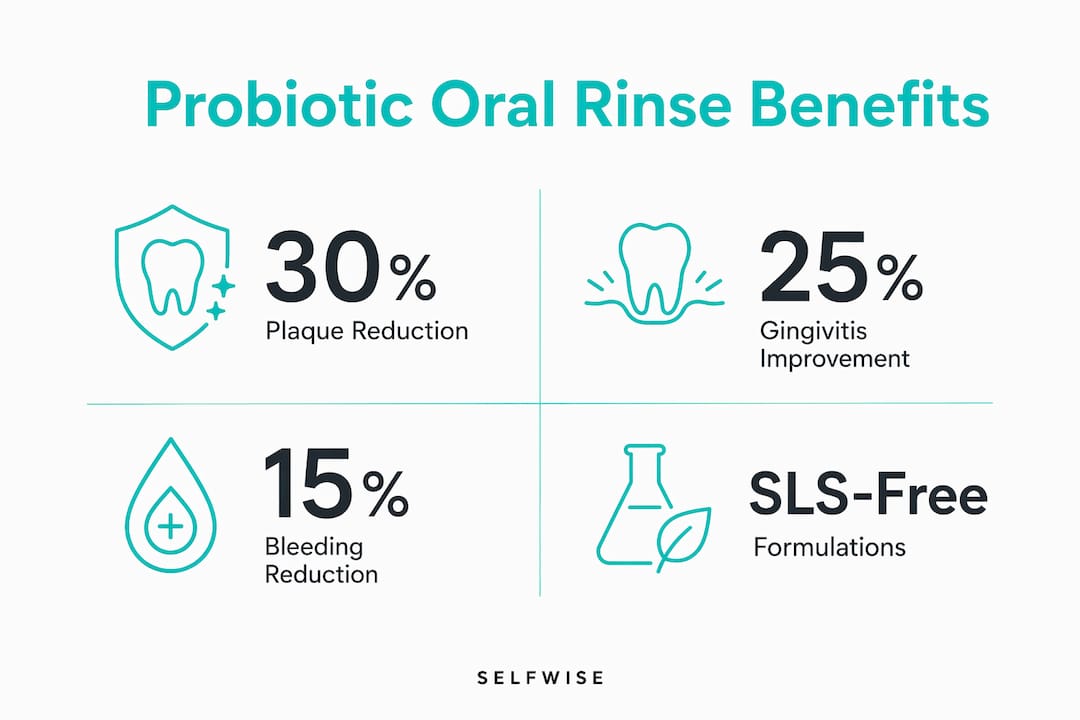
Pooled evidence shows modest, statistically significant short-term reductions in plaque and gingival indices across many randomized controlled trials, though results vary by age group, strain, and delivery format.

| Outcome | Direction of Effect | Typical Effect Size | Typical Follow-Up | Evidence Certainty |
|---|---|---|---|---|
| Plaque index | Reduction | Moderate (comparable to CHX in several trials) | 4 weeks | Moderate |
| Gingival index | Reduction | Moderate; SMD approx. −0.32 to −0.58 | 4–12 weeks | Moderate |
| Bleeding on probing | Reduction | Small to moderate | 4–12 weeks | Low–Moderate |
| S. mutans counts | Reduction | 0.4–1.1 log units in pooled microbiological studies | 4–8 weeks | Moderate |
| Halitosis measures | Mixed | Modest reductions with K12 strains | 4 weeks | Low |
A randomized trial of S. salivarius M18 in young adults with gingivitis reported effect sizes of approximately 0.55–0.58 for plaque and gingival indices after four weeks, with some improvements persisting at short follow-up. A comparative meta-analysis found no statistically significant difference between probiotic rinses and chlorhexidine for gingival or plaque indices at four weeks in many analyses, which is a meaningful finding: probiotics can match the gold-standard antiseptic on short-term clinical measures without the staining and taste disturbance chlorhexidine causes.
Key finding: Probiotics suppressed S. mutans by 0.4–1.1 log units in pooled microbiological studies, with pediatric lozenges and dairy formats showing the most consistent caries reductions.
Study limitations to keep in mind:
- Most trials run only a few weeks; effects at longer durations are largely unknown
- Sample sizes are typically limited
- Strain heterogeneity across studies makes pooling unreliable
- Colonization is rarely measured, so clinical improvements cannot be attributed to true microbiome shifts with confidence
- Placebo and comparator choices vary widely, inflating apparent effect sizes in some analyses
A systematic review and meta-analysis on gingivitis and periodontitis confirms decreased bleeding on probing and lower plaque indices in short-term studies, but notes that effects often diminish with longer follow-up.
Which strains and formulations actually matter
Strain identity is the single most important variable in probiotic oral rinse research. “Probiotic” is a category, not a specification. Streptococcus salivarius K12 and M18 and Lactobacillus reuteri are among the best-supported strains for oral endpoints; most other strains have thinner or more mixed evidence.
Commonly studied strains and their associated outcomes:
- S. salivarius K12: Halitosis reduction, upper respiratory pathogen suppression via salivaricin production
- S. salivarius M18: Plaque and gingivitis improvements; urease and dextranase activity that may reduce plaque pH swings
- Lactobacillus reuteri: Periodontal support; anti-inflammatory effects in gingival tissue
- Lactobacillus rhamnosus: Caries-related findings in some pediatric studies; less evidence for adult periodontal outcomes
- Lactobacillus paracasei and Bifidobacterium lactis: Studied in mixed-format reviews with variable results depending on delivery vehicle
| Strain | Best-Supported Delivery Format | Evidence Strength |
|---|---|---|
| S. salivarius K12 | Lozenge, rinse | Moderate (halitosis, URT) |
| S. salivarius M18 | Lozenge, rinse | Moderate (plaque, gingivitis) |
| L. reuteri | Tablet, rinse | Moderate (periodontal) |
| L. rhamnosus | Dairy, lozenge | Low–Moderate (caries, pediatric) |
| L. paracasei | Dairy, gum | Low (mixed outcomes) |
Formulation variables that determine whether the strain survives to work:
- Viable cell concentration: look for CFU per dose stated on the label, not just “contains probiotics”
- Vehicle pH: neutral to slightly alkaline preserves viability; acidic vehicles degrade cells rapidly
- Buffering agents and cryoprotectants that stabilize cells through manufacturing and shelf life
- Absence of SLS or high alcohol at the moment of oral contact (these kill cells on delivery)
- Third-party viability testing or refrigerated storage requirement as a quality signal
Product selection checklist:
- Named strain to species AND strain level (e.g., L. reuteri DSM 17938, not just “Lactobacillus”)
- CFU per dose stated with a use-by date tied to viability
- Storage instructions that match the strain’s stability profile
- No SLS or alcohol above 5% in the rinse vehicle
- Published clinical data on that specific strain, not just the genus
Pro Tip: Lozenges and slow-dissolve tablets often outperform rinses for colonization because contact time with oral surfaces is longer. If you are choosing between formats for a specific strain, check whether the published trial used a rinse or a lozenge — the evidence may not transfer across delivery vehicles.
Safety, interactions, and what can kill your probiotic rinse
Probiotic oral rinses are generally safe, with few reported serious adverse events in clinical trials, but interactions with other oral-care products can eliminate their benefit entirely.
Reported side effects and cautions:
- Mild gastrointestinal discomfort if large volumes are swallowed (rare in rinse use)
- Theoretical risk of bacteremia in severely immunocompromised patients; this risk is considered very low for oral strains but warrants clinician consultation before use
- No documented antibiotic resistance transfer from oral probiotic strains in current literature
Interactions that reduce probiotic viability:
- Chlorhexidine (CHX) rinses kill probiotic cells on contact; using both in the same session negates the probiotic entirely
- Alcohol-based mouthwashes at concentrations above 10–15% are bactericidal to most probiotic strains
- SLS in toothpaste disrupts cell membranes; rinsing immediately after brushing with an SLS-containing paste reduces viable cell delivery
- Broad-spectrum antiseptic mouthwashes suppress the oral microbiome indiscriminately, which can undermine the ecological niche the probiotic is trying to establish
Timing guidance for concurrent use:
- If using chlorhexidine or an antiseptic rinse, separate it from the probiotic rinse by at least 30–60 minutes; ideally use CHX in the morning and the probiotic rinse in the evening
- Brush with toothpaste, rinse thoroughly with water, wait 30 minutes, then apply the probiotic rinse
- If on a course of oral antibiotics, start the probiotic rinse after the antibiotic course ends, not during it
- Avoid eating or drinking for 30 minutes after the probiotic rinse to allow contact time with oral surfaces
High-risk groups: Individuals who are severely immunocompromised (undergoing chemotherapy, organ transplant recipients, or those with advanced HIV) should consult a clinician before using any live-organism oral product. For the general healthy population, oral probiotic rinses carry a well-documented safety profile across published trials.
For a broader look at which oral care ingredients to avoid when building a probiotic-compatible routine, the interaction principles above apply across product categories.
How to use a probiotic oral rinse effectively
Use a researched strain in a stable formulation, follow the labeled dose, and combine it with standard mechanical plaque control. A probiotic rinse is an adjunct, not a replacement for brushing and flossing.
Step-by-step product selection:
- Confirm the strain is named to strain level with published oral-health evidence
- Verify CFU per dose and viability date
- Check for SLS-free and low-alcohol formulation
- Confirm storage requirements match your routine (refrigerated vs. shelf-stable)
- Look for third-party testing or a certificate of analysis
Dosage and routine:
- Most trials used once or twice daily rinsing for 4 weeks as an initial course
- Evening use after brushing (with the 30-minute wait after toothpaste) maximizes overnight contact time
- A 4–8 week initial course is a reasonable trial period based on current RCT durations
- If no subjective or measurable improvement appears after 8 weeks, the strain or formulation may not be the right fit
Realistic expectations:
- Plaque and gingival improvements are measurable in many people within 4 weeks
- Halitosis reductions with K12 strains can appear within 1–2 weeks in some trials
- Effects are likely to diminish within weeks of stopping use; ongoing maintenance dosing is probably necessary
- Probiotic rinses do not replace professional cleaning or address structural periodontal disease
Pro Tip: Xylitol is a natural prebiotic-like compound that selectively inhibits cariogenic bacteria while leaving beneficial strains unaffected. Adding a xylitol-containing rinse to your routine on alternating evenings with a probiotic rinse is a synbiotic-style strategy that several researchers have flagged as a promising direction for enhancing retention and effect.
Where the research still falls short
The key gaps are strain heterogeneity, short trial durations, small sample sizes, and inconsistent microbiological endpoints. These are not minor quibbles; they limit the ability to make firm clinical recommendations.
Current gaps in the literature:
- No long-term trials (12–24 months or more) assessing clinical disease progression
- No head-to-head strain comparisons in well-powered RCTs
- Outcome measures are inconsistently reported (clinical indices vs. microbiome sequencing vs. patient-reported outcomes)
- Colonization is rarely measured, so it is unclear whether benefits come from true microbiome shifts or transient antimicrobial effects
- Safety data in immunocompromised populations is almost entirely absent
- Delivery-format comparisons (rinse vs. lozenge vs. gum) within the same strain are lacking
Research priorities for the next generation of trials:
- Standardized RCTs with both clinical and microbiome sequencing endpoints, run for at least 12 months
- Dose-finding studies to establish minimum effective CFU per dose for each strain
- Synbiotic formulation trials combining specific probiotic strains with selective prebiotics like xylitol or inulin
- Safety and efficacy data in immunocompromised and elderly populations
- Head-to-head comparisons of delivery formats (rinse vs. lozenge) for the same strain
Key Takeaways
Probiotic oral rinses deliver clinically meaningful short-term improvements in plaque and gingival health when the right strain is used in a viable, compatible formulation.
| Point | Details |
|---|---|
| Strain specificity is non-negotiable | Look for S. salivarius K12, M18, or L. reuteri by name; genus-only labels are insufficient. |
| Effects are transient without ongoing use | Most rinse strains do not colonize permanently; consistent dosing is required to maintain benefits. |
| S. mutans suppression is measurable | Pooled studies show 0.4–1.1 log unit reductions; this is the most consistent microbiological finding. |
| Timing with other products matters | Separate probiotic rinse from chlorhexidine or SLS toothpaste by at least 30–60 minutes. |
| Selfwisebrand’s natural rinse options | Xylitol and nano-hydroxyapatite formulations from Selfwisebrand are compatible adjuncts for a probiotic-friendly routine. |
The evidence is solid, but the hype is ahead of it
Most of the enthusiasm around probiotic oral rinses is justified by the mechanism, not yet fully confirmed by long-term outcomes data. The ecological logic is sound: shifting the oral microbiome toward beneficial taxa is a smarter long-term strategy than repeatedly suppressing the entire community with broad-spectrum antiseptics. The short-term trial data backs that logic up reasonably well.
What the field has not yet delivered is proof that these short-term improvements translate into fewer cavities, less periodontal bone loss, or better systemic outcomes over years. That gap matters. A four-week plaque index improvement is encouraging, but it is not the same as preventing tooth loss at age 60.
The practical implication is this: probiotic rinses are worth using as an adjunct if you choose a strain with real evidence behind it, use a formulation that keeps those bacteria alive, and time it correctly relative to your other oral-care products. They are not a substitute for brushing, flossing, or professional care. Integrating them with natural, microbiome-compatible products like xylitol rinses fits the emerging synbiotic model that researchers are increasingly interested in. That combination, mechanical control plus ecological support, is where the evidence is pointing.
Pro Tip: If you are building a natural oral-care routine, pair a probiotic rinse with a nano-hydroxyapatite-based product for remineralization. The two strategies target different problems: probiotics address the microbial ecology; nano-hydroxyapatite addresses enamel integrity. Neither replaces the other, and they do not interfere.
Natural oral care that works alongside probiotic strategies
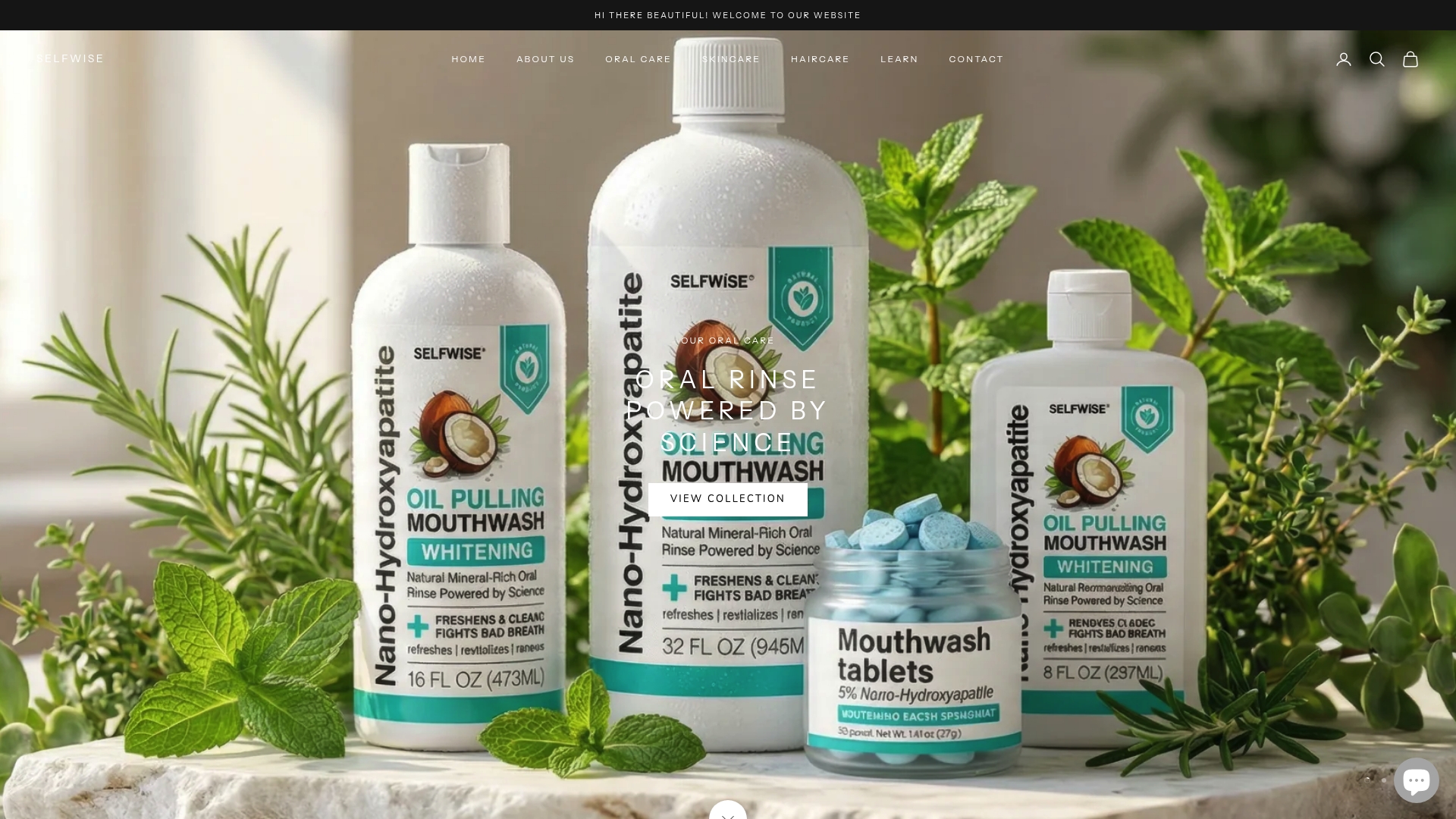
Probiotic rinses work best when the rest of your routine does not undermine them. Harsh surfactants, high-alcohol mouthwashes, and antiseptic rinses used at the wrong time can wipe out the bacteria you just introduced. That is where Selfwisebrand’s natural formulations fill a real gap.
Selfwisebrand’s xylitol and nano-hydroxyapatite mouthwash is SLS-free and alcohol-free, which means it does not disrupt probiotic viability when used as part of the same daily routine. Xylitol selectively inhibits cariogenic bacteria while leaving beneficial strains intact, making it a natural fit for the prebiotic skincare concepts that enhance microbial health researchers are currently exploring. The nano-hydroxyapatite mouthwash tablets add remineralization support without fluoride, addressing enamel health alongside the microbial work a probiotic rinse does.
Browse the full Selfwisebrand mouthwash collection to find a formulation that fits your routine and supports, rather than disrupts, the oral microbiome you are working to build.
Useful sources
- A comparative evaluation of probiotic and chlorhexidine mouthrinses on gingivitis — RCT in 45 adults showing probiotic rinse matched chlorhexidine on plaque and gingival indices at 4 weeks with no significant difference between groups
- Efficacy of probiotics vs. chlorhexidine: systematic review and meta-analysis — Pooled analysis finding no statistically significant difference between probiotics and CHX for short-term plaque and gingival outcomes
- Antigingivitis and antiplaque effects of S. salivarius M18: RCT — Trial reporting effect sizes of 0.55–0.58 for plaque and gingival indices after a 4-week M18 intervention
- Comparative trials of probiotic rinses and chlorhexidine — Demonstrates comparable short-term efficacy with fewer cosmetic side effects for probiotics
- Mouthwash effects on the oral microbiome — Reviews how antiseptic rinses disrupt beneficial bacteria and frames probiotics as a microbiome-preserving alternative
- Frontiers review on probiotic colonization and durability — Calls for 12–24 month trials; addresses transient vs. colonizing effects and synbiotic strategies
- Probiotics in preventing dental caries: systematic review — Covers strain and format heterogeneity; includes L. paracasei, L. rhamnosus, B. lactis, and delivery-format comparisons
- Comparative effectiveness of probiotics, prebiotics, synbiotics, and postbiotics: meta-analysis — Reports 0.4–1.1 log unit S. mutans suppression; most consistent caries reductions in pediatric lozenge/dairy formats
- Clinical effects of probiotics on gingivitis and periodontitis: systematic review and meta-analysis — Confirms short-term reductions in bleeding on probing and plaque indices; notes effect diminishes with longer follow-up
- Practitioner-level review on oral probiotic strains and colonization — Strain-specific signals for L. salivarius, L. reuteri, and L. rhamnosus; discusses colonization potential by species
FAQ
Does probiotic mouthwash actually work?
Yes, within limits. Multiple RCTs show probiotic rinses produce statistically significant short-term reductions in plaque and gingival inflammation, with effects comparable to chlorhexidine at four weeks. Benefits are transient and require ongoing use to maintain.
What is the best probiotic strain for an oral rinse?
Streptococcus salivarius M18 has the strongest evidence for plaque and gingivitis, while K12 targets halitosis and upper respiratory pathogens. Lactobacillus reuteri is the best-supported strain for periodontal applications. Always look for the strain designation on the label, not just the genus name.
Do oral probiotics actually help with bad breath?
S. salivarius K12 specifically targets the volatile sulfur compound-producing bacteria responsible for halitosis, and some trials report measurable reductions within weeks. For a deeper look at probiotics for bad breath, strain selection is the deciding factor.
Why do cardiologists sometimes caution against mouthwash?
The concern is with broad-spectrum antiseptic mouthwashes that suppress nitrate-reducing bacteria in the mouth, which play a role in nitric oxide production and blood pressure regulation. Probiotic rinses do not carry this concern because they support rather than suppress the oral microbiome.
Can I use a probiotic rinse with chlorhexidine?
Not at the same time. Chlorhexidine kills probiotic cells on contact. Separate the two by at least 30–60 minutes, or use chlorhexidine in the morning and the probiotic rinse in the evening as part of a structured routine.