Essential tips for brushing your teeth effectively and naturally
Most people brush their teeth every single day and still end up with sensitivity, early gum recession, or stubborn plaque at their next dental visit. The problem is rarely effort. It’s technique, tools, and the small habits that silently work against you. Brushing is one of the most fundamental acts of self-care you can practice, and when done right, it protects not just your teeth but your whole-body health. This guide walks you through the right tools, proven technique, common pitfalls, and natural enhancements that together create a brushing routine that actually delivers results.
Table of Contents
- What you need before you brush
- Step-by-step: How to brush for cleaner teeth and a healthier mouth
- Common mistakes to avoid for truly healthy teeth
- Natural enhancements: Brushing routines and holistic care
- Our take: Why gentle and mindful brushing works best
- Enhance your routine with natural oral care essentials
- Frequently asked questions
Key Takeaways
| Point | Details |
|---|---|
| Choose gentle tools | Pick a soft-bristled or electric toothbrush and non-abrasive toothpaste for the best results. |
| Master proper technique | Use small circular motions with light pressure and brush all surfaces for two minutes. |
| Avoid common mistakes | Don’t overbrush, replace your brush regularly, and avoid rinsing immediately after brushing with fluoride paste. |
| Enhance naturally | Supplement brushing with holistic care like oil pulling and alcohol-free mouthwash for even greater oral health. |
What you need before you brush
Getting the most out of your brushing session starts before the brush even touches your teeth. The tools you choose set the foundation for everything else, and the good news is that simple, thoughtful selections make a real difference.
Choosing your toothbrush
Always go with a soft-bristled brush, whether manual or electric. Medium or hard bristles feel like they’re doing more work, but they’re more likely to scratch enamel and irritate gums over time. Electric toothbrushes are slightly more effective at plaque removal than manual ones, but a manual brush used with proper technique is absolutely capable of keeping your mouth clean. The key is not the tool itself but how you use it.
Here’s a quick comparison to help you decide:
| Feature | Manual brush | Electric brush |
|---|---|---|
| Plaque removal | Good with technique | Slightly more effective |
| Cost | Low | Higher upfront |
| Travel-friendly | Very easy | Requires charging |
| Best for | Strong technique users | Those building habits |
| Pressure control | Manual effort | Some models auto-alert |
What to look for in toothpaste
Your toothpaste should be non-abrasive and free from harsh detergents. Whether you choose a fluoride or fluoride-free formula is a personal decision, but either way, look for gentle, effective ingredients. Nano hydroxyapatite is a mineral naturally found in enamel and has growing scientific support as a remineralizing agent. Xylitol is another excellent ingredient that actively discourages the bacteria that cause cavities. Pair your brush with a formula that works for your needs by exploring our natural oral care guide for ingredient-level breakdowns.
Here’s what to look for and avoid:
- Look for: Soft-bristled head, small to medium head size, comfortable grip
- Look for in paste: Nano hydroxyapatite, xylitol, natural flavoring, gentle abrasives
- Avoid in paste: Sodium lauryl sulfate (SLS), titanium dioxide, artificial sweeteners
- Replace your brush after any illness, not just on a schedule
- Optional add-ons: Tongue scraper, two-minute timer, floss or interdental brushes
Pro Tip: Keep your extra toothbrush heads or backup manual brushes in a sealed bag in your medicine cabinet. After any cold or flu, swap immediately. Bacteria from illness can linger on bristles longer than most people realize.
Browse our full range of oral care essentials to find tools and formulas that complement a clean, chemical-free routine.
Step-by-step: How to brush for cleaner teeth and a healthier mouth
With the right tools at hand, let’s walk through exactly how to brush for maximum benefit, step by step.
1. Start with the right amount of paste A pea-sized amount is all you need. More foam does not mean more clean. It just means more unnecessary ingredients hitting your system.
2. Position the brush at a 45-degree angle Aim the bristles toward the gumline where plaque loves to hide. This angle lets the bristles clean just beneath the gum margin without scrubbing the gum tissue itself.
3. Use gentle circular motions Small, circular strokes on two or three teeth at a time. Avoid the back-and-forth horizontal scrubbing that causes enamel wear and cervical abrasion. This is one of the most damaging habits in oral care and one of the most common.

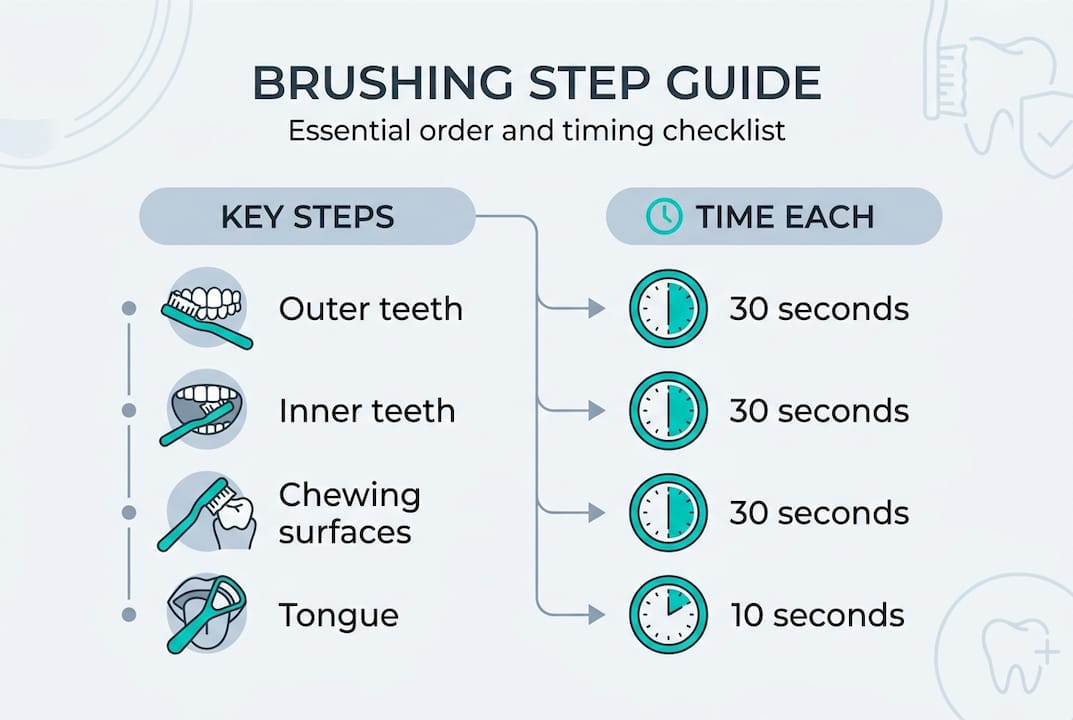
4. Follow the sequence: outer, inner, chewing surfaces Start with the outer (cheek-facing) surfaces of your upper teeth, then lower. Move to the inner (tongue-facing) surfaces. Finish with the chewing surfaces. This systematic order means you never skip an area.
5. Brush your tongue A quick but thorough brush of your tongue removes bacteria that cause bad breath and contribute to plaque formation. Work from back to front with light pressure.
6. Spit but don’t rinse This is the step most people skip. Spitting out excess paste without rinsing with water keeps a thin protective layer of active ingredients on your teeth. It sounds small but makes a meaningful difference over time.
Here’s a timing breakdown to reference:
| Zone | Approximate time |
|---|---|
| Outer upper teeth | 30 seconds |
| Outer lower teeth | 30 seconds |
| Inner surfaces (all) | 30 seconds |
| Chewing surfaces and tongue | 30 seconds |
Pro Tip: Use a timer. Most people who think they brush for two minutes are actually brushing for 45 to 60 seconds. A simple phone timer or a dedicated two-minute song playlist changes this fast.
For more actionable guidance, visit our oral care tips library where we break down routines for every stage of your oral health journey.
Common mistakes to avoid for truly healthy teeth
Knowing the correct brushing routine is vital, but it’s just as important to avoid pitfalls that silently damage your smile.
Here are the most common brushing mistakes and what’s really happening when you make them:
- Brushing too hard: More pressure feels more effective, but it strips enamel and pulls gum tissue away from your teeth. Use the weight of the brush, not your muscle.
- Horizontal scrubbing: Side-to-side strokes create abrasion grooves at the gumline over years. These grooves are irreversible.
- Skipping the night brush: Saliva production drops significantly at night, which means your natural defenses are low. Bacteria that build up overnight work undisturbed for hours. Evening brushing is non-negotiable.
- Using an old brush: Frayed bristles don’t clean effectively and can irritate gum tissue. Replace every three months.
- Rinsing right after brushing: Rinsing immediately reduces fluoride’s cavity-preventing benefits by washing away the active layer before it has time to work. Spit and leave it.
- Using harsh, high-abrasive toothpaste: Some whitening pastes and certain charcoal formulas are surprisingly abrasive. Check the Relative Dentin Abrasivity (RDA) score when you can. Lower is better for daily use.
Enamel does not grow back. Every rough brush stroke, every overly abrasive paste, every horizontal scrub removes a thin layer that is gone permanently. Gentle is not weak. It is precise and protective.
Pro Tip: Try holding your toothbrush with just your thumb and two fingers, like a pen. This naturally limits the force you apply and shifts you toward a gentler, more controlled motion.
For more strategies on supporting your gums and keeping breath clean, check out our fresh breath and oral health tips and our guide to oral care kits that take the guesswork out of building a complete routine.
Natural enhancements: Brushing routines and holistic care
Beyond specific brushing steps, gentle add-ons and natural approaches can elevate your whole oral wellness routine.
These aren’t trends. They’re practical additions that layer genuine value onto the clean you’ve already built with good brushing technique.
- Oil pulling: Swishing with coconut oil or a purpose-made oil pulling mouthwash for 5 to 10 minutes before brushing can help loosen plaque and reduce harmful bacteria. It’s an ancient practice that holds up well alongside modern routines.
- Nano hydroxyapatite toothpaste: This mineral is biocompatible with enamel and supports cavity prevention without fluoride, making it a compelling option for those who prefer fluoride-free formulas. Fluoride-based options remain effective for many people, and both approaches can work depending on your needs.
- Eco-conscious tool choices: Bamboo toothbrushes biodegrade far faster than plastic, and zero-waste toothpaste tubes or tablets dramatically reduce packaging waste. These choices support your health and the planet at the same time.
- Mouthwash timing: Use mouthwash at a different time than brushing, ideally after meals when you can’t brush, rather than immediately after brushing. Alcohol-free and mineral-based options are gentler on your oral microbiome.
- Brush replacement on schedule: Every three months, no exceptions. Mark your calendar. Frayed bristles are less effective and more likely to cause minor gum irritation.
You can explore this kind of layered thinking more fully in our guide to holistic oral care or discover how we approach natural oral care routines built around simplicity and real ingredients.
Our take: Why gentle and mindful brushing works best
Here’s something the oral care industry doesn’t say loudly enough: most damage to teeth and gums is self-inflicted through aggressive habits, not neglect. The people scrubbing hardest with the whitest, strongest-sounding pastes are often the ones with the most sensitivity and gum recession by their forties.
Gentle technique and consistent timing beat intensity every time. A two-minute soft-bristle routine done twice daily will outperform a harsh three-minute scrub in the long run. That’s not a soft option. It’s the smarter one.
Natural and science-backed methods don’t have to compete. Nano hydroxyapatite and fluoride both work. Oil pulling adds to brushing, it doesn’t replace it. What matters is that your routine is sustainable, thoughtful, and ingredient-aware. Mindful brushing is a form of self-respect. Small, consistent actions over years are what protect your oral health in ways that no single product or one-time effort ever will.
Enhance your routine with natural oral care essentials
Inspired to make mindful brushing part of your daily self-care? You’ve now got the technique and knowledge. The next step is pairing it with products that actually support your goals without flooding your body with unnecessary chemicals.
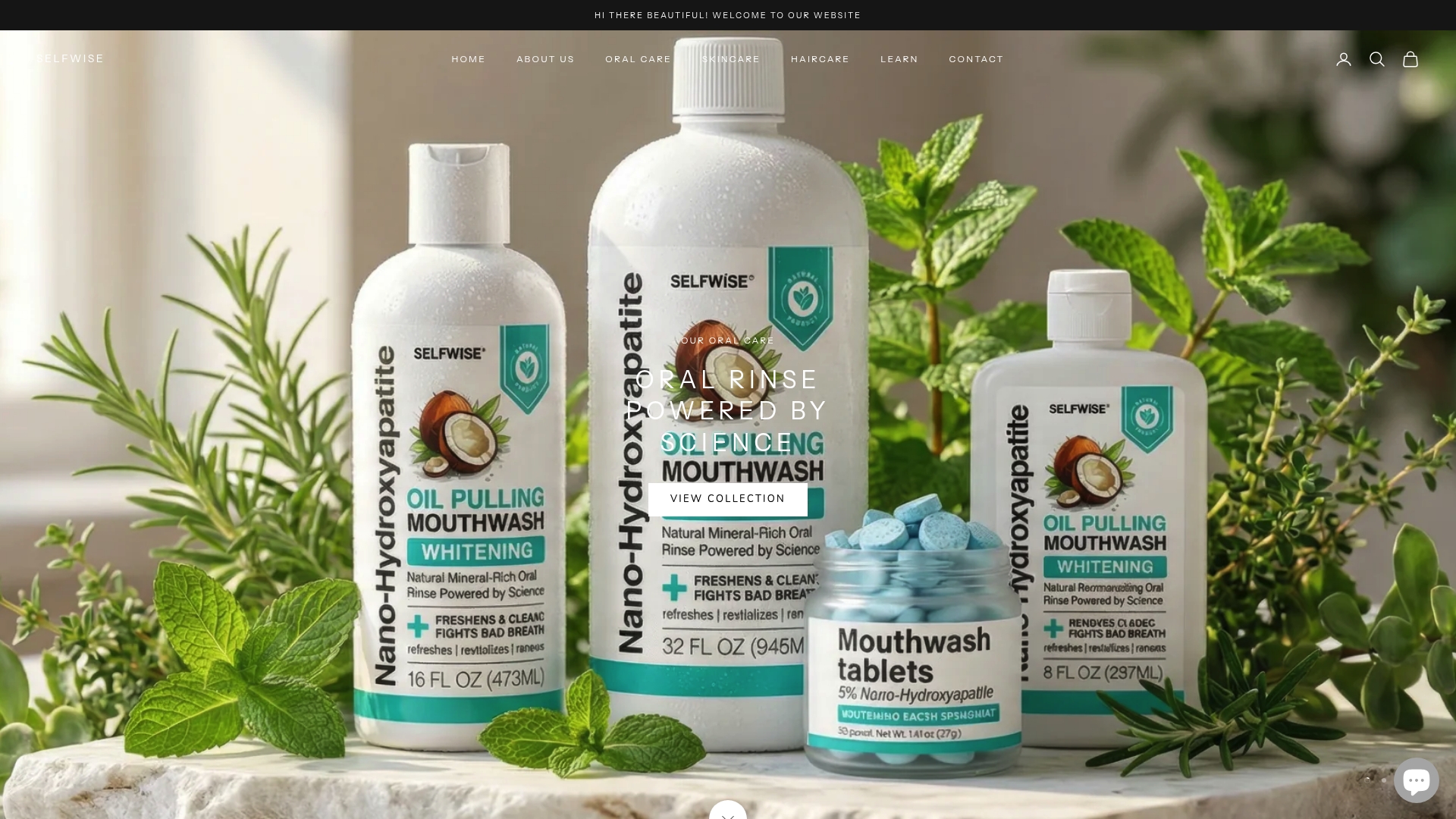
At Selfwise, we’ve built our line around ingredients that are gentle, effective, and backed by both science and tradition. Our nano hydroxyapatite oil pulling mouthwash combines two powerful approaches in one step, and our hydroxyapatite mouthwash tablets make clean, mineral-rich rinsing simple wherever you are. Explore our full range of fresh breath solutions to find the right fit for your routine.
Frequently asked questions
How often should you replace your toothbrush?
Replace your toothbrush every three months, or sooner if the bristles are visibly frayed. You should also replace after illness to avoid reintroducing bacteria into your mouth.
Is it better to brush before or after breakfast?
Brushing before breakfast is generally better because it removes overnight plaque and strengthens your enamel before it faces morning acids from food. Brushing timing affects how well your teeth are protected throughout the day.
Why shouldn’t you rinse after brushing with fluoride toothpaste?
Rinsing immediately removes the active protective layer from your toothpaste before it has time to do its job. Spitting without rinsing keeps those minerals working on your teeth longer.
Can electric toothbrushes be too harsh on enamel?
Electric toothbrushes are generally safe when used with a soft head and a light hand. The real risk is combining one with heavy pressure, which causes abrasion and enamel wear over time just like manual overbrushing does.
Recommended
- Natural Oral Care Guide
- Natural Oral Care Tips & Guides | Selfwise
- Top 4 Organic Toothpaste Options 2026
- Fresh Breath & Oral Health
- Essential natural skincare routine tips for healthy skin – ZenChemy Lab
Related Selfwise oral care
For a gentler oral care routine, these Selfwise pages are relevant:
- Natural oral care collection
- Nano Hydroxyapatite Mouthwash Tablets
- Natural oral health routine
- Mouthwash before or after brushing?
Note: Selfwise oral care products are designed for daily personal care routines and are not a replacement for dental diagnosis or treatment.