Scrape First: Mouthwash Can Cut Tongue Coating in Seven Days
Mouthwash can reduce the bacteria and volatile sulfur compounds behind a coated tongue and the bad breath that comes with it, but it rarely lifts thick, established coating on its own. The Cleveland Clinic treats a white tongue as a hygiene and hydration issue first, not a rinse problem. Your best move: scrape the tongue, then follow with a non-drying, microbiome-friendly rinse like the ones Selfwisebrand formulates without alcohol.
TL;DR:
- Mouthwash only temporarily reduces tongue bacteria and volatile sulfur compounds, and is most effective when combined with regular scraping of the tongue.
- Ingredients like chlorhexidine and chlorine dioxide provide short-term antiseptic benefits but can cause staining and are not suitable for daily use without medical guidance.
- Alcohol-based rinses should be avoided if dry mouth is a concern, as they can worsen dehydration and promote coating buildup.
- Consistent tongue scraping combined with hydration and an alcohol-free, microbiome-friendly rinse effectively controls coating and bad breath over time.
- Persistent, non-removable patches or coating lasting more than a few weeks require professional evaluation to rule out underlying health issues.
Table of Contents
- Why Tongue Coating Forms in the First Place
- How Mouthwash Helps and Where It Falls Short
- Which Mouthwash Ingredients Actually Have Evidence Behind Them
- How to Use Mouthwash for Tongue Coating, Step by Step
- Why Scraping Still Does the Heaviest Lifting
- When to See a Dentist or Doctor
- A Natural, Microbiome-Friendly Option Worth Knowing About
- Choosing the Right Mouthwash for Your Mouth
- What the Evidence Actually Supports
- Ready to Build a Rinse Routine That Doesn’t Dry You Out
- Sources
- FAQ
Why Tongue Coating Forms in the First Place
Your tongue’s surface is covered in tiny projections called papillae, and they’re built to trap things. That’s useful for tasting food. It’s less useful when dead skin cells, food particles, and bacteria pile up between them faster than saliva can rinse them away. The result is the white or yellowish film most people call tongue coating.
Several everyday habits make that buildup worse. According to Cleveland Clinic, the most common contributors include:
- Dehydration, which slows saliva flow and lets debris sit longer
- Mouth breathing, especially overnight, which dries out the tongue’s surface
- Inconsistent brushing and flossing
- Smoking or tobacco use
- Certain medications that cause dry mouth as a side effect
Most coating is cosmetic and clears up once you fix the underlying habit. It becomes something worth watching when it persists for weeks despite good hygiene, causes pain, or shows up as a patch that won’t scrape off at all. That last detail matters more than people realize: a coating you can lift with a scraper is almost always harmless. A white patch fused to the tissue underneath is a different problem entirely, and it’s the detail that should send you to a dentist rather than back to the drugstore aisle.
How Mouthwash Helps and Where It Falls Short
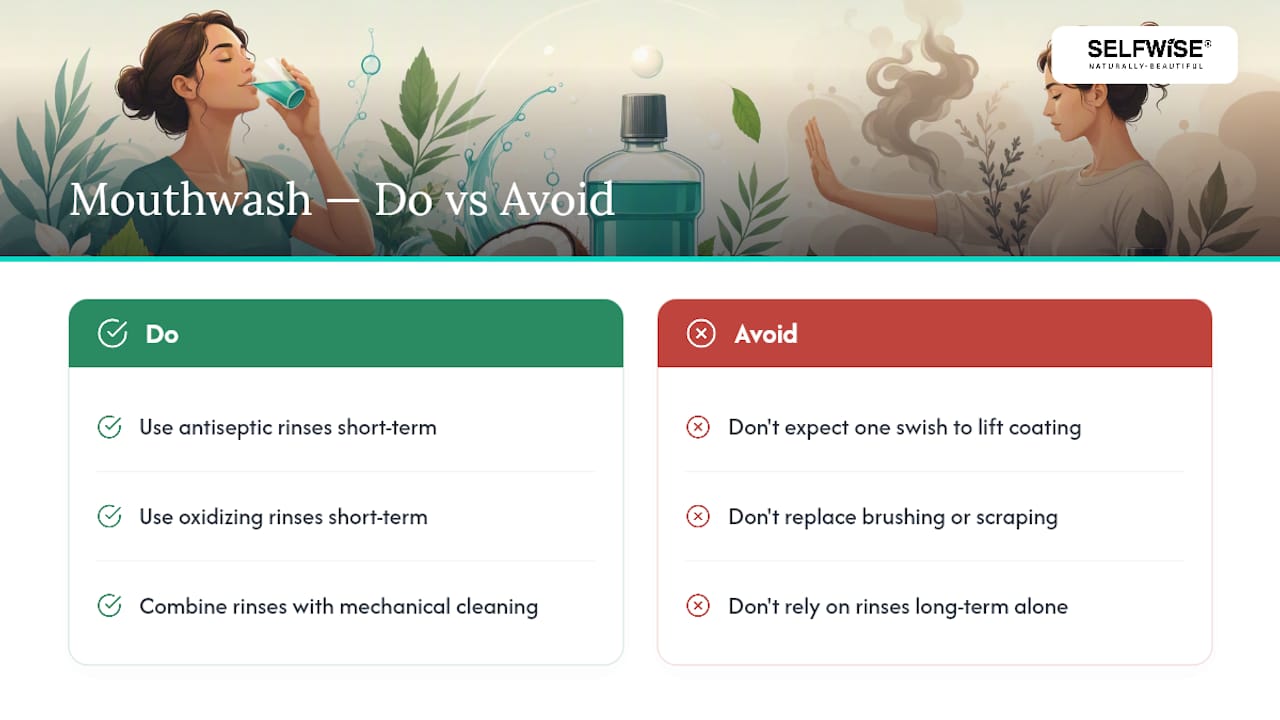
Mouthwash works on tongue coating through two main mechanisms. Antiseptic agents kill or suppress the bacteria producing the smell, while oxidizing agents chemically break down the volatile sulfur compounds (VSCs) those bacteria release. Both actions target the biofilm sitting on and between the papillae rather than the trapped debris itself.
Clinical trials show short-term measurable reductions in tongue coating and bad-breath markers from antiseptic or oxidizing rinses, but long-term recommendations still favor combining rinses with mechanical cleaning.
The trial evidence is more specific than most marketing copy suggests. A randomized, placebo-controlled 7-day trial found that a chlorine dioxide rinse reduced morning oral malodor, tongue-coating scores, and certain salivary bacteria counts compared with baseline, with effects showing up within the first week. A separate clinical crossover comparison found chlorine dioxide performed comparably to 0.2% chlorhexidine on plaque and tongue-coating measures in a short regrowth model, though researchers noted that staining and long-term effects need more study.
What none of these trials show is a rinse dissolving a thick, compacted coating from a dry mouth in one swish. The American Dental Association frames mouthrinses as adjuncts to brushing and flossing, not replacements for them. Mouthwash cleans what’s already loose and suppresses what’s regrowing. It doesn’t do the physical lifting.
Which Mouthwash Ingredients Actually Have Evidence Behind Them
Not every active ingredient on a mouthwash label carries the same weight. Here’s how the main categories stack up:
- Chlorhexidine (CHX): One of the strongest short-term antiseptics available, with solid trial support for reducing plaque and tongue-coating indices. The trade-off is real: staining and taste alteration are well documented, which is why it’s best used for a limited stretch under a dentist’s or hygienist’s direction rather than as a daily habit.
- Chlorine dioxide (ClO2): Comparable short-term results to chlorhexidine in the trial cited above, with less staining risk, making it a reasonable option for people who want antiseptic strength without the cosmetic downside.
- Cetylpyridinium chloride (CPC) and zinc salts: These target VSCs directly and tend to come with fewer staining complaints, which makes them a gentler daily option than chlorhexidine.
- Alcohol: Worth avoiding if dry mouth is part of your problem. Alcohol-based rinses dry oral tissue further, which can actually worsen the conditions that let coating form in the first place, according to oral-health guidance from Colgate.
- Xylitol and nano-hydroxyapatite: These sit in a different category entirely. They’re not antiseptics in the chlorhexidine sense, but they support a healthier oral environment without stripping moisture, which makes them a sound maintenance choice once the acute coating has cleared.
Pro Tip: If your mouth already feels dry by midafternoon, skip anything with alcohol on the label. Reach for an alcohol-free formula instead. Fixing dryness does more for coating than swapping to a stronger antiseptic.
How to Use Mouthwash for Tongue Coating, Step by Step
Order matters here more than people assume. Rinsing before you scrape just pushes loosened debris back onto a surface you’re about to clean anyway.
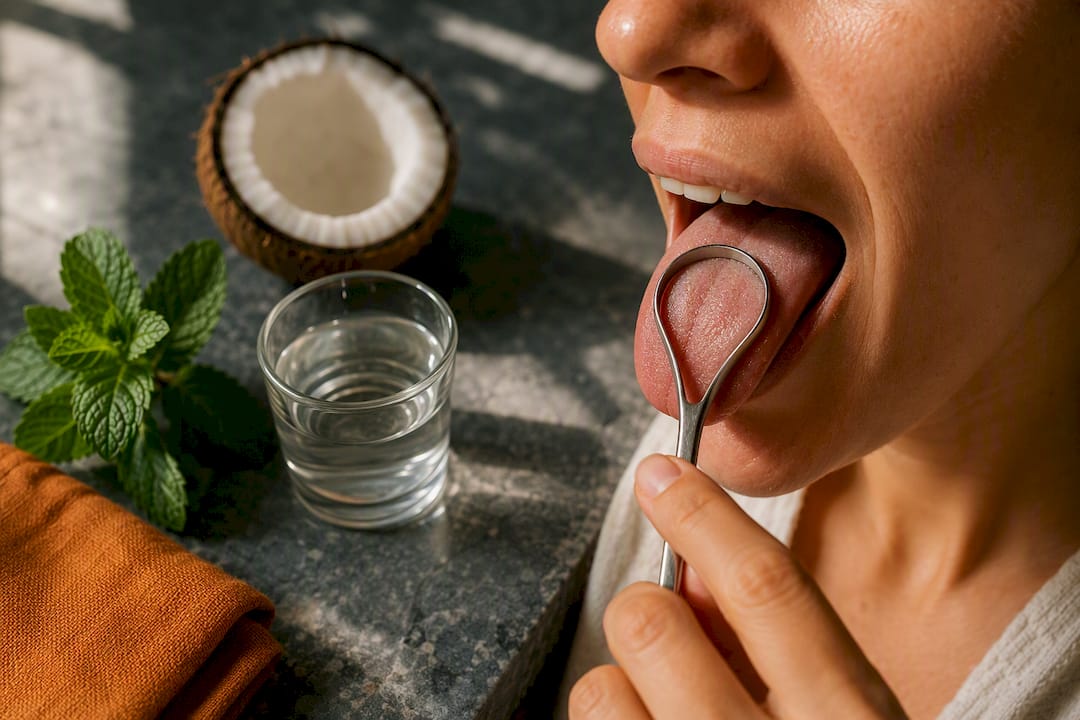
- Scrape first. Use a dedicated tongue scraper from back to front, rinsing the scraper between passes.
- Brush and floss as you normally would, since plaque on your teeth and gumline feeds the same bacteria living on your tongue.
- Rinse last, following the product’s stated volume and hold time, typically 30 to 60 seconds, unless the label directs a different sequence.
The clinical trials referenced earlier used rinses twice daily for 7 to 14 days to see measurable change, and that’s a reasonable starting frequency if you’re targeting active coating. Once things look normal, tapering to once daily or a maintenance rinse is usually enough.
Pro Tip: Watch for tongue irritation, unusual staining, or a mouth that feels drier than before you started. Any of those is a signal to stop the current product and check with a dentist rather than pushing through.
Why Scraping Still Does the Heaviest Lifting
If you only do one thing consistently, make it scraping. UCLA Health points to research showing tongue scraping reduces halitosis-related compounds more effectively than brushing the tongue alone, and it does so by physically removing what’s already loosened, not just suppressing bacteria chemically.
Choosing a scraper is simple: pick a rounded, U-shaped metal or plastic scraper over your fingernail or a toothbrush bristle, which can’t reach into the papillae the same way.
A daily routine that actually holds up:
- Scrape once each morning before eating
- Brush and floss per your normal schedule
- Rinse with a non-drying, microbiome-friendly mouthwash after your evening brushing
- Reassess after a week. If coating persists despite consistent scraping, that’s a signal to look at hydration or see a dentist
When to See a Dentist or Doctor
Self-care covers most tongue coating, but not all of it. See a dentist or physician if coating lasts more than two to three weeks despite consistent scraping and hydration, if it comes with pain, bleeding, or trouble swallowing or speaking, or if you find a white patch that simply won’t scrape off. Mayo Clinic recommends evaluation on that same timeline, since persistent or symptomatic coating can point to oral thrush, leukoplakia, or an underlying systemic issue. Bring a list of current medications and any recent changes to your oral-care routine. Both details help a clinician narrow down the cause faster.
A Natural, Microbiome-Friendly Option Worth Knowing About
Short-term antiseptics like chlorhexidine and chlorine dioxide are useful for knocking down an active problem, but they’re not built for daily, indefinite use. That’s where a natural, non-drying rinse earns its place. Selfwisebrand formulates alcohol-free mouthwash with ingredients like xylitol and nano-hydroxyapatite, aimed at supporting a healthier oral environment without the dryness that alcohol-based and heavy-antiseptic formulas can cause.
The practical fit is straightforward: use a stronger, clinically studied rinse if you’re dealing with active, stubborn coating and want faster results, then shift to a gentler daily rinse once things normalize. Pairing that maintenance rinse with consistent scraping is the combination that holds results over time, not either step alone. For readers who want the fuller picture of how these formulations fit into a complete routine, Selfwisebrand’s microbiome-friendly mouthwash guide breaks down the reasoning ingredient by ingredient.
Choosing the Right Mouthwash for Your Mouth
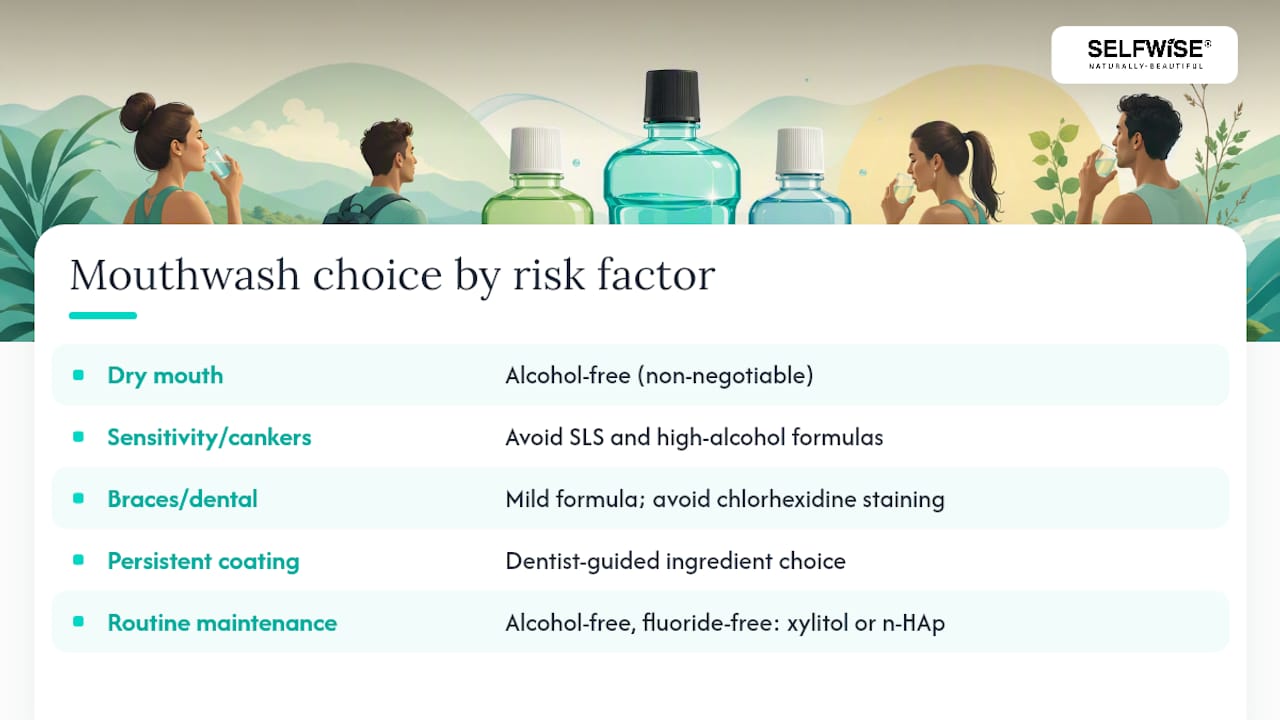
Not every rinse suits every mouth, and picking one without considering your own risk factors is how people end up making coating worse instead of better. If dry mouth is a driver for you, alcohol-free is non-negotiable. Look past the front label and check the ingredient list, since some rinses marketed as “natural” still contain alcohol as a solvent for other actives.
Sensitive mouths and anyone prone to canker sores generally do better avoiding sodium lauryl sulfate (SLS) and high-alcohol formulas, both of which can irritate soft tissue. If you have known allergies, scan for common irritants like certain essential oils in high concentration or artificial dyes, and patch-test a new product for a day or two before committing to full daily use.
For anyone managing braces, dental work, or gum sensitivity, a milder formula without chlorhexidine’s staining risk is usually the more comfortable daily choice, saving the stronger antiseptics for short, clinician-directed bursts. People with genuinely severe or persistent coating tied to a diagnosed condition should let their dentist steer ingredient choice rather than picking based on marketing claims. And if you’re simply maintaining a clean baseline with no active problem, a fluoride-free, alcohol-free option built around xylitol or nano-hydroxyapatite covers daily needs without the trade-offs that come with stronger antiseptic formulas.
What the Evidence Actually Supports
Most advice on tongue coating skips straight to product recommendations, and that’s backwards. The trials on chlorine dioxide and chlorhexidine are genuinely solid, showing measurable change within seven days, but they were run on people who were also mechanically cleaning their tongues as part of the study protocol. Strip out the scraping and I doubt the rinse alone would have moved those numbers nearly as much.
The bigger miss in most guidance is treating dry mouth as an afterthought instead of the root cause it often is. Reaching for a stronger antiseptic when your real problem is dehydration or mouth breathing just compounds the dryness that started the coating in the first place. That’s the mistake I see most: chasing a more aggressive rinse instead of fixing hydration and switching to something alcohol-free.
If you take one thing from this, let it be sequence. Scrape first, always. Then choose your rinse based on whether you’re treating an active problem or maintaining a clean baseline, not based on which bottle has the boldest antibacterial claim on the label.
— Viktor
Ready to Build a Rinse Routine That Doesn’t Dry You Out
If chlorhexidine’s staining and alcohol-based rinses’ dryness have you looking for something you can actually use every day, natural formulas free of alcohol and fluoride may fill that gap. Its formulas skip alcohol and fluoride entirely, built instead around xylitol and nano-hydroxyapatite to support a cleaner mouth without the trade-offs that come with stronger clinical antiseptics.
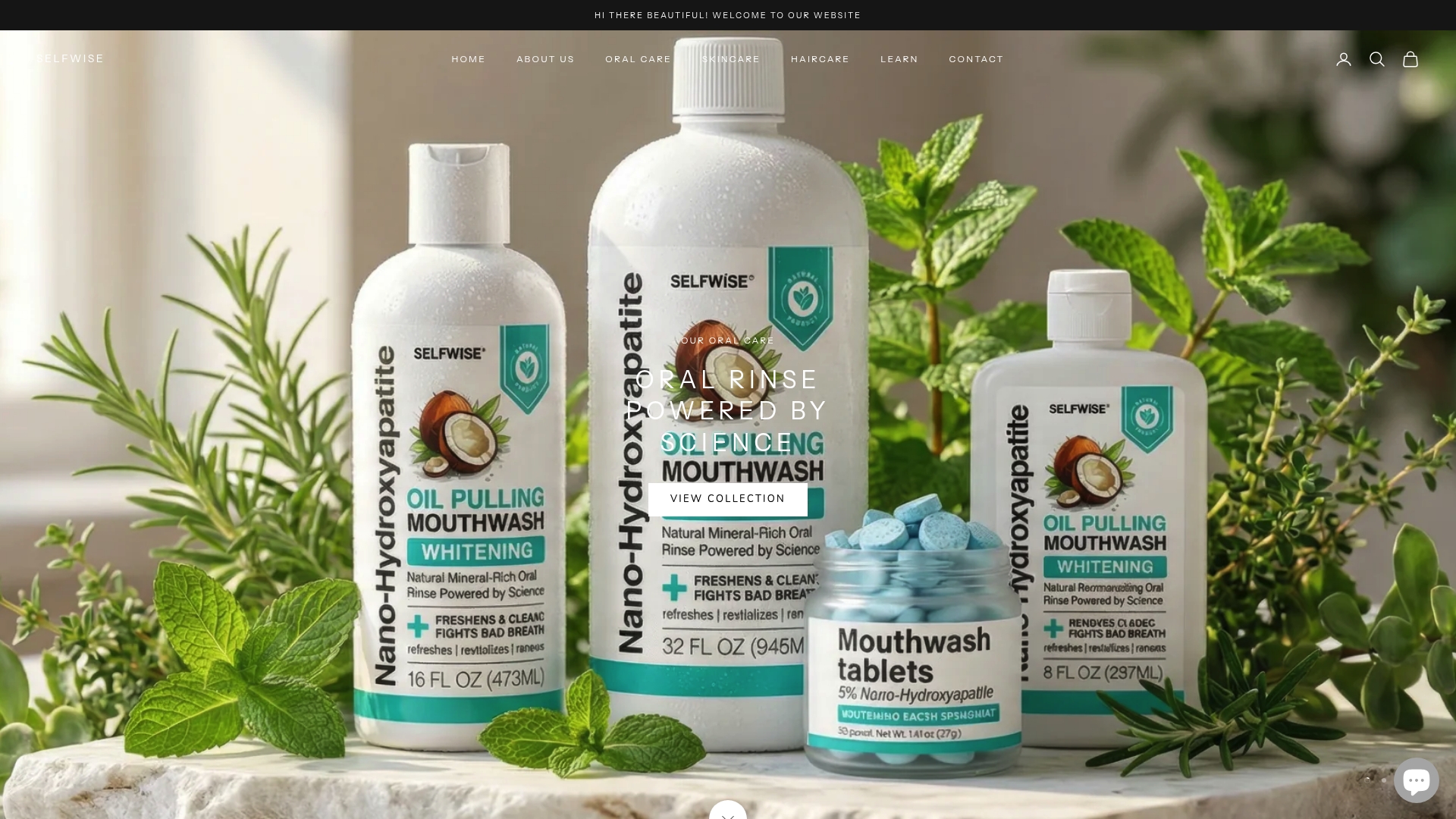
For daily maintenance after you’ve handled an active coating problem, the Nano Hydroxyapatite Mouthwash Tablets give you a fluoride-free, alcohol-free rinse in a format that skips plastic bottles entirely. Browse the full mouthwash collection to find the formula that matches your sensitivity level, and check the natural oral care guide if you want to build out scraping, brushing, and rinsing into one routine that actually sticks.
Sources
- White Tongue: Causes, Treatments & Prevention
- Comparative clinical evaluation of chlorine dioxide and chlorhexidine mouthrinses (PMC article)
- Effects of a mouthwash with chlorine dioxide on oral malodor and salivary bacteria: a randomized placebo-controlled 7-day trial
- Should you try tongue scraping? - UCLA Health
FAQ
What is the best mouthwash for a coated tongue?
There’s no single best option for everyone: chlorhexidine and chlorine dioxide have the strongest short-term trial support for active coating, while alcohol-free, xylitol-based rinses work better as a daily maintenance choice once the coating clears.
Does mouthwash help coated tongue?
Yes, mouthwash reduces the bacteria and volatile sulfur compounds behind tongue coating and bad breath, but trials show it works best paired with tongue scraping rather than used alone.
How can I get rid of coating on my tongue?
Scrape your tongue daily with a dedicated scraper, brush and floss normally, stay hydrated, and follow with an alcohol-free rinse; most coating clears within one to two weeks of consistent care.
Why won’t the white scrape off my tongue?
A patch that won’t lift with gentle scraping may not be simple coating at all. It could be oral thrush, leukoplakia, or another condition, and Mayo Clinic recommends seeing a clinician if it persists.