Prebiotics in Mouthwash: What They Are and Why They Work
Prebiotics in mouthwash are non-living substrates that selectively feed beneficial bacteria already living in your mouth. Unlike antimicrobial rinses that kill microbes indiscriminately, prebiotic mouthwash works with your oral microbiome, shifting its metabolic activity toward outcomes that support gum health, fresher breath, and a more acid-resistant environment. Used consistently, they help balance the oral ecosystem rather than disrupt it.
Here is what that means in practice:
- Microbiome support: Feeds commensal bacteria like Rothia and Neisseria that crowd out acid-producers
- pH buffering: Stimulates alkali-producing metabolic pathways that raise salivary pH and reduce acid stress on enamel
- Breath improvement: Reduces the activity of bacteria responsible for volatile sulfur compounds
Key Takeaways
Prebiotic mouthwash feeds beneficial oral bacteria to shift biofilm metabolism toward a healthier, less acidic environment, with clinical evidence showing measurable gum and pH benefits within 2–3 weeks of consistent use.
| Point | Details |
|---|---|
| What prebiotics in mouthwash are | Non-living substrates that selectively feed beneficial oral bacteria, shifting metabolic activity without killing microbes. |
| Key clinical finding | A double-blind RCT found mean bleeding on probing dropped significantly in 21 days with prebiotic nitrate. |
| Best daily use | Swish for 30–60 seconds after brushing, spit without rinsing, twice daily for consistent microbiome support. |
| Safety note | Generally safe for adults; swallowing large amounts of sugar alcohols can cause GI upset, and children under 6 need dental guidance. |
| Selfwisebrand option | The xylitol mouthwash with nano hydroxyapatite pairs prebiotic activity with enamel remineralization in a fluoride-free, alcohol-free formula. |
Selected studies and reviews
- Localized prebiotic nitrate supplementation remodels oral biofilm metabolism and reduces gingival inflammation: a randomized placebo-controlled trial — Randomized, double-blind, placebo-controlled trial; primary evidence for gingival bleeding reduction and pH changes over 21 days.
- Effect of Prebiotics Supplements on Salivary pH and Salivary Buffer Capacity in Children with Early Childhood Caries: An In Vivo Study (PMC) — In vivo study in children; supports salivary pH and buffer capacity improvements from prebiotic supplementation.
- How probiotics, prebiotics, synbiotics, and postbiotics prevent dental caries: an oral microbiota perspective (PMC) — Peer-reviewed review; covers prebiotic stability, sugar alcohols, oligosaccharides, and mechanisms across the oral microbiome.
- How probiotics, prebiotics, synbiotics, and postbiotics prevent dental caries: an oral microbiota perspective (Nature) — Scientific review; details prebiotic candidates including xylitol, erythritol, arginine, and nitrate with mechanistic evidence.
- Experts on prebiotic-directed nutritional modulation (Springer) — Expert commentary; frames the shift from broad-spectrum antimicrobials to targeted biofilm metabolic modulation.
Table of Contents
- How prebiotics actually change what happens inside your mouth
- What clinical evidence says about the benefits of prebiotic mouthwash
- Prebiotics vs. probiotics vs. antimicrobial mouthwash: when does each make sense?
- What prebiotic ingredients to look for on a mouthwash label
- How to use prebiotic mouthwash in your daily routine
- Safety considerations and who should check with a clinician first
- Where the research stands and what studies still need to answer
- The Selfwisebrand perspective on prebiotic oral care
- Selfwisebrand mouthwash products that align with a prebiotic routine
- Sources
- FAQ
How prebiotics actually change what happens inside your mouth
Prebiotics do not kill bacteria. They feed the right ones. When a prebiotic substrate reaches your oral biofilm, specific commensal bacteria metabolize it and produce protective byproducts: ammonia, nitric oxide precursors, and other alkaline metabolites that raise local pH and reduce the acid stress that drives cavities and gum inflammation.
Three mechanistic pathways matter most:
- Selective substrate use: Only certain bacteria can metabolize a given prebiotic. Xylitol, for example, is taken up by Streptococcus mutans but cannot be fermented into acid, starving cariogenic activity while leaving acid-neutral species unaffected.
- Nitrate-reducing taxa enrichment: Substrates like dietary nitrate feed Rothia and Neisseria species, which convert nitrate to nitrite and then to nitric oxide. This pathway is linked to lower gingival inflammation and, in some research, systemic vascular benefits.
- Alkali production: Arginine and urea-based substrates stimulate bacteria that produce ammonia, directly raising salivary pH and buffer capacity.
This is fundamentally different from how antimicrobials work. Chlorhexidine or alcohol-based rinses reduce microbial load broadly; prebiotics modulate what the biofilm produces without necessarily changing how much plaque is present. Probiotics, by contrast, introduce live organisms to compete with pathogens. Prebiotics skip that step entirely: they are non-living substrates, which means they survive heat, storage, and even some alcohol-containing formulations far better than live cultures can. A peer-reviewed review confirms that prebiotics are inherently more stable than probiotics in oral-care product formats.
The simplified flow looks like this: prebiotic substrate → commensal bacteria metabolize it → beneficial metabolic shift (raised pH, reduced acid, lower inflammation markers).
Pro Tip: Store prebiotic mouthwash tablets in a cool, dry place away from direct sunlight. Solid formats are especially stable because moisture and heat are the main threats to prebiotic activity in liquid rinses; tablets sidestep both.
What clinical evidence says about the benefits of prebiotic mouthwash
The evidence base is still growing, but several well-designed studies point in a consistent direction.
Gingival inflammation and bleeding. The strongest single data point comes from a randomized, double-blind, placebo-controlled trial of localized prebiotic nitrate: mean bleeding on probing fell significantly over 21 days, alongside measurable increases in salivary nitrite and oral pH. That is a statistically significant reduction in a clinical marker of gum inflammation, achieved in three weeks without an antimicrobial.

Salivary pH and buffer capacity. An in vivo study in children with early childhood caries found that daily prebiotic supplementation raised salivary pH and buffer capacity compared with baseline over the study period. Improved buffer capacity means saliva is better at neutralizing acid after meals, which reduces the window of time enamel is under acid attack.
Cariogenic bacteria and cavity risk. Sugar alcohols like xylitol and erythritol show oral prebiotic properties and have been associated with reductions in S. mutans counts and caries incidence across multiple studies. Xylitol in particular is well-documented: S. mutans takes it up but cannot ferment it, disrupting the bacteria’s energy cycle.
Where the evidence is strong vs. preliminary:
- Strong signal: Nitrate prebiotics reducing gingival bleeding (RCT data); xylitol reducing S. mutans (multiple studies)
- Moderate signal: Salivary pH and buffer improvements (in vivo data, children population)
- Preliminary: Long-term caries prevention from prebiotic mouthwash specifically (most trials are short-duration or use supplement forms, not rinses)
The practical takeaway is straightforward: if your goal is fresher breath and lower gum inflammation, the evidence supports regular prebiotic mouthwash use. If you are managing active caries or periodontal disease, prebiotic rinses can complement professional treatment but are not a replacement.
Prebiotics vs. probiotics vs. antimicrobial mouthwash: when does each make sense?
The three approaches target the same problem from different angles. Knowing the difference helps you choose the right tool for your situation.
Prebiotics (substrate/modulation approach)
- Feed beneficial bacteria already present; no live organisms required
- Stable in most product formats; not affected by temperature or storage conditions
- Safe for daily long-term use; no risk of microbial resistance
- Best fit: daily maintenance, microbiome-friendly natural routines, breath support, mild gum health goals
Probiotics (live-organism approach)
- Introduce beneficial bacteria to compete with pathogens
- Fragile: live cultures can be killed by heat, alcohol, or improper storage
- Useful after antibiotic courses that have disrupted the oral microbiome
- Best fit: recolonization after antibiotics, under clinician guidance; not ideal as a standalone daily rinse
Antimicrobial mouthwashes (kill approach)
- Reduce total microbial load broadly, including beneficial species
- Effective for acute infection control and pre/post-surgical use
- Not designed for daily long-term use; can disrupt microbiome balance over time
- Best fit: acute gingivitis, prescribed peri-operative care, clinician-directed short courses
When to use which:
- Daily maintenance and breath support: Prebiotic mouthwash is the natural-routine choice.
- Targeted infection or acute gingivitis flare: Clinician-guided antiseptic (chlorhexidine or similar) for a defined short course.
- After antibiotic treatment: Probiotic rinse or supplement under clinician supervision to help restore microbial diversity.
- Combining approaches: Prebiotics can follow an antiseptic course to help re-establish a healthy biofilm. Using a prebiotic rinse alongside a probiotic supplement is also compatible, since the substrate feeds the organisms being introduced.
For readers who want to avoid harsh chemicals altogether, clean-teeth approaches that skip strong antimicrobials are increasingly supported by the same research base that validates prebiotics.
What prebiotic ingredients to look for on a mouthwash label
Not every product marketed as “microbiome-friendly” contains meaningful prebiotic substrates. Here is what to look for and what to avoid.
Common prebiotic classes in oral care:
- Xylitol: A sugar alcohol that S. mutans cannot ferment into acid; also reduces bacterial adhesion to enamel. Look for it near the top of the ingredient list for meaningful concentration. Multiple studies associate xylitol with reduced cariogenic activity.
- Erythritol: Similar mechanism to xylitol; some evidence suggests it may be more effective at reducing S. mutans biofilm formation.
- Arginine: An amino acid that feeds alkali-producing bacteria, raising salivary pH. Found in some natural toothpastes and rinses.
- Oligosaccharides (GOS and similar): Selectively fermented by beneficial oral bacteria; less common in rinses but present in some supplement formats.
- Nitrate-based substrates: Found in beet-derived or vegetable-extract formulations; feed Rothia and Neisseria species linked to lower gingival inflammation.
Label-reading tips:
- Ingredient order matters. In the U.S., ingredients are listed by concentration, highest first. A prebiotic ingredient listed in the first five positions is present at a meaningful level; one listed near the end is likely a trace amount.
- Tablet and solid formats often concentrate prebiotic ingredients more efficiently than diluted liquid rinses, since there is no water to reduce active-ingredient density.
- Oil-pulling formats deliver substrates differently: the oil acts as a carrier and the swishing action distributes ingredients across the full oral surface.
What to avoid if you want a microbiome-friendly product:
- High-concentration alcohol (above 20%): disrupts the biofilm broadly and can reduce prebiotic substrate activity
- Chlorhexidine at daily-use concentrations: effective for acute treatment but counterproductive for long-term microbiome balance
- Added sugars or glucose syrups: feed acid-producing bacteria, directly opposing the prebiotic goal
Selfwisebrand’s xylitol mouthwash with nano hydroxyapatite pairs xylitol’s prebiotic properties with nano hydroxyapatite’s remineralizing action, a combination that addresses both microbial balance and enamel support in one formula. Both ingredients are alcohol-free and fluoride-free, which keeps the formulation compatible with a natural, microbiome-friendly routine.
How to use prebiotic mouthwash in your daily routine
Timing and technique affect how much benefit you actually get. Here is a practical, dentist-friendly approach:
- Brush first, then rinse. Use your prebiotic mouthwash after brushing. Brushing removes loose debris and disrupts surface biofilm, giving the prebiotic substrate better contact with the bacteria underneath.
- Swish for 30–60 seconds. Longer contact time allows the substrate to distribute across all oral surfaces, including between teeth and along the gumline.
- Spit, do not rinse. Rinsing with water immediately after removes the prebiotic substrate before it can act. Spit and leave it.
- Use twice daily. Morning and evening use aligns with the natural rhythm of biofilm activity: the biofilm is most metabolically active after overnight accumulation and after meals.
- Wait 30 minutes after eating. Using mouthwash right after a meal, when salivary pH is already recovering, lets the prebiotic substrate work during the acid-recovery window.
Special-case guidance:
- Children: Use age-appropriate formulations with lower xylitol concentrations and supervise to prevent swallowing. Children under 6 should use mouthwash only under dental guidance.
- Braces or orthodontic appliances: Prebiotic rinses are well-suited here because the increased plaque retention around brackets raises cavity and gum risk. Swish thoroughly to reach all surfaces.
- Dry mouth: Prebiotic mouthwash can support salivary function by stimulating beneficial bacterial activity, but people with severe xerostomia should confirm with their dentist that the formulation does not contain irritants.
Daily use checklist:
- Brush teeth thoroughly
- Swish prebiotic mouthwash for 30–60 seconds
- Spit; do not rinse with water
- Wait 30 minutes before eating or drinking
- Repeat morning and evening
For a fuller picture of how prebiotic rinsing fits into a complete natural oral care routine, the daily-steps guide covers brushing, oil pulling, and remineralization in sequence.
Safety considerations and who should check with a clinician first
Prebiotic mouthwash is among the safest categories of oral-care products because the active ingredients are non-living substrates, not drugs or live organisms. That said, a few practical precautions apply.
General safety profile:
- Non-living substrates carry no risk of infection or microbial overgrowth
- No known drug interactions for topical use at standard mouthwash concentrations
- Suitable for most healthy adults and children above age 6 with appropriate supervision
Who should consult a clinician before starting:
- People with severe or active periodontal disease: prebiotic mouthwash supports maintenance but is not a substitute for professional scaling and treatment
- People with compromised immune systems: while prebiotics themselves are safe, any change to oral-care routine during immunosuppression warrants a clinician check
- Infants and toddlers under 6: swallowing risk is higher, and the appropriate formulation and dose should be confirmed with a pediatric dentist
- People with fructose intolerance or specific metabolic conditions: some oligosaccharides and sugar alcohols are contraindicated
Swallowing risk. Topical mouthwash use involves minimal ingestion, but swallowing large amounts of sugar alcohols or oligosaccharides can cause gastrointestinal upset, including diarrhea. This is primarily a concern with concentrated supplement sachets, not standard mouthwash rinses. Tablet formats dissolve to a small volume, reducing this risk further.
After dental procedures. If you have had a recent extraction, implant placement, or periodontal surgery, check with your dentist before resuming any mouthwash. Some procedures require a prescribed antiseptic rinse for a defined period before returning to a maintenance product.
Pro Tip: If you are switching from a chlorhexidine rinse to a prebiotic mouthwash, allow a 48–72 hour gap or complete the prescribed antiseptic course first. Chlorhexidine binds to oral surfaces and can reduce prebiotic substrate activity if both are used simultaneously.
How long before you notice a difference?
Results vary by individual, but the evidence points to a rough timeline:
- Immediate (day 1–3): Fresher breath after rinsing, from reduced volatile sulfur compound production
- Short-term (2–3 weeks): Measurable changes in salivary pH and buffer capacity; the nitrate prebiotic RCT showed significant gingival changes within 21 days
- Clinical signs (6–12 weeks): Reductions in gum bleeding and inflammation visible at a dental check; some trials report these changes at the 6-week mark
Tracking your progress at home:
- Note whether gums bleed when you floss: reduced bleeding over 4–6 weeks is a meaningful signal
- Pay attention to morning breath: a consistent improvement within the first two weeks suggests the biofilm is shifting
- Track tooth sensitivity: some people report reduced sensitivity as salivary buffer capacity improves
- Ask your dentist to measure bleeding on probing (BOP) at your next visit; chairside salivary pH and buffer-capacity kits can also give a baseline reading
Individual microbiome composition, diet, and sugar intake all affect response time. A high-sugar diet actively feeds acid-producing bacteria, partially offsetting the prebiotic benefit. The two interventions work in opposite directions; cutting back on frequent sugar exposure amplifies what the mouthwash does.
Where the research stands and what studies still need to answer
The clinical evidence for prebiotic mouthwash is promising but still maturing. Here is an honest picture of what the data shows and where the gaps are.
Key trial highlights:
The randomized placebo-controlled nitrate prebiotic trial is the most rigorous single study available: double-blind, 21-day duration, statistically significant reduction in bleeding on probing (25.7% to 15.3%, p = 0.0002). Its limitation is duration: 21 days is enough to show a functional biofilm shift, but not enough to confirm long-term periodontal outcomes.
The children’s in vivo study on salivary pH and buffer capacity used a wheat dextrin supplement rather than a mouthwash, which limits direct translation to rinse formats. The pH and buffer findings are consistent with the mechanistic model, but the delivery vehicle difference matters for product-specific claims.
This framing, supported by expert commentary on prebiotic nutritional modulation, captures where the field is heading: away from kill-everything antiseptics and toward precision feeding of the microbiome.
Methodological limits readers should know:
- Most trials are short (3–12 weeks); long-term caries and periodontal outcomes remain understudied
- Sample sizes in most RCTs are small, limiting generalizability
- Many studies use supplement forms (sachets, lozenges) rather than mouthwash rinses specifically
- Surrogate endpoints (pH, BOP, microbial counts) are useful but not the same as hard outcomes like tooth loss or confirmed caries reduction
What future research is likely to address:
- Longer RCTs (12+ months) measuring actual caries incidence and periodontal attachment levels
- Dose-response work to establish optimal prebiotic concentrations in rinse formats
- Population diversity studies, since microbiome composition varies significantly by diet, geography, and genetics
The broader review literature on prebiotics, probiotics, and dental caries prevention places these individual trials in context and is worth reading for anyone who wants to go deeper on the evidence.
The Selfwisebrand perspective on prebiotic oral care
The natural oral care space has spent years focused on what to remove from products: fluoride, alcohol, artificial sweeteners, harsh antimicrobials. That is a reasonable starting point, but it is only half the picture. The more interesting question is what you put in a formula and whether it actively supports the biology of a healthy mouth.
Prebiotics answer that question directly. Ingredients like xylitol do not just avoid harm; they work with the bacteria already present in your mouth to shift the metabolic environment toward health. Nano hydroxyapatite addresses the structural side of the equation, supporting enamel remineralization without disrupting the microbiome. Oil pulling, as a delivery format, distributes active ingredients across the full oral surface in a way that a quick 30-second rinse often does not.

Selfwisebrand’s approach is to combine these mechanisms in formulas that are simple enough to trust and specific enough to do something. The natural oral care philosophy behind the product line is grounded in the same evidence base this article draws on: peer-reviewed research on microbiome modulation, not marketing claims.
Selfwisebrand mouthwash products that align with a prebiotic routine
Selfwisebrand’s mouthwash line is built around the same ingredients the clinical evidence points to: xylitol for prebiotic activity, nano hydroxyapatite for remineralization, and alcohol-free, fluoride-free formulas that do not undermine the microbiome you are trying to support.
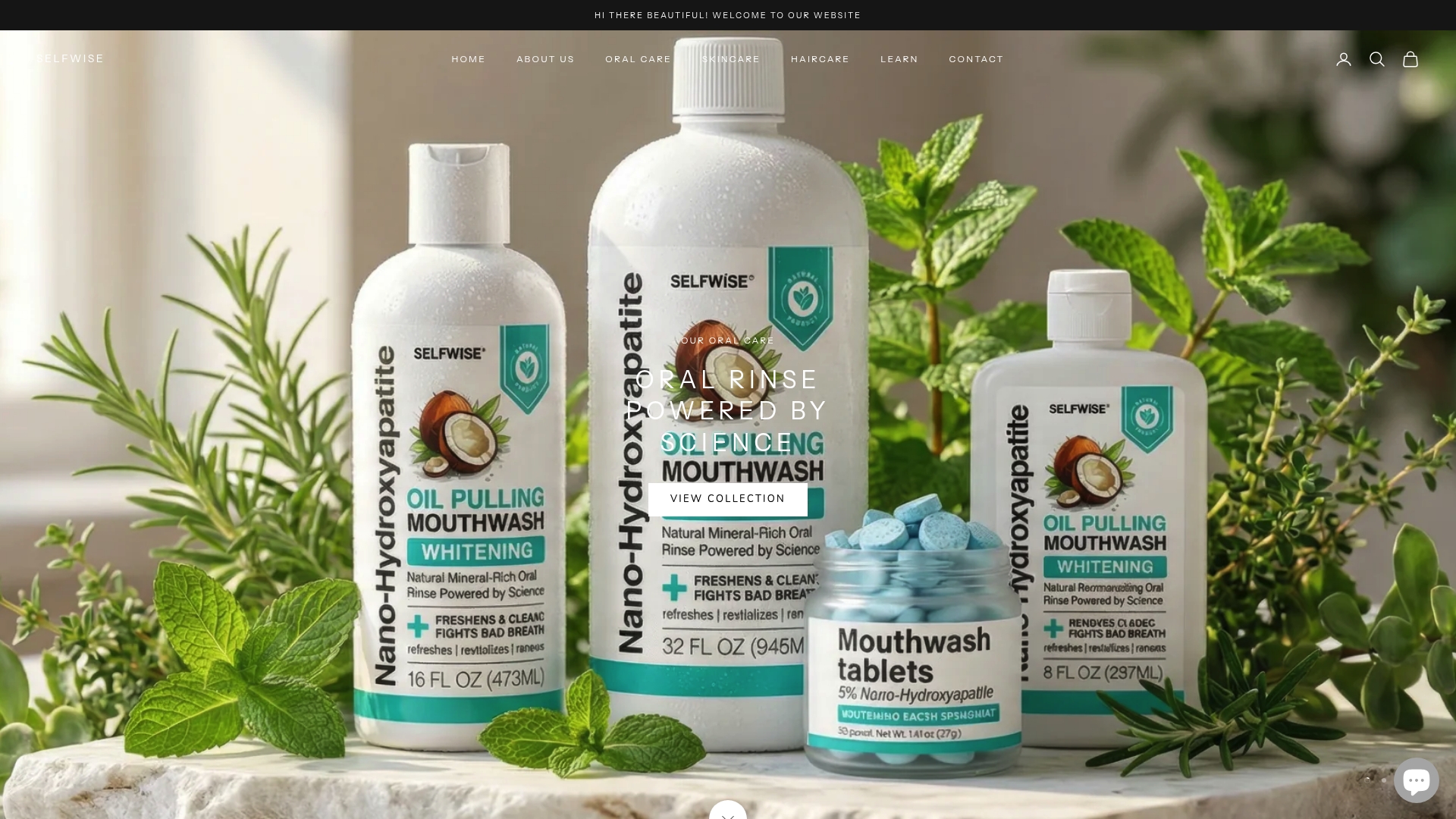
The xylitol mouthwash with nano hydroxyapatite is the most direct fit for a prebiotic daily routine: xylitol feeds the right bacteria while nano hydroxyapatite works on enamel integrity simultaneously. For a portable, travel-friendly option, the nano hydroxyapatite mouthwash tablets dissolve into a concentrated rinse without the plastic bottle. The oil-pulling mouthwash suits people who want a longer swishing format that distributes ingredients more thoroughly across the gumline and between teeth.
All three are fluoride-free and formulated without harsh antiseptics, keeping them compatible with the microbiome-modulation approach the research supports. Browse the full Selfwisebrand mouthwash collection to find the format that fits your routine.
Sources
- Localized prebiotic nitrate supplementation remodels oral biofilm metabolism and reduces gingival inflammation: a randomized placebo-controlled trial
- Effect of Prebiotics Supplements on Salivary pH and Salivary Buffer Capacity in Children with Early Childhood Caries: An In Vivo Study - PMC
- How probiotics, prebiotics, synbiotics, and postbiotics prevent dental caries: an oral microbiota perspective - PMC
- How probiotics, prebiotics, synbiotics, and postbiotics prevent dental caries: an oral microbiota perspective
- Experts on prebiotic-directed nutritional modulation (Springer)
FAQ
Are prebiotics good for your teeth?
Yes. Prebiotic substrates like xylitol and nitrate feed beneficial oral bacteria that produce protective metabolites, raising salivary pH, reducing acid stress on enamel, and lowering gingival inflammation markers in clinical trials.
Is probiotic mouthwash better than regular mouthwash?
It depends on the goal. Probiotic rinses introduce live beneficial bacteria and work best after antibiotic disruption of the oral microbiome. Prebiotic mouthwash is more stable, easier to use daily, and better suited to long-term microbiome maintenance without the storage and viability challenges that live cultures face.
Why do some dentists advise against daily mouthwash use?
The concern applies mainly to alcohol-based and high-concentration antiseptic rinses, which can disrupt the oral microbiome with daily long-term use. Prebiotic and alcohol-free mouthwashes do not carry the same risk; they modulate rather than deplete the microbial community.
Are prebiotics safe to use every day?
For most healthy adults, yes. Prebiotic mouthwash ingredients are non-living substrates with no known drug interactions at standard topical concentrations. The main precaution is avoiding swallowing large amounts of sugar alcohols, which can cause gastrointestinal upset; standard rinse-and-spit use keeps ingestion minimal.