Mouthwash: When It Helps, When to Skip, and Natural Options
Mouthwash is not strictly necessary for most people who brush thoroughly and clean between their teeth every day. It works as an adjunct, a supporting layer, not a substitute for mechanical cleaning. In specific situations, gingivitis, high cavity risk, or areas your toothbrush can’t reach, a therapeutic rinse can add a measurable benefit that flossing and brushing alone don’t fully cover.
TL;DR:
- Mouthwash offers modest benefits primarily for those with high cavity risk, gingivitis, or hard-to-reach areas, but it is not necessary for everyone who brushes thoroughly.
- Ingredients like essential oils and cetylpyridinium chloride improve plaque control and gingivitis when used alongside regular brushing, with chlorhexidine reserved for short-term therapy due to side effects.
- Long-term daily use of antimicrobial rinses can cause staining, taste alteration, and microbiome disruption, especially with alcohol-based formulas or chlorhexidine.
- Oral hygiene routines should focus on brushing and interdental cleaning, with mouthwash serving as an optional, targeted adjunct depending on individual needs.
- Natural substitutes such as nano-hydroxyapatite and xylitol are promising for remineralization and cavity prevention, but require personalized consultation with a dentist.
Table of Contents
- Is Mouthwash Necessary, or Just Nice to Have?
- When Mouthwash Actually Moves the Needle
- When You Can Skip It, and What Goes Wrong If You Don’t Need To
- How to Use Mouthwash the Right Way
- How to Choose a Mouthwash That Actually Fits Your Needs
- Where Natural Formulas Fit Into the Evidence
- A Straightforward Take on Mouthwash
- Selfwise Mouthwash Options Worth a Look
- Sources
- FAQ
Is Mouthwash Necessary, or Just Nice to Have?
Mouthwash falls into two very different categories, and mixing them up is where most confusion starts. Cosmetic mouthwash masks bad breath and leaves a fresh taste, but it has no lasting effect on bacteria or enamel. Therapeutic mouthwash contains active ingredients designed to change something in your mouth chemically or biologically, and those cosmetic and therapeutic formulas differ in intended clinical effect, not just marketing language.
Common actives and what they’re built to do:
- Fluoride: strengthens enamel and helps prevent cavities
- Essential oils (EO): reduce plaque-forming bacteria and calm gum inflammation
- Cetylpyridinium chloride (CPC): targets plaque and gingivitis with daily use
- Chlorhexidine (CHX): a stronger antimicrobial, generally reserved for short-term therapy
- Xylitol: starves cavity-causing bacteria of the sugars they feed on
- Nano-hydroxyapatite: supports remineralization as a fluoride-free alternative
Beyond the actives, most formulas also carry solvents, sweeteners, and preservatives that affect taste and how well you tolerate the product day after day. Those non-active ingredients vary widely across market products, which is part of why one brand feels harsh and another feels mild even with similar active ingredients.
When Mouthwash Actually Moves the Needle
Mechanical cleaning, brushing plus interdental cleaning, remains the foundation of oral hygiene. Nothing rinses that off the table. But the research on specific rinse types is stronger than skeptics often assume.
Systematic reviews and umbrella reviews on dental biofilm show that EO and CPC mouthwashes produce consistent, measurable improvements in plaque and gingivitis when added to a normal brushing routine. That’s not a marginal effect dentists dismiss. Chlorhexidine works even more aggressively against bacteria, but its side effects, staining teeth and altering taste, mean it’s typically prescribed for two to four weeks rather than indefinitely.

Fluoride rinses have solid evidence behind them too, particularly for children and for adults flagged as high caries risk. A group of key opinion leaders reached evidence-based consensus that mouthwash should be personalized rather than universally recommended, precisely because the benefit depends on who’s using it and why.
A few things temper the enthusiasm here:
- Effect sizes are real but modest, not dramatic reversals of gum disease
- Benefits are adjunctive; they add to brushing, they don’t replace it
- Long-term daily use of EO or CPC shows gains over months, but methodological limitations exist in the underlying studies
When You Can Skip It, and What Goes Wrong If You Don’t Need To
If you brush twice a day for two full minutes and clean between your teeth consistently, mouthwash usually adds very little. Piling on a rinse you don’t need isn’t just unnecessary, it can introduce problems of its own.
Common downsides worth knowing about:
- Staining: chlorhexidine in particular can discolor teeth and increase tartar buildup with extended use
- Altered taste: some antimicrobial rinses temporarily dull taste perception
- Microbiome disruption: aggressive antimicrobials don’t discriminate between harmful and beneficial oral bacteria
- Alcohol content: can dry out and irritate soft tissue, especially with frequent use
- Drug interactions: certain medications don’t mix well with strong antiseptic rinses
Some groups should be more cautious than others. Young children risk swallowing rinse they shouldn’t ingest. People managing dry mouth often find alcohol-based formulas make things worse, not better. Pregnant people and anyone on prescription medication should run their choice by a dentist before adding a daily rinse, the same way you’d check any new product against an existing prescription.
How to Use Mouthwash the Right Way
Technique matters almost as much as ingredient choice. Get the timing wrong and you can undercut the exact benefit you’re trying to get.
- Separate it from brushing. Rinsing immediately after fluoride toothpaste can wash away the concentrated fluoride sitting on your enamel before it has time to work.
- Spit, don’t rinse with water. Rinsing with water right after brushing dilutes fluoride and remineralizing agents, which defeats the purpose of using them.
- Match frequency to purpose. Daily use fits EO or CPC formulas meant for long-term plaque control; chlorhexidine is meant for short bursts of two to four weeks, not indefinite daily use.
- Measure and swish for about 30 seconds. Shorter than that and the active ingredients don’t have enough contact time to do their job.
- Wait roughly 30 minutes before eating or drinking after a fluoride rinse so it can keep working uninterrupted.
Pro Tip: If you’re using a fluoride or remineralizing rinse at night, do it right before bed after your last brush. Saliva flow drops while you sleep, giving the active ingredients more uninterrupted contact time with your teeth.
How to Choose a Mouthwash That Actually Fits Your Needs
Start with the goal, not the shelf display. If cavity prevention is the priority, fluoride is the ingredient with the most backing. If your gums bleed or feel puffy, EO or CPC formulas are built for daily plaque and gingivitis control. Chlorhexidine belongs in short-term therapeutic use under a dentist’s direction, not a daily lineup.
A few practical filters to run any bottle through:
- Check for the ADA Seal of Acceptance, which reflects independent clinical trials on safety and efficacy, though its absence doesn’t automatically mean a product doesn’t work
- Choose alcohol-free formulas if you deal with dry mouth or tissue sensitivity
- Look past the ingredient list for actual clinical evidence, not just a claim printed on the label
Natural adjuncts deserve a place in this conversation too. Nano-hydroxyapatite is gaining support in lab research and some clinical work as a fluoride-free option for enamel support, and it pairs naturally with xylitol, which works by limiting the food supply cavity-causing bacteria depend on. You can dig deeper into how natural antimicrobial rinse ingredients perform if you want the fuller comparison against synthetic actives, and the cosmetic versus therapeutic breakdown is worth a read before you commit to a bottle.
Where Natural Formulas Fit Into the Evidence
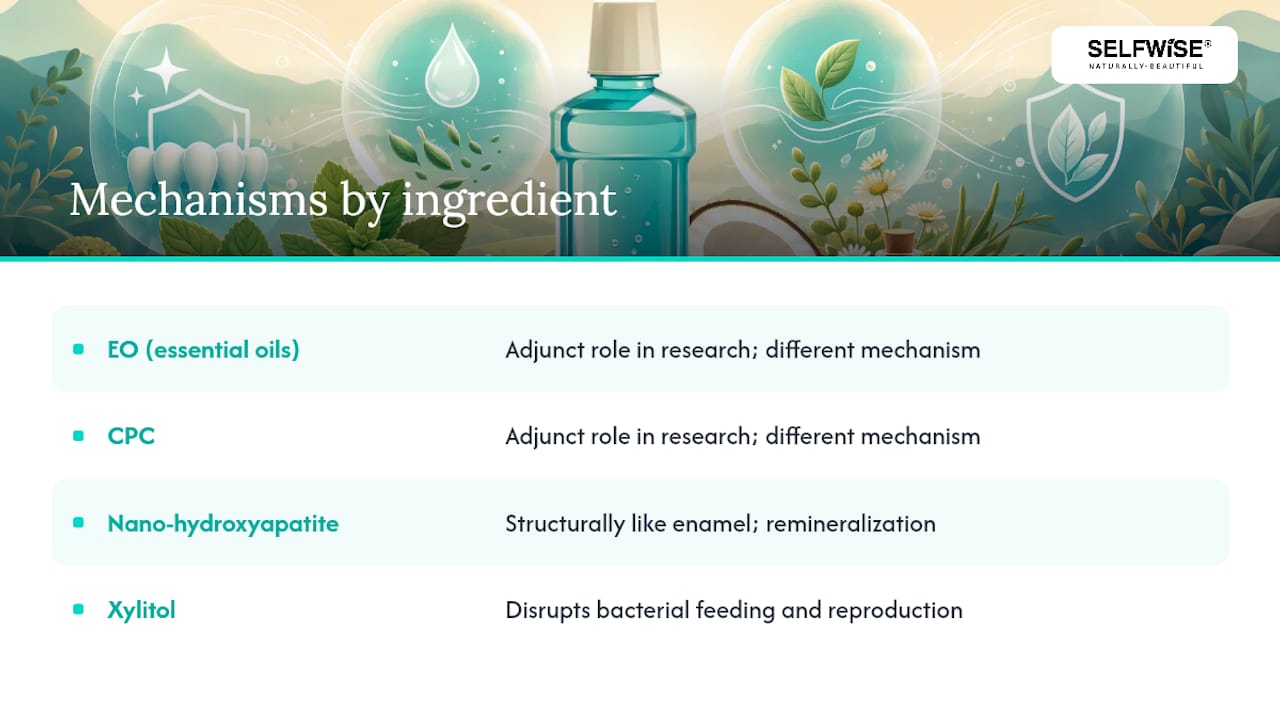
Nano-hydroxyapatite and xylitol aren’t fringe additions. Nano-hydroxyapatite is structurally similar to the mineral that makes up tooth enamel, which is part of why it shows promise for remineralization without relying on fluoride. Xylitol works differently: it interferes with how cavity-causing bacteria feed and reproduce, making it a reasonable daily adjunct rather than a short-term fix. Neither replaces brushing or interdental cleaning. Both fit the same adjunctive role that EO and CPC rinses fill in the research, just through a different mechanism. For anyone managing a specific concern, from early enamel wear to persistent bad breath, a conversation with a dentist about therapeutic goals still belongs at the center of the decision.
A Straightforward Take on Mouthwash
The honest answer is that most people spend more time debating mouthwash than they spend flossing, and that’s backwards. Brushing and interdental cleaning do the heavy lifting; nothing marketed in a colorful bottle changes that hierarchy. What natural formulas offer isn’t a shortcut around the fundamentals, it’s a smarter adjunct for the specific gap you’re trying to close, whether that’s enamel support or a dry, irritated mouth that can’t tolerate alcohol-based rinses. Selfwisebrand builds around that reality rather than against it: informed choice over blanket claims, and a nudge toward your dentist whenever a concern is genuinely therapeutic rather than cosmetic.
— Viktor
Selfwise Mouthwash Options Worth a Look
If your routine already has brushing and flossing locked down, the next question is which adjunct actually fits your goals. Selfwise’s nano hydroxyapatite mouthwash tablets give you a fluoride-free, remineralizing option in solid form, no plastic bottle, no alcohol, no artificial dyes.
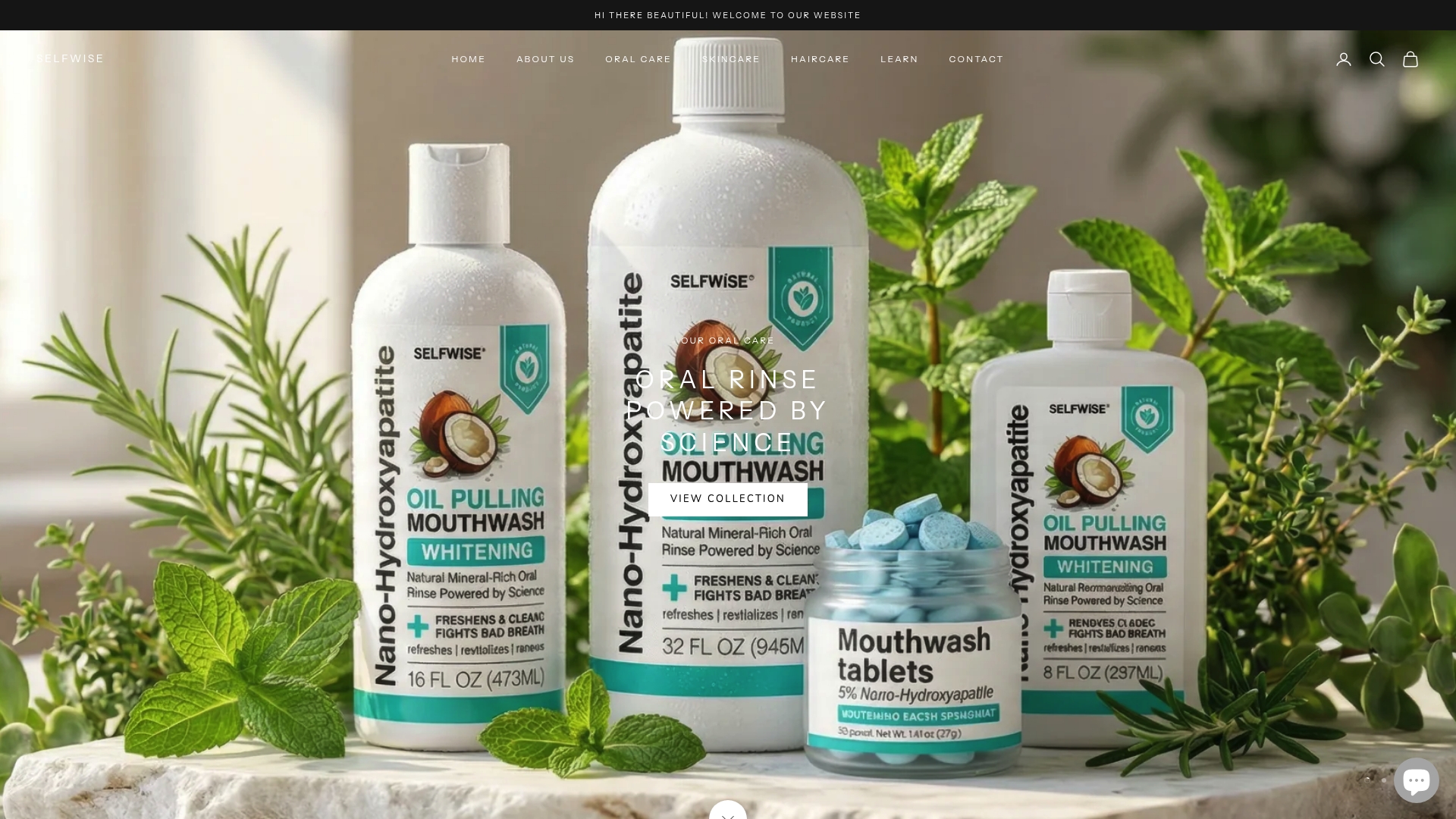
For anyone drawn to oil pulling as a gentler daily habit, the nano hydroxyapatite oil pulling mouthwash combines that traditional practice with enamel-support science instead of asking you to choose one over the other. And if sweetener choice matters to you, the xylitol mouthwash with nano hydroxyapatite pairs cavity-fighting xylitol with the same remineralizing base. Browse the full mouthwash collection to compare ingredients side by side, and check the therapeutic details with your dentist if you’re managing gingivitis or another condition beyond routine maintenance.
Sources
For the research and guidelines behind this article, see the ADA’s mouthrinse guidance, the British Dental Journal’s KOL consensus on mouthwash use, and the systematic review on mouthwashes and dental biofilm. Anyone managing implants or limited mechanical access may also find this implant maintenance checklist useful.
- Key opinion leaders reach an evidence-based consensus on mouthwash use | British Dental Journal
- Mouthrinse (Mouthwash) - American Dental Association
- A fresh look at mouthwashes—what is inside and what is it for? - PMC
FAQ
Can you go without mouthwash entirely?
Yes. If you brush twice daily and clean between your teeth consistently, mechanical cleaning covers the essential foundation of oral hygiene, and mouthwash becomes optional rather than required.
Are there any downsides to using mouthwash?
Some formulas carry real tradeoffs: chlorhexidine can stain teeth with extended use, alcohol-based rinses can dry out soft tissue, and aggressive antimicrobials may disrupt the balance of your oral microbiome.
Do people in Europe use mouthwash as often as in the US?
Usage habits vary by country and aren’t consistently tracked in the clinical literature this article draws from, so no reliable comparison figure exists here. What’s consistent across regions is the guideline that mouthwash works best as a personalized adjunct, not a universal daily habit.
Is it good to use mouthwash every day?
Daily use fits certain formulas well, especially EO or CPC rinses aimed at long-term plaque and gingivitis control, but chlorhexidine is meant for short two to four week stretches rather than everyday use indefinitely.
Is fluoride necessary in a mouthwash?
Fluoride isn’t required for everyone, but it has strong evidence for cavity prevention in children and adults at higher caries risk. Fluoride-free alternatives like nano-hydroxyapatite offer a comparable remineralizing route for people who prefer to skip it.