Sensitive Mouths: Why Mouthwash Burns and Try Xylitol or Saline
Mouthwash usually burns because of alcohol or other solvents, strong flavorings like menthol or cinnamon, or tissue that’s already irritated or inflamed. Less often, the sting points to an underlying condition. If a rinse burns, stop using it, rinse your mouth with plain water, and switch to a milder, flavor-free option or check with a dentist if the pain is severe or doesn’t fade.
TL;DR:
- Mouthwash ingredients like ethanol, essential oils, and strong flavorings are the primary causes of burning sensations, especially in sensitive or inflamed tissue.
- Alcohol-free rinses can still cause irritation if they contain essential oils or flavoring agents, so ingredient reading is crucial before purchasing.
- Persistent burning, abnormal taste, or oral lesions after stopping mouthwash may indicate underlying health issues rather than product sensitivity.
- Switching to milder options such as saline or xylitol-based rinses and diluting stronger formulas can reduce irritation and improve tolerance over time.
- A healthcare professional should be consulted if symptoms last more than two weeks or if oral ulcers, lesions, or other concerning signs develop.
Table of Contents
- Common causes of a burning sensation from mouthwash
- Which ingredients are most likely to sting
- When burning points to a medical issue, not the product
- What to do right now if your mouthwash burns
- How to choose a mouthwash that won’t burn
- When to contact your dentist or doctor
- Why ingredient simplicity and tolerance matter
- A gentler option once your mouth has settled
- Sources
- FAQ
Common causes of a burning sensation from mouthwash
Most burning falls into a handful of categories, and figuring out which one fits your situation tells you what to do next.
- Alcohol and solvent irritation: Ethanol dries and dehydrates the soft tissue in your mouth, which can sting on contact, especially on cheeks, gums, or the tongue.
- Therapeutic actives: Ingredients like chlorhexidine and cetylpyridinium chloride (CPC) work well against bacteria but are known to sting or cause local side effects in some people.
- Flavoring agents and essential oils: Menthol, cinnamon, and similar additives create a cooling or hot sensation that some mouths tolerate poorly.
- Existing sensitivity or inflammation: Gum disease, canker sores, or already-irritated tissue reacts more sharply to any active ingredient.
- Incorrect use: Swishing an undiluted rinse too long, or using it more often than directed, intensifies whatever irritation the formula already causes.
Once you know which bucket your reaction fits, the fix is usually straightforward: switch products, dilute, or cut back on frequency.
Which ingredients are most likely to sting
Reading the ingredient list is the fastest way to predict whether a mouthwash will bother you before you even open the bottle.
Alcohol acts as a solvent and preservative in many therapeutic rinses, and the ADA/JADA guidance on antimicrobial mouthrinses notes that reducing alcohol content or choosing a milder flavor can cut down on burning for people who are sensitive to it. Essential oils and flavor compounds, including eucalyptol, menthol, methyl salicylate, and cinnamaldehyde, can trigger a sharp, localized sting even in small concentrations. Chlorhexidine and CPC are effective against plaque and gingivitis, but local side effects, including burning and taste changes, are part of their known profile.
Here’s the part that trips people up: alcohol-free doesn’t automatically mean gentle. A pilot study on a green tea-based mouth rinse found that a non-alcohol formula still caused oral burning and mucosal peeling in some participants, which means the culprit can be an essential oil, extract, or flavoring agent rather than the alcohol itself.
- Watch for “alcohol denat,” “SD alcohol,” or “ethanol” near the top of the ingredient list.
- Scan for cinnamon, cinnamaldehyde, menthol, and eucalyptol if you know flavors bother you.
- Check for chlorhexidine gluconate or cetylpyridinium chloride if you’re using a prescription-strength rinse.
A systematic review of home-use mouthrinses found that local adverse effects, including staining, taste changes, mucosal lesions, and burning, show up across multiple active ingredients, and that side-effect reporting in clinical trials is often inconsistent, as detailed in this review of mouthrinse adverse events. That inconsistency is exactly why label reading matters more than trusting marketing claims.
When burning points to a medical issue, not the product
Sometimes the mouthwash is just the trigger that reveals a problem that was already there. A few signs suggest it’s worth looking past the bottle.
- Burning that persists or spreads well after you’ve stopped using any rinse.
- Ongoing altered taste, dry mouth, or a metallic sensation.
- White patches, red patches, or erosions on the gums, tongue, or inner cheeks.
According to the Mayo Clinic’s overview of burning mouth syndrome, burning sensations can stem from dry mouth, vitamin deficiencies involving B vitamins, iron, or zinc, GERD, or contact allergies to flavorings like cinnamon or mint. Poorly fitting dentures and chronic dry mouth are also common contributors. A dentist or doctor evaluating this may check for deficiencies, review your current medications, or refer you for patch testing if a contact allergy seems likely.
What to do right now if your mouthwash burns
The priority is to stop the exposure and calm the tissue, not to push through it.
- Stop using the product immediately and rinse your mouth thoroughly with plain water.
- Switch to a bland saline rinse or a flavor-free, alcohol-free rinse while your mouth settles.
- Avoid spicy, acidic, or heavily flavored foods for a day or two while the tissue recovers.
- Seek urgent care if you notice significant swelling, trouble breathing, or pain that feels out of proportion to a simple rinse.
Pro Tip: Keep a small notebook or phone note of exactly which product, how much, and how long you rinsed. That timeline makes it much easier for a dentist to pinpoint the cause later.
How to choose a mouthwash that won’t burn
Once the irritation has settled, the goal shifts to picking something that won’t repeat the problem. Start with the label and work backward from there.
Avoid high concentrations of ethanol, menthol, and cinnamaldehyde if you know your mouth reacts to them. Look instead for xylitol-based formulas, nano-hydroxyapatite rinses, and other mild, flavor-light options built around fewer active ingredients. Saline rinses are about as gentle as it gets, and oil pulling with a plain carrier oil can serve as a low-irritation adjunct rather than a replacement for brushing. Mouthwash tablets that dissolve in water also let you control concentration more precisely than a pre-mixed bottle.
- Read the first five ingredients on the label before you buy, since concentration usually decreases down the list.
- Try a small patch test by holding a diluted rinse against one area of gum tissue for a few seconds before a full swish.
- Dilute a stronger rinse with water for a short trial period and shorten how long you hold it in your mouth.
- If you need chlorhexidine short-term for a dental issue, ask your dentist about the shortest effective course rather than open-ended daily use.
| Option | Typical use case | Irritation profile |
|---|---|---|
| Saline rinse | Post-procedure or acute irritation | Very low |
| Xylitol rinse | Daily use, cavity-prone mouths | Low |
| Nano-hydroxyapatite rinse | Daily remineralizing routine | Low |
| Chlorhexidine rinse | Short-term, dentist-directed | Higher, monitor closely |
If your reaction is really about sensation intensity rather than a true irritant, it can help to understand how “burn” and effectiveness get conflated in consumer products generally, a pattern covered in this explainer on why a strong sensation feels harsher than it needs to be.
When to contact your dentist or doctor
Reach out to a dentist or doctor if burning lasts more than about two weeks after you’ve stopped the product, or if you notice ulcers, lesions, or symptoms elsewhere in your body. Bring the product label or a photo of its ingredients, a rough timeline of when the burning started, and notes on what makes it better or worse. From there, a clinician may examine the tissue directly, order bloodwork to check for deficiencies, or refer you for allergy testing or a burning mouth syndrome evaluation.

Why ingredient simplicity and tolerance matter
A rinse that burns isn’t automatically working harder. That sensation is usually just irritation, and a shorter ingredient list with well-tolerated actives like xylitol and nano-hydroxyapatite tends to be easier on sensitive mouths than a rinse loaded with alcohol and strong flavor oils. If a reaction doesn’t settle after switching products, a dentist or doctor should be part of the next step, not a guess at a different bottle.
— Viktor
A gentler option once your mouth has settled
If you’re ready to try a rinse built around fewer, calmer ingredients, Selfwise formulates its mouthwash without alcohol and keeps flavoring intentionally mild, leaning on xylitol and nano-hydroxyapatite rather than intense essential oils. 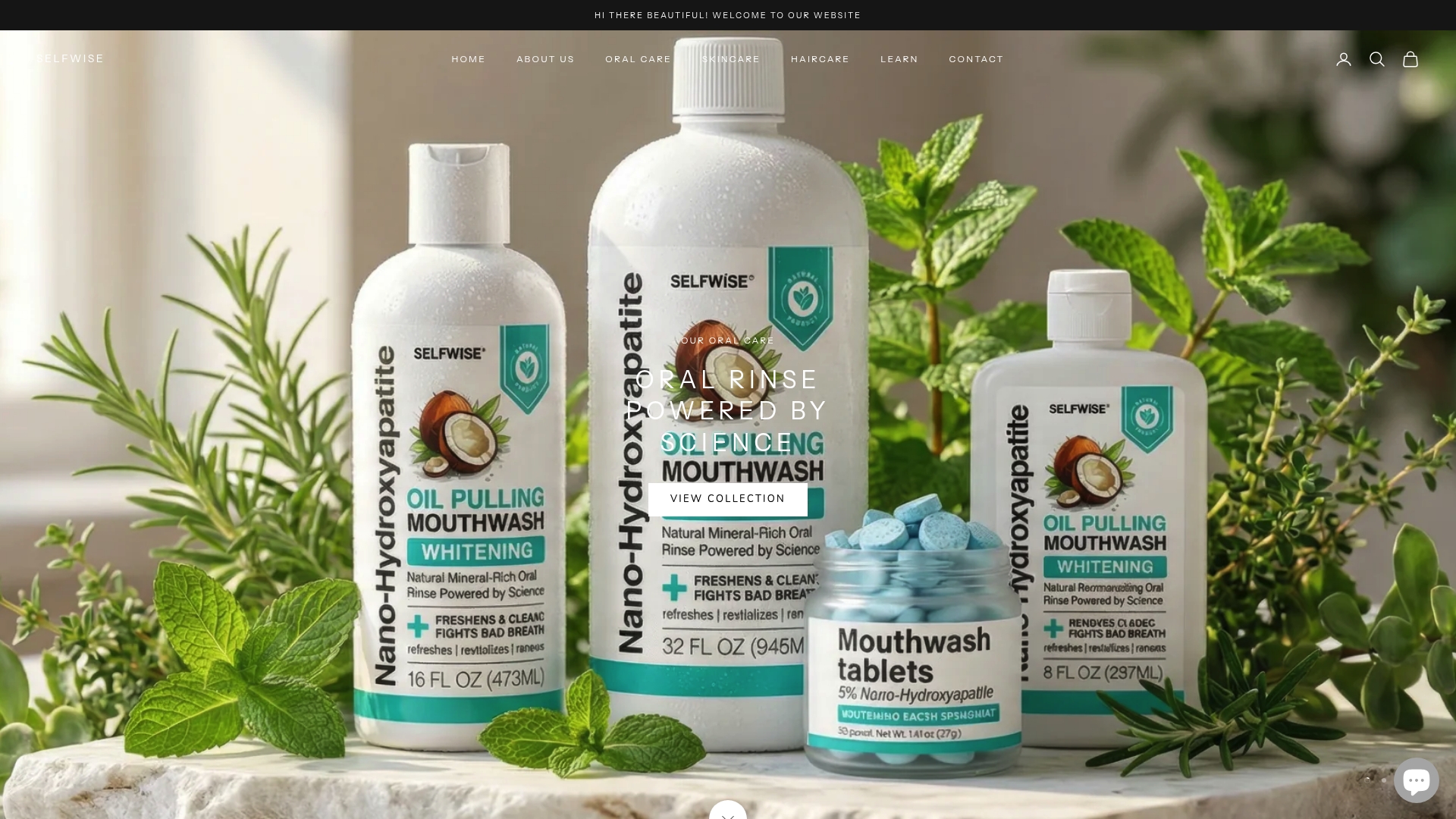
That approach fits someone who just weaned off a rinse that burned and wants a lower-irritation daily option, ideally after any clinician-recommended waiting period has passed. It also fits someone building a natural oral care routine from scratch who wants to avoid harsh actives from the start.
- Formulated without alcohol, avoiding common causes of drying and solvent-related sting.
- Contains ingredients such as xylitol and nano-hydroxyapatite instead of strong essential oils or menthol.
- Positioned as compatible with a range of users, including those with dental work.
Browse the Selfwise mouthwash collection to see current options, or read the natural oral care guide for a broader routine built around gentler ingredients.
This article is general information, not a substitute for advice from a qualified doctor. Consult a qualified healthcare professional about your own circumstances before acting on anything here.
Sources
- Burning mouth syndrome - Symptoms & causes - Mayo Clinic
- Tolerability of a green tea-based mouth rinse: A pilot study
- Antimicrobial mouthrinse as part of a comprehensive oral care regimen - JADA
FAQ
Why do dentists say not to use mouthwash?
Dentists don’t generally say to avoid mouthwash entirely, but they may advise against certain rinses for people with dry mouth, mouth sores, or sensitivity, since alcohol and strong flavorings can worsen those conditions. For most people, the concern is choosing the right formula, not skipping rinsing altogether.
Does Listerine burning mean it’s working?
No, a burning sensation from a rinse reflects tissue irritation from alcohol or flavoring agents, not proof that it’s fighting bacteria more effectively. Clinicians note this sensory burn often misleads people into thinking a stronger sting equals a stronger product, according to clinical perspective on mouthrinse sensation.
Why do you have to wait 30 minutes after using mouthwash?
Some dentists suggest waiting after eating or rinsing so active ingredients have time to work on the tooth surface without being immediately rinsed away by food or drink. This isn’t specifically about burning, but about giving a therapeutic rinse a chance to do its job.
Is there a mouthwash that doesn’t burn?
Yes, mild, alcohol-free formulas built around xylitol, nano-hydroxyapatite, or plain saline tend to cause far less irritation than rinses with high alcohol content or strong essential oils. Trying a small patch test with a new rinse before a full swish is a practical way to check tolerance beforehand.