Why Natural Surfactants in Rinse Matter for Oral Care
Most people scrutinize the toothpaste they use but barely glance at the ingredient list on their mouthwash. That gap is exactly where understanding why natural surfactants in rinse formulations makes such a difference. Surfactants are the workhorses behind every rinse you swish: they break up oils, lift debris from your gum line, and carry it all away with water. The question is not whether your rinse contains surfactants. It almost certainly does. The real question is whether those surfactants are helping your mouth or quietly working against it.
Table of Contents
- Key takeaways
- Why natural surfactants in rinse-off oral care actually work
- Benefits of natural surfactants over conventional alternatives
- What to look for when choosing a natural oral rinse
- Finding natural rinses that actually perform
- Sustainability and environmental impact of natural surfactants
- My honest take on surfactants and oral care
- Try Selfwisebrand’s natural oral rinses
- FAQ
Key takeaways
| Point | Details |
|---|---|
| Surfactants are unavoidable in rinses | Every effective oral rinse relies on surfactants to lift debris and distribute active ingredients. |
| Natural options reduce mucosal irritation | Plant-derived surfactants are less likely to disturb oral tissues than conventional sulfates or alcohols. |
| Foaming is not a cleansing measure | Lather volume tells you almost nothing about cleaning power; rinsability and micelle formation matter more. |
| Formulation details change everything | pH, concentration, and contact time determine how gentle a surfactant actually is in practice. |
| Sustainability requires a full-picture view | Biodegradable surfactants are a strong start, but product performance and usage habits shape the real environmental outcome. |
Why natural surfactants in rinse-off oral care actually work
Surfactants do one thing exceptionally well: they bridge the gap between water and oil. Their molecular structure has a water-loving head and an oil-loving tail, which allows them to form tiny spherical structures called micelles. Those micelles trap bacteria, food residue, and oily debris, then get carried away when you spit. Micelles trapping oils and dirt make the whole rinse cycle effective rather than just refreshing.
What makes natural surfactants stand out in this process is their source and structure. The most commonly used natural surfactants in oral rinses come from plant-derived glucosides and alkyl polyglucosides, synthesized from renewable feedstocks like coconut oil and sugar. These ingredients provide cleansing and foam without the stripping harshness typical of sulfates. Because their molecular chains are shorter and their interaction with biological membranes is less aggressive, they clean effectively while leaving your oral tissues intact.
There is a distribution benefit too. Surfactants allow your rinse to spread evenly across every surface in your mouth, including areas your toothbrush cannot reach. Without them, active ingredients like xylitol or nano hydroxyapatite would pool unevenly rather than coating teeth and gums uniformly. Natural surfactants carry those actives to where they need to go, then rinse clean without leaving a residue that disrupts the oral microbiome.
Here is what separates a well-formulated natural rinse from a mediocre one:
- Foam quality. Foam is sensory feedback, not a performance metric. A gentle glucoside-based rinse may produce less lather than a sulfate-heavy formula, but the actual cleaning is comparable or better.
- Rinsability. Natural surfactants tend to clear from oral surfaces quickly, reducing prolonged contact with mucosal tissue.
- Micelle concentration. Formulators track the critical micelle concentration to confirm that surfactants are working at an effective level, not just present in trace amounts.
- Blending. Blending surfactants improves foam quality and reduces harshness. A single natural surfactant is rarely enough; the best formulas combine non-ionic, amphoteric, and mild anionic types.
Pro Tip: If your current mouthwash produces thick, persistent foam that coats your mouth even after rinsing with water, that is often a sign of surfactant overload. Look for a rinse where the foam clears quickly and cleanly.
Benefits of natural surfactants over conventional alternatives
The oral cavity is one of the most sensitive mucous membrane environments in your body. That context makes the natural vs synthetic surfactants conversation especially relevant because the tissue exposure in a rinse product, even a brief 30-second swish, is direct and repeated daily.
Sodium lauryl sulfate (SLS) is the most common synthetic surfactant in conventional oral care. Research consistently links it to increased mucosal irritation, disrupted oral tissue barrier function, and a higher frequency of aphthous ulcers in sensitive users. Alcohol, another conventional rinse ingredient, adds antimicrobial action but comes with its own set of mucosal dryness concerns. Natural surfactants sidestep both issues by interacting with tissue membranes less aggressively. The effectiveness of natural rinse agents in maintaining mucosal comfort is one of the strongest practical arguments for switching.
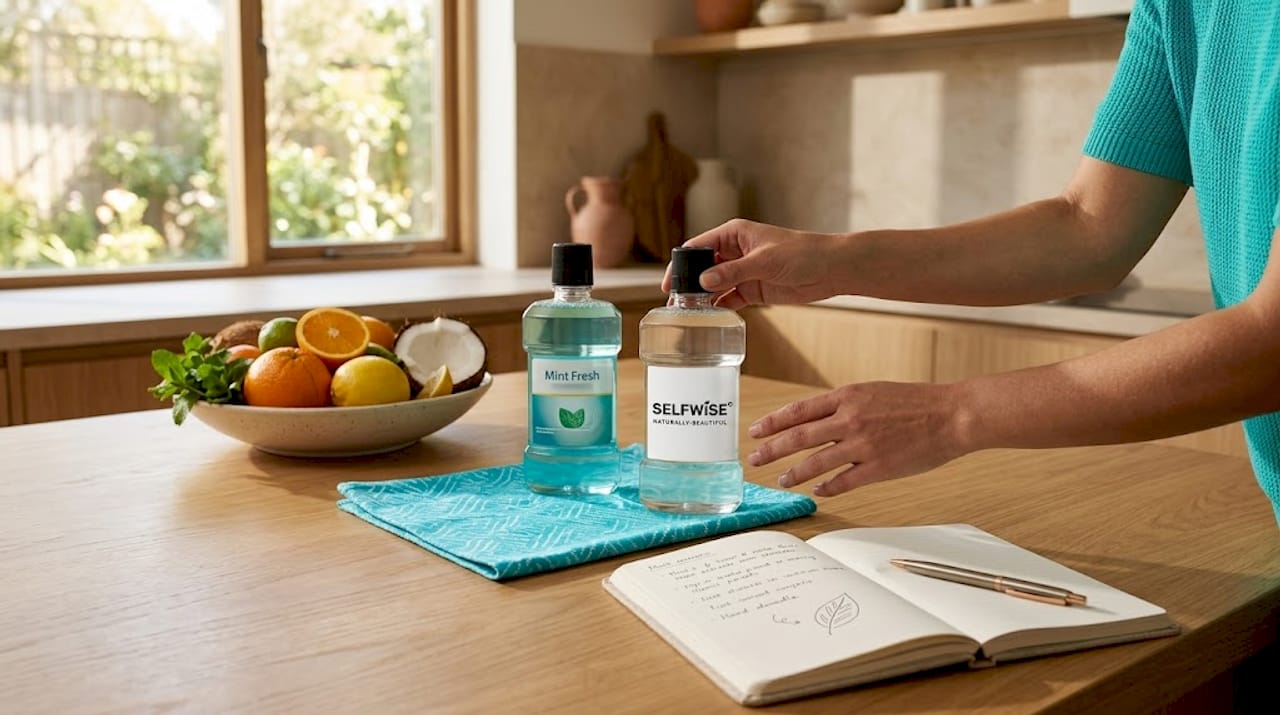
Here is a direct comparison of how they stack up:
| Feature | Natural surfactants | Conventional surfactants (SLS, alcohol) |
|---|---|---|
| Mucosal irritation risk | Low | Moderate to high |
| Source | Renewable plant feedstocks | Petrochemical or synthetic |
| Biodegradability | High | Varies; often lower |
| Foam profile | Moderate, rinses cleanly | High, can persist |
| Microbiome disruption | Minimal | More significant |
| Regulatory trend | Favored increasingly | Under growing scrutiny |
The environmental advantages deserve equal attention. Biosurfactants from renewable substrates are biodegradable and some glycolipid types even deliver antimicrobial properties on top of their cleansing action. That dual function means they can replace multiple conventional ingredients at once, simplifying formulas and reducing ingredient complexity.
“Natural does not automatically mean mild. Concentration, molecular structure, and contact time all influence how a surfactant behaves on tissue. The best formulations use natural surfactants precisely calibrated for the exposure environment they are designed for.”
The nuance here matters. Not every naturally derived ingredient is gentle by default. High concentrations of even the mildest glucoside can cause irritation if the formulation pH is poorly managed. The benefits of natural surfactants are fully realized only when a formulator has thought carefully about all of these variables together.
What to look for when choosing a natural oral rinse
Reading a mouthwash label fluently is a skill worth developing. Most consumers scan for broad terms like “alcohol-free” or “natural,” but the ingredient list tells a more specific story.
- Look for glucoside-derived names. Decyl glucoside, coco glucoside, and lauryl glucoside are all plant-derived surfactants. Their presence signals a formulation intentionally built around natural surfactants for rinsing rather than cheaper synthetic alternatives.
- Check the position in the ingredient list. Ingredients are listed in descending order of concentration. A natural surfactant listed in the top five is doing real work. Listed near the bottom, it may be a marketing placeholder.
- Assess pH context. Oral care rinse stability and mucosal comfort both depend on formulation pH staying near neutral. A rinse optimized around pH 6.5 to 7.5 is significantly gentler on tissues than one sitting at pH 4.
- Evaluate contact time. The briefer your swish, the less exposure time matters. But for oil-pulling style rinses held in the mouth for several minutes, a mildly formulated surfactant blend becomes even more important.
- Look for complementary actives. A natural surfactant system works harder when paired with xylitol (which disrupts harmful bacterial adhesion), nano hydroxyapatite (which supports enamel mineralization), or aloe vera (which soothes tissue).
Pro Tip: When testing a new natural mouthwash for the first time, swish for 20 seconds rather than the full recommended time. If your tissues feel calm and comfortable afterward, extend to the full duration. This is a practical way to gauge your individual sensitivity to the surfactant system.
Finding natural rinses that actually perform
Once you understand what to look for, shopping for a natural oral rinse gets much more specific. These are the signs worth prioritizing:
- Ingredient transparency. Brands that publish full ingredient rationales, not just marketing copy, tend to formulate more carefully. Obscuring ingredients behind trade names or vague “natural blend” labels is a red flag.
- Surfactant-free does not mean better. Some brands eliminate surfactants entirely and position it as a selling point. The result is often a rinse that distributes poorly and leaves active ingredients sitting on the tongue rather than reaching the gum line.
- Pairing with a hydroxyapatite mouthwash adds remineralizing benefit on top of gentle cleansing, making the routine more comprehensive.
- Frequency matters. Twice daily use of a well-formulated natural rinse keeps the oral environment consistently balanced. Using it once a week because the formula is “too strong” points to a surfactant problem worth solving.
- Fresh breath signals a healthy formula. Genuine fresh breath from a natural rinse comes from antimicrobial ingredients working correctly, not from high-alcohol content masking odor with a burning sensation. If your rinse feels harsh to sustain, that is information.
Sustainability and environmental impact of natural surfactants
Choosing natural oral care products with plant-derived surfactants does carry meaningful environmental benefits, but the picture is more layered than “natural equals green.”
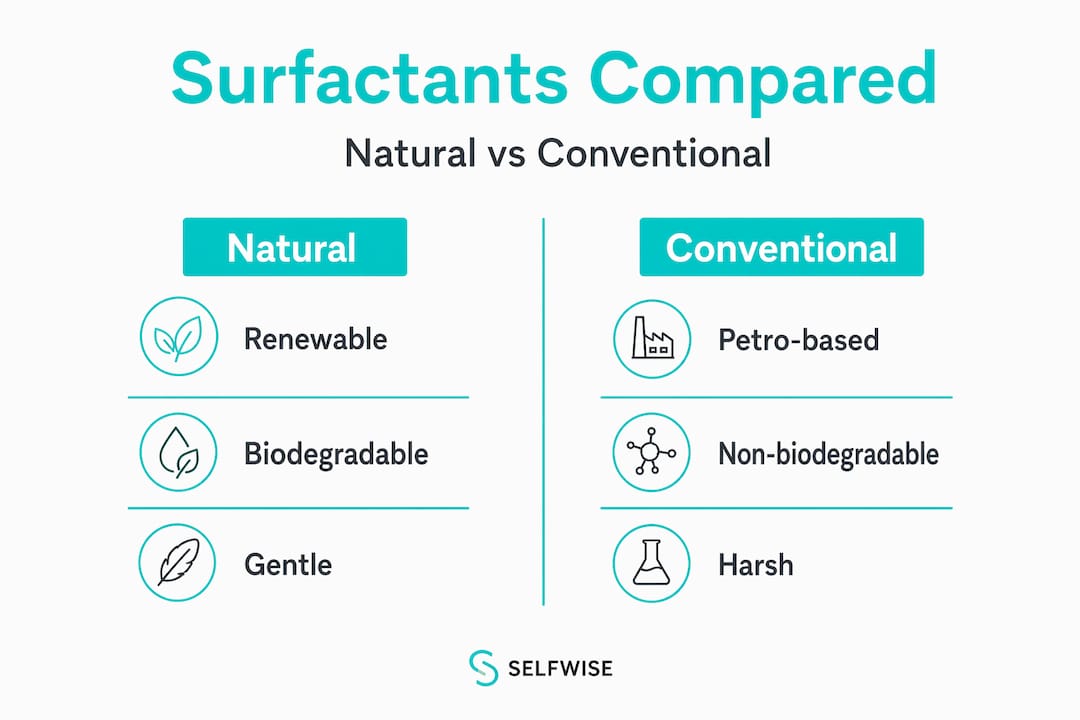
| Factor | Natural surfactants | Conventional surfactants |
|---|---|---|
| Raw material source | Renewable (coconut, corn sugar) | Petroleum-based |
| Biodegradation rate | Rapid in most environments | Slower, variable |
| Production emissions | Lower for bio-based routes | Higher for petrochemical synthesis |
| Performance efficiency | Comparable at right concentration | High but often over-dosed |
Life-cycle assessments of surfactant products confirm that environmental impact depends heavily on usage patterns and product performance, not just ingredient origin. A poorly formulated natural rinse that requires double the volume per use to feel effective may actually have a higher environmental cost than a precise conventional formula. The most sustainable choice is a natural surfactant system that performs well at the recommended dose. Consumer demand is accelerating this direction: sustainability trends in rinse-off personal care are pushing formulators to develop biosurfactants through fermentation, with tailored molecular structures that compete directly with conventional options on performance.
My honest take on surfactants and oral care
I have spent years looking at oral care formulations, and the thing that consistently surprises me is how little attention surfactants get from consumers. People will spend 20 minutes researching fluoride versus nano hydroxyapatite, then pick a mouthwash based on the bottle color.
Here is what I have learned: surfactant choice is the formulation decision that touches you most directly. Every other ingredient in your rinse depends on the surfactant system to reach your tissue. If that system is aggressive or poorly calibrated, it does not matter how well the rest of the formula was designed.
The “chemical-free” claims bother me too, because they miss the point entirely. Natural surfactants are chemicals. What matters is whether they are the right chemicals at the right concentration for the biological environment they are working in. The brands doing this well are not the ones shouting “no harsh chemicals” on the front of the bottle. They are the ones explaining exactly what is in the formula and why.
My expectation for 2026 and beyond is that consumers will get better at reading these labels. And when they do, the brands still hiding behind vague natural claims will have a hard time keeping up.
— Viktor
Try Selfwisebrand’s natural oral rinses
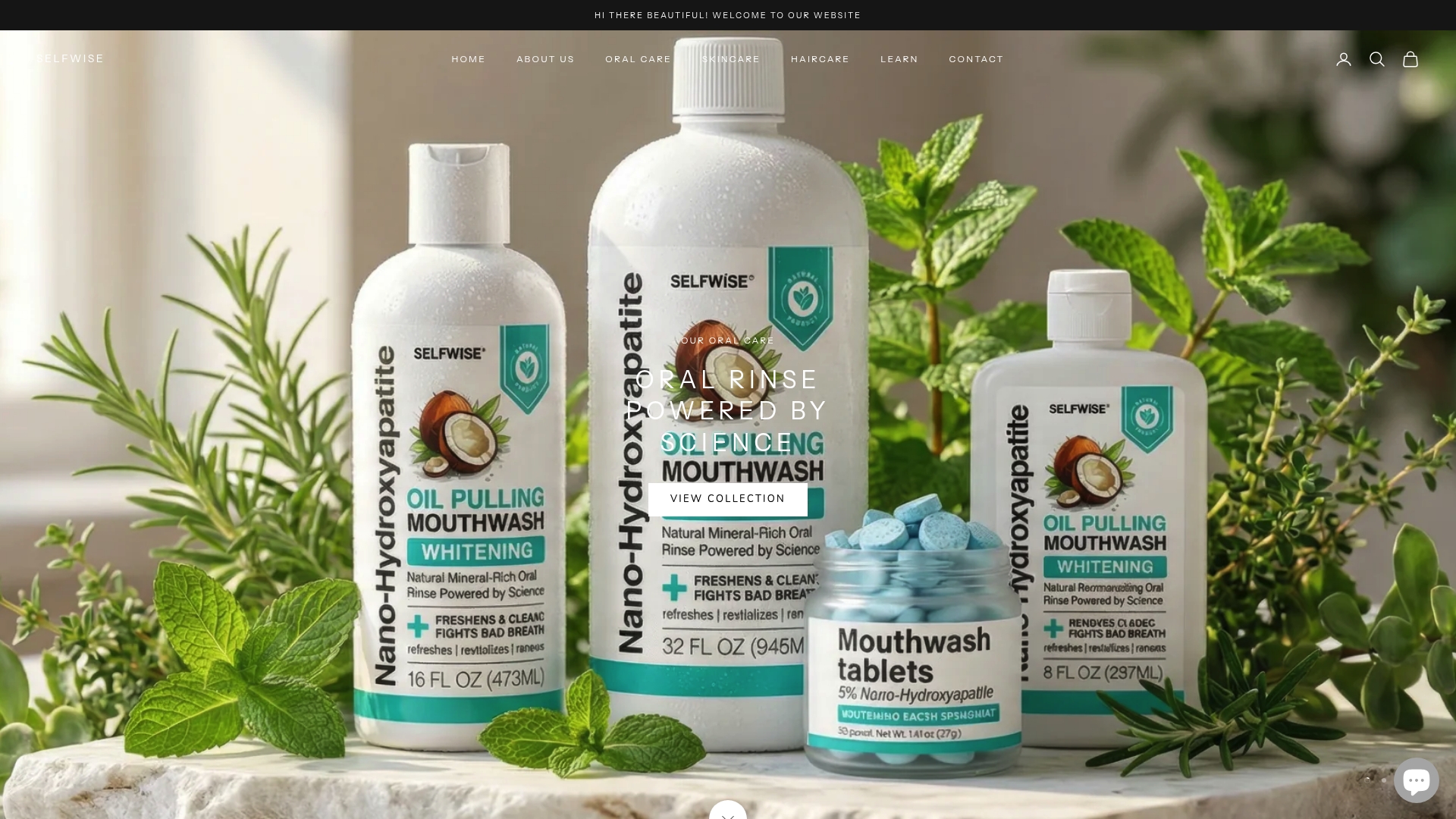
At Selfwisebrand, every rinse formula starts with the surfactant question. Our natural mouthwash collection uses plant-derived, biodegradable surfactant systems that clean without stripping, and pair those surfactants with nano hydroxyapatite and xylitol for real oral health support. If you are ready to move past conventional sulfate-heavy rinses, our nano hydroxyapatite mouthwash tablets offer a concentrated, travel-friendly format with a formula built around gentle cleansing and enamel support. For those exploring oil-pulling style routines, our nano hydroxyapatite oil pulling mouthwash combines the traditional practice with modern ingredient science. Simple ingredients. Real results.
FAQ
What are natural surfactants in oral rinses?
Natural surfactants are plant-derived cleansing agents, typically glucosides made from coconut oil or sugar, that reduce water surface tension and form micelles to lift debris from oral surfaces. They perform the same function as conventional surfactants but with a gentler interaction with mucosal tissue.
Why use natural surfactants instead of SLS in mouthwash?
Sodium lauryl sulfate has been linked to mucosal irritation and a higher incidence of mouth ulcers in sensitive individuals. Natural alternatives like decyl glucoside or coco glucoside cleanse effectively with significantly lower irritation potential.
Does more foam mean a rinse is working better?
No. Foaminess is largely sensory, not a measure of cleaning performance. A gentle natural surfactant rinse may produce moderate lather while still reducing surface tension and lifting debris effectively.
Are natural surfactants in rinses better for the environment?
Generally yes, because they are biodegradable and renewable. However, real-world environmental impact also depends on how the product performs and how much a person uses per dose, not just what the ingredients are made from.
How do I know if my mouthwash has natural surfactants?
Look for ingredient names like decyl glucoside, coco glucoside, lauryl glucoside, or alkyl polyglucoside on the label. These indicate plant-derived surfactants. If you see sodium lauryl sulfate or sodium laureth sulfate listed, the formula relies on conventional synthetic surfactants instead.