Article: Alcohol Free Mouthwash: The Risk Isn’t Alcohol, It’s the Antiseptic
Alcohol Free Mouthwash: The Risk Isn’t Alcohol, It’s the Antiseptic
Alcohol-free mouthwash works because it fits well with why many users prefer alcohol-free rinses. For most people brushing and flossing already, it can meaningfully cut plaque and gingivitis, soothe dry or sensitive mouths, and freshen breath without the sting of an alcohol base. The main thing to watch isn’t the lack of alcohol at all: it’s how potent the antiseptic active ingredient is, since some antibacterial rinses, alcohol-free or not, can disturb nitrate-processing bacteria and nudge blood pressure. The details below help you pick the right one.
TL;DR:
- A trial that lasted six months found a rinse without alcohol reduced plaque by 31.6% and gingivitis by 24% versus control, alongside brushing and flossing.
- Use moisturizing or xylitol rinses daily for dry mouth or breath; use chlorhexidine only briefly under dental guidance because it can stain teeth.
- Antibacterial rinses may raise systolic blood pressure by 2 to 3.5 mmHg in some studies, with risk linked to antiseptic strength and frequency, not alcohol.
- Children under six should not use mouthwash, and those under twelve need supervision; swallowing 1 to 2 ounces can cause gastric distress in small children.
Table of Contents
- What Alcohol-Free Mouthwash Does Well
- Possible Side Effects and What Causes Them
- What the Clinical Trials and Reviews Say
- How to Choose and Use It Safely
- Why We Favor Alcohol-Free, Microbiome-Friendly Rinses
- Long-Term Effects and How Often to Rinse
- Enamel Remineralization and Sensitivity
- When Alcohol-Free Rinses Are the Right Call
- A Gentle, Alcohol-Free Option Worth Trying
- FAQ
- Sources
What Alcohol-Free Mouthwash Does Well
Removing alcohol doesn’t make a mouthwash weaker. In a six-month randomized trial, an alcohol-free essential-oil rinse cut plaque by about 31.6% and gingivitis by about 24.0% compared with a negative control, used alongside normal brushing and flossing, not in place of it. A separate two-week study found an alcohol-free version of a well-known essential-oil rinse outperformed a 5% hydroalcohol control, lowering plaque and gingivitis significantly. These numbers put alcohol-free formulas on equal footing with their traditional counterparts for everyday plaque control.
The bigger win for many people is comfort. Alcohol dries out oral tissue and can sting on contact, which is a real problem for anyone dealing with dry mouth, recovering from dental work, or simply prone to canker sores. Alcohol-free rinses often rely on humectants and milder surfactants instead, which makes them easier to tolerate twice a day without the burning sensation that causes some people to skip rinsing altogether. Better tolerance tends to mean better adherence, and adherence is what actually drives results over months of use.
Not every rinse is built for the same job. It helps to think in categories:
- Breath-focused rinses: moisturizing, often xylitol-sweetened, meant for daily freshness without drying the mouth.
- Daily maintenance rinses: mild antimicrobial action paired with fluoride-free remineralizing ingredients for routine plaque control.
- Dry-mouth formulas: humectant-heavy, alcohol-free by design, aimed at people with xerostomia or medication-related dryness.
- Dentist-prescribed therapy rinses: stronger antiseptic actives used short-term for active gum disease, not everyday maintenance.
Our guide to alcohol-free rinse benefits walks through how these categories map onto specific ingredients if you want to go deeper before choosing one.
Possible Side Effects and What Causes Them
Most of the side effects people associate with mouthwash come from the active antiseptic ingredient, not the presence or absence of alcohol. Chlorhexidine, a prescription-strength antimicrobial sometimes formulated without alcohol, is the biggest example: it’s effective against gum disease but carries a well-documented side effect profile.
- Tooth staining and increased calculus buildup, reported in Peridex prescribing information at notably higher rates than controls.
- Temporary taste alteration, especially for salty or bitter flavors.
- Mouth or throat irritation and, less commonly, increased mucus production.
- Mucosal sensitivity with prolonged daily use of strong antiseptics.
One finding worth your attention: systematic reviews of mouthrinse use show that antibacterial rinses can reduce salivary and plasma nitrite levels and raise systolic blood pressure by roughly 2 to 3.5 mmHg in some studies, a mechanism tied to killing off nitrate-reducing bacteria that normally support the nitrate-to-nitrite-to-nitric-oxide pathway involved in blood vessel function. The effect size depends heavily on which antiseptic agent is used and how often, not on whether the rinse contains alcohol.
Children need separate consideration. Poisoning data and labeling guidance note that mouthrinse ingestion by a small child, even in amounts as small as 1 to 2 ounces, can cause gastric distress, with larger volumes warranting medical attention. Mouthwash isn’t recommended for children under 6, and kids under 12 should use it only with supervision. Our guide to starting kids on mouthwash covers age-appropriate alcohol-free options in more detail.
What the Clinical Trials and Reviews Say
The trial record on alcohol-free formulations is more substantial than most people expect, and it points in a consistent direction.
- A six-month randomized trial of an alcohol-free essential-oil mouthrinse found plaque reductions near 31.6% and gingivitis reductions near 24.0% versus a negative control, used as an adjunct to brushing and flossing.
- A shorter two-week experimental gingivitis model found the alcohol-free version of a leading essential-oil rinse beat a hydroalcohol control on both plaque (23.9%) and gingivitis (10.4%), with results reaching statistical significance.
- A randomized, examiner-blinded trial comparing 0.2% chlorhexidine with and without alcohol found both versions reduced gingival bleeding and plaque significantly more than brushing alone, with treatment-related adverse events occurring at similar rates for both formulations. In other words, dropping the alcohol from chlorhexidine didn’t cost it any effectiveness and didn’t meaningfully change its side effect rate either.
- The nitrate pathway review ties blood pressure changes to antiseptic strength rather than alcohol content, reinforcing that ingredient choice, not alcohol status, is the variable to watch.
How to Choose and Use It Safely
Match the rinse to the job, and you’ll get better results with fewer surprises.
- Pick by goal, not habit. Use a moisturizing, xylitol-based rinse for breath and dry-mouth relief, a mild antimicrobial for daily maintenance, and reserve dentist-prescribed chlorhexidine for short, supervised courses.
- Treat it as an adjunct, never a replacement. Rinsing doesn’t substitute for brushing twice a day and flossing once a day.
- Don’t overuse strong antiseptics. Daily, indefinite use of potent antimicrobial rinses is where microbiome disruption and blood pressure effects tend to show up, not occasional use.
- Read the label before you buy. Check the active ingredient, any ADA Seal of Acceptance notation, age warnings, and whether the formula leans humectant (for dryness) or antiseptic (for treatment).
- Know when to call your dentist. Persistent bleeding gums, worsening gingivitis, or a prescription recommendation are reasons to get a professional opinion rather than self-treat.
Pro Tip: If you’re rinsing for dry mouth, do it right after brushing at night, when saliva flow is naturally lowest and you need the humectant coverage most.
Our frequency and timing guide breaks down exactly how often to rinse based on which type you’re using.
Why We Favor Alcohol-Free, Microbiome-Friendly Rinses
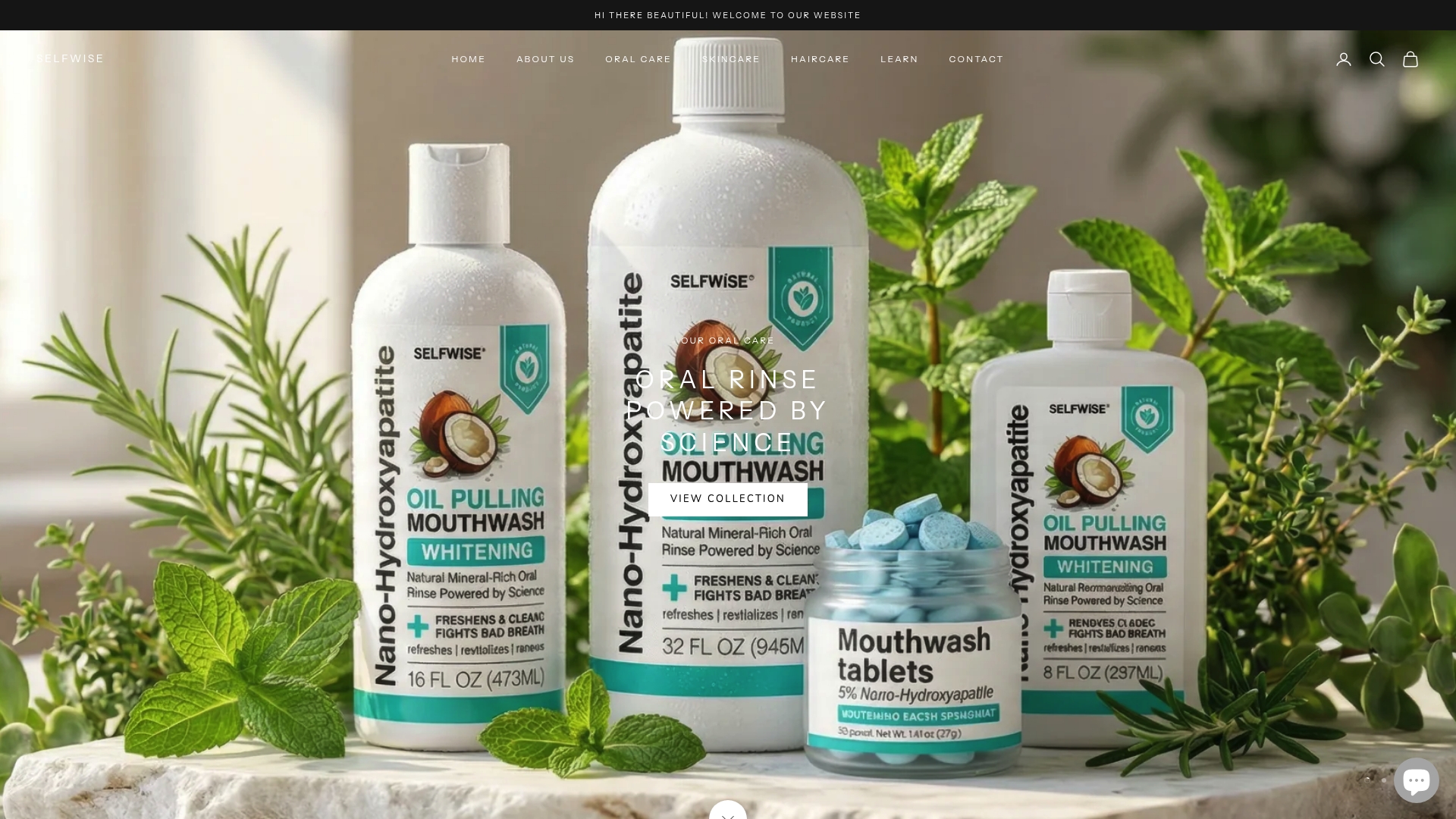
We formulate around a simple idea: effective oral care doesn’t require harsh chemicals or drying alcohol. Our rinses lean on ingredients like xylitol and nano-hydroxyapatite, paired with traditions like oil pulling, to support fresh breath and plaque control without disrupting the bacteria your mouth actually needs. That approach lines up with what the nitrate-pathway research points toward: gentler daily maintenance, with stronger antiseptics kept for short, targeted use.
For the ingredient science behind these choices, our natural antimicrobial ingredients guide and our microbiome-friendly mouthwash explainer cover the mechanisms in more depth.
Long-Term Effects and How Often to Rinse
Used as directed, alcohol-free rinses are generally suited to daily, long-term use, which is precisely why the distinction between rinse types matters so much. A gentle, xylitol-based or humectant formula designed for maintenance can reasonably be used once or twice a day indefinitely, the same way you’d brush and floss, because it isn’t built to aggressively kill bacteria the way a prescription antiseptic is.
The calculus changes with stronger antimicrobial actives. Chlorhexidine-based rinses, whether alcohol-free or not, are typically recommended for short, defined courses, often a couple of weeks, rather than open-ended daily use, partly because of staining and calculus buildup and partly because prolonged suppression of oral bacteria isn’t the goal of routine care. Practitioners commonly reserve these for dentist-directed therapy and suggest a 30 to 60-minute window before eating or drinking afterward to let the active ingredient work.

The practical takeaway: a dry-mouth or breath-focused alcohol-free rinse fits into a sustainable daily routine, while anything labeled as an antiseptic treatment deserves a start and end date set with your dentist. Rotating strategies this way protects both your enamel and the bacterial balance that supports healthy gums over years, not just weeks.
Enamel Remineralization and Sensitivity
Alcohol itself doesn’t erode enamel, but it does dry out oral soft tissue, which can leave teeth feeling more sensitive simply because saliva, your natural buffering and remineralizing fluid, isn’t flowing as freely. Alcohol-free rinses sidestep that drying effect, which is one reason people with sensitive teeth often find them more comfortable day to day.
Some alcohol-free formulations go a step further by including nano-hydroxyapatite, a mineral that closely resembles the natural structure of tooth enamel. Rather than just avoiding harm, these rinses are designed to support the surface of the tooth directly, which can be useful for anyone managing early sensitivity or looking to reinforce enamel between dental visits. Xylitol plays a complementary role here too: it doesn’t ferment into the acids that feed enamel-damaging bacteria the way sugar does, so it helps maintain a less acidic environment where remineralization has a better chance to happen.
None of this replaces professional treatment for significant sensitivity or visible enamel wear, but choosing a rinse that avoids unnecessary drying and includes remineralizing ingredients is a reasonable, low-effort way to support your enamel as part of a daily routine.

When Alcohol-Free Rinses Are the Right Call
For daily maintenance and dry mouths, alcohol-free, microbiome-considerate rinses are the sensible default. Save potent antiseptic rinses for short, dentist-directed courses rather than everyday habit.
The goal isn’t sterilizing your mouth. It’s keeping harmful bacteria in check while preserving the nitrate-reducing species your body relies on, and that balance is best managed with your dentist’s input on anything stronger than routine care.
— Viktor
A Gentle, Alcohol-Free Option Worth Trying
We formulate rinses that include xylitol and nano-hydroxyapatite to support fresh breath and enamel while avoiding dryness or irritation sometimes caused by alcohol or harsh antiseptics. If you’re managing a sensitive mouth or just want a daily rinse that works with your oral microbiome instead of against it, our mouthwash collection is built for exactly that.
This article is general information, not a substitute for advice from a qualified doctor. Consult a qualified healthcare professional about your own circumstances before acting on anything here.
FAQ
Is alcohol-free mouthwash actually good for you?
Yes, for most people it supports plaque and gingivitis control as well as alcohol-containing versions while being gentler on oral tissue. The main consideration is the antiseptic strength of the active ingredient rather than the absence of alcohol itself.
What happens when you drink non-alcoholic mouthwash?
Mouthwash of any kind isn’t meant to be swallowed, and alcohol-free doesn’t make ingestion safe. Labeling and case data note that swallowing even 1 to 2 ounces can cause gastric distress in a small child, with larger amounts requiring medical attention.
What happens if I use alcohol-free mouthwash every day?
Gentle, humectant or xylitol-based alcohol-free rinses are generally suitable for daily long-term use as part of your brushing and flossing routine. Stronger antiseptic alcohol-free formulas, like chlorhexidine, are better reserved for short, dentist-directed courses rather than indefinite daily use.
Why are some cardiologists cautious about certain mouthwashes?
The concern centers on strong antibacterial rinses reducing nitrate-processing oral bacteria, which systematic reviews show can lower salivary nitrite and raise systolic blood pressure by about 2 to 3.5 mmHg in some studies. This effect is tied to antiseptic potency, not to whether a rinse contains alcohol, so checking the active ingredient matters more than checking for alcohol alone.
What should I look for on an alcohol-free mouthwash label?
Check the active ingredient to understand whether it’s a daily maintenance formula or a treatment-strength antiseptic, along with any age warnings and ADA Seal of Acceptance notation. For dry mouth, prioritize humectant ingredients over antiseptic actives.
Sources
- Randomized clinical trial showing efficacy of alcohol-free essential-oil mouthrinse
- Trial: alcohol-free essential-oil mouthrinse showed superior plaque/gingivitis reduction in a 2-week model
- Influence of mouth rinse use on the enterosalivary pathway and blood pressure regulation: A systematic review
- Chlorhexidine with and without alcohol reduces gingival inflammation vs brushing alone
- Poisoning cases and product labeling guidance for mouthwash ingestion