Why Oil-Based Rinse Differs from Water in Oral Care
Oil-based rinses are defined by their ability to dissolve oil-soluble impurities that water alone cannot remove. This is why oil-based rinse differs from water so fundamentally: the two operate on opposite chemical principles. Water-based rinses target water-soluble debris using surfactants, while oil-based rinses bind to lipid-based biofilm, sebum, and plaque through the “like dissolves like” principle. In natural oral care, this distinction matters enormously. Techniques like oil pulling and essential-oil rinsing exploit exactly this chemistry to reach areas mechanical brushing misses.
Why does oil-based rinse differ from water in cleansing?
Oil-based rinses work by binding to oil-soluble substances that water simply cannot lift. Plaque biofilm, for example, has a lipid-rich outer layer. Water rolls off it. An oil-based rinse penetrates and dissolves it.

The key mechanism is emulsification. A properly formulated oil-based rinse contains emulsifiers that, when water is added, cause the formula to turn milky. That milky appearance signals that oil-soluble debris has been encapsulated in tiny droplets and is ready to rinse away cleanly. Without emulsifiers, the oil stays oily and leaves residue.
Water-based rinses take a different route. They rely on surfactants, which are molecules with one water-loving end and one oil-attracting end. Surfactants lift surface-level debris, sweat, and water-soluble particles effectively. They do not penetrate lipid biofilm the way oil-based rinses do.
- Oil-based rinses dissolve oil-soluble debris like plaque biofilm and sebum
- Water-based rinses remove water-soluble impurities, sweat, and surface dust
- Emulsifiers in oil-based rinses create a milky rinse-off effect, preventing greasiness
- Surfactants in water-based rinses lift debris but can strip natural moisture
- Both rinse types serve distinct functions and work best when used together
Pro Tip: Watch for the milky color change when you add water to an oil-based rinse. If the formula stays clear, it has not emulsified properly and will leave residue behind.
The oil-based vs water-based rinse distinction is not about which is “better.” It is about which impurity type you are targeting. Understanding this guides smarter choices in any natural oral care routine.
What are the benefits of oil-based rinses for natural oral care?
Oil-based rinses deliver benefits that water-based rinses structurally cannot replicate. The most clinically significant is their ability to disrupt bacterial biofilm in the mouth.
Essential oils in oral rinses act as antimicrobial agents, penetrating plaque biofilm and inhibiting bacterial growth. They reach interdental spaces and gum margins where a toothbrush cannot. This makes them a genuine adjunct to brushing and flossing, not a replacement.
The clinical evidence is specific. Essential-oil-containing mouth rinses produced plaque reductions of 24.7% and reduced gingival bleeding by over 68% in people with diabetes at 12 weeks. That is a meaningful result in a population where gum disease is harder to control. The same study recorded a nearly sixfold increase in plaque-free sites.
“Essential-oil-containing mouth rinses act specifically as adjunct agents complementing mechanical cleaning by penetrating plaque biofilms, reaching areas that brushes cannot access and improving both plaque control and gingival health.”
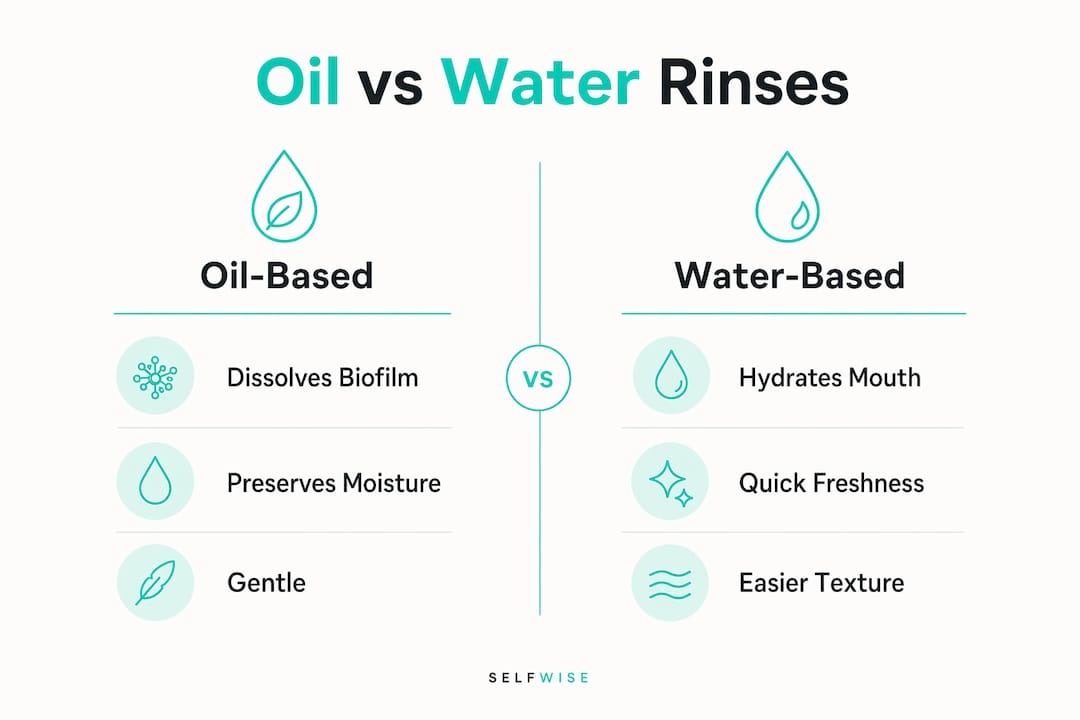
Oil-based rinses also preserve moisture in oral tissues. Water-based rinses that contain alcohol or aggressive surfactants can dry out the oral mucosa over time. Oil-based formulas maintain the natural lipid barrier of oral tissues, which matters for people with dry mouth or sensitive gums.
A secondary advantage is gentleness. Because oil-based rinses do not rely on stripping surfactants, they are milder on tissue barriers. This is especially relevant for people who experience irritation from conventional alcohol-based mouthwashes. The role of essential oils in natural oral rinses goes well beyond flavor. They are the functional core of the cleansing action.
How to use oil-based rinses effectively
Correct technique determines whether an oil-based rinse delivers its full benefit or leaves you with a greasy, ineffective experience. The order of steps is not optional.
- Start on a dry surface. Apply the oil-based rinse before introducing water. Premature water contact blocks the oil from binding to lipid-based debris. In oral care, this means swishing the oil rinse before drinking water or rinsing with a water-based product.
- Swish thoroughly. Oil pulling, the traditional practice of swishing oil in the mouth, typically runs for 5–20 minutes. This duration allows the oil to emulsify with saliva and reach the full oral cavity.
- Add water to emulsify. When you introduce water, the formula should turn milky. This signals that debris has been encapsulated and is ready to spit out. If it stays oily, swish longer or check the product formulation.
- Follow with mechanical cleaning. Oil rinsing works best as part of a routine that includes brushing. It is not a standalone replacement. The double-cleansing principle from Korean skincare applies directly here: oil first, then water-based cleansing second.
- Use a formulated product, not raw oil. Raw plant oils lack emulsifiers. They tend to leave greasy residue and do not rinse clean. A properly formulated oil-based oral rinse is built to emulsify and clear completely.
Pro Tip: If you use a nano hydroxyapatite mouthwash after oil pulling, you get the biofilm-disrupting benefit of the oil rinse followed by the remineralizing benefit of the hydroxyapatite. These two steps complement each other precisely because they target different things.
Avoiding harsh chemicals in your routine also means choosing formulated oil rinses over products that rely on alcohol or synthetic surfactants to do the heavy lifting.
How do oil-based and water-based rinses compare in everyday use?
The texture difference is the first thing most people notice. Oil-based rinses feel thicker and more coating. Water-based rinses feel light and immediately refreshing. Neither sensation predicts effectiveness, but it does predict which type a person will stick with.
Suitability by tissue type:
| Factor | Oil-based rinse | Water-based rinse |
|---|---|---|
| Dry or sensitive oral mucosa | Preferred. Maintains moisture and lipid barrier. | May cause dryness if alcohol-based. |
| Oily or acne-prone skin | Use non-comedogenic formulas. | Generally lighter and better tolerated. |
| Plaque and biofilm removal | Stronger. Dissolves lipid-rich biofilm directly. | Surface-level. Effective for water-soluble debris. |
| Moisture retention | Higher. Oils preserve natural barrier function. | Lower if surfactant-heavy formulas are used. |
| Ease of rinsing | Requires emulsification step. | Rinses immediately with water. |
People with dry mouth or sensitive gums consistently do better with oil-based rinses. The lipid content supports the oral mucosa rather than stripping it. People who prefer a quick, light rinse after meals often reach for a water-based option, which is perfectly appropriate for that purpose.
- Oil-based rinses suit dry, sensitive, or inflamed oral tissues
- Water-based rinses work well for quick, post-meal freshening
- Alcohol-free water-based rinses reduce the drying risk significantly
- Combining both types in a routine covers the full spectrum of oral hygiene needs
The oil-in-water emulsion format bridges the gap between the two types. It delivers oil-based cleansing in a water-dispersible formula, making it easier to use without the full oil-pulling commitment. For people new to oil-based oral care, this is often the most practical entry point.
Key Takeaways
Oil-based rinses dissolve lipid-rich plaque biofilm through emulsification, a mechanism water-based rinses cannot replicate, making them the stronger choice for deep oral cleansing.
| Point | Details |
|---|---|
| Core chemistry difference | Oil-based rinses dissolve oil-soluble biofilm; water-based rinses lift water-soluble debris via surfactants. |
| Emulsification is required | A milky color change when water is added confirms proper emulsification and clean rinse-off. |
| Clinical oral health benefit | Essential-oil rinses reduced plaque by 24.7% and gingival bleeding by over 68% at 12 weeks in clinical study. |
| Use formulated products only | Raw oils lack emulsifiers and leave residue; always choose a properly formulated oil-based oral rinse. |
| Combine both rinse types | Oil-based rinses first, then water-based, covers the full range of oral impurities effectively. |
What I’ve learned from years of watching people get oil rinsing wrong
Most people who try oil pulling once and quit do so because they used raw coconut oil straight from the jar. It does not emulsify. It sits in the mouth feeling greasy, coats the teeth without lifting biofilm effectively, and leaves a film that feels worse than before. That experience is not oil rinsing failing. It is the wrong product being used.
The second misconception I see constantly is the idea that oil-based rinses are a replacement for brushing. They are not. They are a complement. The clinical data on essential-oil rinses is built on studies where people still brushed. The oil rinse reaches where the brush cannot. The brush does the mechanical work the oil cannot.
What I find genuinely underappreciated is the moisture benefit. People with dry mouth or post-antibiotic oral sensitivity often find that switching to an oil-based rinse reduces irritation noticeably. Water-based rinses with alcohol are particularly harsh on already-compromised oral tissue. An oil-based formula does not strip the mucosa. It supports it.
The natural oral care space has moved well past the point where oil pulling is a fringe idea. The evidence on essential-oil rinses is published in peer-reviewed journals. The mechanism is understood chemistry. Choosing an oil-based rinse is not a wellness trend. It is an informed decision grounded in how oral biofilm actually works.
— Viktor
Natural oil-based oral rinses from Selfwisebrand
Selfwisebrand builds its oral care products around the same principle this article covers: oil-based and water-based rinses do different jobs, and your routine should include both.
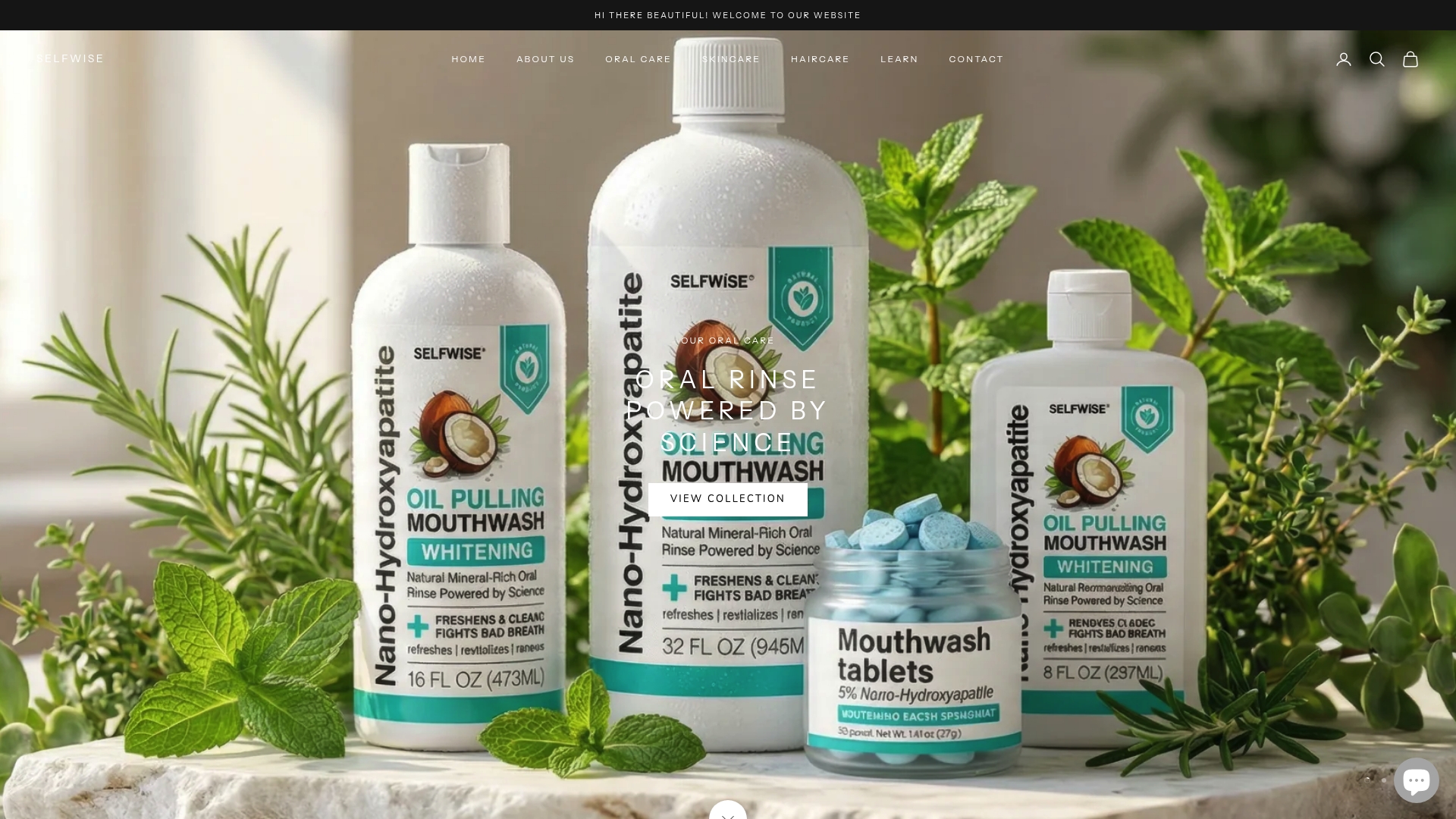
The Nano Hydroxyapatite Oil Pulling Mouthwash combines traditional oil-pulling benefits with nano hydroxyapatite for enamel remineralization. No fluoride, no alcohol, no synthetic surfactants. The full mouthwash collection includes both oil-based and water-based options, so you can build a complete routine without compromising on ingredients. Selfwisebrand formulates every product with emulsifiers that ensure clean rinse-off, not the greasy residue that raw-oil approaches leave behind. Simple ingredients, real results.
FAQ
What makes oil-based rinses different from water-based rinses?
Oil-based rinses dissolve oil-soluble impurities like plaque biofilm through the “like dissolves like” principle, while water-based rinses use surfactants to lift water-soluble debris. The two types target fundamentally different categories of oral impurities.
How do oil rinses work in the mouth?
Oil-based oral rinses bind to lipid-rich bacterial biofilm, then emulsify with saliva and water to form a milky suspension that rinses away cleanly. Essential oils in the formula also act as antimicrobials, disrupting bacterial growth in areas a toothbrush cannot reach.
Are oil-based rinses better than water-based rinses?
Neither type is universally better. Oil-based rinses excel at removing biofilm and preserving oral tissue moisture. Water-based rinses are more convenient for quick freshening. Using both in sequence gives the most complete oral hygiene result.
Can I use raw coconut oil instead of a formulated oil rinse?
Raw coconut oil lacks emulsifiers, so it does not rinse clean and often leaves a greasy residue. A properly formulated oil-based oral rinse contains emulsifiers that cause the formula to turn milky when water is added, ensuring complete rinse-off.
Who benefits most from oil-based oral rinses?
People with dry mouth, sensitive gums, or gum disease benefit most from oil-based rinses. Clinical evidence shows essential-oil rinses significantly reduce plaque and gingival bleeding, particularly in populations like people with diabetes where gum disease is harder to control.