Oil Pulling Mistakes to Avoid for a Safer Routine
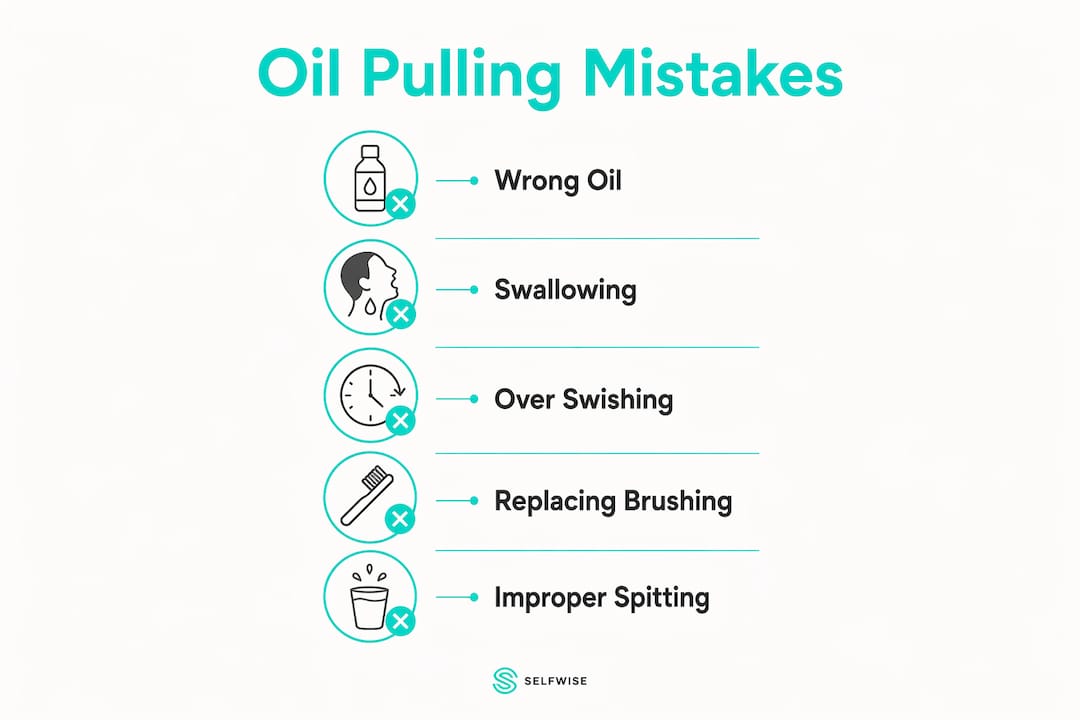
The biggest mistakes to avoid when oil pulling are swallowing the oil, using the wrong type of oil, replacing brushing and flossing, swishing too aggressively, and spitting into the sink. Fix those five and you’ve already eliminated the most common oil pulling errors that send beginners off track.
Here’s the short version: use a food-grade cold-pressed oil (coconut, sesame, or sunflower), swish gently for several minutes, spit into the trash, then rinse and brush. The American Dental Association is clear that oil pulling does not replace brushing twice daily for two minutes and flossing once a day. Selfwisebrand’s oil-pulling products are designed around that same principle: oil pulling as a supplement, not a shortcut.
- Don’t swallow the oil
- Use food-grade, cold-pressed oils only
- Never skip brushing and flossing
- Spit into trash, not the sink
- Keep sessions to 5–15 minutes with a gentle swishing motion. Beginners should start at 5 minutes and gradually work up to a maximum of 10–15 minutes; never exceed 20 minutes as longer sessions increase jaw strain without added benefit.
Table of Contents
- Common oil pulling mistakes and how to fix each one
- How to oil pull safely: a step-by-step technique
- What dentists actually warn about with oil pulling
- When you should skip oil pulling entirely
- What the evidence actually says about oil pulling
- Key Takeaways
- Oil pulling works best when you respect its limits
- A cleaner way to oil pull without the guesswork
- Useful sources
- FAQ
Common oil pulling mistakes and how to fix each one
1. Using the wrong oil
Not every oil works for oil pulling. The traditional options are food-grade, cold-pressed coconut, sesame, or sunflower oil. Refined, flavored, or low-quality oils may contain additives that irritate the mouth. Check the best oils for oil pulling before you buy anything.
2. Swallowing the oil
This is the most important rule: do not swallow. The oil collects bacteria, debris, and toxins from your mouth during swishing. Swallowing it can cause nausea, digestive upset, and in rare cases, aspiration of oil into the lungs, which can lead to lipid pneumonia. If you accidentally swallow a small amount, you’ll likely be fine, but watch for stomach discomfort. Repeated accidental swallowing is a sign your technique needs adjustment.

3. Swishing too hard or too long
Aggressive swishing strains your jaw muscles and can worsen TMJ symptoms. Beginners often assume more effort means more benefit. It doesn’t. Start with shorter sessions of gentle, relaxed swishing and gradually increase duration. Longer sessions may increase the risk of jaw fatigue and headaches without added benefit.

Pro Tip: Breathe through your nose during the session. It keeps you relaxed, reduces the gag reflex, and makes longer sessions much easier to manage.
4. Replacing brushing and flossing
Oil pulling cannot remove hardened plaque the way a toothbrush does. According to Tufts University dental researchers, once a biofilm has formed, oil pulling is no more effective than rinsing with water at disrupting it. Treat oil pulling as a pre-rinse step, not a replacement. Brush and floss after every session.
5. Spitting into the sink or toilet
Coconut oil solidifies at room temperature. Spitting it down the drain creates buildup in pipes over time and can cause serious clogs. Always spit into a paper towel or a small disposable cup, then throw it in the trash.
6. Pulling at the wrong time of day
Oil pulling works best first thing in the morning on an empty stomach. Doing it after eating mixes food particles into the oil and increases the chance of gagging. An empty stomach also reduces nausea from the swishing motion.
7. Ignoring oil allergies
Coconut, sesame, and sunflower oils are common allergens. If you have a known tree nut or seed allergy, check with your doctor before choosing an oil. Reactions can range from mild oral irritation to more serious responses. Sesame allergy in particular is worth flagging, since sesame is one of the nine major food allergens recognized by the FDA.
8. Starting with too much oil
A moderate amount of oil is typically used for adults. Using more makes it harder to swish comfortably and increases the risk of swallowing. Beginners can start with a teaspoon and work up. The oil will expand as it mixes with saliva, so less is genuinely more when you’re starting out.
9. Pulling after recent dental work
If you’ve had a tooth extracted, implant placed, or oral surgery, skip oil pulling until your dentist clears you. The swishing motion can disrupt blood clots and interfere with healing. University of Colorado Anschutz dental experts specifically advise against oil pulling during post-extraction recovery.
10. Expecting it to cure infections or disease
Oil pulling has antimicrobial properties, but it cannot treat an active infection. Using it as a substitute for antibiotics or professional dental care is dangerous. As one dental expert at the University of Colorado Anschutz put it: “Oil pulling will not get rid of an infection. It may lessen it temporarily, but it’s a Band-Aid. The infection will come back.”
11. Skipping the rinse and brush sequence afterward
After spitting, rinse your mouth with warm water to remove any residual oil, then brush and floss. Oil pulling works best as a pre-rinse, not the final step. Skipping the brush afterward defeats the purpose of the whole routine.
Pro Tip: If you prefer a fluoride-free option, a remineralizing toothpaste with nano hydroxyapatite after oil pulling supports enamel without the additives. Ask your dentist what fits your situation.
How to oil pull safely: a step-by-step technique
Getting the technique right removes most of the risk. Follow these steps every time:
- Do it first thing in the morning, before eating or drinking anything.
- Measure one tablespoon of food-grade cold-pressed oil (or use a pre-measured product).
- Sit upright with your head slightly tilted forward to reduce the chance of swallowing.
- Swish gently for 5 minutes to start. Work up to 10–15 minutes over several sessions. Never exceed 20 minutes.
- Keep the motion relaxed. Push and pull the oil between your teeth without forcing it. Your jaw should not feel tired.
- Spit into a paper towel or disposable cup, then throw it in the trash. Never into the sink.
- Rinse with warm water, then brush and floss as normal.
A few additional points worth knowing:
- Oil pulling is best used daily or a few times a week as a supplement to your routine, not as a standalone habit.
- If you accidentally swallow a small amount, minor stomach discomfort is the most likely outcome. Swallowing a large amount repeatedly is what creates real risk.
- For a full walkthrough, the beginner’s guide to oil pulling technique covers timing and sequencing in more detail.
- Pairing oil pulling with your morning oral care routine makes it easier to stay consistent.
What dentists actually warn about with oil pulling
The American Dental Association does not recommend oil pulling as a dental hygiene practice. That position comes from a lack of clinical evidence, not a blanket safety concern. The real risk, according to dental professionals, is behavioral: people feel a clean sensation after swishing and start skipping the habits that actually protect their teeth.
“Oil pulling is not recommended by the American Dental Association because there’s a lack of clinical evidence. But if a patient believes it’s doing some good and continues with their normal dental care routine, it shouldn’t hurt anything.” — University of Colorado Anschutz dental expert
The Cleveland Clinic flags this directly: the perceived “clean” feeling after oil pulling can lead people to overestimate its benefit and underinvest in mechanical cleaning. Brushing and flossing remain the gold standard because they physically disrupt plaque in a way that swishing oil cannot.
Key risks to know:
- Aspiration: Inhaling oil during swishing can cause lipid pneumonia, a serious lung condition.
- Digestive upset: Swallowing the used oil causes nausea and diarrhea in some people.
- TMJ strain: Prolonged or forceful swishing aggravates jaw joint problems.
- Symptom masking: Oil pulling can temporarily reduce inflammation or discomfort, hiding signs of an infection that needs treatment.
- Plumbing damage: Oil solidifies in pipes and causes clogs over time.
When you should skip oil pulling entirely
Some situations call for skipping oil pulling until you’ve spoken with a dentist or doctor.
Avoid oil pulling if you:
- Are under age 12, or supervise a child who is, due to aspiration risk
- Have difficulty swallowing or a compromised gag reflex
- Have had a recent tooth extraction, oral surgery, or implant placement
- Have an active dental infection or abscess
- Have severe asthma or any pulmonary condition that increases aspiration risk
- Have a known allergy to coconut, sesame, or sunflower oil
- Have TMJ disorder or chronic jaw pain (prolonged swishing can worsen symptoms)
Stop and see a dentist if you notice:
- Persistent pain or increased swelling in the mouth or jaw
- Bleeding that worsens rather than improves
- Signs of infection: fever, pus, spreading redness
- Repeated gagging or coughing during sessions
- Any new or worsening dental symptom after starting oil pulling
When you talk to your dentist, ask specifically whether oil pulling interacts with any dental restorations you have (crowns, bridges, veneers) and whether it’s compatible with any medications you take. Some prescription mouth rinses, for example, are designed to coat the teeth and oil pulling right after could reduce their effectiveness.
What the evidence actually says about oil pulling
The honest summary: oil pulling shows modest short-term effects in some studies, but the evidence base is limited.
- Systematic reviews find some benefit for reducing plaque and improving breath in the short term, but no sufficient evidence that oil pulling prevents cavities or treats systemic disease.
- Tufts University researchers note that studies have small sample sizes and methodological limitations, making strong conclusions difficult.
- Consumer Reports dental experts describe oil pulling as “supportive at best” and emphasize it cannot match the mechanical plaque removal of brushing and flossing.
The ADA standard remains the baseline: brush twice daily for two minutes, floss once a day, and see your dentist every six months (or every three to four months if you have gum disease). Oil pulling fits into that routine as a pre-rinse addition, not a replacement for any part of it. For a deeper look at what the research says about cavity claims, the oil pulling and cavities guide covers the evidence without the hype.
Key Takeaways
Oil pulling is a safe supplementary habit when done correctly, but swallowing the oil, skipping brushing, and using it to manage infections are the errors that turn a harmless ritual into a real risk.
| Point | Details |
|---|---|
| Never swallow the oil | Used oil contains bacteria and debris; swallowing it risks digestive upset and, rarely, lipid pneumonia. |
| Start at 5 minutes | Build up gradually to 10–15 minutes; never exceed 20 minutes, since longer sessions add jaw strain without extra benefit. |
| Spit into trash only | Oil solidifies in pipes and causes clogs; always spit into a paper towel or disposable cup. |
| Keep brushing and flossing | The ADA standard is brushing twice daily for two minutes and flossing once a day; oil pulling does not replace either. |
| Selfwisebrand as a safer option | Selfwisebrand’s pre-measured oil-pulling mouthwash reduces dosing errors and pairs with a remineralizing routine. |
Oil pulling works best when you respect its limits
The wellness space tends to overclaim. Oil pulling is genuinely interesting as a traditional practice with some supporting science, but the gap between what it can do and what people expect it to do is where much of the harm happens.
What strikes me most about the research is the behavioral risk, not the physical one. Swallowing a tablespoon of coconut oil is unlikely to send you to the hospital. But convincing yourself that a 15-minute swish replaces your dentist visit? That’s where real damage accumulates quietly. Cavities don’t announce themselves. Gum disease progresses under the surface. Oil pulling feels productive in a way that can make people feel like they’ve “done their oral care” when they’ve only done the optional part.
The other thing worth saying plainly: the 20-minute target you’ll see repeated across wellness blogs has no strong clinical basis. Most of the modest benefits in studies appear within 10–15 minutes. Never exceed 20 minutes: pushing beyond that is where jaw strain, headaches, and accidental swallowing become real problems, especially for beginners. Start at 5 minutes. Build slowly. That’s not a compromise; it’s the smarter approach.
Oil pulling belongs in a natural oral care routine the same way a good rinse does: before brushing, not instead of it. Used that way, with quality ingredients and realistic expectations, it’s a worthwhile habit.
A cleaner way to oil pull without the guesswork
If you’ve ever measured out a tablespoon of coconut oil at 6 AM and then tried to figure out where to spit it, you know the friction points of DIY oil pulling. Selfwisebrand’s Nano Hydroxyapatite Oil Pulling Mouthwash removes those friction points entirely.
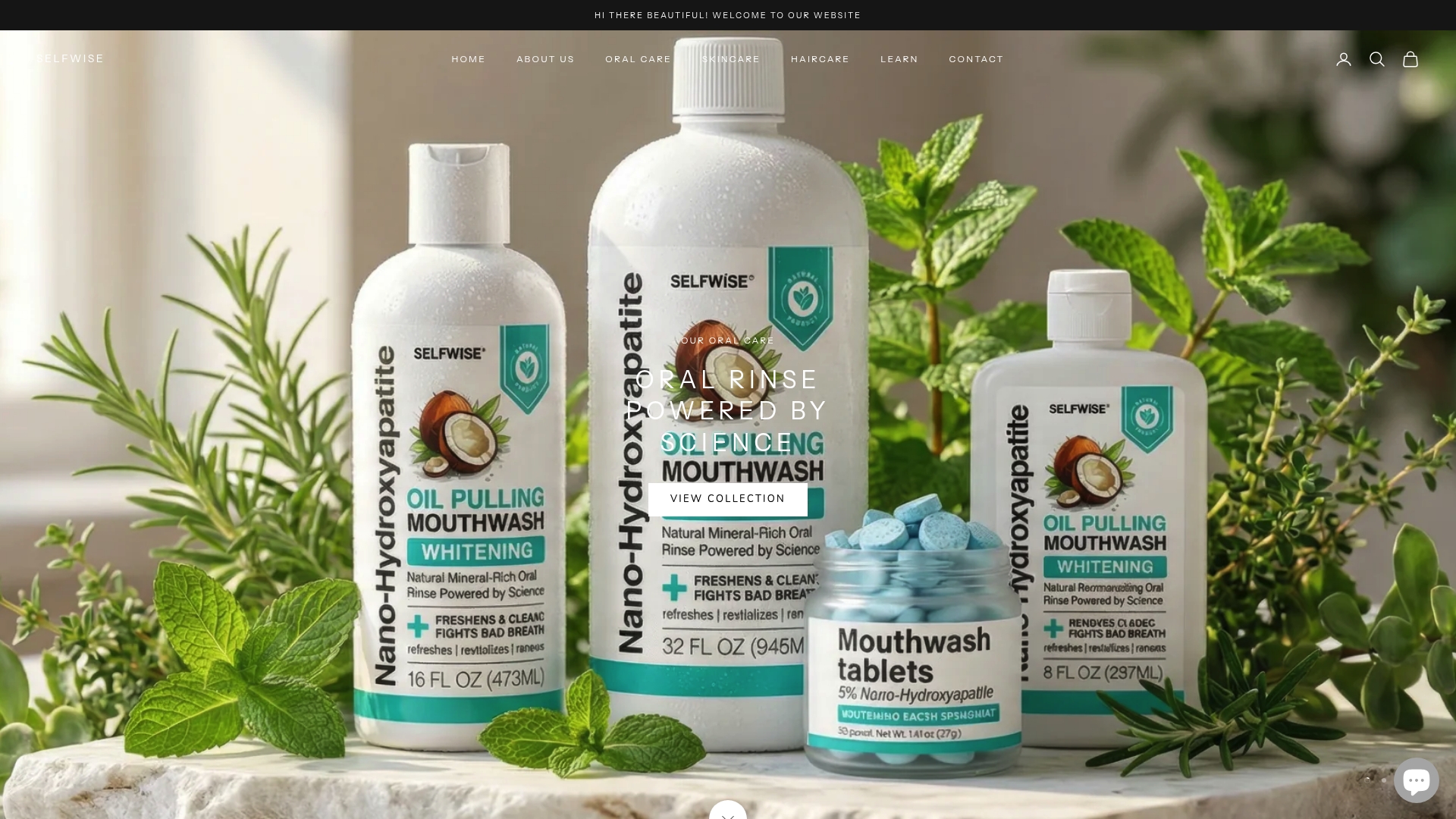
It comes pre-measured, formulated with food-grade ingredients, and paired with nano hydroxyapatite for enamel support, so you’re not just swishing oil; you’re adding a remineralizing step to your routine at the same time. No melting a solid oil, no guessing on amounts, no disposal confusion. The full mouthwash collection also includes xylitol and nano hydroxyapatite rinse options if you want to build out a complete fluoride-free routine. None of these replace brushing, flossing, or your dentist, and Selfwisebrand doesn’t pretend otherwise. Browse the collection and pick the format that fits your morning.
Useful sources
- American Dental Association — Oil Pulling: Primary source for the ADA’s position that oil pulling does not replace brushing and flossing.
- PMC — Oil Pulling for Maintaining Oral Hygiene: A Review: Systematic review used for the evidence summary on plaque and breath effects.
- Consumer Reports — Does Oil Pulling Really Help Your Teeth?: Dental expert commentary on behavioral risks and realistic benefits.
- Cleveland Clinic Health Essentials — Is Oil Pulling Your Best Choice?: Source for the “perceived clean feeling” behavioral risk insight.
- CNET — Coconut Oil Pulling Benefits and Dangers: Practical safety warnings on swallowing, aspiration, plumbing disposal, and contraindications.
- University of Colorado Anschutz — Does Oil Pulling Really Work?: Dental expert quotes on infections, post-extraction cautions, and age recommendations.
- Tufts University — Oil Pulling for Oral Health: Research-backed commentary on plaque biofilm limitations and study methodology.
- The Dental District — What You Should Know Before Trying Oil Pulling: Timing guidance and TMJ screening advice.
- Selfwisebrand Guides: Brand resources on technique, morning routines, and ingredient science for natural oral care.
FAQ
Why do dentists warn against oil pulling?
Dentists caution that oil pulling lacks sufficient clinical evidence and that people often use it as a reason to skip brushing and flossing, which are the only proven methods for mechanical plaque removal. The ADA does not recommend it as a dental hygiene practice.
What should you never do when oil pulling?
Never swallow the oil, spit it into the sink, use it to treat an active infection, or let it replace brushing and flossing. These are the core oil pulling pitfalls that create real health and plumbing problems.
Are there negative effects from oil pulling?
Yes, if done incorrectly. Swallowing the oil can cause digestive upset; aspiration can lead to lipid pneumonia; aggressive swishing can strain the jaw and worsen TMJ symptoms. Done gently and correctly, most healthy adults tolerate it well.
Will oil pulling damage tooth enamel?
There is no strong evidence that oil pulling damages enamel directly. The risk is indirect: if oil pulling replaces brushing with a remineralizing toothpaste or fluoride toothpaste, enamel loses the protective benefit of those products. Always brush after pulling.
Can children do oil pulling?
Dental experts advise against oil pulling for children under 12 due to the aspiration risk. Young children have less control over the swallowing reflex, making accidental ingestion more likely.