Healthy Gum Color: What It Looks Like and Why It Matters
Healthy gum color is uniform and free of inflammation — typically a pale or coral pink in people with lighter skin tones, and brown, blue-black, or deeper pigmented tissue in people with more melanin. Both are normal. What matters most is consistency: no sudden redness, no puffiness, no bleeding when you brush or floss gently. The American Dental Association and NIDCR both point to two objective markers of gum health: no bleeding on gentle probing and pocket depths below 3 mm at the gumline.
Two quick checks you can do at home right now:
- No bleeding on gentle brushing or flossing. Healthy gums don’t bleed. Bleeding is the single most reliable early warning sign of inflammation.
- No persistent redness or swelling. Gums that look puffy, feel tender, or stay red after a few days of good hygiene need professional attention.
Table of Contents
- What Does Healthy Gum Color Actually Look Like?
- What Unhealthy Gum Colors Usually Signal
- Why Does Gum Color Change in the First Place?
- How Dentists Actually Evaluate Gum Health
- How to Restore and Maintain Healthy Gum Color
- When Should You See a Dentist About Gum Color?
- Key Takeaways
- The Part Most Gum Color Guides Get Wrong
- Natural Oral Care That Supports Healthier Gums
- Useful Sources
- FAQ
What Does Healthy Gum Color Actually Look Like?
The short answer: it depends on your skin tone, and that’s completely normal. According to Cleveland Clinic, healthy gums in lighter-skinned people tend to appear pale pink or coral pink. In people with darker skin, healthy gingiva can range from brown to blue-black — a variation driven by melanin concentration in the tissue, not disease. Epithelial keratinization and vascularity also influence the exact shade you see, which is why two people with similar complexions can still have noticeably different gum tones.
The key clinical principle, backed by population research on gingival pigmentation, is uniformity. A gum that is consistently one shade across the arch is far less concerning than one that shifts from pink to red to white in patches.
Texture and contour signs of health
Color is only part of the picture. Healthy gums also feel firm and resilient when pressed lightly. The tissue hugs each tooth snugly, and the small triangular peaks between teeth (interdental papillae) fill the spaces without gaps or puffiness. Some adults show a faint orange-peel texture called stippling, best seen on dry tissue under indirect natural light. Stippling appears after about age 5 and is not present in everyone — its absence alone does not signal disease.
Other non-color signs of healthy gums:
- No spontaneous bleeding between brushing sessions
- No persistent bad breath that doesn’t resolve with cleaning
- No pain or sensitivity along the gumline
- No visible pus or discharge around the tooth base
Pro Tip: When checking your gums at home, use natural daylight and a clean dry finger or dry gauze to gently move the lip or cheek aside. Avoid judging the alveolar mucosa — the redder, looser tissue deeper in the mouth — as inflamed gingiva. That tissue is naturally red and movable, and confusing it with attached gingiva is one of the most common at-home misreads.
What Unhealthy Gum Colors Usually Signal
Color changes in gum tissue are one of the body’s clearest distress signals. Here’s what each common shift tends to mean and how urgently it warrants attention:
- Diffuse, symmetrical dark brown or blue-black pigmentation: Often physiologic melanin pigmentation — completely benign, especially when it has been present since childhood and is symmetric. This is not a disease. Routine monitoring is all that’s needed.
Physiologic oral pigmentation is benign and common worldwide. Most diffuse, symmetric brown areas present since childhood are harmless and require only routine monitoring — not treatment.
A note on changes vs. baseline: Experts emphasize that new redness, swelling, or color shifts matter far more than a stable, longstanding appearance. A gum that has always been dark brown and stays that way is almost certainly fine. One that was pink last month and is now red and swollen is telling you something.
Why Does Gum Color Change in the First Place?
Color changes in gum tissue come from several directions, and knowing the source helps you respond correctly.
Local oral causes are the most common:
- Plaque-driven inflammation (gingivitis and periodontitis) is responsible for most redness and swelling
- Trauma from aggressive brushing, ill-fitting dental appliances, or sharp foods
- Oral candidiasis, which produces white patches and often follows antibiotic use or immune suppression
- Amalgam tattoos from old silver fillings leaching metallic particles into adjacent tissue
- Extrinsic staining from tobacco, which deposits tar and nicotine compounds directly into gingival tissue
Systemic and medication-related causes are less obvious but worth knowing:
- Anemia reduces oxygenated blood flow, making gums appear pale
- Addison’s disease causes increased melanin production, sometimes producing new brown patches in the mouth
- Heavy-metal exposure (bismuth, lead, mercury) can produce dark lines along the gumline
- Certain medications, including antimalarials, minocycline, and some chemotherapy agents, cause drug-induced pigmentation
Behavioral risk factors that accelerate color changes include smoking, poor oral hygiene, and a diet low in vitamin C. Systemic conditions like diabetes and immunosuppression raise the risk of pathological changes because they impair the body’s ability to fight oral bacteria. The systemic connection between oral and whole-body health runs deeper than most people realize.
How Dentists Actually Evaluate Gum Health
A visual check in the mirror tells you something. A periodontal exam tells you much more. Here’s what happens during a professional gum assessment and what the numbers mean:
| Clinical Measure | Healthy Range | Concern Threshold |
|---|---|---|
| Pocket depth (probing) | Below 3 mm | 3 mm or deeper indicate increased risk or presence of gingivitis or periodontitis |
| Bleeding on probing | Absent | Present (indicates inflammation) |
| Gingival color | Uniform, appropriate for skin tone | Redness, pallor, or new focal changes |
| Tissue contour | Firm, knife-edged margin | Swollen, rolled, or receded margin |
| Exudate (pus) | None | Any visible discharge |
Periodontal probing is the gold standard for measuring pocket depth. A thin instrument is gently walked around each tooth at six points; depths below 3 mm with no bleeding indicate healthy tissue. Deeper pockets suggest that bacteria have colonized below the gumline, where brushing and flossing can’t reach.
Bleeding on probing is the primary clinical discriminator between health and gingivitis. Color alone can mislead — some inflamed gums look nearly normal in color, particularly in people who smoke, because nicotine constricts blood vessels and masks redness. Bleeding doesn’t lie.
“Clinical gingival health is defined by the absence of clinically detectable inflammation. Bleeding on probing is central to the case definitions that distinguish health from gingivitis.” — NIDCR / Journal of Clinical Periodontology consensus definitions
One nuance worth knowing: a patient who has had periodontal treatment may have shallower bone levels than average, but if inflammation is absent, that periodontium is still considered clinically healthy. Stability after treatment still requires ongoing monitoring because recurrence risk remains elevated.
How to Restore and Maintain Healthy Gum Color
Gum color normalizes when the underlying cause is addressed. For most people, that starts at home.
- Switch to an alcohol-free, natural mouthwash. Alcohol-based rinses can irritate already-inflamed tissue. A natural mouthwash formulated with xylitol or nano hydroxyapatite supports the oral environment without stripping it.
Timeline: Plaque-driven gingivitis often shows visible improvement within 7–14 days of consistent home care. Deeper periodontitis requires professional therapy and months of monitoring before stability is confirmed. For evidence-based approaches to natural gum regeneration, the timeline is longer but the trajectory is real.
Pro Tip: A consistent morning and evening routine that pairs mechanical cleaning (brush + floss) with a targeted natural rinse accelerates visible improvement. Nano hydroxyapatite mouthwash used after brushing at night gives the mineral time to work while you sleep, when saliva flow is lowest.
When Should You See a Dentist About Gum Color?
Not every color change is an emergency, but some are. Here’s how to triage:
Seek urgent care (same day or within 24–48 hours):
- Rapidly spreading redness or swelling
- Visible pus or a bad taste that doesn’t clear
- Severe pain along the gumline or jaw
- Fever combined with oral swelling
- Difficulty swallowing or opening your mouth
See a dentist soon (within 1–2 weeks):
- Bleeding every time you brush or floss, even after improving technique
- A new white or red patch that hasn’t resolved in two weeks
- Gum recession that seems to be progressing
- Color change that doesn’t improve after 7–14 days of good home hygiene
Routine monitoring (next scheduled visit):
- Stable, symmetric brown or blue-black pigmentation that has been present for years and hasn’t changed
- Mild pinkish variation that resolves with better brushing
When you call the dental office, mention bleeding, any pocketing you’ve noticed, recent illness or medication changes, and your smoking history. That information helps the team triage your appointment correctly and prepare the right instruments.
For a step-by-step gum care routine that complements professional care, consistent daily habits are the foundation.
Key Takeaways
Healthy gum color varies by skin tone, but uniformity and the absence of inflammation are the two markers that matter most across every complexion.
| Point | Details |
|---|---|
| Uniformity over exact shade | Pale pink, coral, brown, or blue-black can all be healthy — sudden or patchy changes are the real warning sign. |
| Bleeding is the key indicator | No bleeding on gentle brushing or probing is the clearest sign of gingival health; bleeding signals inflammation regardless of color. |
| Pocket depth threshold | Dentists use a 3 mm pocket-depth threshold; deeper pockets with bleeding indicate gingivitis or periodontitis. |
| Gingivitis can reverse quickly | Plaque-driven gingivitis often improves within about one to two weeks of consistent brushing, flossing, and natural rinsing. |
| Selfwisebrand supports gum health | Selfwisebrand’s nano hydroxyapatite and xylitol mouthwash products offer a fluoride-free, alcohol-free daily rinse that supports the oral environment between dental visits. |
The Part Most Gum Color Guides Get Wrong
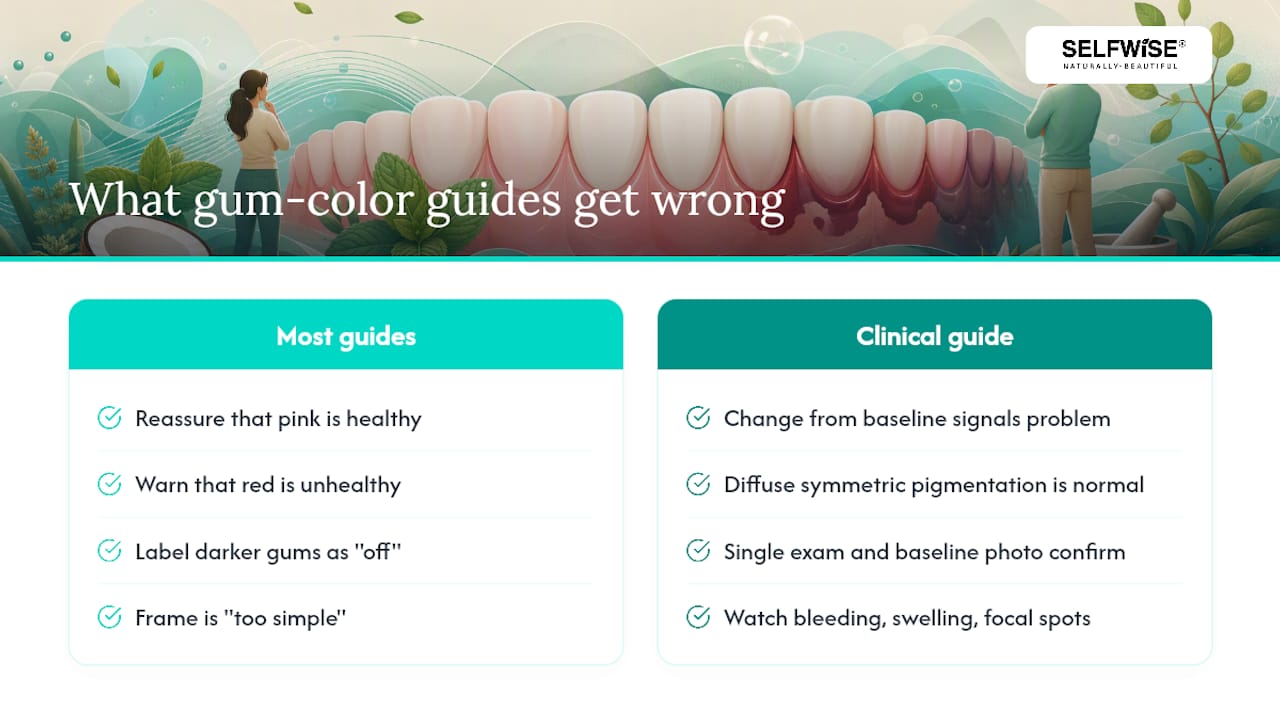
Most articles on gum color spend the bulk of their space reassuring readers that pink is healthy and red is not. That framing is too simple, and for a significant portion of the population, it’s actively misleading.
Darker-skinned individuals with naturally pigmented gingiva have spent years being told by well-meaning but uninformed sources that their gums look “off.” The clinical literature is clear: diffuse, symmetric gingival pigmentation is a normal biological variation, not a pathology. A single dental exam and a baseline photo are often all that’s needed to confirm it and move on.
The more useful frame is this: change is the signal, not color. A gum that has always been dark and stays dark is almost certainly fine. A gum that shifts from its baseline, bleeds, swells, or develops focal spots is telling you something worth investigating. That distinction is what separates a useful clinical guide from a generic one.
The other thing most guides understate is how quickly gingivitis responds to good home care. Two weeks of consistent brushing, daily flossing, and a gentle natural rinse can produce a visible difference. That’s not a small thing. It means the window between “noticing a problem” and “fixing it” is often shorter than people expect, provided the disease hasn’t progressed to periodontitis.
Natural Oral Care That Supports Healthier Gums
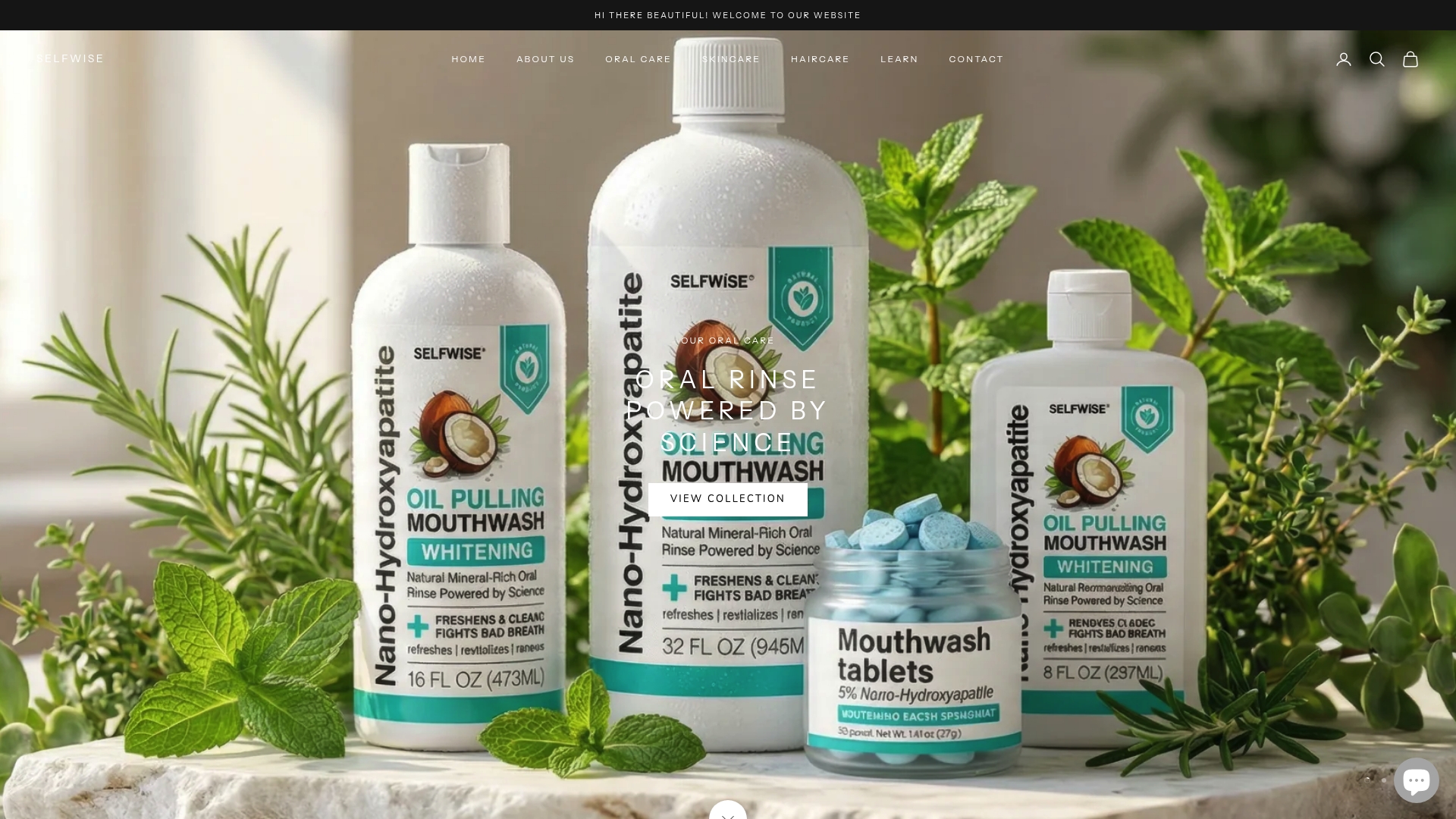
If your gums are showing early signs of inflammation, or you simply want to build a daily routine that keeps them in good shape, Selfwisebrand’s natural mouthwash line is formulated specifically for that goal. The nano hydroxyapatite mouthwash tablets dissolve into a fluoride-free rinse that supports enamel remineralization and a clean oral environment without alcohol or harsh additives. Use one tablet after brushing at night, when saliva flow is lowest and the mineral has the most time to work.
For readers drawn to oil pulling, the nano hydroxyapatite oil pulling mouthwash combines the traditional swishing practice with enamel-supportive nano hydroxyapatite. Swish for 10–15 minutes in the morning before brushing, then spit and brush as normal. The xylitol mouthwash with nano hydroxyapatite pairs well as an after-meal rinse, since xylitol actively disrupts the bacteria that drive plaque formation.

Browse the full natural mouthwash collection to find the format that fits your routine, or explore the fluoride-free options if you’re making the switch from conventional products.
This article is for general informational purposes and does not replace professional dental advice. Confirm any clinical concerns with a licensed dentist or periodontist.
Useful Sources
- Are Your Gums Healthy? How To Tell and Boost Gum Health — Cleveland Clinic
- Gingivitis — Merck Manuals (Professional)
- Physiological oral pigmentation and gingival pigmentation review — PMC
- Consensus and definitions for gingival health and disease — PubMed
- Periodontology anatomy - Gingiva — Precision in Perio
- Gingival pigmentation prevalence and relation to skin tone — Journal DOI
- Oral mucosa and gingival features — NCBI Bookshelf
- Physiological oral pigmentation — ArtSmiles
- Periodontal Gum Disease — NIDCR (PDF)
“Most symmetrical brown areas present since childhood are harmless and require only routine monitoring — not treatment. A single dental exam and baseline photo are often all that’s needed to reassure patients with lifelong physiologic pigmentation.” — Clinical consensus on physiologic oral pigmentation
FAQ
What color are unhealthy gums?
Unhealthy gums most often appear red, bright red, or deep red with swelling, and may bleed on contact. White patches, pale or washed-out tissue, and yellow or gray areas can also indicate infection, anemia, or fungal overgrowth.
How can you tell if your gums are healthy by color?
Healthy gums are uniformly colored for your skin tone — pale pink or coral in lighter skin, brown or blue-black in darker skin — with no swelling, no bleeding on gentle brushing, and no new focal color changes.
How do you restore healthy gum color?
Consistent brushing, daily flossing, and switching to an alcohol-free natural mouthwash can reverse plaque-driven gingivitis within 7–14 days. Deeper disease requires professional scaling; Selfwisebrand’s xylitol and nano hydroxyapatite mouthwash products support the oral environment between dental visits.
What do unhealthy gums look like beyond color?
Beyond color, unhealthy gums often feel tender or swollen, bleed during brushing or flossing, pull away from the teeth (recession), or produce a persistent bad taste or odor. Pus along the gumline is a sign of active infection requiring prompt care.