
Fat-Soluble Vitamins and Their Role in Oral Health
Most conversations about vitamins and dental health stop at calcium and vitamin C. That narrow focus leaves out the role of fat-soluble vitamins in oral health, a group of nutrients that quietly govern everything from enamel mineralization to gum tissue integrity. Vitamins A, D, E, and K work at a biological level that no toothbrush or rinse can replicate. If your teeth or gums are struggling despite a solid oral care routine, the missing piece might be sitting in your nutrition, not your bathroom cabinet.
Table of Contents
- Key takeaways
- How vitamin D supports your teeth and gums
- Vitamin A and gum health
- Vitamins E and K: the underrated pair
- Optimizing your fat-soluble vitamin intake
- Evidence-based benefits: putting it all together
- My take on vitamins and oral health
- Build a natural oral care routine that works
- FAQ
Key takeaways
| Point | Details |
|---|---|
| Vitamin D drives mineralization | Without adequate vitamin D, your body cannot absorb enough calcium to maintain strong enamel and alveolar bone. |
| Vitamin A protects soft tissue | Deficiency leads to dry mouth and increased infection risk, undermining your mouth’s first line of defense. |
| Vitamins E and K work together | Vitamin E shields gum tissue from oxidative damage while vitamin K directs calcium into teeth and bone. |
| Fat is required for absorption | Taking fat-soluble vitamins without dietary fat significantly reduces how much your body actually uses. |
| Food first, supplements second | A balanced diet rich in healthy fats outperforms isolated supplementation for long-term oral wellness. |
How vitamin D supports your teeth and gums
Vitamin D is often called the “gatekeeper” for calcium absorption, and that label holds up under scrutiny. Without sufficient vitamin D, your digestive system cannot pull enough calcium and phosphorus from food to keep enamel dense and alveolar bone strong. The alveolar bone is the ridge of bone that holds your teeth in place. When it degrades, tooth loss follows.
The biological mechanism goes deeper than absorption. Vitamin D receptors sit inside periodontal ligament stem cells, and when activated, they enhance osteogenic differentiation, meaning they push those cells toward forming new bone tissue rather than other cell types. That process is critical for maintaining the bone architecture around your teeth, especially as you age.
Vitamin D also modulates your immune response inside the mouth. Dose-dependent reductions in gingival inflammation have been observed in clinical studies when patients supplemented at 500 to 2,000 IU daily. Inflamed gums heal more slowly, bleed more easily, and create pockets where bacteria thrive. Keeping inflammation in check is not cosmetic. It is structural.
The clinical picture is sobering. Over 40% of US adults are vitamin D deficient, and many do not know it. A 2020 meta-analysis of 27 studies found that maintaining serum levels above 30 ng/mL significantly reduced pocket depth, attachment loss, and tooth loss in patients with periodontal disease. That is not a minor effect. That is the difference between keeping and losing teeth.
Pro Tip: Before starting any vitamin D supplement, ask your doctor for a 25(OH)D blood test. Supplementing without knowing your baseline is guesswork, and vitamin D toxicity is a real risk at high doses.
Vitamin A and gum health
Your oral mucosa, the soft tissue lining your cheeks, gums, and tongue, depends on vitamin A to stay intact and functional. This tissue acts as a physical barrier against bacteria and pathogens. When vitamin A levels drop, that barrier thins, breaks down, and becomes vulnerable to infection and slow healing.

Saliva is another casualty of vitamin A deficiency. Saliva is not just moisture. It contains antimicrobial proteins, buffers acid, and physically washes debris off your teeth. Vitamin A maintains oral mucosa and saliva production, and without it, dry mouth (xerostomia) sets in. Dry mouth accelerates decay, promotes gum disease, and makes the mouth a far more hospitable environment for harmful bacteria.
The recommended daily allowance for adults sits between 700 and 900 mcg RAE per day. Good dietary sources include:
- Liver and cod liver oil (the most concentrated sources)
- Orange and yellow vegetables like sweet potatoes and carrots (as beta-carotene, a precursor)
- Leafy greens including spinach and kale
- Eggs and full-fat dairy products
Because vitamin A is fat-soluble, eating these foods with a source of healthy fat improves how much your body actually absorbs. A salad loaded with carrots but dressed with fat-free dressing delivers far less usable vitamin A than the same salad with olive oil.
Pro Tip: Beta-carotene from plants converts to vitamin A in your body, but the conversion rate is low. If you rely entirely on plant sources, you may need more volume than you think to meet your daily requirement.
Vitamins E and K: the underrated pair
These two vitamins rarely get top billing in dental health conversations, but their absence shows up clearly in the mouth.
Vitamin E and oxidative protection
Every cell membrane in your gum tissue faces oxidative stress from bacteria, food, and normal metabolic processes. Vitamin E protects oral tissue cell membranes from that damage by neutralizing free radicals before they break down tissue structure. Chronically inflamed gums produce higher levels of oxidative stress, which is exactly where vitamin E’s antioxidant function becomes most relevant.
Vitamin K and calcium direction
Vitamin K2 does something no other nutrient does quite as precisely. It activates a protein called osteocalcin, which acts as a traffic controller for calcium in your body. Without adequate K2, calcium may deposit in arteries and soft tissues rather than reaching your bones and teeth where it belongs. This is why taking high-dose vitamin D without vitamin K2 is a strategy worth reconsidering.
The table below compares their primary functions and key sources:
| Vitamin | Primary oral health role | Key dietary sources | Daily target |
|---|---|---|---|
| Vitamin E | Antioxidant protection of gum tissue | Sunflower seeds, almonds, spinach, avocado | 15 mg |
| Vitamin K2 | Directs calcium into teeth and bone via osteocalcin | Natto, hard cheese, egg yolks, chicken liver | 90–180 mcg MK-7 |
The synergy between vitamins D and K is one of the more compelling findings in recent nutritional research. Vitamin D increases calcium absorption from the gut. Vitamin K2 tells that calcium where to go. Running one without the other is like increasing water pressure without directing the hose.
Optimizing your fat-soluble vitamin intake
Knowing which vitamins matter is only half the work. Getting them into your system at useful levels requires some practical adjustments to how and what you eat.
-
Build meals around healthy fats. Fat-soluble vitamins travel through your lymphatic system via structures called chylomicrons, which only form in the presence of dietary fat. Avocado, olive oil, eggs, and full-fat dairy are not just nutrient sources. They are the delivery mechanism for vitamins A, D, E, and K.
-
Identify your risk factors for deficiency. People with limited sun exposure, those following low-fat or plant-based diets, older adults, and anyone with fat malabsorption conditions face higher deficiency risk. Balanced dietary patterns like the Mediterranean diet address multiple deficiencies simultaneously and outperform isolated supplementation in long-term studies.
-
Test before you supplement at high doses. A 25(OH)D blood test costs very little and tells you whether you actually need to supplement vitamin D. Maintenance doses of 1,000 to 2,000 IU daily are generally considered safe, but higher doses carry real risk without confirmed deficiency.
-
Respect the storage factor. Unlike water-soluble vitamins that flush out in urine, fat-soluble vitamins accumulate in liver and fat tissue. Daily supplementation at high doses is not necessary and can lead to toxicity over time. Symptoms of hypervitaminosis include joint pain, dry skin, and in severe cases, organ damage.
-
Pair fat-soluble vitamins with vitamin C and calcium. These nutrients work alongside each other. Vitamin C supports collagen synthesis in gum tissue. Calcium provides the raw mineral that vitamins D and K help place correctly. Oral health and nutrition are inseparable when you look at the full picture.
Pro Tip: Never take fat-soluble vitamin supplements with a fat-free meal. The absorption drop is significant. A tablespoon of olive oil or a handful of nuts alongside your supplement makes a measurable difference in bioavailability.
Evidence-based benefits: putting it all together
The research on fat-soluble vitamins and dental wellness has moved well past theory. Here is what the clinical evidence actually supports:
- Vitamin D at adequate serum levels reduces periodontal pocket depth, attachment loss, and tooth loss, confirmed across dozens of clinical trials
- Vitamin A deficiency directly correlates with xerostomia, mucosal breakdown, and increased susceptibility to oral infection
- Vitamin E’s antioxidant activity protects gum cell membranes and supports tissue repair in the presence of chronic inflammation
- Vitamin K2 activates osteocalcin to place calcium precisely in bones and teeth, making it a necessary partner to vitamin D supplementation
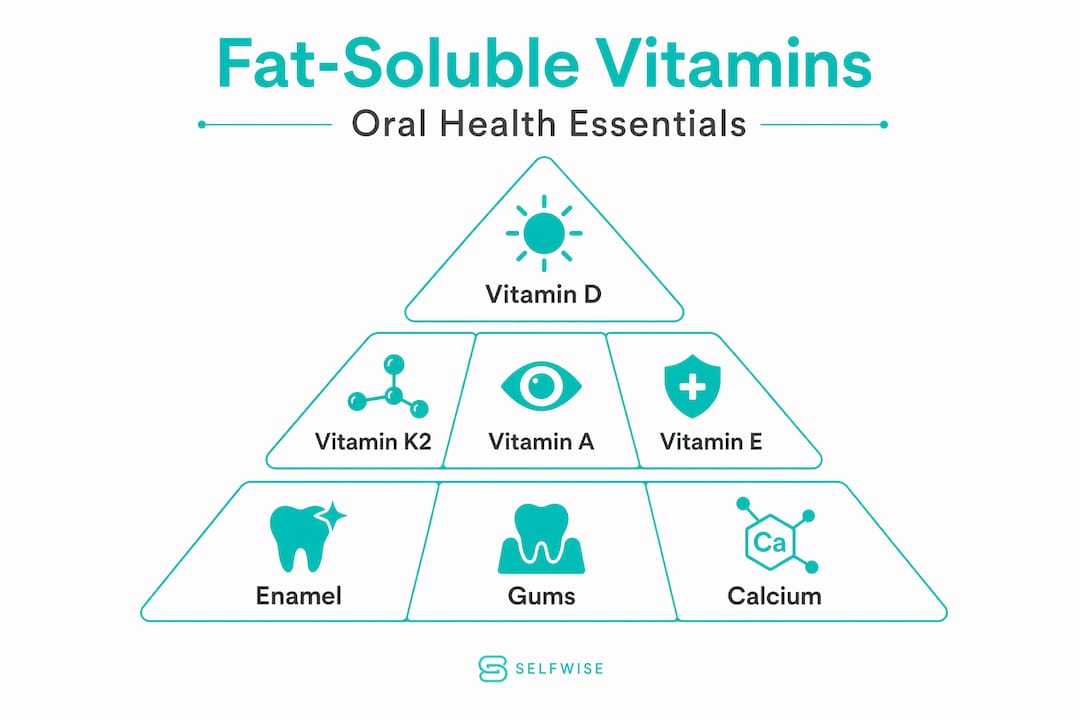
The fat-soluble vitamins benefits for oral health are not isolated effects. They interact. Vitamin D pulls calcium in. Vitamin K2 places it correctly. Vitamin A keeps the soft tissue barrier intact. Vitamin E protects the cellular environment where all of this happens. Supplementing one while ignoring the others produces incomplete results at best.
A food-first approach, built around whole foods with adequate healthy fats, delivers these vitamins in the ratios and forms your body recognizes. For those exploring how vitamins affect teeth through a natural oral care lens, understanding hydroxyapatite and enamel mineralization adds another layer to the picture, since the minerals that vitamins D and K help direct are the same ones that remineralizing ingredients work with at the tooth surface.
My take on vitamins and oral health
I’ve watched a lot of people chase the wrong solution for years. They invest in whitening products, specialty toothpastes, and expensive treatments while eating low-fat diets that quietly deplete the very vitamins their teeth and gums need to stay strong.
What I’ve found consistently is that vitamin D gets the most attention, but vitamin K2 is the one most people are missing. You can push calcium absorption through the roof with vitamin D, but without K2 to activate osteocalcin, that calcium does not reliably end up in your teeth. It can end up in places you do not want it. That detail gets lost in most conversations about dental nutrition.
Testing matters more than most people realize. I’ve seen individuals take 5,000 IU of vitamin D daily for years without ever checking their serum levels. That is not optimization. That is guessing with a fat-soluble compound that stores in your liver. Get the blood test first. Then decide what you actually need.
The most durable oral health outcomes I’ve observed come from people who treat nutrition as part of their routine, not a supplement to it. A diet rich in healthy fats, diverse vegetables, quality protein, and minimal processed food does more for your gums and enamel than any single supplement ever will. The vitamins are already there. You just need to stop blocking their absorption.
— Viktor
Build a natural oral care routine that works
If this article has you rethinking how nutrition and oral care connect, Selfwisebrand’s natural oral care guide is the logical next step. It covers how to build a routine grounded in science and real ingredients, the kind of approach that actually complements what your body is already trying to do with the right nutrients.
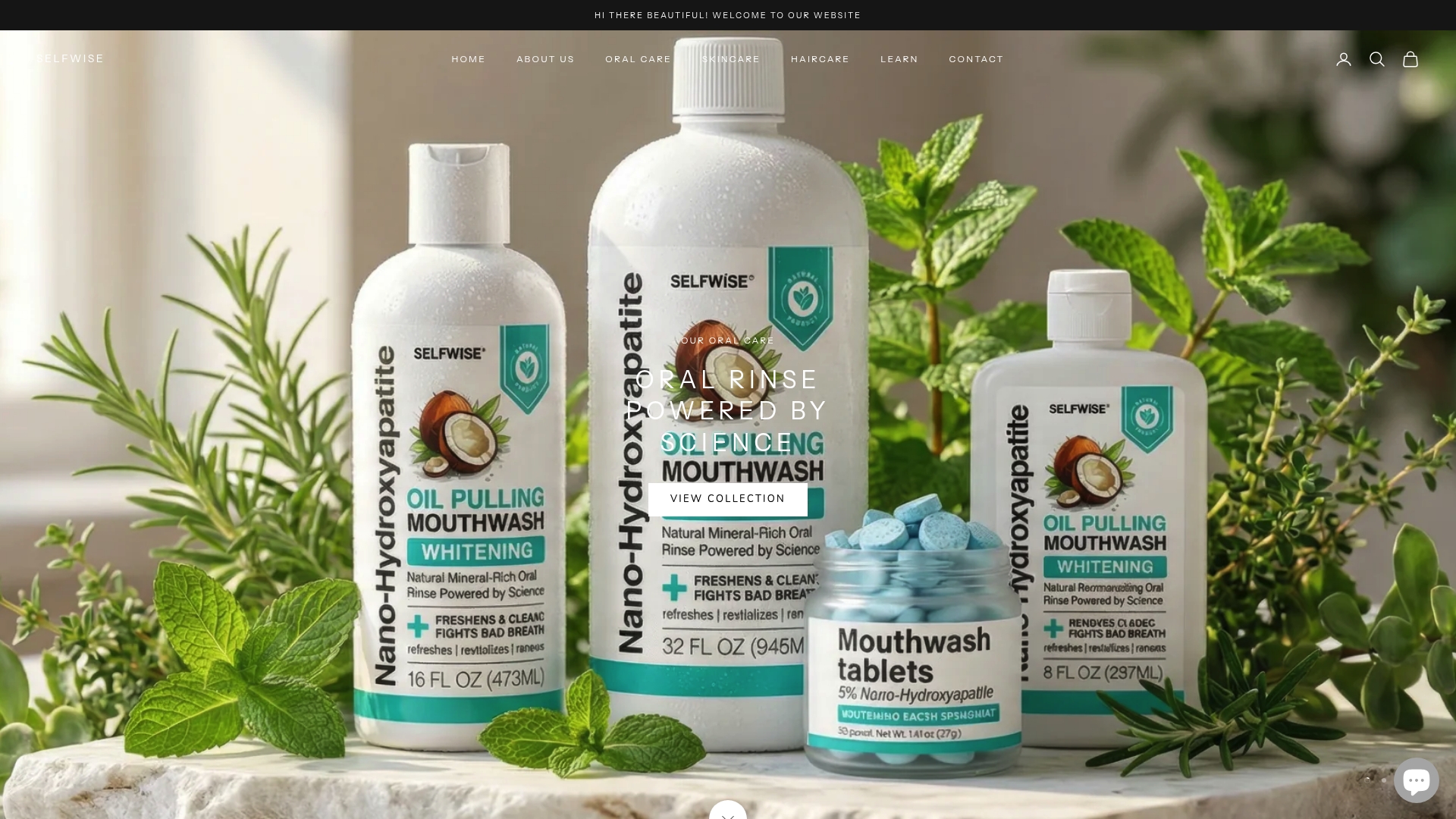
Selfwisebrand formulates products around ingredients like nano hydroxyapatite and xylitol because they work with your body’s mineralization processes, the same processes that fat-soluble vitamins support from the inside. Explore the full natural oral care collection to find products that fit a health-conscious routine. Simple ingredients, backed by research, designed for people who take their oral health seriously.
FAQ
What is the role of fat-soluble vitamins in oral health?
Vitamins A, D, E, and K support enamel mineralization, gum tissue integrity, calcium direction, and immune modulation in the mouth. Their combined effect makes them foundational to long-term dental and gum health.
How does vitamin D affect teeth and gums?
Vitamin D enhances calcium and phosphorus absorption needed for strong enamel and alveolar bone, and it reduces gingival inflammation. Serum levels above 30 ng/mL are associated with significantly lower rates of tooth loss and periodontal disease.
Can vitamin A deficiency cause oral health problems?
Yes. Low vitamin A leads to dry mouth, breakdown of the oral mucosa, slower tissue healing, and increased vulnerability to oral infections. The recommended intake for adults is 700 to 900 mcg RAE per day.
Why is vitamin K2 important for dental health?
Vitamin K2 activates osteocalcin, a protein that directs calcium into bones and teeth rather than soft tissues. Without it, calcium absorbed through vitamin D supplementation may not reach your enamel or jawbone effectively.
Do fat-soluble vitamins need to be taken with food?
Yes, and specifically with fat-containing food. Fat-soluble vitamins form chylomicrons for absorption only in the presence of dietary fat. Taking them with fat-free meals significantly reduces how much your body absorbs and uses.