Natural teeth whitening: what actually works and what doesn't
Natural teeth whitening is one of the most searched topics in oral care — and one of the most misleading. Activated charcoal, oil pulling, baking soda, banana peels, turmeric: the internet is full of DIY whitening methods, and most of them fall into one of two categories — ineffective, or actively harmful to your enamel. This guide cuts through the noise with an honest look at what the evidence actually supports.
Quick summary
- What works: Consistent plaque removal (brushing, flossing, oil pulling), enamel remineralisation with nano hydroxyapatite, and reducing staining habits.
- What doesn't work: Banana peels, turmeric, most charcoal products used long-term, hydrogen peroxide rinses at home.
- What causes harm: Abrasive charcoal powders used daily, lemon juice, apple cider vinegar — all erode enamel.
- Key fact: Most "yellow" teeth are either stained (surface deposits — cleanable) or have thin enamel (showing the darker dentine beneath — not cleanable with whitening products).
- Relevant product: Selfwise Nano Hydroxyapatite Oil Pulling Mouthwash
Best for: Anyone wanting to improve the appearance of their teeth using safe, evidence-supported approaches rather than harsh whitening treatments.
Not for: Structural discolouration from tetracycline staining, fluorosis, or deep intrinsic staining — these require professional treatment.
Why teeth look yellow — and why this matters for whitening
Before choosing a whitening approach, it's important to understand why your teeth appear discoloured. There are two distinct causes, and they respond to completely different treatments.
Extrinsic staining is surface discolouration deposited on the enamel from food, drink, and tobacco. Coffee, tea, red wine, and dark berries all leave chromogen compounds on the enamel surface. This type of staining responds to thorough plaque removal, polishing, and oil pulling. It is the most common cause of yellow-looking teeth and the most treatable without harsh chemicals.
Intrinsic discolouration comes from within the tooth structure. Enamel is naturally semi-translucent — the darker yellow dentine beneath it shows through. As enamel thins with age or erosion, more dentine is visible and teeth appear more yellow. No amount of surface whitening fixes this — in fact, abrasive whitening products make it worse by removing more enamel. The correct approach is protecting and remineralising existing enamel.
What actually works
1. Consistent plaque removal
Plaque is a sticky biofilm that traps staining compounds against the tooth surface. Teeth that are brushed and flossed consistently accumulate less staining because there is less biofilm for chromogens to bind to. This is the single most effective free whitening intervention available, and it is underrated because it sounds too simple.
2. Oil pulling
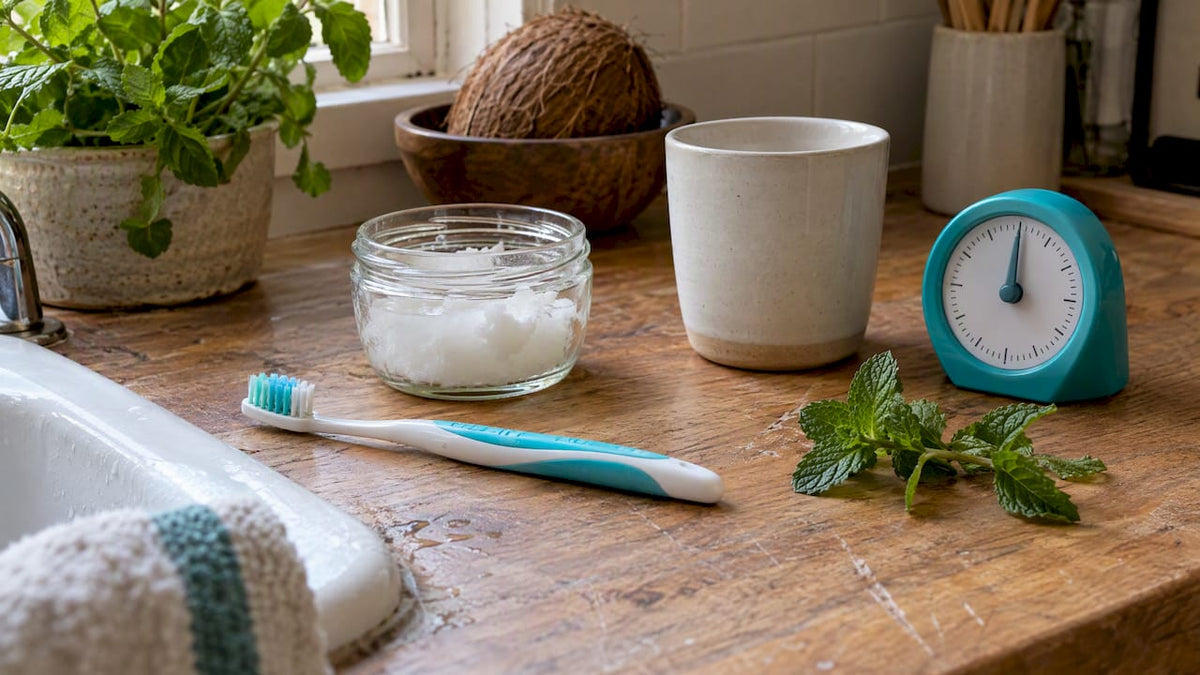
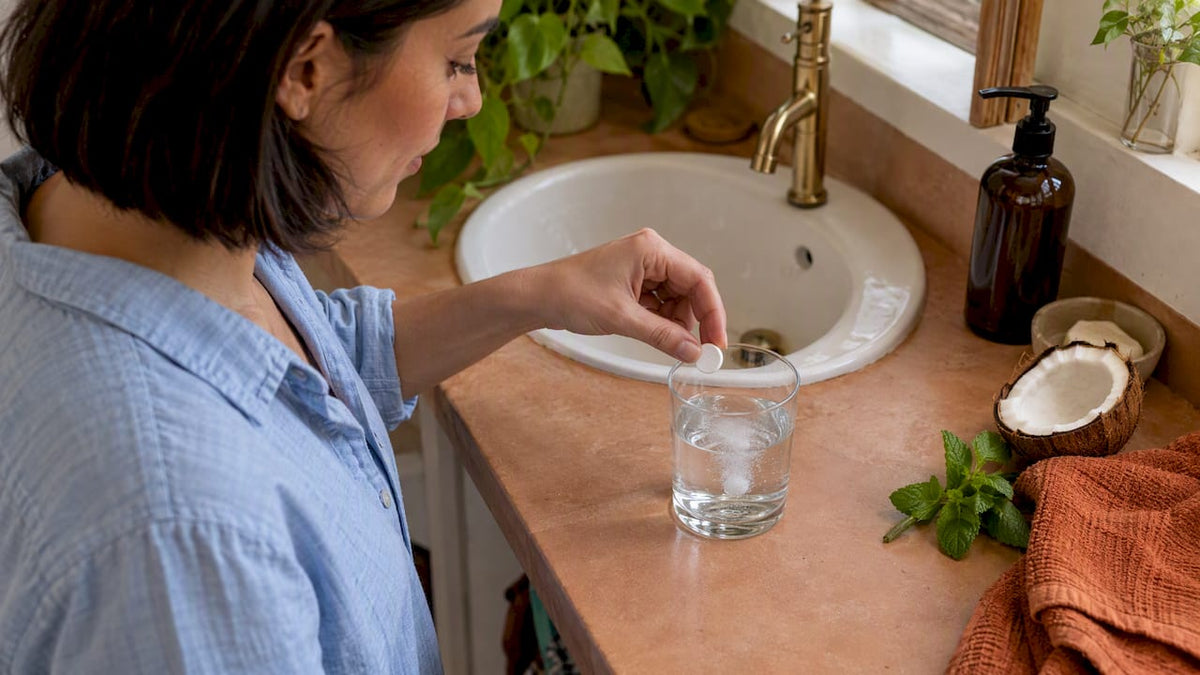
Oil pulling physically removes surface bacteria, debris, and some staining compounds through emulsification. Several studies have shown measurable reductions in plaque index and bacterial counts after oil pulling. The Selfwise Nano Hydroxyapatite Oil Pulling Mouthwash adds an emulsified coconut oil base — making swishing easier and more effective — alongside nano hydroxyapatite for enamel support. Regular use removes the surface film that makes extrinsic staining accumulate faster.
3. Nano hydroxyapatite mouthwash
Nano hydroxyapatite does not bleach teeth. But by filling in microscopic surface lesions in enamel — small pores and rough patches where staining compounds accumulate and bacteria adhere — it creates a smoother, denser enamel surface. Over time this is associated with teeth appearing brighter and more uniform in colour. This is remineralisation-driven brightening, not chemical whitening. It is gradual (4 to 12 weeks) and safe for daily use.
4. Reducing staining habits
Drinking through a straw reduces direct contact between staining beverages and tooth surfaces. Rinsing with water after coffee, tea, or red wine — before chromogens have time to bind to the enamel pellicle — significantly reduces accumulation. Not smoking is the single most impactful lifestyle change for tooth colour.
5. Professional cleaning
A dental hygienist can remove calculus (hardened plaque deposits) and surface staining that cannot be removed at home. A professional clean every 6 months is more effective for tooth colour than any home whitening product used intermittently.
What doesn't work
| Method | Claim | Reality |
|---|---|---|
| Banana peels | Minerals in peel whiten teeth | No evidence of any effect. Sugars in the peel may feed bacteria. |
| Turmeric | Anti-inflammatory properties whiten teeth | Turmeric is a deep yellow pigment. It stains. No whitening evidence. |
| Coconut oil alone | Oil pulling whitens teeth | Oil pulling removes surface bacteria and debris but does not bleach. Appearance improvement is from plaque removal, not whitening. |
| Hydrogen peroxide rinsing (home use) | Bleaches enamel | Hydrogen peroxide at concentrations available over the counter is unlikely to produce significant whitening. Higher concentrations cause gum and tissue irritation and require professional application. |
| Strawberries and lemon | Malic acid and citric acid remove stains | Acid erodes enamel. Any stain removal is outweighed by enamel damage from repeated use. |
What causes harm
Activated charcoal powders used daily are among the most harmful DIY whitening products. Charcoal is highly abrasive. Studies, including a 2019 review in the British Dental Journal, concluded there is no evidence supporting the whitening efficacy of charcoal dental products and raised concerns about enamel abrasion with regular use. Some charcoal powders have an RDA (relative dentine abrasivity) value higher than recommended for daily toothpastes.
Apple cider vinegar and lemon juice are acidic enough to soften and erode enamel with repeated use. The acid temporarily removes surface deposits — which is why teeth may look briefly cleaner after use — but each application removes a thin layer of enamel that cannot be replaced.
Baking soda is mildly abrasive and reasonably safe in small amounts infrequently, but not suitable as a daily whitening regimen. Toothpastes formulated with baking soda at controlled concentrations are safer than using pure baking soda.
A safe daily whitening routine
- Oil pull with nHAp Oil Pulling Mouthwash in the morning — removes overnight bacteria and surface debris
- Brush for 2 minutes with a soft toothbrush — removes plaque before staining compounds can bind
- Floss once daily — removes debris from interproximal surfaces where staining also accumulates
- Rinse with water after staining drinks — reduces chromogen binding to the enamel pellicle
- Professional clean every 6 months — removes calculus and extrinsic staining that builds despite good home care
Frequently asked questions
How long does it take for oil pulling to whiten teeth?
Oil pulling does not bleach teeth — it removes the surface film that makes staining accumulate. Most people notice teeth looking cleaner and brighter within 2 to 4 weeks of consistent daily use, primarily due to improved plaque removal rather than any whitening chemical action.
Is activated charcoal toothpaste safe?
Occasional use of a charcoal toothpaste may not cause significant harm, but daily use of highly abrasive charcoal products risks wearing enamel over time. The British Dental Journal review found no evidence supporting their efficacy. If you want to use charcoal products, choose ones with a low RDA value and use them infrequently.
Can nano hydroxyapatite whiten teeth?
Nano hydroxyapatite does not bleach teeth. It remineralises enamel by filling surface lesions and microscopic pores — which creates a smoother, denser enamel surface that reflects light more uniformly. Many users report teeth looking brighter after consistent use, but this is a remineralisation effect, not chemical whitening.
Why do my teeth look more yellow as I get older?
As enamel naturally thins with age and exposure, more of the underlying dentine — which is naturally yellow — shows through the semi-translucent enamel. This is intrinsic discolouration and cannot be corrected by surface whitening. Protecting enamel from further erosion (through remineralisation and avoiding acidic damage) is the most effective long-term strategy.
Does oil pulling remove coffee stains?
Oil pulling removes surface bacteria and some loose staining compounds through emulsification, which can reduce the accumulation of coffee staining over time. It is more effective as a preventive measure — used consistently before staining builds up — than as a treatment for existing deep staining.
Related reading
- Selfwise natural oral care guide
- Nano Hydroxyapatite Oil Pulling Mouthwash
- Nano Hydroxyapatite Mouthwash Tablets
Written by: Selfwise Editorial Team | Published: April 2026 | Disclosure: This article is published by Selfwise, a brand that sells natural oral care products. This content is informational and does not constitute dental or medical advice.
Sources: Brooks JK et al. Charcoal and charcoal-based dentifrices. British Dental Journal (2017). Amaechi BT et al. Nano-hydroxyapatite remineralisation research. Journal of Dentistry.