Natural gum regeneration: evidence-based methods that work
Receding gums are one of those problems that creep up slowly, and by the time you notice the sensitivity or the longer-looking teeth, you’re already wondering how far it’s gone. Before booking a graft or a deep cleaning, many people want to know if there’s a gentler way in. The good news is that certain natural methods, including oil pulling, xylitol, nano-hydroxyapatite, and propolis, have real science behind them. This guide walks you through each one, explains what the research actually supports, and gives you a practical routine you can start today.
Table of Contents
- Gathering natural tools for gum regeneration
- Step-by-step: Oil pulling for healthier gums
- Using xylitol for gum support
- Nano-hydroxyapatite and propolis: What’s proven for gums?
- How to track progress and avoid common pitfalls
- Why natural methods work best as adjuncts, not replacements
- Enhance your gum care naturally with Selfwise
- Frequently asked questions
Key Takeaways
| Point | Details |
|---|---|
| Natural tools assist gum health | Oil pulling, xylitol, and propolis support daily gum maintenance with evidence-backed benefits. |
| Nano-hydroxyapatite strengths | This ingredient is proven for enamel repair but not for gum regeneration except in surgical applications. |
| Adjunct, not substitute | Natural methods are best used alongside professional care for persistent gum issues. |
| Monitor your results | Track firmness, bleeding, and sensitivity to verify improvement and avoid common mistakes. |
Gathering natural tools for gum regeneration
Before you start any new oral care routine, having the right ingredients on hand makes a measurable difference. Not all products marketed as “natural” deliver the same results, so being selective matters.
Here are the core tools backed by evidence for gum support:
- Coconut or sesame oil for oil pulling (cold-pressed, unrefined where possible)
- Xylitol chewing gum (at least 1 gram of xylitol per piece, no sorbitol fillers)
- Nano-hydroxyapatite toothpaste for enamel remineralization and reduced sensitivity
- Propolis chewing gum or mouthwash for anti-inflammatory support
One important preparation step: check your existing products for irritants. Sodium lauryl sulfate (SLS), artificial sweeteners, and alcohol-based mouthwashes can all aggravate sensitive gum tissue. Swapping these out before you add new tools gives your gums a cleaner baseline to work from. Our natural oral care guide covers the full picture if you want to audit your current routine.
When selecting oils, look for cold-pressed coconut or sesame oil without additives. Refined oils are cheaper but stripped of the antimicrobial compounds that make oil pulling work. Oil pulling with oils like coconut or sesame reduces plaque and gingival inflammation indices, making ingredient quality a genuine factor in outcomes. You can also read about the specific benefits and limits of coconut oil for gums before committing to a brand.
| Tool | Primary benefit | Limitation |
|---|---|---|
| Coconut oil | Antimicrobial, anti-inflammatory | Benefit is adjunctive, not curative |
| Sesame oil | Reduces plaque and bleeding | Similar limitations to coconut oil |
| Xylitol gum | Reduces harmful bacteria, stimulates saliva | Needs consistent daily use |
| Nano-hydroxyapatite toothpaste | Enamel remineralization, sensitivity relief | Limited direct gum regeneration data |
| Propolis gum | Reduces gingival inflammation | Less studied than other tools |
Pro Tip: Buy oils in dark glass bottles and store them away from heat. Oils that oxidize lose their antimicrobial properties faster, and rancid oil in your mouth isn’t doing your gums any favors.
Understanding which of these natural regeneration tips cross over into hard science versus wellness trend will keep your routine grounded and effective.
Step-by-step: Oil pulling for healthier gums
Oil pulling is one of the oldest oral hygiene practices in existence, rooted in Ayurvedic tradition and now supported by a growing body of clinical research. It’s not magic, but it’s also not placebo. Here’s how to do it correctly.
How to oil pull:
- Measure one tablespoon of coconut or sesame oil.
- Swish it gently around your mouth for 15 to 20 minutes. Gentle swishing works better than aggressive gargling, which fatigues your jaw and doesn’t improve results.
- Do not swallow. The oil collects bacteria and byproducts from your mouth during the process, and swallowing it reintroduces those compounds.
- Spit into a trash can, not the sink. Coconut oil solidifies at room temperature and will eventually clog pipes.
- Rinse your mouth thoroughly with warm water.
- Brush your teeth as normal.
Do this once daily, preferably first thing in the morning before eating or drinking anything. Frequency matters: once a week won’t produce the same benefits as a consistent daily practice.
“Oil pulling is comparable to chlorhexidine in some studies for reducing plaque, making it a meaningful adjunct for people who want to reduce their reliance on synthetic mouthwashes.”
That comparison to chlorhexidine is significant because chlorhexidine is the clinical gold standard for short-term plaque control. It doesn’t mean oil pulling replaces professional care, but it does mean the effect is real and measurable. Study durations in the available research ranged from one to 45 days, so we don’t yet have strong long-term data. Set realistic expectations: oil pulling supports gum health, it doesn’t reverse advanced recession on its own.
Check out our broader oral care tips for how to build this into a morning routine without it feeling like a chore. And if you’re specifically dealing with recession, the coconut oil for receding gums guide goes deeper on what’s realistic.
Pro Tip: If 20 minutes feels too long at the start, begin with 5 minutes and work up. Consistency over duration is the key variable, especially in the first month.

Using xylitol for gum support
Xylitol doesn’t get the credit it deserves. Most people know it as the sweetener in sugar-free gum, but it has a specific mechanism that makes it genuinely useful for gum health, not just cavity prevention.
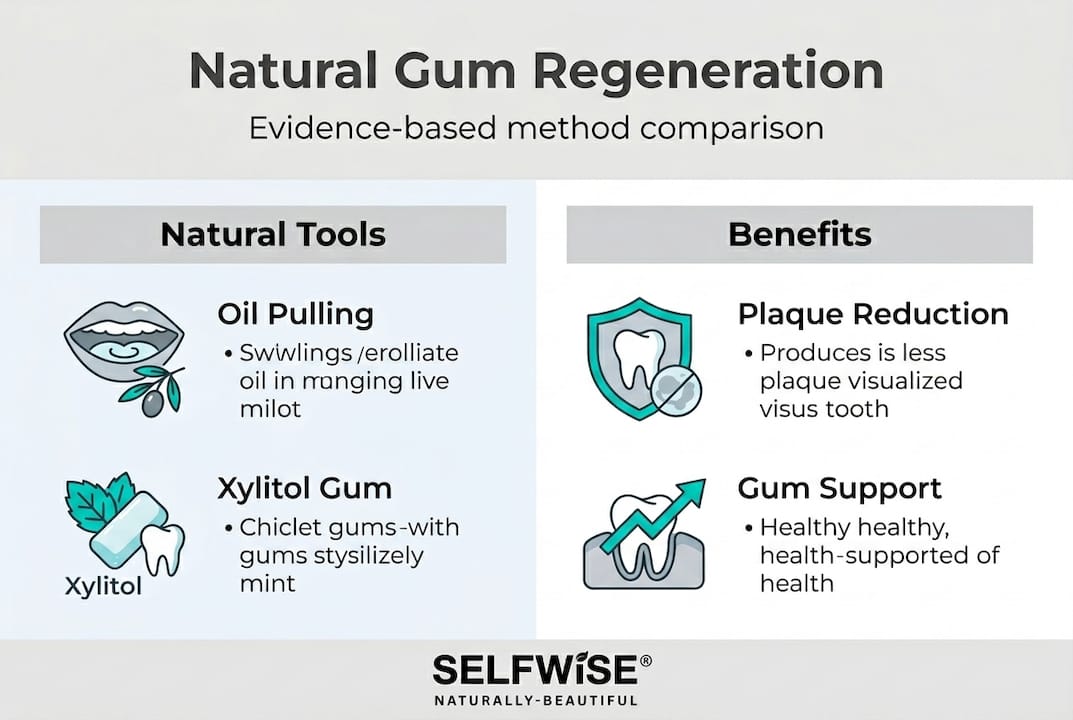
Here’s how it works. Xylitol is a sugar alcohol that harmful oral bacteria, particularly Streptococcus mutans, cannot metabolize. When these bacteria absorb xylitol instead of regular sugar, they can’t produce the acids that damage enamel and irritate gum tissue. Over time, the bacterial population in your mouth actually shifts toward less harmful strains. Xylitol also stimulates saliva production, and saliva is your mouth’s built-in defense system. It neutralizes acids, delivers minerals to teeth, and helps rinse away food debris.
Xylitol chewing gum reduces mutans streptococci levels, plaque accumulation, and supports gingival health, making it a useful adjunct alongside brushing and professional care.
Practical benefits of xylitol:
- Reduces acid-producing bacteria without antibiotics
- Stimulates saliva, which naturally protects gum tissue
- Easy to use: just chew after meals for 5 minutes
- Available in gum, mints, and xylitol mouthwash options that fit any routine
- Pairs well with brushing and oil pulling without interference
How does xylitol compare to similar products?
| Sweetener | Bacterial effect | Saliva stimulation | Gum health benefit |
|---|---|---|---|
| Xylitol | Strongly inhibits S. mutans | Yes | Strong adjunctive support |
| Sorbitol | Minimal inhibition | Yes | Weak |
| Sucrose (sugar) | Feeds harmful bacteria | No | Negative |
| Erythritol | Some inhibition | Mild | Moderate |
The key practical takeaway: use xylitol gum after meals when you can’t brush. Chewing for at least five minutes gives xylitol enough contact time to influence the bacterial environment in your mouth. If you also want to explore other natural dental products that complement xylitol, the options have expanded considerably in recent years.
Dosing matters too. Research suggests five to six grams of xylitol daily spread across multiple exposures is more effective than one large dose. Three pieces of gum per day after meals gets you close to that target without any complicated tracking.
Nano-hydroxyapatite and propolis: What’s proven for gums?
These two ingredients are trending in the natural oral care space, and for good reason. But it’s worth separating what’s actually established from what’s speculative.
Nano-hydroxyapatite (nHA) is a biomimetic mineral, meaning it closely resembles the structure of tooth enamel. It fills in microscopic surface lesions, reduces sensitivity, and supports remineralization without fluoride. The evidence for enamel protection is solid. However, nano-hydroxyapatite in toothpaste promotes enamel remineralization but lacks direct evidence for gum regeneration in everyday consumer products. Its use in actual gum regeneration is mostly surgical, where nHA-based materials are used in bone grafts for intrabony defects with good results.
For the average person using a consumer nHA toothpaste, the benefit is enamel protection and reduced sensitivity near the gumline, which matters if recession has exposed tooth roots. That’s a real and meaningful benefit, just a different one than “regrowing gums.”
Propolis is a resin collected by bees and is one of the more interesting natural anti-inflammatories in oral care. Propolis chewing gum reduces gingival inflammation similarly to propolis mouthwash when used after scaling and root planing. That’s a meaningful finding because it shows propolis can support professional treatment outcomes rather than just acting as a standalone remedy.
| Ingredient | Best evidence for | Gum regeneration evidence | Notes |
|---|---|---|---|
| Nano-hydroxyapatite | Enamel remineralization | Surgical use only (grafts) | Good for sensitivity near gumline |
| Propolis | Gingival inflammation reduction | Adjunct post-SRP | Pairs well with professional treatment |
When to consider these ingredients:
- Use nHA toothpaste if you have sensitivity at the gumline or early enamel erosion
- Add propolis gum or rinse after a professional cleaning to support healing
- Avoid propolis if you have a known bee or pollen allergy
- Don’t expect either ingredient to reverse significant recession on its own
Our nano hydroxyapatite mouthwash tablets and nHA oil pulling mouthwash are formulated to deliver these benefits in practical daily formats. Understanding what proven regeneration methods look like across different tissues can also help calibrate expectations for what’s possible with topical application versus surgical intervention. For more context on the full category, visit our natural oral care page.
How to track progress and avoid common pitfalls
Starting a natural gum care routine is one thing. Knowing whether it’s working is another. Most people abandon routines too early because they don’t have clear markers of progress.
Signs your gums are responding well:
- Reduced bleeding when brushing (this is often the first and fastest improvement)
- Gums look pinker and less puffy, not swollen or dark red
- Sensitivity near exposed root surfaces decreases
- Gum tissue feels firmer when you press lightly with a clean fingertip
- Bad breath becomes less persistent between brushings
Signs you need to see a dentist:
- Bleeding continues or gets worse after four weeks of consistent care
- You notice gaps between teeth widening or teeth feeling loose
- Recession is rapid or measurably visible month over month
- Pain, abscess, or swelling that wasn’t there before
Oil pulling as an adjunct, not a replacement, is the framework that applies to all natural methods here. The research consistently shows low-to-moderate evidence quality with short study durations, which means natural methods work best alongside professional monitoring, not instead of it.
Pro Tip: Take a close-up photo of your gums from the same angle once a week using good lighting. After four to eight weeks, you’ll have an actual visual record that’s far more reliable than memory alone. It’s a simple way to catch regression early or confirm that your routine is working.
The best natural brushing tips pair well with this tracking approach. Use a soft-bristled brush at a 45-degree angle to the gumline, and never scrub. Aggressive brushing is itself a cause of recession in many people. Browse our fresh breath oral health collection for tools that support gentle, effective daily care.
Why natural methods work best as adjuncts, not replacements
Here’s an uncomfortable truth that the wellness space often glosses over: no natural method currently available will reverse significant gum recession. If tissue has been lost, getting it back requires professional intervention such as connective tissue grafts, guided tissue regeneration, or surgical procedures. That’s just where the science stands right now.
What natural methods genuinely do is reduce the conditions that cause ongoing damage. Oil pulling limits the bacterial load in your mouth. Xylitol changes the microbial balance over time. Propolis calms inflammation post-treatment. nHA protects exposed enamel from further erosion. These are real, meaningful effects, and they can stop mild gum problems from becoming severe ones.
The mistake we see most often is treating natural methods as a complete solution and delaying professional care because “I’m doing oil pulling now.” The evidence on oil pulling specifically labels it an adjunct, not a replacement, and that framing applies across every natural ingredient covered in this guide.
Our honest perspective: build a natural routine you’re proud of, use it consistently, and keep your dental appointments. The combination of a clean daily practice and professional oversight gives you the best outcome. Natural methods shine when they’re part of a bigger picture, not when they’re asked to carry the whole weight alone. For a deeper look at how to choose wisely, our natural dental products advice page is a good next read.
Enhance your gum care naturally with Selfwise
If this guide has you ready to upgrade your routine with products that actually deliver on what the science supports, Selfwise makes it straightforward.
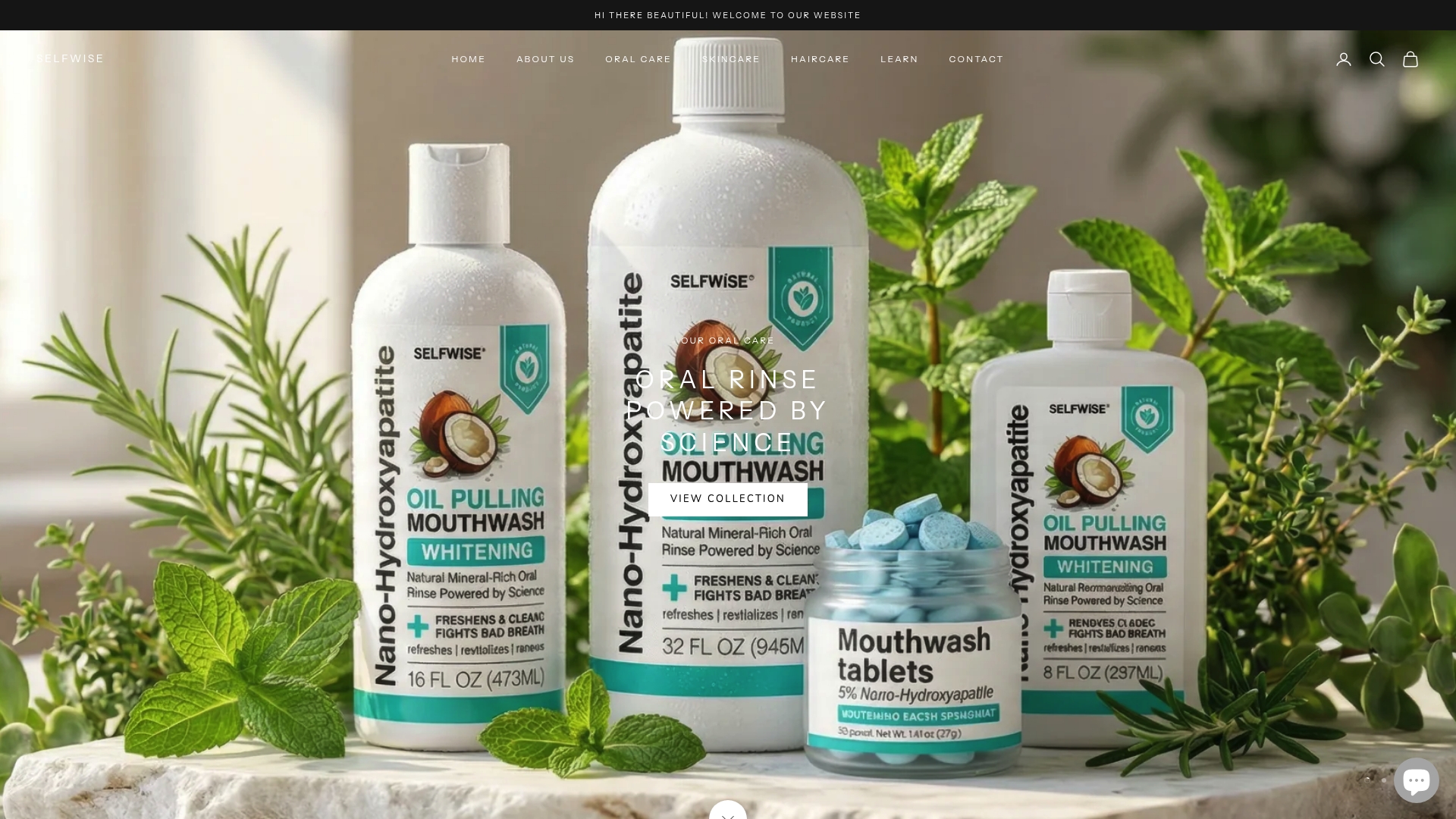
Our nano hydroxyapatite oil pulling mouthwash combines the plaque-reducing power of oil pulling with nano-hydroxyapatite in a format that’s faster and easier than traditional swishing. For daily mineral support, our nano-hydroxyapatite mouthwash tablets dissolve in water to create a remineralizing rinse without harsh additives. Explore the full fresh breath oral health collection to find products matched to every step of the natural gum care routine covered here. Simple formulas, evidence-informed ingredients, and no ingredients you need a chemistry degree to understand.
Frequently asked questions
Can gums actually regenerate naturally?
Gums can recover from mild inflammation and become firmer and less swollen, but tissue lost to recession generally requires professional treatment to restore.
Is oil pulling safe for daily use?
Oil pulling with coconut or sesame oil is generally safe when done correctly and not swallowed, though evidence quality remains low due to short study durations and high risk of bias in existing research.
How does xylitol help gum health?
Xylitol reduces mutans streptococci and plaque, supporting gum health by shifting the bacterial balance in your mouth and stimulating protective saliva flow as an adjunct to brushing and professional care.
Does nano-hydroxyapatite regenerate gums?
Nano-hydroxyapatite is well-supported for enamel remineralization but hasn’t shown direct gum regeneration in consumer products; its application in gum tissue is primarily through surgical bone grafts.
When should you see a dentist for gum issues?
See a dentist if your gums bleed consistently, show visible recession that’s worsening, or don’t respond to natural care after four to six weeks of consistent effort.