Green Tea Oral Rinse: Benefits, Science, and How to Use It
What is green tea oral rinse?
Green tea oral rinse is a mouthwash made by brewing or extracting the leaves of Camellia sinensis, the same plant behind every cup of traditional green tea. Unlike alcohol-based commercial rinses loaded with synthetic preservatives, this is a plant-derived rinse whose active power comes from polyphenolic catechins, particularly epigallocatechin gallate (EGCG). These catechins give the rinse its antibacterial, antioxidant, and anti-inflammatory properties, all of which translate directly to measurable oral health improvements.
The rinse works as a natural antimicrobial agent against the bacteria responsible for plaque, gum disease, and bad breath. Clinical research has validated it as a genuine alternative to chlorhexidine, the gold-standard chemical mouthwash, without the side effects that make long-term chlorhexidine use problematic.
Key traits of green tea oral rinse at a glance:
- Source: Leaves of Camellia sinensis (green, unfermented tea)
- Primary actives: Catechins, especially EGCG, epicatechin gallate (ECG), and epigallocatechin (EGC)
- Mechanism: Damages bacterial cell membranes, suppresses pro-inflammatory cytokines (IL-6, IL-8, TNF-α)
- Target conditions: Dental plaque, gingivitis, halitosis, tongue coating
- Compared to chlorhexidine: Comparable efficacy, fewer side effects, suitable for longer use
Table of Contents
- Key oral health benefits you can expect from green tea rinse
- What the clinical science actually says about its effectiveness
- How to use green tea rinse for the best results
- How Selfwisebrand’s natural oral care philosophy aligns with green tea rinse
- Selfwisebrand natural mouthwash: skip the chemicals, keep the results
- FAQ
- Key Takeaways
Key oral health benefits you can expect from green tea rinse
Green tea rinse delivers across several fronts simultaneously, which is what separates it from single-purpose rinses.
Plaque and gingival inflammation reduction. A multi-arm, double-blinded randomized controlled trial with 60 patients found that 0.5% green tea mouthwash produced statistically significant reductions in plaque index, gingival index, and sulcular bleeding index over 21 days, performing comparably to 0.2% chlorhexidine. That is not a minor finding. It means a brewed plant extract can match the pharmaceutical benchmark for plaque control.
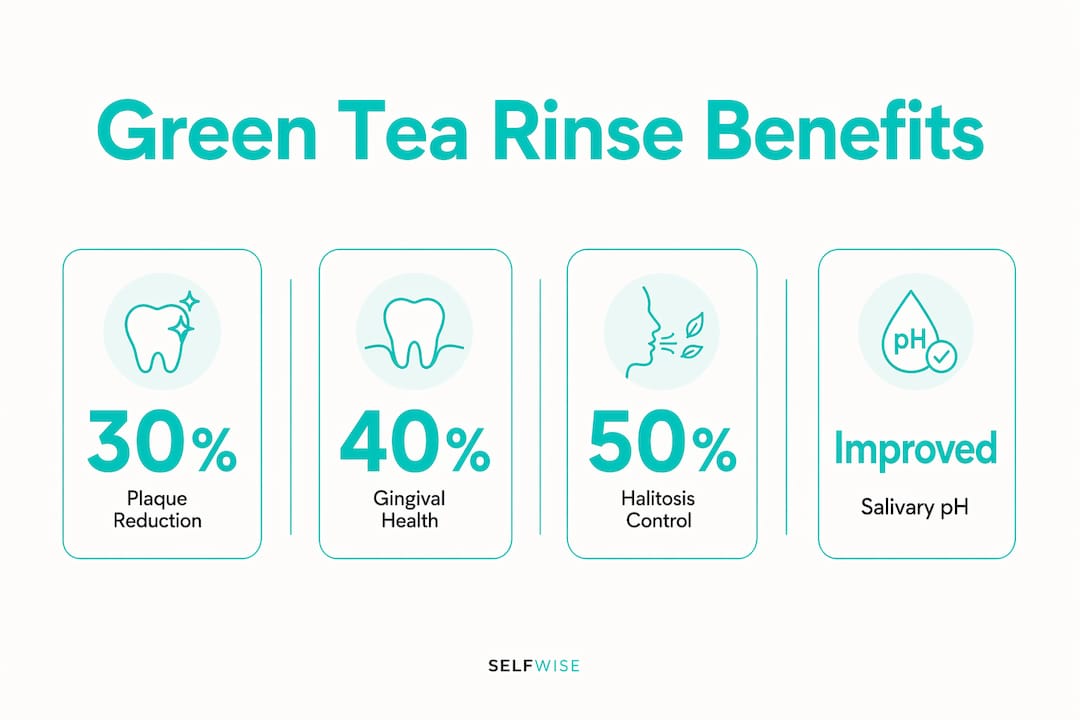
Halitosis control. Oral bad breath is largely driven by volatile sulfur compounds (VSCs) produced by bacteria metabolizing proteins on the tongue and between teeth. A double-blind RCT showed that 5% C. sinensis mouth rinse reduced oral malodor, tongue coating, and plaque scores as effectively as 0.2% chlorhexidine after 21 days. Green tea’s antimicrobial action cuts the bacterial load that generates those sulfur compounds in the first place.
Gum health and anti-inflammatory effects. EGCG suppresses the inflammatory signaling pathways that drive gum disease. Specifically, it down-regulates cyclooxygenase-2 and inhibits IL-1β-dependent pro-inflammatory signal transduction, which is the same pathway targeted by many prescription anti-inflammatory drugs, just without the systemic exposure.
Salivary pH improvement. An RCT cited in a systematic review of Camellia sinensis mouthwashes found green tea rinse more effective at raising salivary pH than both chlorhexidine and sodium fluoride mouthwashes. A higher salivary pH means a less acidic oral environment, which directly reduces the risk of enamel demineralization.
Better patient compliance. Studies note improved adherence to green tea rinse compared to chlorhexidine, with no oral mucosa scalding and no altered taste sensation reported. For anyone who has tried to stick with chlorhexidine long-term, that matters.
| Benefit | Evidence | vs. Chlorhexidine |
|---|---|---|
| Plaque reduction | Statistically significant (p < 0.01) over 21 days | Comparable |
| Gingival inflammation | Significant reduction in gingival index | Comparable |
| Sulcular bleeding | Significant reduction in bleeding index | Comparable |
| Halitosis control | Significant VSC reduction in double-blind RCT | Comparable |
| Tongue coating | Reduced comparably in 21-day RCT | Comparable |
| Salivary pH | Increased more than chlorhexidine in RCT | Superior |
| Side effects | No staining, no taste alteration, no mucosal scalding | Fewer |
What the clinical science actually says about its effectiveness
The research base for green tea as an oral rinse is more solid than most people realize. A systematic review covering 69 relevant studies, including 41 randomized controlled trials, concluded that Camellia sinensis mouthwashes demonstrate antimicrobial, anti-plaque, and anti-inflammatory activity with a notably favorable safety profile.
How it kills bacteria. EGCG damages bacterial cell membranes directly and inhibits gyrase enzyme activity, disrupting bacterial DNA replication. Green tea rinse targets Streptococcus mutans, the primary driver of dental caries, and Porphyromonas gingivalis, the key pathogen in periodontal disease. Research shows that brewed green tea and green tea-extract rinses similarly reduce both pathogens in saliva, meaning you do not need a concentrated extract to get results.
Statistic callout: A multi-arm, double-blinded randomized controlled trial with 60 gingivitis patients found that 0.5% green tea mouthwash produced high statistically significant reductions in plaque index and gingival index (p < 0.01) over 21 days, with efficacy comparable to 0.2% chlorhexidine gluconate.
The halitosis data is equally compelling. Both included studies in a systematic review on Camellia sinensis and halitosis found statistically significant early effects of green tea use compared to baseline, with one study confirming long-term efficacy of green tea mouthwash. The mechanism is straightforward: fewer bacteria means fewer VSCs.
One detail researchers consistently flag is the safety advantage. Chlorhexidine causes tooth staining, alters taste, and can scald oral mucosa with prolonged use. Green tea rinse produces none of these effects, which is why dental researchers view it as the better option for anyone who needs ongoing chemical plaque control rather than a short-term course.
How to use green tea rinse for the best results
Getting the preparation right matters more than most guides admit. The brewing temperature directly affects catechin content and, by extension, how well the rinse performs against gingival inflammation.
Making a green tea mouth rinse at home:
- Steep one green tea bag (or 1 teaspoon of loose-leaf green tea) in 100 mL of warm water at approximately 40°C (104°F) for 5 minutes
- Do not use boiling water. High heat degrades catechins, and the research confirms that the warm-water method produces significantly better gingival inflammation outcomes than the hot-then-ice method
- Allow the rinse to cool to a comfortable temperature before use
- Use it plain, without adding sugar, honey, or other additives that would feed oral bacteria
Pro Tip: Brew at warm, not boiling, temperature. A randomized controlled trial found that warm-water green tea mouthwash produced significantly lower gingival bleeding scores compared to hot-water-then-ice preparation. The difference is in catechin preservation, not just comfort.
Frequency and duration. Clinical trial protocols showing significant plaque and gingivitis reduction used twice-daily rinsing for 2–3 weeks as an adjunct to mechanical oral hygiene. Twice daily, after brushing, is the evidence-based starting point.
Timing. Use the rinse 30 minutes after brushing, not immediately before or during. This gives fluoride (if you use it) time to act on enamel before the rinse changes the oral environment.
What green tea rinse does not replace. Green tea rinse is an adjunct to brushing and flossing, not a substitute. Clinical authors are consistent on this point: mechanical plaque removal remains the foundation, and the rinse amplifies results rather than doing the job alone.
Possible side effects and contraindications:
- Green tea contains caffeine. People sensitive to caffeine should be aware that swallowing the rinse introduces a small amount systemically
- Those with known allergies to Camellia sinensis should avoid it
- Pregnant individuals should consult a healthcare provider before adding any new oral care product, including herbal rinses
- Green tea is generally non-irritating and does not cause mucosal scalding, unlike chlorhexidine
For those who prefer a ready-made option, look for alcohol-free natural rinses that list green tea extract or Camellia sinensis among their active ingredients.
How Selfwisebrand’s natural oral care philosophy aligns with green tea rinse
The principles behind green tea oral rinse, natural antibacterial action, antioxidant protection, anti-inflammatory support, and zero harsh chemicals, are exactly what Selfwisebrand builds into its product formulas.
Selfwisebrand’s natural mouthwash collection applies the same logic: skip the alcohol, skip the synthetic preservatives, and use ingredients with a real mechanism of action. Nano hydroxyapatite supports enamel remineralization by mimicking the mineral structure of tooth enamel itself. Xylitol disrupts S. mutans metabolism without killing it through brute chemical force, which reduces the risk of resistance. Neither ingredient causes staining or taste distortion, the same advantages that make green tea rinse a preferred long-term option over chlorhexidine.
The natural oral care guide on the Selfwisebrand site covers how these ingredients work together as a daily routine, which is the same integrated approach the clinical literature recommends for green tea rinse: pair it with mechanical hygiene, use it consistently, and choose ingredients that support rather than disrupt the oral microbiome.
Selfwisebrand natural mouthwash: skip the chemicals, keep the results
If the green tea research convinced you that natural antibacterial ingredients can genuinely compete with synthetic ones, Selfwisebrand’s mouthwash line takes that logic further with formulas built for daily use, much like a Facial Care Set for Glowing Skin, Lashes & Lips designed for holistic beauty and wellness.
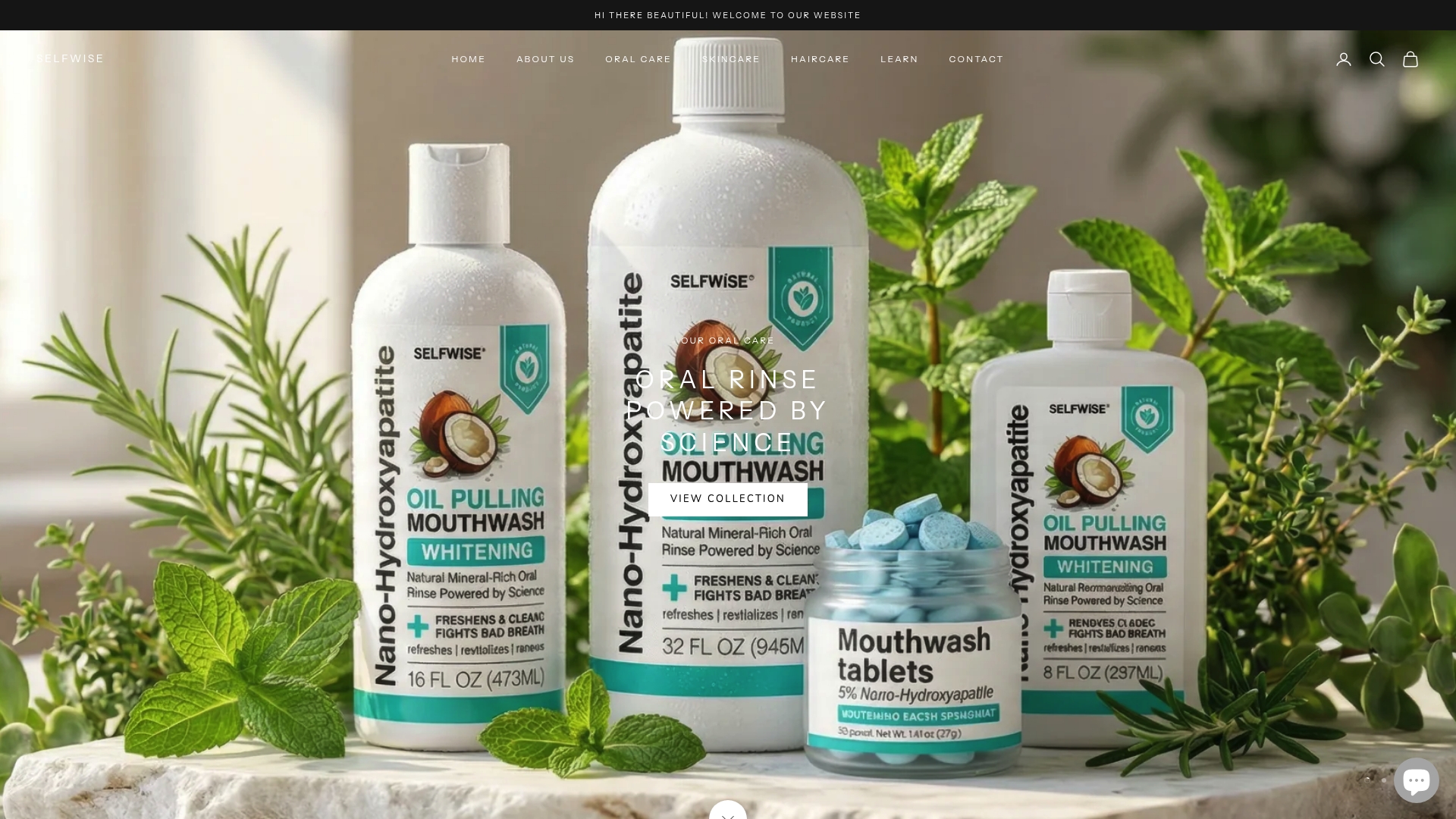
The Xylitol Mouthwash with Nano Hydroxyapatite combines two of the most researched natural oral care actives in a single alcohol-free rinse. Xylitol starves cavity-causing bacteria of the sugars they need to thrive. Nano hydroxyapatite fills microscopic enamel lesions and reduces sensitivity, something no chlorhexidine rinse does. For people who want the antibacterial and remineralizing benefits in one step, the Nano Hydroxyapatite Oil Pulling Mouthwash adds the mechanical oil-pulling action that has its own body of clinical support for plaque reduction.
No staining. No altered taste. No long-term side effects. Browse the full natural mouthwash range and find the formula that fits your routine.
FAQ
Is rinsing with green tea actually good for your mouth?
Yes. Clinical trials show that green tea rinse significantly reduces plaque, gingival inflammation, and oral malodor, with efficacy comparable to 0.2% chlorhexidine and a better side-effect profile for long-term use.
How often should you use a green tea rinse?
Twice daily, after brushing, for at least 2–3 weeks is the protocol used in clinical trials that produced significant plaque and gingivitis reductions. Use it as an adjunct to brushing and flossing, not a replacement.
Can green tea rinse help with receding gums?
Green tea’s anti-inflammatory catechins reduce gingival inflammation and bleeding, which are early-stage contributors to gum recession. Current evidence supports its use for gingivitis management, though advanced gum recession requires professional periodontal treatment.
Does green tea flush out oral bacteria?
Yes. EGCG and other catechins damage bacterial cell membranes and inhibit bacterial enzyme activity, reducing counts of Streptococcus mutans and Porphyromonas gingivalis in saliva. This is the same mechanism that reduces plaque and halitosis.
What is the difference between homemade and commercial green tea rinse?
Homemade rinse brewed at 40°C preserves catechin content well and matches clinical trial preparations. Commercial green tea extract rinses offer standardized catechin concentrations and longer shelf life. Both forms show similar antibacterial effects against key oral pathogens in research.
Key Takeaways
Green tea oral rinse, made from Camellia sinensis catechins, reduces plaque, gingival inflammation, and halitosis comparably to 0.2% chlorhexidine, with fewer side effects and better long-term tolerability.
| Point | Details |
|---|---|
| Clinical efficacy | A 60-patient double-blinded RCT showed statistically significant plaque and gingival index reductions (p < 0.01) over 21 days. |
| Brewing temperature matters | Warm-water preparation at 40°C preserves catechins better and produces significantly lower gingival bleeding than hot-then-ice methods. |
| Adjunct, not replacement | Green tea rinse works best alongside brushing and flossing; it amplifies mechanical plaque control rather than replacing it. |
| Safety advantage | No tooth staining, no taste alteration, and no mucosal scalding, unlike chlorhexidine, making it suitable for ongoing daily use. |
| Selfwisebrand alignment | Selfwisebrand’s xylitol and nano hydroxyapatite mouthwashes apply the same chemical-free, mechanism-driven approach as green tea rinse. |