
What Is Castor Oil Oral Rinse? Benefits and Safe Use
Castor oil oral rinse is the practice of swishing a small amount of edible castor oil in the mouth to support oral health, using the oil’s natural antimicrobial and anti-inflammatory properties. It is a home remedy, not a regulated dental product, meaning no standardized formula or FDA-approved protocol exists for this use. The active compound driving its potential is ricinoleic acid, a fatty acid that gives castor oil its thick texture and its biological activity. If you follow natural oral care and want to know whether this practice is worth trying, this guide covers the evidence, the real risks, and how it compares to better-studied options.
What is castor oil oral rinse and how does it work?
A castor oil oral rinse involves briefly swishing food-grade castor oil around the mouth, then spitting it out. The practice falls under the broader category of oil pulling, a traditional Ayurvedic technique used for centuries across South Asia. What separates castor oil from the more commonly used coconut or sesame oils is its composition. Castor oil contains ricinoleic acid with antimicrobial effects, a compound that disrupts bacterial cell membranes and reduces inflammation in soft tissue. This is the biological basis for its use in oral care.
The mechanism is similar to other oil pulling practices. The oil coats oral surfaces, potentially binding bacteria and debris before being expelled. Ricinoleic acid adds a layer of antimicrobial activity that neutral oils like sunflower oil do not provide. That said, the practice remains a folk remedy. No pharmaceutical-grade castor oil oral rinse product exists on the market, and the technique is self-administered at home using raw oil.

What does the science say about castor oil for oral health?
The evidence for castor oil oral health benefits is real but limited. Lab studies confirm that ricinoleic acid disrupts common oral pathogens, including Streptococcus mutans and Candida albicans. However, clinical evidence for gingivitis or plaque reduction from castor oil rinsing specifically is mixed and lacks the large-scale, controlled trials needed for firm conclusions.
The American Dental Association does not recommend oil pulling as a proven oral health practice, and castor oil rinse falls under the same umbrella. This does not mean the practice is useless. It means the evidence base is not strong enough to replace or rival conventional dental hygiene. Researchers have tested 10% castor oil solutions for dental appliance cleansing with measurable antimicrobial results, which shows the oil has real applications in dentistry, just not yet as a mainstream rinse.
Safety is the more pressing concern for most users. Swallowing castor oil during rinsing triggers its well-documented laxative effect, causing nausea, cramping, and diarrhea even in small amounts. This is not a minor caveat. It is the primary reason castor oil is a riskier choice for oral rinsing than other oils.
Key safety considerations before trying a castor oil oral rinse:
- Castor oil is FDA-approved only as a stimulant laxative, not for oral rinse use
- Even small amounts swallowed during swishing can cause gastrointestinal distress
- People with sensitive digestion, IBS, or pregnancy should avoid it entirely
- Children should never use castor oil as an oral rinse
- Stop use immediately if you experience nausea or stomach discomfort
Pro Tip: Always use food-grade or cold-pressed castor oil for any oral application. Industrial or cosmetic-grade castor oil contains additives that are not safe for mouth contact.
How does castor oil compare to coconut and sesame oil for oil pulling?
This is where castor oil loses ground to its more popular alternatives. The high viscosity of castor oil makes it genuinely difficult to swish for any meaningful duration. It coats the mouth heavily, increases the urge to swallow, and leaves a thick residue that many users find unpleasant. Coconut oil and sesame oil are both lighter, easier to manage, and have a stronger clinical track record for oil pulling specifically.
For a direct comparison, the table below covers the properties that matter most for oral use:
| Oil | Viscosity | Key active compound | Antimicrobial activity | Laxative risk | Ease of use |
|---|---|---|---|---|---|
| Castor oil | Very high | Ricinoleic acid | Strong (lab data) | Yes, significant | Difficult |
| Coconut oil | Medium | Lauric acid | Strong (lab + clinical data) | None | Easy |
| Sesame oil | Low to medium | Sesamin, sesamol | Moderate | None | Easy |
| Sunflower oil | Low | Linoleic acid | Mild | None | Very easy |
Coconut oil, with its lauric acid content, has the most clinical support for oil pulling and is the standard recommendation across oil pulling guides for natural oral care. Sesame oil is the traditional Ayurvedic choice and has a long history of safe use. Castor oil’s antimicrobial profile is competitive on paper, but its practical drawbacks are significant.
The laxative risk is unique to castor oil and has no equivalent in coconut or sesame oil use. This single factor makes castor oil a secondary option for most people, not a first choice. If you are exploring oil pulling for oral health, starting with coconut oil gives you better usability and a stronger evidence base.
How to use castor oil safely as an oral rinse
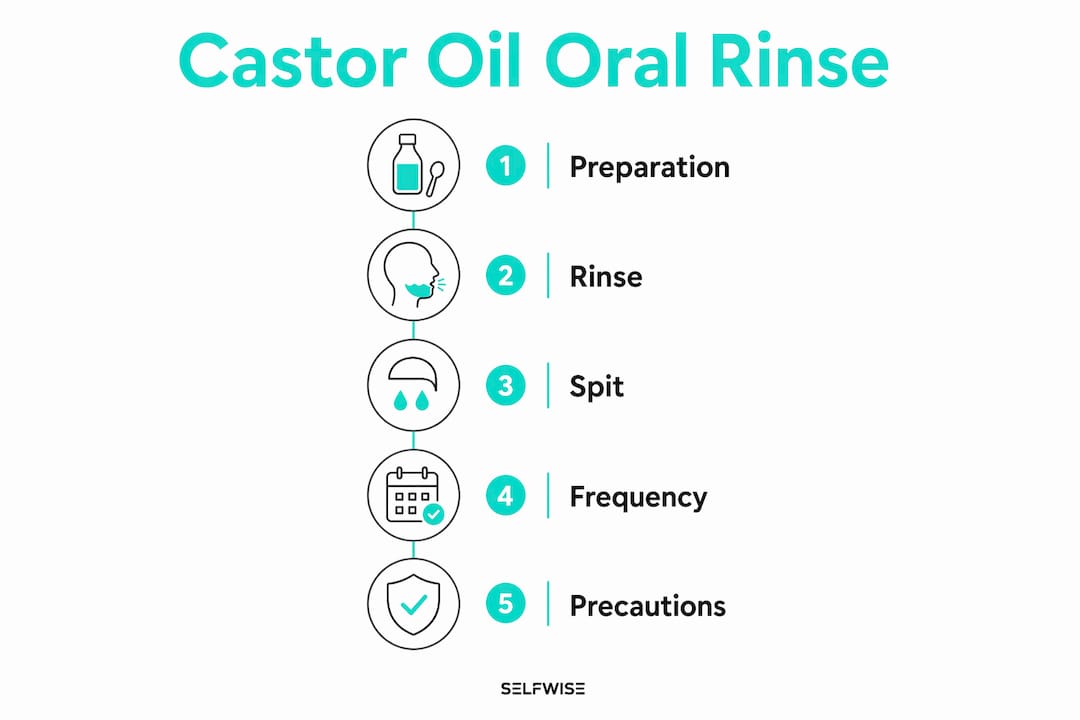
If you decide to try a castor oil oral rinse, the protocol matters. Sloppy technique increases the risk of swallowing and reduces any potential benefit. Follow these steps to minimize risk and get the most from the practice:
- Choose the right oil. Use only food-grade, cold-pressed, hexane-free castor oil. Check the label for purity before use.
- Measure carefully. Use no more than 1 teaspoon. Larger amounts increase the chance of accidental ingestion and make swishing harder.
- Swish for 2 to 5 minutes maximum. The recommended swishing time is short by design. Longer sessions increase fatigue and the risk of swallowing.
- Spit into the trash, not the sink. Castor oil is thick and will clog drains over time. Spitting into a tissue or trash bin is the cleaner option.
- Rinse your mouth with warm water. Follow with a full water rinse to remove oil residue from teeth and gums.
- Brush as normal. Continue your regular brushing and flossing routine. The rinse is a supplement, not a replacement.
For gum irritation specifically, a topical approach works better than swishing. Applying castor oil to gums with a clean cotton swab delivers the ricinoleic acid directly to inflamed tissue without the swallowing risk. This is a practical option for soothing mild gum discomfort between dental visits.
Pro Tip: Limit castor oil oral rinsing to two or three times per week at most. Daily use is unnecessary and increases cumulative ingestion risk over time.
What are the real benefits and limitations of castor oil oral rinse?
The honest picture of castor oil oral health benefits is a mix of genuine potential and real constraints. Understanding both helps you set realistic expectations.
Potential benefits supported by available evidence:
- Antimicrobial activity. Ricinoleic acid disrupts bacterial and fungal growth in lab settings, which supports its use as a supplemental oral rinse.
- Gum soothing. Topical castor oil on gum tissue can reduce mild inflammation and moisturize dry or irritated gum surfaces.
- Accessible and affordable. Food-grade castor oil is widely available and inexpensive compared to specialty oral care products.
Limitations that matter:
- No clinical trials confirm that castor oil rinsing reduces plaque, gingivitis, or cavities in humans at a statistically meaningful level.
- The ADA’s position on oil pulling applies here. It is not a substitute for fluoride toothpaste, flossing, or professional cleanings.
- Castor oil rinse should supplement, not replace, conventional dental care. This is the expert consensus.
- The viscosity and laxative risk make it less practical than coconut or sesame oil for regular use.
The most realistic role for a castor oil oral rinse is as an occasional addition to an already solid oral hygiene routine. It is not a treatment for gum disease, tooth decay, or infection. If you are building a natural oral care routine, starting with proven tools like nano hydroxyapatite, xylitol, and regular oil pulling with coconut oil gives you a stronger foundation than castor oil alone.
Key takeaways
Castor oil oral rinse offers genuine antimicrobial properties through ricinoleic acid, but its high viscosity, laxative risk, and limited clinical evidence make it a supplemental option rather than a core oral care practice.
| Point | Details |
|---|---|
| Definition | Castor oil oral rinse is a home remedy involving brief oil swishing, not an FDA-approved dental product. |
| Active compound | Ricinoleic acid provides antimicrobial and anti-inflammatory effects, but clinical proof for oral use is limited. |
| Safety risk | Swallowing even small amounts can trigger laxative effects including nausea and cramping. |
| Best use case | Topical gum application or short swishing sessions supplement, not replace, brushing and flossing. |
| Better alternatives | Coconut and sesame oils offer easier use, no laxative risk, and stronger clinical support for oil pulling. |
Why I think castor oil rinse deserves a measured look, not hype
I have followed the natural oral care space closely for years, and castor oil oral rinse sits in an interesting position. The antimicrobial chemistry is real. Ricinoleic acid is not a marketing claim. It is a well-studied fatty acid with documented effects on bacterial membranes. That part of the story is legitimate.
What concerns me is the way this practice gets promoted without honest discussion of the viscosity problem and the laxative risk. Most people who try castor oil swishing for the first time are surprised by how thick it is. It is not like coconut oil, which melts quickly and moves easily. Castor oil sits in your mouth like a paste, and the urge to swallow increases with every passing minute. That is a real problem when the substance you are trying not to swallow is a stimulant laxative.
My honest position is this: if you want to experiment with castor oil for oral care, the topical gum application is the smarter route. A cotton swab, a small amount of food-grade oil, and direct contact with irritated gum tissue gives you the anti-inflammatory benefit without the swallowing risk. For oil pulling as a regular practice, coconut oil is the better tool. It has the clinical data, the usability, and none of the gastrointestinal risk.
Castor oil oral rinse is not dangerous if you use it correctly and sparingly. But it is not the most practical or best-supported option in the natural oral care toolkit. Build your routine on proven ingredients first, then add castor oil as an occasional experiment if you are curious.
— Viktor
Natural oral care products worth adding to your routine
If castor oil oral rinse has you thinking about upgrading your natural oral care routine, Selfwisebrand has products built on ingredients with stronger clinical backing.

The nano hydroxyapatite oil pulling mouthwash from Selfwisebrand combines the oil pulling concept with nano hydroxyapatite for enamel support, giving you the traditional benefits of oil rinsing plus remineralization in one product. For those who prefer a tablet format, the nano hydroxyapatite mouthwash tablets offer a fluoride-free alternative that travels well and works without the viscosity challenges of raw oil. Browse the full natural mouthwash collection to find options that fit your routine. Simple ingredients, real results.
FAQ
What is a castor oil oral rinse exactly?
A castor oil oral rinse is a home practice where you swish a small amount of food-grade castor oil in your mouth for two to five minutes, then spit it out. It is not a standardized dental product and has no FDA approval for oral use.
Is castor oil safe for rinsing your mouth?
Castor oil is generally safe for brief oral rinsing if you spit it out completely and use food-grade oil. The main risk is swallowing it, which can cause nausea, cramping, and diarrhea due to its stimulant laxative properties.
What are the benefits of castor oil rinse for oral health?
The primary benefit comes from ricinoleic acid, which has antimicrobial and anti-inflammatory properties. It may soothe mild gum irritation and provide modest antibacterial support, though clinical evidence for these effects in humans remains limited.
How does castor oil compare to coconut oil for oil pulling?
Coconut oil is easier to swish, has no laxative risk, and has more clinical support for oil pulling than castor oil. Castor oil has stronger lab-based antimicrobial data but is harder to use and carries a real ingestion risk.
Can castor oil replace brushing and flossing?
No. Castor oil oral rinse is a supplemental practice only. Experts and dental organizations agree it cannot replace fluoride or nano hydroxyapatite toothpaste, flossing, or professional dental care.