Synthetic Dyes in Oral Products: What You Need to Know
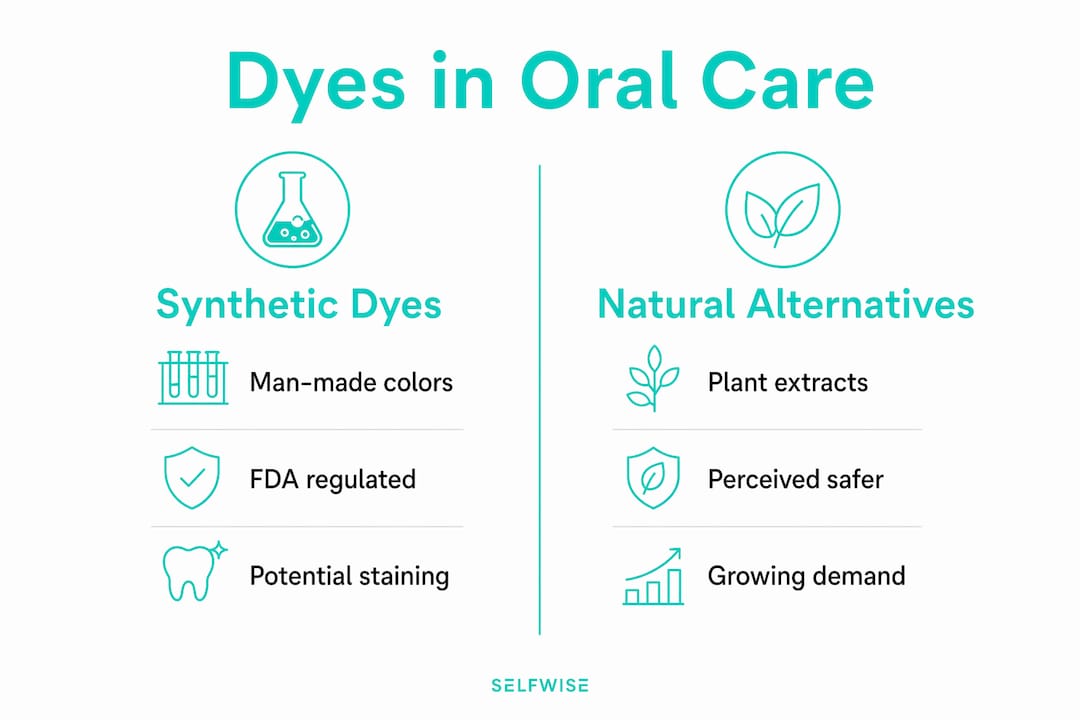
Synthetic dyes in oral care products are man-made color additives that give mouthwashes, toothpastes, and whitening rinses their vivid colors. The FDA classifies these substances as color additives and requires them to be permanently or provisionally listed before any manufacturer can legally use them. Common examples include FD&C Blue No. 1 (Brilliant Blue), FD&C Red No. 40, and Tartrazine (Yellow No. 5). These dyes serve no therapeutic purpose. They exist purely to make products look appealing on the shelf and in your mouth. Understanding what they are, how they are regulated, and what they do to your teeth and dental work is the first step toward making a smarter choice about your oral care routine.
What are synthetic dyes in oral care products?
Synthetic dyes, also called synthetic food colorants or color additives, are chemically manufactured pigments added to consumer products for visual effect. In oral care, they appear in mouthwashes, toothpastes, whitening rinses, and children’s fluoride gels. The FDA governs their use through a color additive inventory system that assigns each dye a listing status: permanent, provisional, or delisted. Delisted additives are prohibited from use in any product sold in the United States.
The most common synthetic dyes found in oral products include:
- FD&C Blue No. 1 (Brilliant Blue): Used in mouthwashes and gel toothpastes to create blue or green tones.
- FD&C Red No. 40 (Allura Red): Appears in flavored children’s toothpastes and some adult rinses.
- FD&C Yellow No. 5 (Tartrazine): Used in whitening rinses and multi-flavor toothpaste lines.
- FD&C Green No. 3: Less common but present in some specialty rinses.
The FDA specifies permitted limits for each dye in specific product categories, including dentifrices and mouthwashes. That means a manufacturer cannot simply add any amount of Blue No. 1 to a rinse and call it compliant. The quantity and product type both matter.
Pro Tip: Read the ingredient list on any oral care product, not just the front label. Color additives appear by their FDA-assigned names, such as “FD&C Blue No. 1” or “CI 42090.” If you see a number after a color name, that is a synthetic dye.
How do synthetic dyes affect your teeth and dental work?
Synthetic dyes primarily affect oral aesthetics by staining dental materials rather than altering tooth enamel chemistry. This distinction matters because the risk is not the same for everyone. People with natural teeth face different concerns than those with resin composite fillings, veneers, or crowns.
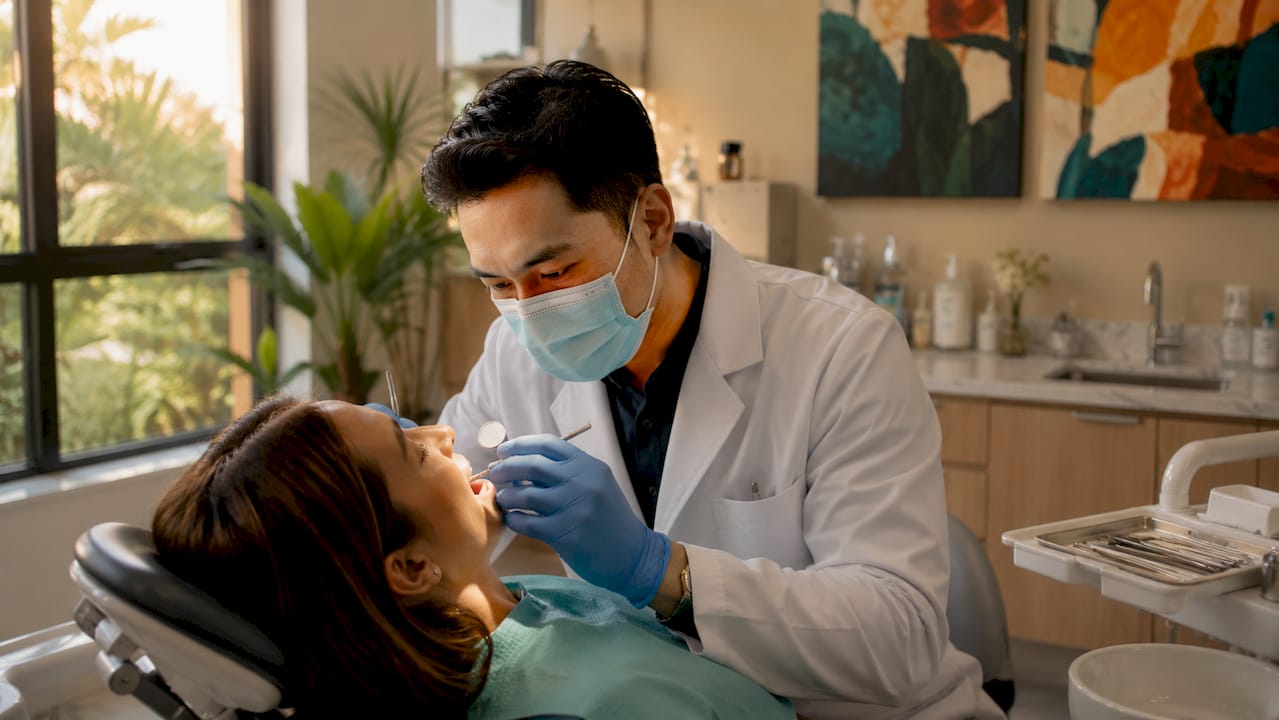
A 2026 lab study found that Brilliant Blue caused clinically unacceptable staining on most dental resin composites after just seven days of exposure. The staining exceeded the accepted threshold of ΔE00=1.8 across nearly all tested composite materials. That finding means regular use of a Blue No. 1 mouthwash can visibly discolor your dental restorations within a single week.
| Dye | Staining Risk on Composites | Reversibility with Whitening Mouthwash |
|---|---|---|
| FD&C Blue No. 1 (Brilliant Blue) | High (clinically unacceptable) | Partial only |
| FD&C Red No. 40 | Moderate | Partial |
| FD&C Yellow No. 5 | Low to moderate | Partial |
Whitening mouthwashes do offer some recovery. Research shows a statistically significant improvement in whiteness index after using whitening rinses, but full return to baseline color is generally not achieved. That means once staining sets in on a composite, you are unlikely to fully undo it with an over-the-counter product.
Pro Tip: If you have resin composite fillings or veneers, check whether your mouthwash contains Brilliant Blue (FD&C Blue No. 1). Switching to a dye-free rinse is the simplest way to protect your restorations from discoloration.
What health and sensitivity concerns come with dyes in oral care?
Synthetic dyes are not inert for everyone. Certain individuals, particularly children and people with known sensitivities, can experience real reactions. Potential health issues linked to synthetic dyes in oral and medicinal products include allergic reactions, asthma flare-ups, headaches, and behavioral changes in children. These are not theoretical risks. They are documented concerns in the medical literature.
The transparency problem compounds the risk. Dye quantities in commercial oral products are often proprietary, meaning manufacturers are not required to disclose exact concentrations on the label. You can see that a product contains Red No. 40, but you cannot easily determine how much. That gap makes it difficult to assess your actual exposure, especially for parents managing a child’s daily brushing routine.
Practical steps to reduce your risk:
- Avoid products with multiple synthetic dyes. The more dyes listed, the higher the cumulative exposure.
- Choose children’s oral care products labeled dye-free. Children’s smaller body weight means proportionally higher exposure per dose.
- Track reactions. If you or your child experiences mouth irritation, redness, or unusual symptoms after using a new oral care product, check the ingredient list for color additives first.
- Consult a dentist or allergist if you suspect a dye sensitivity. Patch testing can confirm specific triggers.
Consumers often underestimate their exposure because limited product labeling transparency makes full assessment difficult. Reading labels carefully is the most direct defense you have.
How do synthetic dyes compare with natural alternatives?
Natural colorants used in oral care products come from plant extracts, minerals, and food-derived pigments. Common examples include activated charcoal, turmeric, spirulina, and beet extract. These differ from synthetic dyes in their chemical structure, stability, and regulatory pathway. Natural colorants are not automatically exempt from FDA oversight, but they are generally subject to different review processes than synthetic FD&C dyes.
Natural alternatives differ chemically and may carry a safer perception among health-conscious consumers, but they require caution on efficacy claims. A turmeric-tinted toothpaste does not whiten teeth. A charcoal-colored rinse does not guarantee less staining than a Blue No. 1 product. Natural colorants also vary in stability, meaning they can fade or change color over a product’s shelf life in ways that synthetic dyes do not.
The consumer trend toward dye-free and naturally colored oral care products is real and growing. Brands are responding by reformulating with plant-based pigments or removing color additives entirely. That shift reflects a broader preference for ingredient transparency, not necessarily a proven safety advantage in every case. If you are swapping conventional dental products for natural alternatives, understand what you are getting and what you are not. A product can be natural and still stain composites. A product can be synthetic-dye-free and still contain other ingredients worth scrutinizing.
How can you identify and avoid synthetic dyes on product labels?
Checking the ingredient list is the most reliable method for identifying synthetic dyes in oral care products. Specific FDA-listed color additive names appear on ingredient labels by their official designations. Knowing what to look for removes the guesswork.
Follow these steps when evaluating an oral care product:
- Flip to the ingredient list. Front-of-pack claims like “dye-free” or “natural color” are not regulated in the same way as ingredient disclosures. The back label is the authoritative source.
- Scan for FD&C or D&C designations. Any ingredient beginning with “FD&C” or “D&C” followed by a color name and number is a synthetic dye. Examples: FD&C Blue No. 1, D&C Red No. 33.
- Look for CI numbers. Some products use international Color Index numbers (e.g., CI 42090 for Brilliant Blue). These are the same synthetic dyes under a different naming system.
- Treat “dye-free” claims with skepticism. A product labeled “dye-free” may still contain color additives under a different name. Verification against the full ingredient list is the only reliable check.
- Prioritize products with short, recognizable ingredient lists. The fewer the ingredients, the easier the verification. Products built around nano hydroxyapatite, xylitol, or coconut oil tend to have simpler formulations with no need for synthetic colorants.
For a deeper look at which oral care ingredients to avoid beyond synthetic dyes, the oral care ingredients guide from Selfwisebrand covers the full picture.
Key Takeaways
Synthetic dyes in oral care products are FDA-regulated color additives with no therapeutic benefit, and their staining, sensitivity, and transparency risks make ingredient-label verification the most important habit a health-conscious consumer can build.
| Point | Details |
|---|---|
| Synthetic dyes serve no oral health function | They exist for visual appeal only; FDA listing status determines legal use. |
| Brilliant Blue poses the highest staining risk | A 2026 study found it caused clinically unacceptable staining on most dental composites within seven days. |
| Whitening mouthwashes offer only partial reversal | Staining from synthetic dyes on composites is not fully reversible with over-the-counter whitening rinses. |
| Sensitive individuals face real health risks | Allergic reactions, asthma, and behavioral effects are documented concerns, especially in children. |
| Label reading beats front-of-pack claims | FD&C names and CI numbers on ingredient lists are the only reliable way to confirm dye presence or absence. |
The ingredient transparency problem no one talks about enough
Most people assume that if a product is sold in a pharmacy, it has been fully vetted for safety at every concentration. That assumption is wrong. The FDA’s color additive listing system confirms that a dye is permitted for a specific use, but it does not require manufacturers to disclose exact quantities on the label. You know the dye is there. You do not know how much.
That gap bothers me more than the dyes themselves. A person with a known Tartrazine sensitivity cannot make a truly informed decision about a mouthwash that lists Yellow No. 5 without knowing the concentration. Parents managing children’s oral care routines face the same problem. The marketing on the front of the bottle often says nothing useful. The ingredient list tells you what is in the product but not how much of it.
The staining research reinforces this concern from a different angle. Brilliant Blue staining on resin composites is not a hypothetical. It is a documented, measurable outcome after one week of normal use. Most people with composite fillings have no idea their blue-tinted mouthwash is working against their dental work. The evidence on staining reversibility makes it clear that prevention is the only reliable strategy. Whitening rinses help, but they do not fully undo the damage.
My honest recommendation is this: if you have dental restorations, are managing a child’s oral care, or have any history of dye sensitivity, go dye-free. Not because synthetic dyes are universally dangerous, but because they offer you nothing in return for the risk. The color of your mouthwash has no bearing on how clean your mouth gets. Choosing products built around ingredients like nano hydroxyapatite and xylitol gives you real oral health benefits without the cosmetic trade-offs.
— Viktor
Dye-free oral care from Selfwisebrand
Selfwisebrand formulates every oral care product without synthetic dyes, because color additives have no place in a routine built around real results.
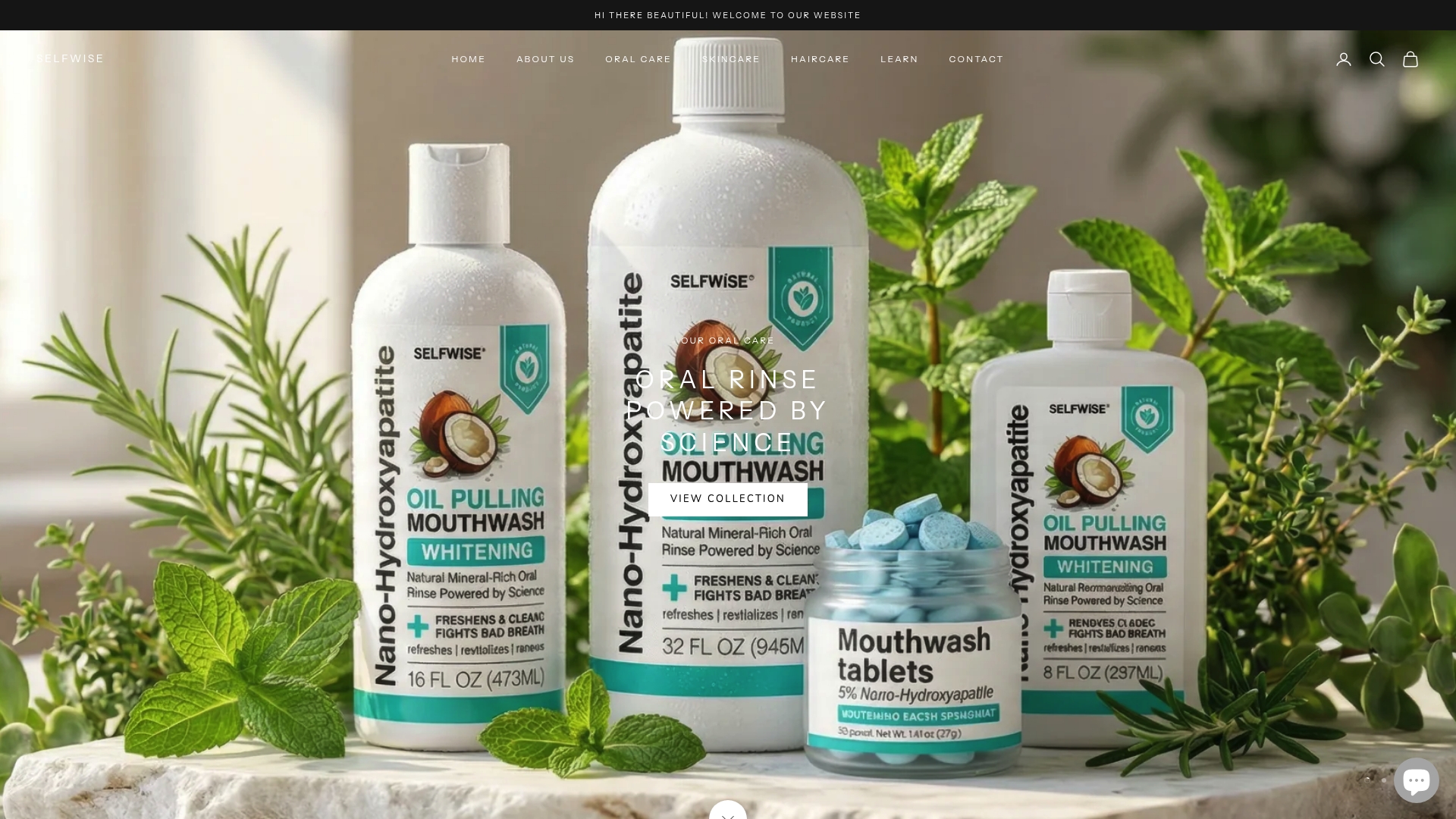
The nano hydroxyapatite mouthwash tablets and the oil pulling mouthwash are both free from FD&C dyes and formulated with ingredients that actively support enamel health. The full mouthwash collection covers natural rinse options for every routine, and the fluoride-free range extends that same clean-ingredient standard across toothpastes and supporting products. Simple ingredients. No synthetic colorants. No guessing what is in the bottle.
FAQ
What are synthetic dyes in oral care products?
Synthetic dyes in oral care products are man-made color additives, such as FD&C Blue No. 1 and Red No. 40, added to mouthwashes and toothpastes for visual appeal. They serve no therapeutic function and must be FDA-listed to be legally used.
Are synthetic dyes in mouthwash safe?
FDA-approved synthetic dyes are permitted within specified limits, but sensitive individuals, children, and those with dental restorations face documented risks including allergic reactions and composite staining. Choosing dye-free products eliminates these concerns entirely.
Can mouthwash dyes stain dental fillings?
Yes. A 2026 study found that Brilliant Blue (FD&C Blue No. 1) caused clinically unacceptable staining on most resin composite materials after seven days of exposure. Whitening mouthwashes can partially reverse the discoloration but cannot fully restore baseline color.
How do I know if my toothpaste or mouthwash contains synthetic dyes?
Check the ingredient list for any name beginning with “FD&C” or “D&C” followed by a color and number, or look for CI (Color Index) numbers. Front-of-pack “dye-free” claims are not always reliable without verifying the full ingredient list.
What are the best natural alternatives to synthetic dyes in oral care?
Natural oral care products use plant-based colorants or no colorants at all. Ingredients like nano hydroxyapatite and xylitol deliver real oral health benefits without any need for synthetic color additives. Always verify the full ingredient list regardless of natural labeling claims.