Endocrine Disruptors in Oral Care: What You Need to Know
Endocrine disruptors are chemicals that interfere with the hormone system by mimicking, blocking, or altering hormone production and signaling, and several are found in everyday oral care products. If you’ve been scrutinizing your toothpaste label lately, you’re asking the right questions. Compounds like triclosan, parabens, phthalates, and sodium fluoride appear in products millions of people use twice a day, every day. Understanding what endocrine disruptors in oral care actually are, which ingredients qualify, and what the science says about their effects on dental health gives you the knowledge to make genuinely informed choices.
What are endocrine disruptors in oral care products?
Endocrine-disrupting chemicals, commonly called EDCs, are substances that interfere with the body’s endocrine system. The endocrine system controls hormone production and release, regulating everything from metabolism and immunity to bone density and inflammation. EDCs mimic hormones, block receptors, or alter hormone transport and metabolism, effectively sending false signals to cells and tissues throughout the body.
Oral care products are a particularly significant exposure route because they contact the highly permeable mucous membranes of the mouth. Unlike skin, oral tissue absorbs chemicals rapidly and directly into the bloodstream, bypassing some of the filtration that digestion provides. This makes the concentration and frequency of exposure from toothpaste and mouthwash more relevant than many people assume.

Regulatory bodies and researchers have taken increasing interest in this area. France’s national food safety agency, ANSES, made headlines with a 2025 proposal to classify sodium fluoride as an endocrine disruptor under EU CLP regulation. That proposal alone signals a meaningful shift in how governments are beginning to treat ingredients that have been standard in oral care for decades.
Which oral care ingredients are known or suspected endocrine disruptors?
Several specific compounds found in toothpaste, mouthwash, and dental materials carry credible evidence of endocrine-disrupting activity. Knowing them by name is the first step toward reading labels with real understanding.
- Triclosan: Once a common antibacterial agent in toothpastes like Colgate Total, triclosan interferes with estrogen, androgen, and thyroid hormones. The FDA banned it from hand soaps in 2016, and its use in oral care has declined significantly, but it still appears in some products sold outside the United States.
- Parabens: Used as preservatives in toothpaste and mouthwash, parabens mimic estrogen and accumulate in the body with daily exposure. Methylparaben and propylparaben are the most common variants. They bind to estrogen receptors and can alter hormonal feedback loops even at low concentrations.
- Phthalates: These plasticizers appear in product fragrances and packaging materials. Phthalates are endocrine-disrupting plasticizers that may affect oral microbiome diversity, though their full impact on oral health remains an active area of research.
- Sodium fluoride: The most debated entry on this list. ANSES proposed classifying sodium fluoride as a Category 1 endocrine disruptor and reproductive toxicant under EU CLP regulation in 2025. This does not mean fluoride toothpaste is immediately dangerous, but it does mean the regulatory conversation has shifted.
- Sodium lauryl sulfate (SLS): SLS is the foaming agent in most conventional toothpastes. It increases mucosal permeability and may facilitate the absorption of other chemicals present in the formula, amplifying the potential impact of co-occurring EDCs.
- Bisphenol A (BPA): Found in some dental sealants and composite resins rather than toothpaste itself, BPA is a well-documented estrogen mimic that can leach from dental materials during and after application.
Pro Tip: When reading a toothpaste ingredient list, search for the suffix “-paraben” (methylparaben, propylparaben, butylparaben) and the term “fragrance” or “parfum,” which can legally conceal phthalates without naming them directly.
How do endocrine disruptors affect teeth and oral health?
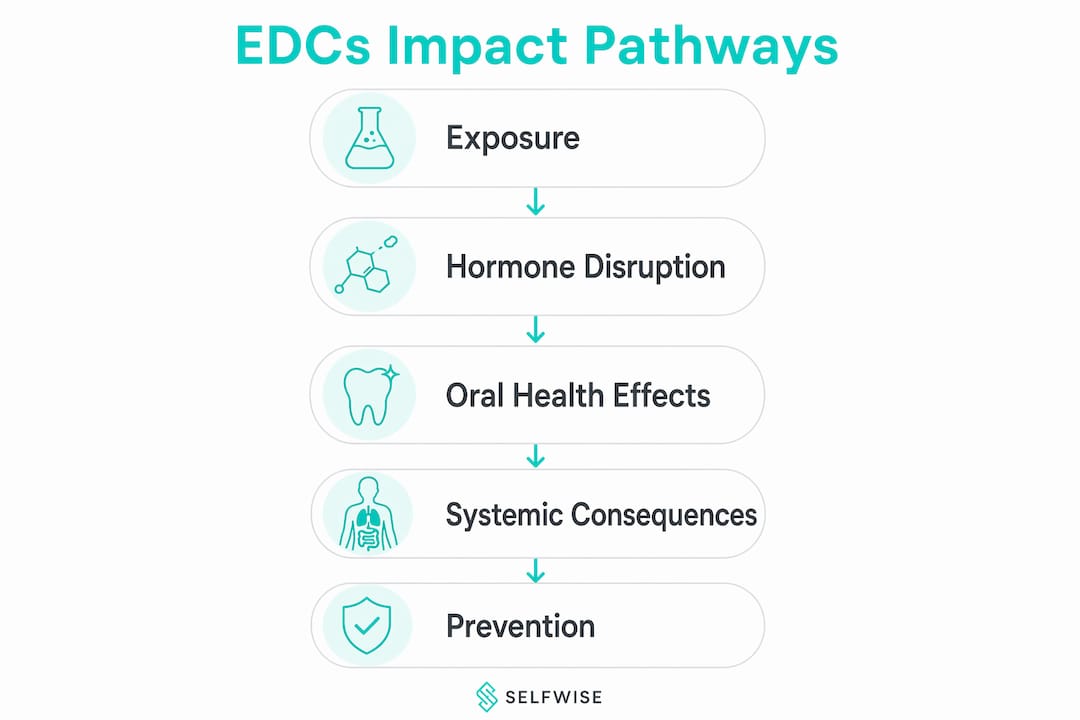
The impact of endocrine disruptors on oral health operates through several biological pathways, some direct and some systemic.
Enamel development and mineralization
BPA and fluoride both have documented effects on enamel formation. BPA exposure during tooth development has been linked to enamel defects in animal studies. Fluoride at elevated doses causes dental fluorosis, a condition where enamel becomes mottled or pitted during development. The key distinction is dose and timing: the concern is greatest during childhood when enamel is still forming.
Oral microbiome disruption
Phthalates may affect oral microbiome diversity, though the research on this specific pathway is still inconclusive. The oral microbiome contains over 700 species of bacteria and plays a direct role in cavity prevention, gum health, and even cardiovascular risk. Any chemical that shifts microbial balance toward pathogenic species could contribute to oral disease over time, even without directly damaging teeth.
Systemic hormone conditions and oral consequences
The connection between hormones and oral health is not theoretical. Diabetes leads to periodontal inflammation and makes gum disease significantly harder to control. Thyroid disorders affect saliva flow, taste perception, and cavity risk. These conditions show what happens when the endocrine system is genuinely disrupted, and they illustrate the biological plausibility of EDC-related oral effects.
| Pathway | Mechanism | Oral health outcome |
|---|---|---|
| Hormone mimicry | EDCs bind to estrogen or androgen receptors | Altered tissue growth, inflammation |
| Enamel disruption | BPA and fluoride interfere with ameloblast function | Enamel defects, fluorosis |
| Microbiome shift | Phthalates alter microbial diversity | Increased cavity and gum disease risk |
| Immune modulation | Hormones influence inflammation and immunity | Slower healing, higher infection risk |
Pro Tip: If you have a thyroid condition or diabetes, discuss your oral care product ingredients with your dentist. Systemic hormone disruption amplifies the effects of local chemical exposure in the mouth.
How to identify safe oral care products and reduce exposure
Reducing your exposure to endocrine disruptors in oral care does not require a chemistry degree. It requires knowing what to look for and understanding what the alternatives actually offer.
- Read the full ingredient list. Avoid products containing triclosan, methylparaben, propylparaben, butylparaben, and sodium lauryl sulfate. If “fragrance” or “parfum” appears without further disclosure, treat it as a potential phthalate source.
- Choose fluoride-free formulas when appropriate. Given the ANSES proposal and the nuance around total fluoride intake from multiple dietary sources, adults with low fluoride exposure from water and food may reasonably consider fluoride-free alternatives. Nano hydroxyapatite is a well-researched substitute that supports remineralization without fluoride’s regulatory controversy.
- Look for certified natural or clean-label products. Certifications from organizations like COSMOS Organic or NATRUE require ingredient transparency and restrict many synthetic chemicals. They are not perfect filters, but they eliminate the most common EDC offenders.
- Consider your full routine. Toothpaste, mouthwash, whitening strips, and dental floss all contribute to cumulative chemical exposure. Switching one product matters less than auditing the whole routine.
- Prioritize children’s products. Enamel development and hormonal sensitivity are highest in childhood. Choosing paraben-free, SLS-free, and fluoride-free options for children reduces exposure during the most vulnerable developmental window.
| Ingredient to avoid | Safer alternative | Why it matters |
|---|---|---|
| Triclosan | Xylitol, tea tree oil | Triclosan disrupts thyroid and sex hormones |
| Parabens | Vitamin E, rosemary extract | Parabens mimic estrogen with daily accumulation |
| Sodium fluoride | Nano hydroxyapatite | Under review as Category 1 endocrine disruptor |
| SLS | Coco glucoside, decyl glucoside | SLS increases absorption of co-occurring chemicals |
| Synthetic fragrance | Essential oils, unfragranced | “Fragrance” can legally conceal phthalates |
For a deeper look at natural dental products that avoid these compounds, Selfwisebrand has compiled practical guidance on building a cleaner routine.
What are the latest regulatory developments on EDCs in oral care?
The regulatory picture around endocrine disruptors in oral care is moving faster than most consumers realize.
- ANSES and sodium fluoride: In 2025, France’s ANSES submitted a formal proposal to classify sodium fluoride as a Category 1 endocrine disruptor and Category 1B reproductive toxicant under EU CLP regulation. A public consultation closed in January 2026. If adopted, this classification would affect how fluoride-containing products are labeled and marketed across the European Union.
- EU CLP Regulation: The EU’s Classification, Labeling and Packaging regulation assigns hazard categories based on scientific evidence. A Category 1 endocrine disruptor classification signals strong evidence of hormonal interference. Importantly, hazard classification reflects potential, not confirmed harm from typical product use. The distinction matters for interpreting risk.
- Scientific uncertainty on microbiome effects: Research on how EDCs alter the oral microbiome is still in early stages. The effects of phthalates on oral microbial communities and oral disease risk remain unclear, and researchers caution against overinterpreting current data. This is an active frontier, not a settled question.
- Global trends: The European Union’s broader chemicals strategy is pushing toward eliminating EDCs from consumer products by default. This pressure is already influencing reformulations by major oral care brands globally, even in markets without equivalent regulations.
For context on how these classifications compare to broader EU cosmetics standards, the overview at HBPS-Beauty on natural cosmetics provides useful regulatory background.
Key takeaways
Endocrine disruptors in oral care products are a real and evolving concern, with specific ingredients like triclosan, parabens, and sodium fluoride carrying credible regulatory and scientific scrutiny.
| Point | Details |
|---|---|
| EDCs in oral care are specific | Triclosan, parabens, phthalates, SLS, and sodium fluoride are the primary suspects in toothpaste and mouthwash. |
| Regulatory action is accelerating | ANSES proposed classifying sodium fluoride as a Category 1 endocrine disruptor under EU CLP regulation in 2025. |
| Oral health effects are plausible | EDCs can disrupt enamel formation, alter the oral microbiome, and amplify inflammation through hormonal pathways. |
| Label reading is your first defense | Avoid parabens, triclosan, SLS, and unlabeled “fragrance” to reduce cumulative EDC exposure from daily oral care. |
| Safer alternatives exist | Nano hydroxyapatite, xylitol, and certified natural formulas offer effective oral care without the most concerning EDC ingredients. |
The part most oral care brands won’t tell you
I’ve spent years looking at ingredient lists across hundreds of oral care products, and the pattern that stands out most is not the presence of any single chemical. It’s the combination. A toothpaste with SLS, a paraben preservative, and synthetic fragrance is not delivering three separate low-level exposures. SLS increases mucosal permeability, which means the parabens and phthalate-containing fragrance compounds absorb more efficiently. The cumulative effect is harder to study and easier to dismiss, which is exactly why it tends to get dismissed.
The ANSES proposal on sodium fluoride is significant not because it proves fluoride toothpaste is dangerous, but because it shows that ingredients with decades of mainstream use are still being re-evaluated as our understanding of endocrine biology improves. That should make you skeptical of any brand claiming its formula is permanently settled science.
What I find genuinely encouraging is the growth of products built around nano hydroxyapatite and xylitol. These ingredients have strong evidence behind them, no current endocrine disruption concerns, and they work. The natural oral care guide from Selfwisebrand is one of the more practical resources I’ve seen for people trying to make this transition without getting lost in conflicting claims.
The honest position is this: the science on EDCs in oral care is not complete, but it is directional. Reducing exposure to known disruptors while maintaining effective oral hygiene is not alarmism. It’s reasonable risk management.
— Viktor
Build a cleaner oral care routine with Selfwisebrand
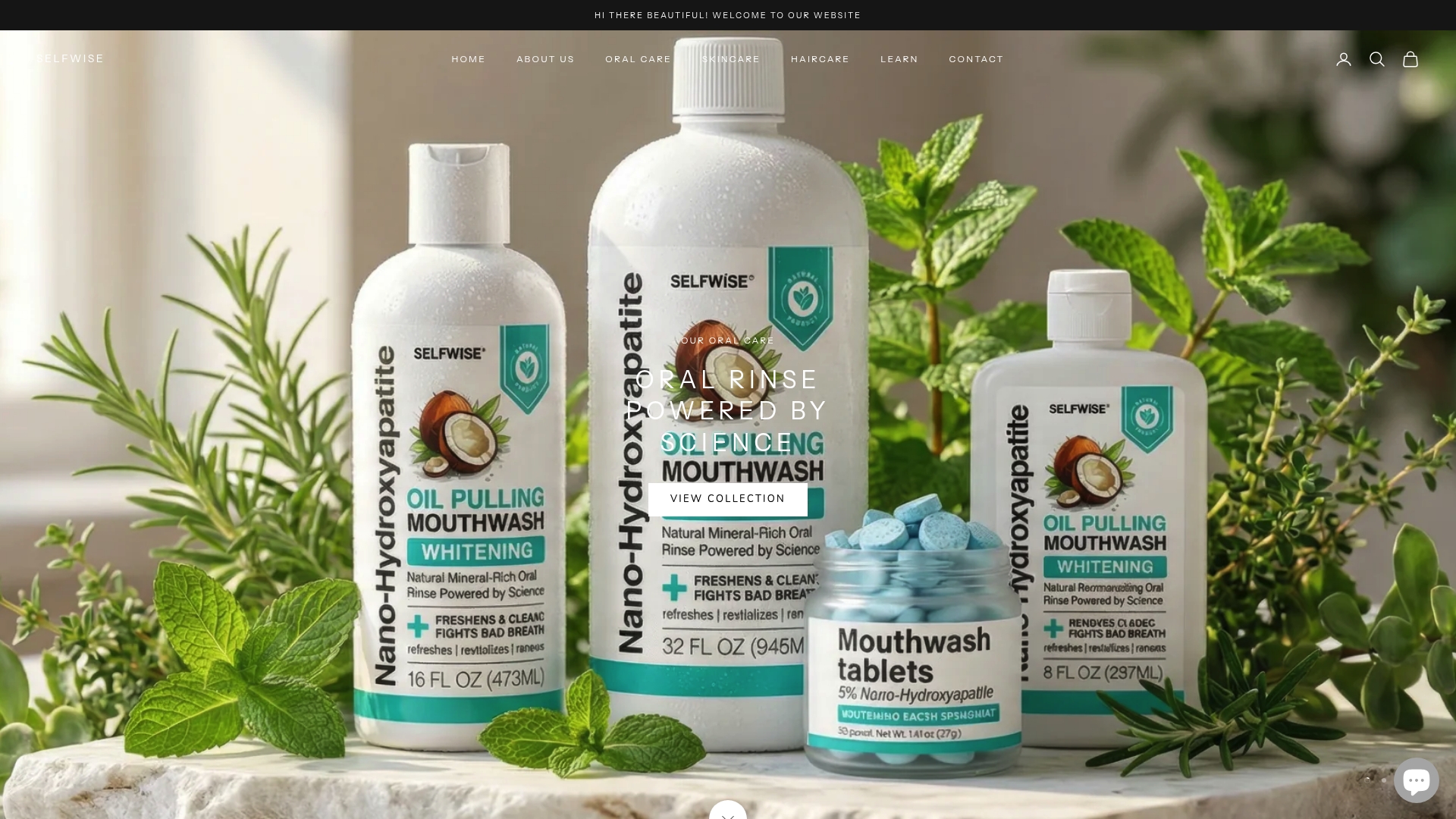
If reading this article made you want to audit your bathroom cabinet, that’s exactly the right response. Selfwisebrand formulates its oral care products without triclosan, parabens, SLS, or synthetic fragrance, using ingredients like nano hydroxyapatite and xylitol that are backed by science and free from current endocrine disruption concerns. The fluoride-free collection is a practical starting point for anyone looking to reduce EDC exposure without compromising on results. For a full routine overhaul, the natural mouthwash options complete the picture. Simple ingredients. Real results.
FAQ
What are endocrine disruptors in oral care products?
Endocrine disruptors in oral care are chemicals that interfere with hormone function by mimicking, blocking, or altering hormone signals. Common examples in toothpaste and mouthwash include triclosan, parabens, phthalates, and sodium fluoride.
Are endocrine disruptors in toothpaste actually harmful?
Hazard classification indicates potential for harm, not confirmed harm from typical use. ANSES’s 2025 proposal to classify sodium fluoride as a Category 1 endocrine disruptor reflects scientific concern, but does not confirm that standard toothpaste use causes measurable hormonal damage.
How do endocrine disruptors affect teeth specifically?
EDCs can disrupt enamel mineralization during development, shift oral microbiome balance toward pathogenic bacteria, and amplify inflammation through hormonal pathways. BPA and fluoride at elevated doses have the most documented effects on enamel formation.
What ingredients should I avoid for safer oral care?
Avoid triclosan, methylparaben, propylparaben, sodium lauryl sulfate, and any product listing “fragrance” or “parfum” without full disclosure. These are the most common endocrine-disrupting ingredients found in conventional toothpaste and mouthwash.
Is fluoride-free toothpaste a safer choice?
For adults with adequate fluoride from diet and water, fluoride-free toothpaste with nano hydroxyapatite is a well-supported alternative. Given that fluoride intake comes from multiple dietary sources beyond toothpaste, switching to a fluoride-free formula can meaningfully reduce total exposure without sacrificing remineralization benefits.