The Role of Essential Oils Oral Rinse in Daily Oral Care
Essential oil oral rinses are defined as antimicrobial mouth rinses formulated with plant-derived compounds, primarily eucalyptol, menthol, methyl salicylate, and thymol, that reduce plaque and gingivitis when used alongside brushing and flossing. A 2025 meta-analysis found these rinses reduce plaque by 23% and gingivitis by 18% compared to control rinses. That makes the role of essential oils oral rinse one of the most clinically supported positions in natural oral care today. These rinses complement mechanical cleaning. They do not replace it.
How do essential oils work against oral bacteria and plaque?
Essential oils disrupt oral bacteria through multiple simultaneous mechanisms, which is what separates them from most synthetic antiseptics. Plant essential oils break down bacterial cell walls, block protein and nucleic acid synthesis, and interfere with energy metabolism all at once. A single-target antibiotic hits one pathway. Essential oils hit several. That multi-target action is why bacterial resistance to essential oils develops far more slowly.
Their lipid solubility gives them another structural advantage. Plaque biofilms have a fatty outer layer that repels water-based rinses. Essential oils penetrate that layer because they dissolve in lipids, reaching bacteria that a standard rinse cannot touch. Oils like clove, cinnamon, and citrus show broad antimicrobial effects against the specific pathogens linked to cavities and gum disease, including antifungal activity against Candida species.
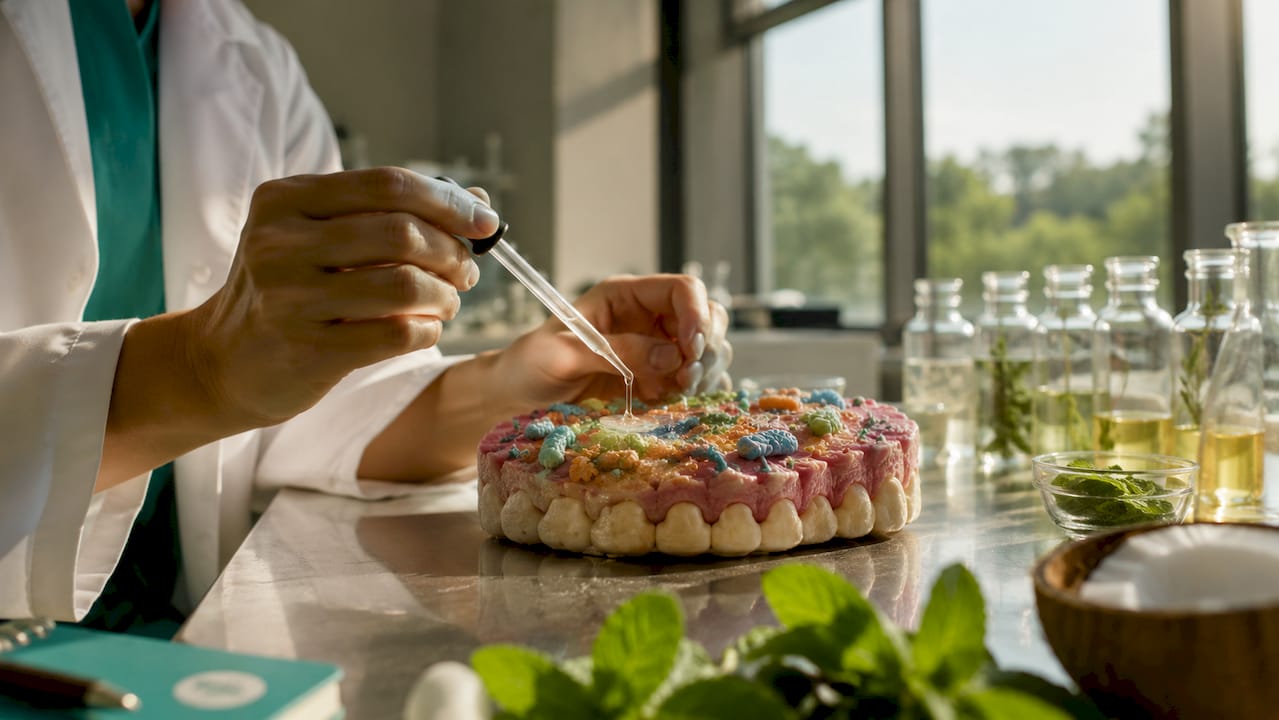
One honest limitation: EO rinse substantivity is low to moderate, meaning these oils act fast but do not bind strongly to oral surfaces. They clear bacteria during and shortly after rinsing, but the effect does not persist for hours the way chlorhexidine does. That is why daily consistent use matters more than occasional treatment.
Key antimicrobial properties of common essential oils:
- Eucalyptol: Disrupts bacterial membranes and reduces inflammatory mediators in gum tissue
- Thymol: Inhibits bacterial enzyme activity and shows strong action against Streptococcus mutans
- Clove (eugenol): Blocks bacterial cell wall synthesis and provides analgesic properties
- Cinnamon: Disrupts biofilm formation and shows anticariogenic effects
- Menthol: Enhances penetration of other active compounds and freshens breath
Pro Tip: Natural antimicrobial rinse ingredients like clove and cinnamon work best when the rinse formula keeps them at a stable concentration. Check that your chosen rinse lists specific oil concentrations rather than vague “blend” language.
What clinical evidence supports essential oil mouth rinses?
The clinical record for essential oil mouth rinses is strong, particularly for plaque and gingivitis control. A 12-week randomized controlled trial showed EO rinses significantly reduced plaque at interproximal and marginal sites compared with brushing alone. Both alcohol-containing and alcohol-free variants produced meaningful results. That finding matters because it removes the alcohol question as a barrier to use.
The European Federation of Periodontology (EFP) includes EO rinses in step one periodontal therapy. Step one therapy targets plaque control and gingival stabilization before any surgical intervention is considered. Recommending EO rinses at this stage reflects confidence in their clinical value, not just their natural appeal.
“EO rinses are considered second only to chlorhexidine for efficacy in plaque and gingivitis control, based on trials lasting at least six months.” — Journal of Global Oral Health, 2025
Chlorhexidine remains the gold standard for short-term antiseptic use, but it causes tooth staining, alters taste perception, and is not recommended for long-term daily use. EO rinses do not carry those drawbacks. That makes them the preferred choice for ongoing preventive care rather than acute treatment.
| Rinse type | Plaque reduction | Gingivitis reduction | Long-term suitability |
|---|---|---|---|
| Essential oil rinse | 23% vs. control | 18% vs. control | High |
| Chlorhexidine | High (short-term) | High (short-term) | Low (staining, taste) |
| Cetyl pyridinium chloride (CPC) | Moderate | Moderate | Moderate |
| Plain water rinse | Minimal | Minimal | N/A |
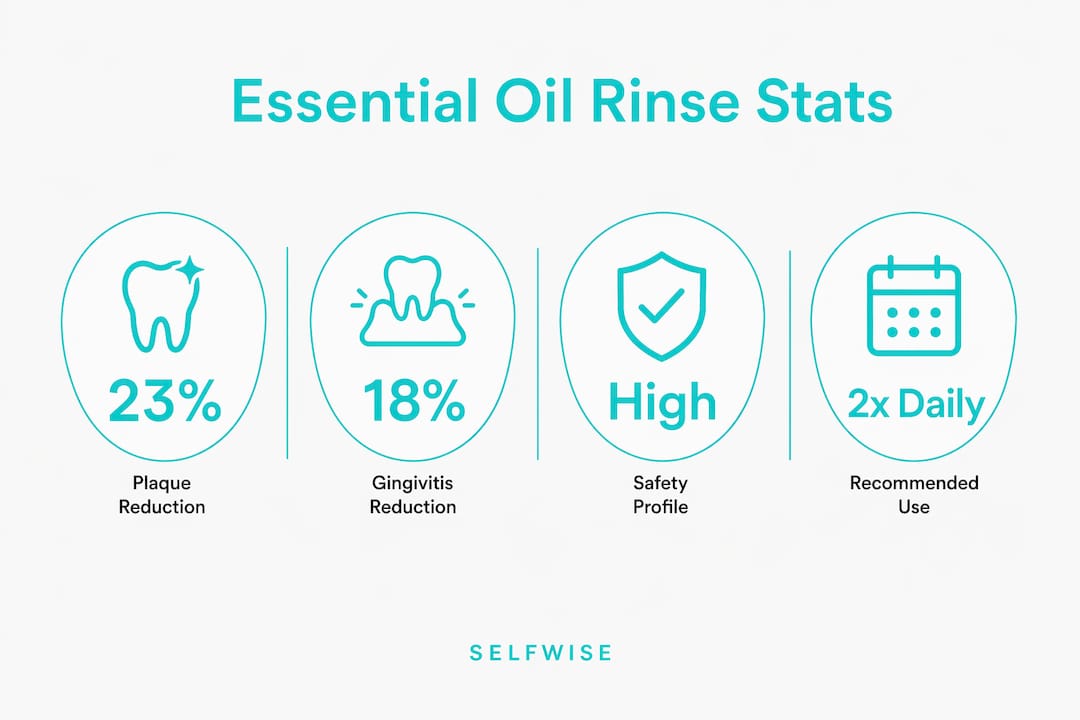
Plant essential oils also carry a higher safety profile than synthetic antibiotics, which are often linked to systemic side effects. That safety advantage, combined with proven efficacy, positions EO rinses as a practical long-term tool for people building a natural oral care routine.
How to use essential oils for mouthwash effectively
Correct usage determines whether you get clinical results or just fresh breath for five minutes. The standard adult protocol for an EO rinse containing eucalyptol, menthol, methyl salicylate, and thymol is 20 mL twice daily, swished for 30 seconds, then spat out. That protocol matches the dosing used in the clinical trials that produced the 23% plaque reduction data.
Follow these steps to get the most from your rinse:
- Complete brushing and interdental cleaning first. Mechanical cleaning removes the bulk of plaque. The rinse then reaches areas your brush and floss left behind.
- Measure 20 mL. Most rinse caps are calibrated to this volume. Eyeballing it leads to under-dosing.
- Swish actively for 30 seconds. Passive holding does not generate the fluid dynamics needed to penetrate interproximal spaces.
- Spit, do not rinse with water. Rinsing with water immediately after dilutes the active oils and shortens contact time.
- Use twice daily, morning and evening. Consistent daily use compensates for the low-to-moderate substantivity of essential oils.
- Children under 12 should consult a healthcare provider before using EO rinses, as swallowing risk and dosing differ from adults.
Pro Tip: For optimal timing, use your EO rinse after brushing and flossing rather than before. Research on mouthwash timing shows rinsing after mechanical cleaning lets the active ingredients work on a cleaner surface with less biofilm interference.
Alcohol sensitivity is a real concern for some people. Alcohol-free EO formulas perform comparably in clinical trials, so switching to an alcohol-free version is a practical solution rather than a compromise. If you find the flavor too intense, that is usually a sign of high menthol or thymol concentration. Try a formula with a different EO blend, such as one featuring citrus or cinnamon as the primary active.
How do essential oil rinses compare to other natural mouthwash options?
EO rinses sit at the intersection of clinical credibility and natural formulation, which is a rare position in the oral care market. Most natural mouth rinse alternatives lack the clinical trial data that EO rinses have accumulated over decades. Oil pulling, for example, has traditional roots and some supporting research, but its evidence base does not match the depth of EO rinse trials.
Comparison of common rinse options:
| Rinse type | Key benefit | Main drawback | Best use case |
|---|---|---|---|
| Essential oil rinse | Clinically proven plaque and gum control | Low substantivity, needs daily use | Daily preventive care |
| Chlorhexidine | Strongest short-term antiseptic | Staining, taste disruption, not for daily long-term use | Post-surgical or acute gum flare |
| CPC rinse | Moderate antimicrobial effect | Less evidence than EO or CHX | Mild maintenance |
| Oil pulling | Natural, gentle, traditional | Limited clinical evidence for plaque control | Supplementary routine step |
| Fluoride rinse | Enamel remineralization | No significant antimicrobial action | Cavity prevention focus |
The practical advantage of EO rinses over chlorhexidine for everyday use is clear. Chlorhexidine stains teeth with regular use and disrupts taste for hours. EO rinses deliver comparable long-term plaque control without those side effects. For people committed to a natural oral care routine, that trade-off makes EO rinses the stronger daily choice.
People who want to avoid alcohol entirely can pair an alcohol-free EO rinse with oil pulling for a fully natural, complementary routine. Oil pulling adds a mechanical flushing action that EO rinses do not provide. Together, they cover more of the oral environment than either does alone. Selfwisebrand’s natural oral care guide outlines how to layer these steps without overcomplicating your morning routine.
- EO rinses outperform CPC rinses in most head-to-head plaque reduction studies
- Alcohol-free EO formulas match alcohol-based versions in clinical efficacy
- Flavor sensitivity is the most common reason people abandon EO rinses, not safety concerns
- People with persistent gingival inflammation despite good brushing habits are the ideal candidates for adding an EO rinse
Key Takeaways
Essential oil oral rinses reduce plaque by 23% and gingivitis by 18% when used consistently alongside brushing and flossing, making them the most evidence-backed natural mouthwash option available.
| Point | Details |
|---|---|
| Proven clinical efficacy | A 2025 meta-analysis confirms 23% plaque and 18% gingivitis reduction versus control rinses. |
| Multi-target antimicrobial action | Essential oils disrupt bacterial cell walls, enzymes, and energy metabolism simultaneously, reducing resistance risk. |
| Adjunct, not replacement | EO rinses work best after brushing and flossing, not as a standalone oral hygiene step. |
| Consistent daily use required | Low substantivity means twice-daily rinsing is necessary to maintain plaque control benefits. |
| Better long-term fit than chlorhexidine | EO rinses deliver comparable ongoing plaque control without staining or taste disruption. |
What I’ve learned from watching people actually use EO rinses
Most people who try essential oil rinses and quit do so for the wrong reason. They stop because the flavor is strong or the alcohol burns, and they conclude the product does not work. The product works. The formulation was wrong for them.
The bigger mistake I see is people treating an EO rinse as a substitute for brushing on rushed mornings. That is where the clinical evidence breaks down. EO rinses yield their best results when mechanical plaque control is already established. Without that foundation, the rinse is managing a biofilm load it was never designed to handle alone.
What actually works is simple. Brush, floss, then rinse. Do it twice a day. Pick a formula with a flavor you can tolerate for 30 seconds. Alcohol-free options exist and perform just as well. If you have persistent gum inflammation despite brushing well, an EO rinse is often the missing piece, not a new toothbrush.
The natural oral care space has a tendency to overclaim. EO rinses do not need that treatment. They have genuine clinical backing, a strong safety profile, and a clear role in daily preventive care. That is enough. Use them for what they are good at, and they will deliver.
— Viktor
Natural mouthwash with essential oils from Selfwisebrand
Selfwisebrand formulates natural oral care products built around ingredients with real clinical backing, including essential oil-based rinses that fit directly into the daily routine this article describes.
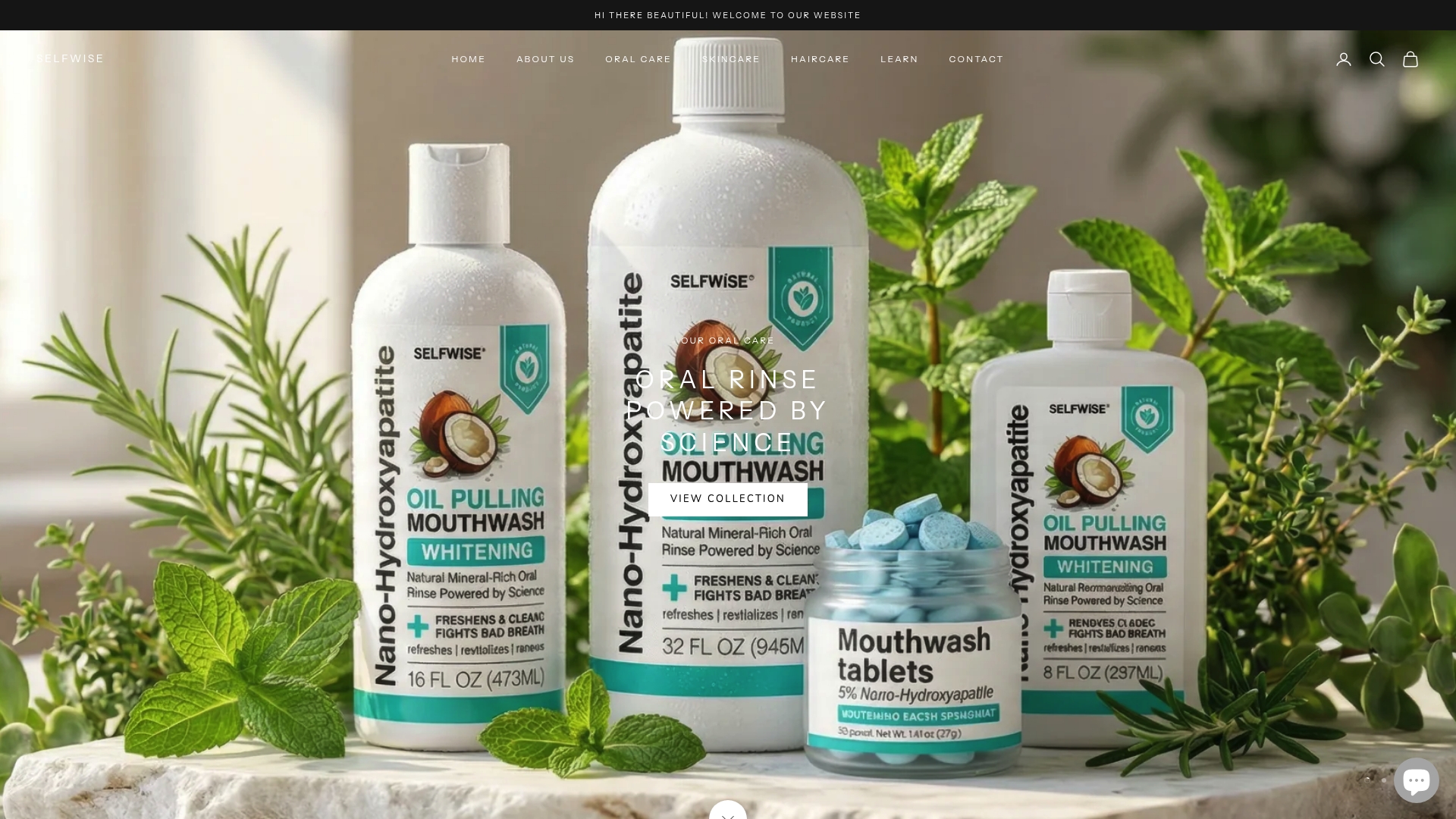
The Selfwisebrand mouthwash collection includes alcohol-free and fluoride-free options designed for people who want effective plaque control without harsh synthetic additives. For those who want to combine EO rinsing with enamel support, the nano hydroxyapatite mouthwash tablets offer a fluoride-free remineralizing rinse that pairs well with an EO-based routine. Both options align with the adjunctive, daily-use approach that the clinical evidence supports. Simple ingredients. Real results.
FAQ
What is the role of essential oils in an oral rinse?
Essential oils act as antimicrobial agents in oral rinses, disrupting bacterial cell walls and biofilms to reduce plaque and gingivitis. They function as adjuncts to brushing and flossing, not replacements.
Which essential oils are most effective for oral health?
Eucalyptol, thymol, menthol, and methyl salicylate are the most clinically studied oils for oral health. Clove and cinnamon also show strong antimicrobial and anticariogenic effects against common oral pathogens.
How often should you use an essential oil mouthwash?
The standard protocol is 20 mL twice daily, swished for 30 seconds. Consistent daily use is necessary because essential oils have low-to-moderate substantivity and do not bind to oral surfaces for extended periods.
Are essential oil rinses safe for long-term daily use?
Yes. Essential oil rinses carry a higher safety profile than synthetic antiseptics like chlorhexidine and do not cause tooth staining or lasting taste disruption with regular use. Children under 12 should consult a healthcare provider first.
Do essential oil rinses work without alcohol?
Alcohol-free EO rinses perform comparably to alcohol-based versions in clinical trials. Choosing an alcohol-free formula is a practical option for people with sensitivity, without sacrificing efficacy.