Propylene Glycol in Oral Care: Safety and Alternatives
Propylene glycol in oral care is defined as a synthetic polyol used primarily as a humectant and solvent in toothpaste and mouthwash formulations. Known in the industry as 1,2-propanediol, it retains moisture in the product, prevents the paste from drying out or hardening, and keeps flavors, sweeteners, and active ingredients uniformly dissolved. The FDA classifies propylene glycol as generally recognized as safe for food and pharmaceutical use. You will find it listed on the ingredient labels of many conventional toothpastes and mouth rinses, typically at concentrations around 0.5–2% by weight.
What is propylene glycol in oral care formulations?
Propylene glycol functions as a formulation workhorse rather than a therapeutic ingredient. It does not whiten teeth, fight cavities, or kill bacteria on its own. Its job is to make the product stable, smooth, and consistent from the first use to the last squeeze of the tube.
How it controls moisture and texture
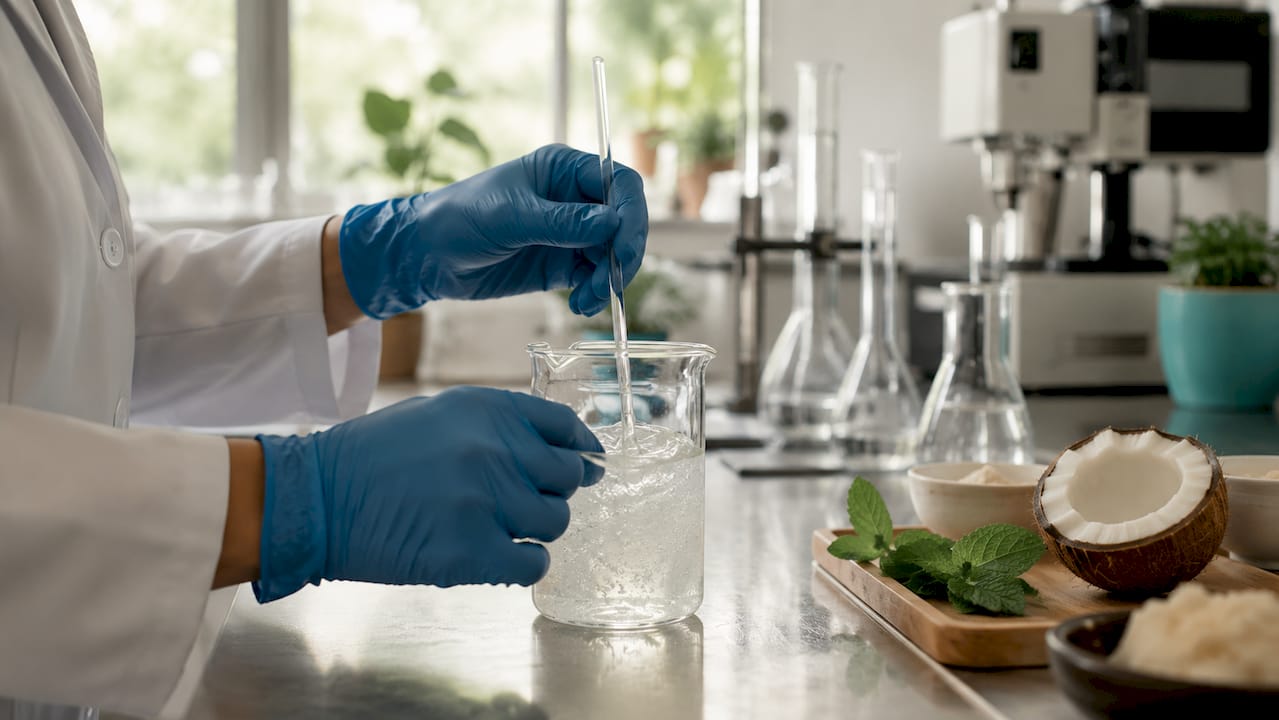
As a humectant, propylene glycol binds water molecules within the toothpaste base. This prevents the paste from caking at the tube opening or drying into a crumbly solid. Without a humectant, most toothpaste formulas would separate or harden within weeks of opening.
As a solvent, it dissolves fragrances and sweeteners that do not mix easily in water alone. Mint flavoring, saccharin, and certain antimicrobial agents all benefit from propylene glycol’s ability to keep them evenly distributed throughout the formula. This directly affects how consistently the product performs every time you use it.
Propylene glycol also contributes lubricity to the paste. That smooth, non-gritty feel when you brush is partly the result of reduced friction between the abrasive particles and your gum tissue.
Formulation roles at a glance
- Moisture retention: Prevents drying and caking in tube and on brush
- Solvent capacity: Keeps flavors, sweeteners, and actives uniformly dissolved
- Texture control: Improves extrusion ease and reduces gritty feel
- Stability: Prevents ingredient stratification during storage
- Compatibility: Works alongside glycerin, sorbitol, and other polyols in blended systems
Formulators using propylene glycol must balance polyol interactions carefully. Swapping it out changes the entire moisture and solubility profile of the formula, not just one variable.
Pro Tip: If you are trying a new toothpaste and notice the texture feels grainy or the flavor is uneven, that is often a sign the humectant and solvent system was reformulated without fully compensating for propylene glycol’s multiple roles.
Is propylene glycol safe for mouth use?
Propylene glycol is safe for oral use at the concentrations found in consumer dental products. The evidence for this comes from toxicology data, regulatory review, and cell-based lab studies.
What the science says
The acute oral toxicity of propylene glycol is very low. In animal studies, the LD50 for rats is 20 g/kg orally. That number means a person would need to consume an extraordinary amount to reach a toxic dose, far beyond anything possible from brushing teeth or rinsing with mouthwash.
A 2025 study tested propylene glycol in oral mucosa cell models at concentrations up to 200 mg/mL without reducing cell viability. That concentration is significantly higher than what appears in any commercial toothpaste. The result indicates low cytotoxic potential under normal use conditions.
Real-world safety also depends on exposure conditions. Saliva dilution, contact time, and the health of your oral mucosa all affect how your mouth responds to any ingredient. Someone with mouth sores or inflamed gum tissue may experience more sensitivity than someone with intact tissue.
When sensitivity becomes a concern
Some people do react to propylene glycol. Frequent contact with the ingredient has been linked to irritant or allergic contact reactions, particularly in individuals with sensitive skin or mucosa. The risk at standard oral care levels is low, but it is not zero.
If you notice persistent mouth soreness, tingling, or tissue irritation after switching to a new toothpaste or mouthwash, check the ingredient list for propylene glycol. Discontinue use and consult your dentist if symptoms continue.
One important distinction: consumer product exposure is fundamentally different from industrial or pharmaceutical high-dose contexts. The fear around propylene glycol often comes from conflating its use in antifreeze formulations with its use in food and oral care. Industrial antifreeze uses ethylene glycol, not propylene glycol. They are different compounds with very different safety profiles.
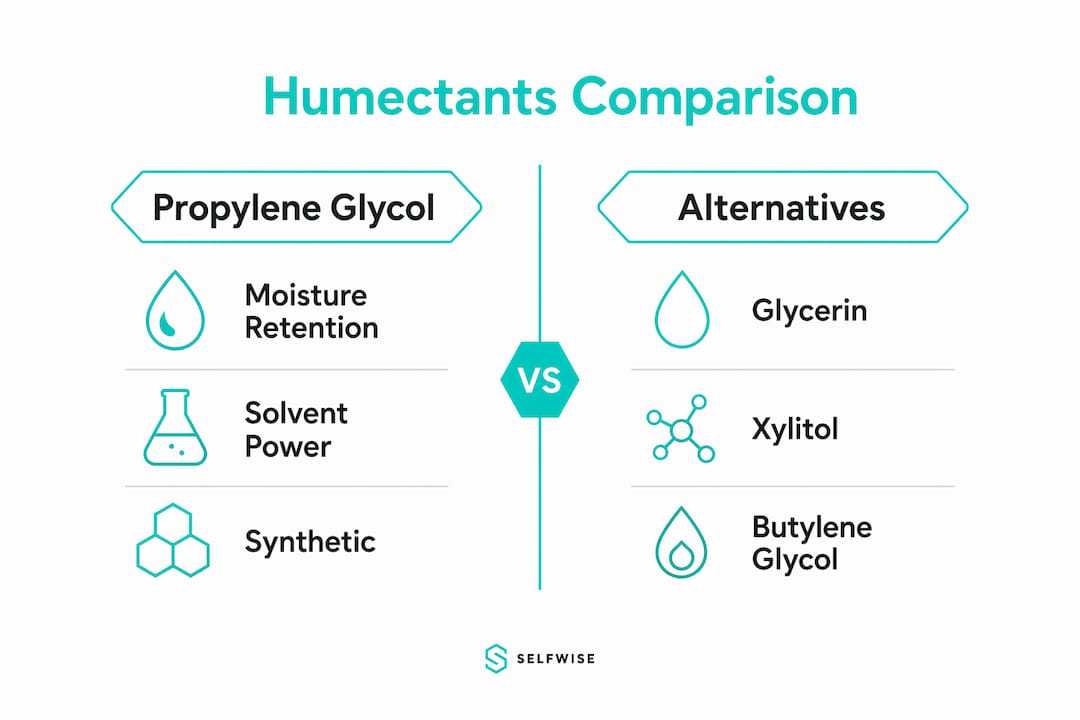
Propylene glycol vs. natural humectant alternatives
Natural oral care brands, including those focused on natural oral care formulations, often replace propylene glycol with plant-derived polyols. Each alternative brings trade-offs in texture, taste, and formulation complexity.
Common alternatives and how they compare
Glycerin is the most widely used substitute. It is derived from plant oils or animal fats and provides strong moisture retention. Glycerin leaves a slightly sweet, thick coating on teeth that some users find pleasant and others find filmy. It does not dissolve flavors as effectively as propylene glycol, so formulators often need additional solubilizers.
Xylitol is a sugar alcohol with proven cavity-fighting properties beyond simple humectancy. It adds sweetness naturally and inhibits the growth of Streptococcus mutans, the primary cavity-causing bacterium. Xylitol is a functional upgrade over propylene glycol in terms of oral health benefit, though it is more expensive and has a different moisture-retention profile.
Butylene glycol is a synthetic polyol like propylene glycol but is considered milder by some formulators. Patent disclosures show that polyol blends vary widely in their texture and solubility outcomes. Butylene glycol is less common in oral care than in skincare.
Side-by-side comparison
| Ingredient | Moisture Retention | Solvent Strength | Natural Origin | Oral Health Benefit |
|---|---|---|---|---|
| Propylene glycol | Strong | Strong | Synthetic | None (formulation only) |
| Glycerin | Strong | Moderate | Plant-derived | None (formulation only) |
| Xylitol | Moderate | Low | Plant-derived | Yes (anti-cavity) |
| Butylene glycol | Moderate | Moderate | Synthetic | None (formulation only) |
The table shows that no single alternative replicates all of propylene glycol’s functions. Glycerin handles moisture well but falls short on solvent capacity. Xylitol adds real oral health value but cannot anchor a formula on its own. Most natural toothpaste brands use blends of two or three of these ingredients to compensate.
How to choose oral care products based on ingredients
Reading a toothpaste or mouthwash label takes less than 60 seconds and tells you exactly what you are putting in your mouth twice a day. Propylene glycol will appear by its full chemical name on any compliant label.
A practical approach to label reading
- Scan the first five ingredients. These make up the largest portion of the formula by weight. If propylene glycol appears here, it is a primary humectant in that product.
- Look for the humectant cluster. Propylene glycol, glycerin, sorbitol, and xylitol often appear together. The order tells you which is dominant.
- Check for known sensitizers. If you have reacted to propylene glycol in skincare, treat oral care products with the same caution. The ingredient is used across both categories with similar formulation logic.
- Try one new product at a time. Switching multiple products simultaneously makes it impossible to identify which ingredient caused a reaction.
- Give it two weeks. Mild initial sensitivity sometimes resolves as your mouth adjusts. Persistent or worsening symptoms are a different matter.
If you prefer to avoid propylene glycol entirely, look for products that list glycerin or xylitol as the primary humectant and do not include propylene glycol anywhere in the ingredient list. Natural oral care lines built around nano hydroxyapatite and xylitol typically omit it by design.
Pro Tip: Ask your dentist to review your full oral care product list at your next cleaning. Dentists regularly identify ingredient-related irritation that patients attribute to other causes.
Key takeaways
Propylene glycol is a safe, functional ingredient in oral care at standard concentrations, but natural alternatives like xylitol and glycerin offer comparable performance with added benefits for health-conscious consumers.
| Point | Details |
|---|---|
| Formulation role | Propylene glycol retains moisture and dissolves flavors; it is not a therapeutic active. |
| Safety at normal levels | FDA GRAS status and cytotoxicity studies confirm low risk at 0.5–2% toothpaste concentrations. |
| Sensitivity risk | Individuals with reactive mucosa or skin should monitor for irritation and check labels carefully. |
| Best natural alternatives | Xylitol adds anti-cavity benefit; glycerin provides strong moisture retention without synthetic polyols. |
| Label reading | Propylene glycol appears by full chemical name; scanning the first five ingredients reveals its role. |
Why i think the fear around propylene glycol is mostly misdirected
Most of the anxiety I see around propylene glycol in oral care comes from one source: people reading that it is used in industrial applications and assuming the worst. That logic does not hold up. Water is used in industrial cooling systems. Sodium chloride is used in road de-icing. Context and concentration are everything in toxicology.
That said, I do not think the answer is to dismiss consumer concerns. Some people genuinely react to propylene glycol, and their experience is real. The more useful response is to help people understand what the ingredient actually does, at what levels it appears, and what the alternatives look like in practice.
What I have found is that health-conscious consumers who switch to natural oral care products built around xylitol, nano hydroxyapatite, and plant-derived humectants often report better overall tolerance, not because propylene glycol was harming them, but because simpler formulas with fewer synthetic ingredients tend to cause fewer reactions across the board. That is a reasonable preference, and it is worth acting on.
The goal is not fear. The goal is informed choice. Understanding what propylene glycol does in a formula is the first step toward deciding whether you want it in yours.
— Viktor
Natural oral care without the synthetic fillers
If reading this article made you want to simplify your oral care routine, Selfwisebrand builds products around ingredients that do more than hold a formula together.
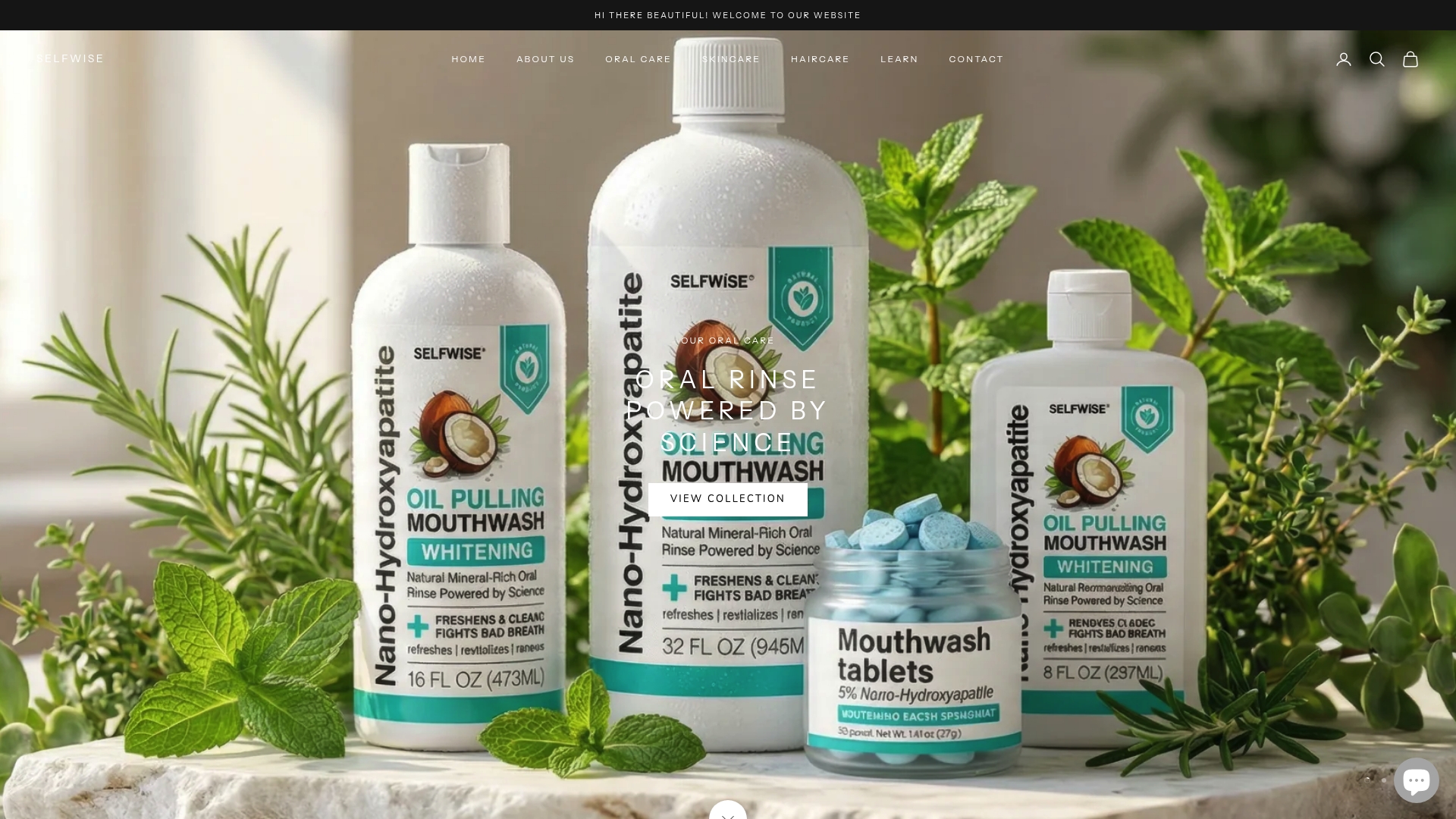
The nano hydroxyapatite mouthwash tablets from Selfwisebrand skip propylene glycol entirely and use nano hydroxyapatite to actively support enamel remineralization. For a liquid option, the nano hydroxyapatite oil pulling mouthwash combines traditional oil pulling with modern enamel science. Both are fluoride-free and built for people who want their oral care ingredients to earn their place. Browse the full fluoride-free collection to find the right fit for your routine.
FAQ
What does propylene glycol do in toothpaste?
Propylene glycol acts as a humectant and solvent in toothpaste, retaining moisture to prevent drying and keeping flavors and active ingredients uniformly dissolved throughout the formula.
Is propylene glycol safe to use in your mouth daily?
Yes, at the concentrations used in oral care products (typically 0.5–2%), propylene glycol is considered safe by the FDA and shows low cytotoxic potential in oral mucosa studies.
Can propylene glycol cause mouth irritation?
It can in sensitive individuals. Frequent exposure has been linked to irritant or allergic reactions, particularly in people with reactive mucosa or known sensitivity to the ingredient in skincare products.
What are the best propylene glycol-free alternatives in oral care?
Glycerin and xylitol are the most common replacements. Xylitol also provides anti-cavity benefits, making it a functional upgrade for consumers seeking natural oral care options.
How do i know if my toothpaste contains propylene glycol?
Check the ingredient list on the label. Propylene glycol will appear by its full chemical name. If it is in the first five listed ingredients, it is a primary component of the formula.