Parabens in Dental Products: What You Need to Know
Parabens in dental products are synthetic preservatives from the parahydroxybenzoic acid family, added to toothpastes and mouthwashes to stop bacteria, yeast, and mold from growing inside the tube. The two most common types are methylparaben and propylparaben, and you will find them listed by name on most conventional dental product labels. The American Dental Association recognizes them as potential allergens for sensitive individuals. For health-conscious consumers, knowing what these chemicals are and how to spot them is the first step toward building a cleaner oral care routine.
What are parabens in dental products, chemically speaking?
Parabens are not a single chemical. They are a family of related esters that differ slightly in molecular structure, which affects how strong their preservative action is. In dental products, manufacturers use them because they are inexpensive, stable, and effective against a broad range of microbes at low concentrations.
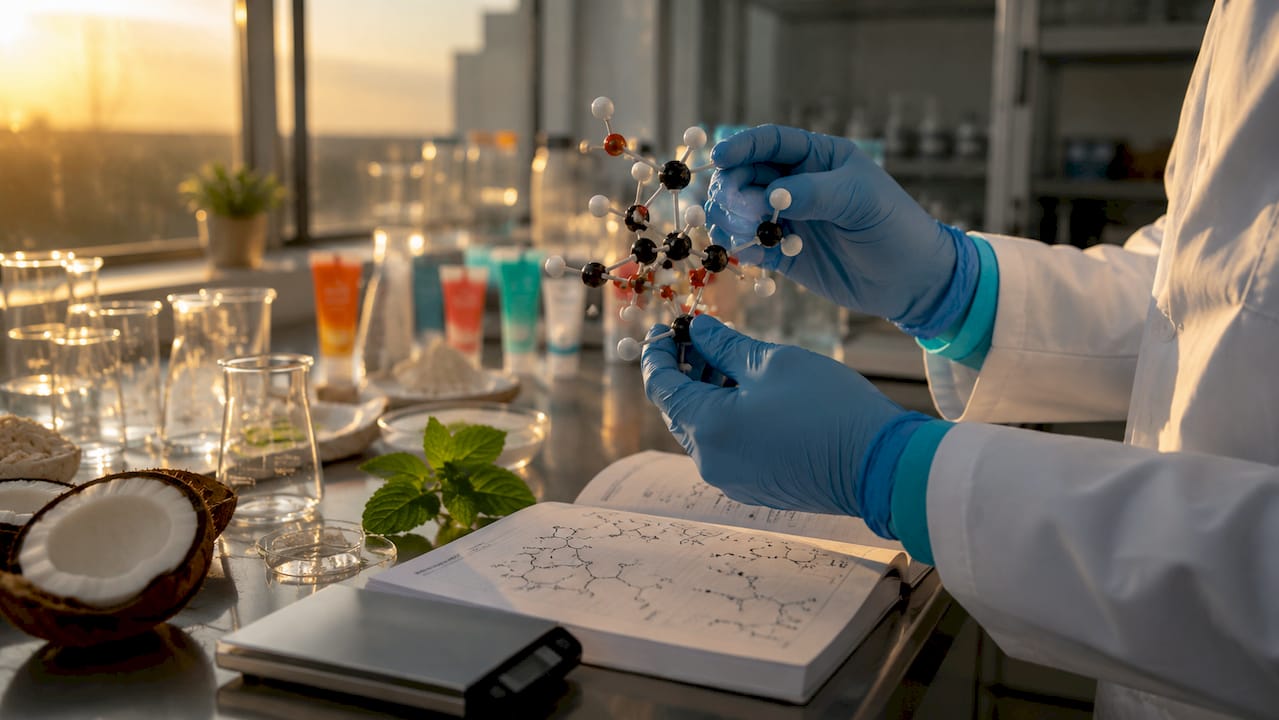
The most common parabens found in toothpaste formulations are methylparaben and propylparaben. A 2026 Scientific Reports study confirmed both compounds appear in real commercial toothpaste formulations alongside ingredients like amine fluoride and xylitol. That finding matters because it shows parabens are still active dental product ingredients, not a relic of older formulas.
Here is how parabens function inside a product:
- Methylparaben targets bacteria and fungi at concentrations typically below 0.2%. It is the most widely used paraben across personal care products.
- Propylparaben works alongside methylparaben to extend the antimicrobial range. It is more effective against mold and yeast.
- Butylparaben and ethylparaben appear less frequently in oral care but show up in some formulations as secondary preservatives.
- Combinations of two or more parabens are common because blending them creates broader protection at lower individual concentrations.
The table below shows where parabens typically appear in dental product categories:
| Product Type | Common Paraben Used | Primary Function |
|---|---|---|
| Conventional toothpaste | Methylparaben, propylparaben | Prevent bacterial and mold growth |
| Antiseptic mouthwash | Methylparaben | Extend shelf life in water-based formulas |
| Whitening gel | Propylparaben | Inhibit yeast contamination |
| Fluoride gel | Methylparaben | Preserve active fluoride compounds |
Are parabens safe in dental products?
The safety question around parabens is real, but the answer depends heavily on who is asking. The American Dental Association classifies parabens as potential allergens and contact irritants in toothpastes, placing them in the same category as sodium lauryl sulfate, essential oils, and propylene glycol. That classification does not mean parabens are toxic for everyone. It means a subset of users will react to them.
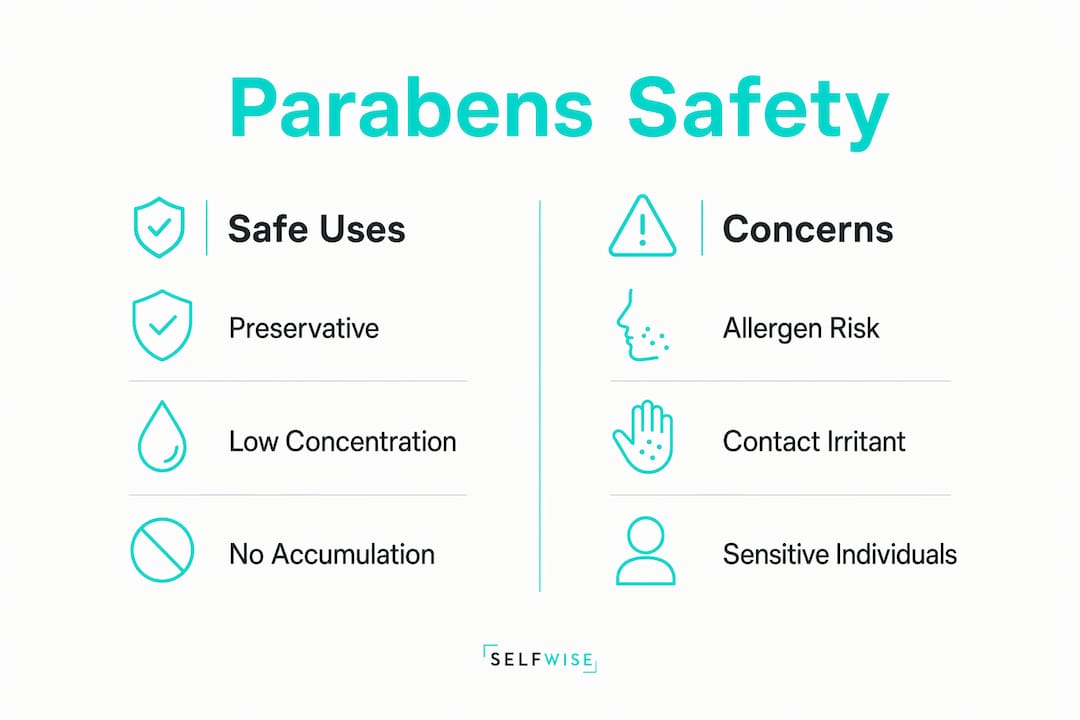
The more contested concern is their role as endocrine disruptors. Some studies link parabens to estrogen mimicry, raising questions about fertility and cancer risk at higher systemic exposures. Oral care products present a lower absorption risk than leave-on skin products because you rinse and spit. Still, the concern is not zero, especially for people who use multiple paraben-containing products daily.
For sensitive individuals, the documented reactions include:
- Perioral dermatitis: redness and small bumps around the mouth
- Stomatitis: inflammation of the mucous membranes inside the mouth
- Cheilitis: cracked, inflamed lips linked to contact reactions from toothpaste ingredients
- Gum irritation: localized soreness that does not resolve with standard care
One important clarification: parabens do not accumulate in the mouth the way they might in skin tissue. You are not building up a reservoir of parabens in your gum tissue with every brush. The exposure is real but time-limited. That said, daily repeated exposure adds up, and for allergy-prone users, even brief contact is enough to trigger a reaction.
Pro Tip: If you experience recurring mouth sores, lip irritation, or gum sensitivity and cannot identify the cause, check your toothpaste ingredient list for methylparaben or propylparaben before assuming the problem is dental in origin.
How to spot parabens on a dental product label
Reading ingredient labels is the most reliable way to know what you are putting in your mouth. The challenge is that paraben naming conventions vary, and some brands use chemical names that are not immediately recognizable as parabens.
Follow these steps to identify parabens on any dental product:
- Look for the suffix “-paraben.” Any ingredient ending in paraben is a member of this chemical family. Methylparaben, propylparaben, butylparaben, and ethylparaben are the four most common in oral care.
- Check the preservative section. Ingredients are listed in descending order by concentration. Parabens usually appear near the end of the list, which means they are present at low levels but still active.
- Watch for INCI names. The International Nomenclature of Cosmetic Ingredients system labels methylparaben as Methylparaben and propylparaben as Propylparaben, so the naming is usually straightforward. Less common variants like 4-hydroxybenzoic acid methyl ester refer to the same compound.
- Do not rely on “paraben-free” claims alone. A product can drop methylparaben and still contain propylparaben or butylparaben. The label claim may be technically accurate while still including a paraben variant.
- Cross-reference with the full ingredient list. The ADA advises consumers to scrutinize entire ingredient lists because sensitivity symptoms often arise from multiple components, not just parabens.
- Use a reference tool. Resources like the Environmental Working Group’s Skin Deep database let you search any ingredient by name and see its safety profile across product categories.
The deeper skill here is not just spotting parabens. It is learning to read ingredient lists as a whole. Parabens rarely travel alone. A product containing propylparaben often also contains sodium lauryl sulfate and artificial flavoring. Knowing the full picture helps you make a genuinely informed swap.
Natural dental products: paraben-free options that actually work
The good news is that natural dental products have matured significantly. Early natural toothpastes sacrificed effectiveness for clean ingredients. Today, formulations using xylitol, nano hydroxyapatite, and plant-based essential oils deliver real oral health benefits without synthetic preservatives.
Here is what to look for in a paraben-free dental product:
- Xylitol: A natural sugar alcohol that actively inhibits the bacteria responsible for tooth decay. It also reduces the need for synthetic preservatives by lowering the pH environment where microbes thrive.
- Nano hydroxyapatite: A biocompatible mineral that remineralizes enamel and reduces sensitivity. It is the same compound that makes up 97% of tooth enamel, and it works without fluoride or parabens.
- Essential oils: Tea tree oil, peppermint oil, and clove oil have documented antimicrobial properties. They serve a dual purpose as flavor agents and natural preservatives.
- Coconut oil: Used in oil pulling formulas, coconut oil has natural antifungal and antibacterial properties that reduce oral microbial load without synthetic additives.
The natural oral care guide at Selfwisebrand walks through how to build a complete routine using these ingredients. The key insight is that natural preservatives work differently from parabens. They do not simply kill microbes on contact. They create an environment where microbial growth is less likely, which is a more sustainable approach for daily oral care.
For people with sensitive skin and oral tissue, switching to paraben-free products often resolves chronic irritation that seemed unrelated to toothpaste. The connection between oral product ingredients and perioral skin reactions is underdiagnosed. Many people treat the symptom with topical creams without ever addressing the source.
Pro Tip: When switching to a paraben-free toothpaste, change one product at a time and wait two to three weeks before evaluating results. Switching everything at once makes it impossible to identify which ingredient was causing the problem.
Key takeaways
Parabens in dental products are preservatives that serve a real function but carry documented allergen risks, and paraben-free alternatives using xylitol and nano hydroxyapatite deliver comparable protection without the sensitivity concerns.
| Point | Details |
|---|---|
| Parabens defined | Methylparaben and propylparaben are the most common preservatives in conventional toothpaste and mouthwash. |
| Safety profile | The ADA classifies parabens as potential allergens; they do not accumulate in oral tissue but can trigger reactions in sensitive users. |
| Label reading | Look for any ingredient ending in “-paraben” and never rely solely on “paraben-free” front-of-pack claims. |
| Natural alternatives | Xylitol, nano hydroxyapatite, and essential oils provide effective preservation and oral health benefits without synthetic parabens. |
| Switching strategy | Change one dental product at a time to isolate the cause of any sensitivity before committing to a full routine overhaul. |
Why i think most people are asking the wrong question about parabens
Most of the paraben debate focuses on whether they are dangerous. That is the wrong starting point. The more useful question is: why use them at all when better options exist?
I have seen this pattern repeatedly. Someone comes in with chronic lip irritation or recurring mouth sores. They have seen a dentist, tried different toothpastes, and nothing resolves it. When you look at their product stack, they are using a conventional toothpaste with methylparaben, a mouthwash with propylparaben, and a lip balm with butylparaben. The cumulative daily exposure is significant, even if each individual product is within “safe” limits.
The regulatory view is that parabens at low concentrations are acceptable. That is probably true for most people. But acceptable and optimal are not the same thing. If a paraben-free formula using nano hydroxyapatite and xylitol works just as well and eliminates a known allergen risk, the argument for keeping parabens in your routine is weak.
My practical advice: do not wait for a reaction to motivate a switch. Read your labels now. If your current toothpaste contains methylparaben or propylparaben, try a toothpaste allergy guide to understand what you might be reacting to. And if you are already experiencing sensitivity, change one product at a time and give each change three full weeks before drawing conclusions. That is the method that actually produces useful information.
— Viktor
Clean oral care without the chemical guesswork
If reading ingredient labels has made you want to simplify your routine, Selfwisebrand builds products around exactly that idea. Every formula starts with a short list of ingredients you can actually recognize.
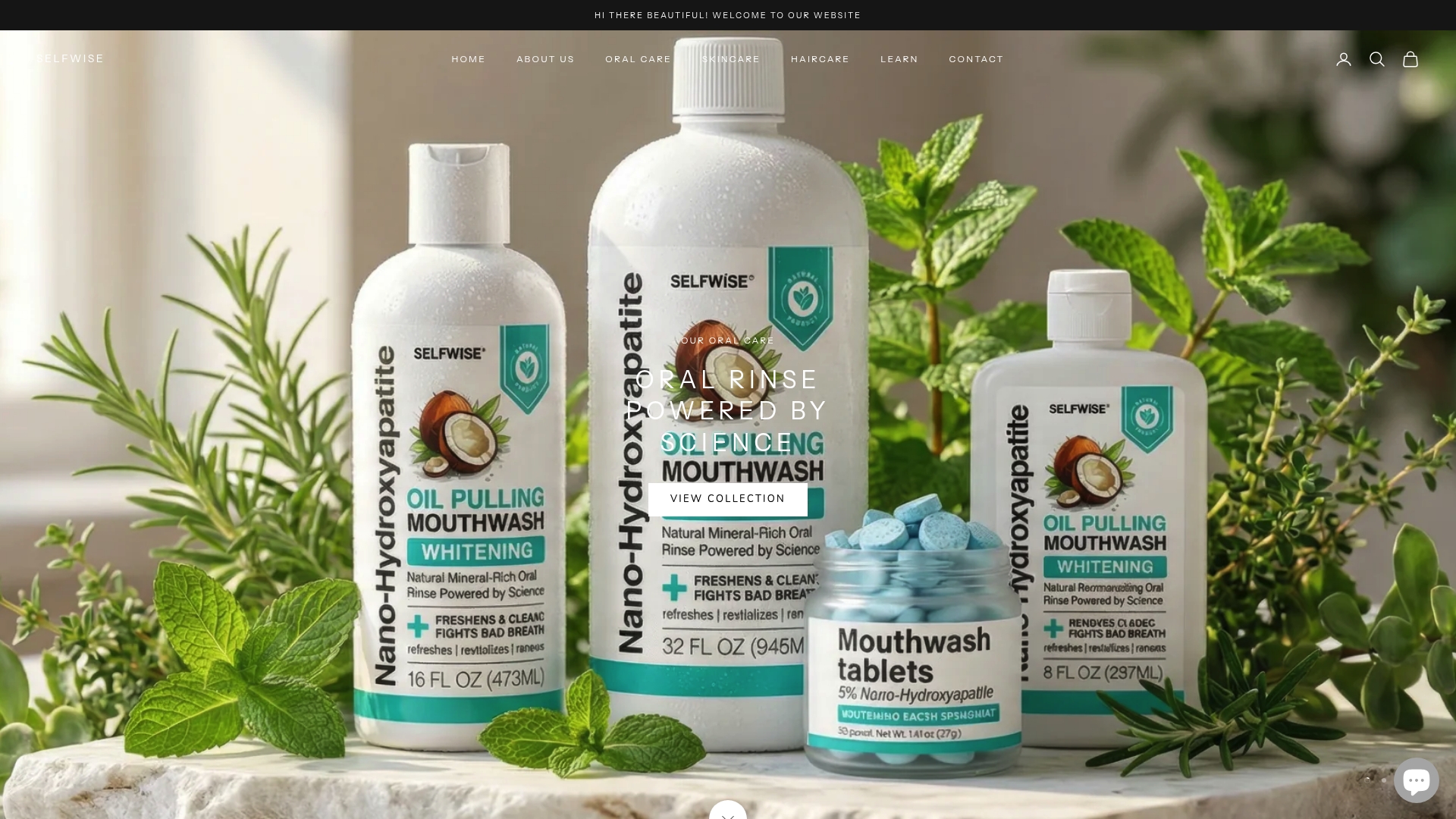
The fluoride-free collection includes paraben-free options formulated with nano hydroxyapatite and xylitol, two ingredients with strong scientific backing for enamel remineralization and cavity prevention. The nano hydroxyapatite mouthwash tablets skip synthetic preservatives entirely by using a solid tablet format that does not require water-based preservation. No parabens. No guesswork. Just ingredients that work.
FAQ
What are parabens in dental products?
Parabens in dental products are synthetic preservatives from the parahydroxybenzoic acid family, used to prevent bacterial, yeast, and mold growth in water-based formulas like toothpaste and mouthwash. Methylparaben and propylparaben are the two most common types.
Are parabens in toothpaste dangerous?
The ADA classifies parabens as potential allergens and contact irritants, not universally toxic compounds. They pose the greatest risk to individuals with chemical sensitivities, where they can trigger perioral dermatitis, stomatitis, or gum irritation.
How do i find toothpaste without parabens?
Check the ingredient list for any word ending in “-paraben” and avoid products containing methylparaben, propylparaben, butylparaben, or ethylparaben. Do not rely on front-of-pack “paraben-free” claims alone, since some products drop one paraben while retaining another.
What natural ingredients replace parabens in oral care?
Xylitol, nano hydroxyapatite, and essential oils like tea tree and peppermint serve as natural alternatives to synthetic parabens. These ingredients provide antimicrobial protection and oral health benefits without the allergen risk associated with conventional preservatives.
Can parabens cause tooth or gum problems?
Parabens do not directly damage tooth enamel or gum tissue in most users. In sensitive individuals, they can cause mucosal irritation, gum soreness, and perioral skin reactions that are often mistaken for dental problems rather than ingredient reactions.