
How Vitamin C Shapes Your Gum Health
Vitamin C is one of the most critical nutrients for gum tissue, and the evidence is clear: it builds the collagen that holds your gums together, neutralizes the inflammation that breaks them down, and supports the immune cells that fight periodontal bacteria. If your gums bleed easily, heal slowly, or look swollen and dark, low vitamin C intake is a legitimate suspect. The practical starting point is simple: aim to meet the U.S. RDA through food first, and consider a targeted supplement or a stabilized topical adjunct when diet falls short or healing demands more.
Quick stat: The NIH Office of Dietary Supplements sets the adult RDA for men and women with specific values, and defines an upper intake level where risks increase, advising moderation.
Key Takeaways
Vitamin C supports gum health through two distinct mechanisms: collagen synthesis and antioxidant/immune activity, making it one of the most evidence-backed nutritional adjuncts for periodontal tissue.
| Point | Details |
|---|---|
| Dual biological role | Vitamin C builds gum collagen and neutralizes oxidative stress, addressing both structure and inflammation. |
| U.S. RDA targets | Men need 75 mg/day, women 75 mg/day; the UL is 2,000 mg/day, above which GI and kidney-stone risks rise. |
| Food-first strategy | One cup of raw red bell pepper delivers roughly 190 mg, exceeding the adult RDA in a single serving. |
| When to see a dentist | Persistent bleeding after 2–4 weeks of dietary correction, tooth mobility, or pus requires professional evaluation. |
| Selfwisebrand adjunct | Nano hydroxyapatite and xylitol mouthwashes complement vitamin C’s tissue support by protecting enamel during healing. |
Table of Contents
- How does vitamin C actually support gum tissue?
- What does the clinical evidence show?
- What do deficiency signs look like in your mouth?
- Which foods give you the most vitamin C for gum health?
- When should you supplement, and how much is safe?
- How to build vitamin C into your daily oral care routine
- How long before you see improvement in your gums?
- The dual-action case for vitamin C in periodontal care
- When do gum symptoms need professional care?
- An evidence-first perspective on vitamin C and natural oral care
- Selfwisebrand natural mouthwash as a complement to your vitamin C strategy
- Useful sources for further reading
- FAQ
How does vitamin C actually support gum tissue?
The role of vitamin C in gum health comes down to three interlocking mechanisms, each with a direct clinical consequence.
Collagen synthesis. Vitamin C is an essential cofactor for prolyl hydroxylase, the enzyme that hydroxylates proline residues in collagen chains. Without that step, collagen fibers can’t form stable triple helices, and the periodontal ligament, which anchors each tooth to its socket, literally unravels. Merck Manuals’ clinical reference describes this as the central mechanism behind the classic oral signs of severe deficiency: swollen, bleeding gums and, in advanced cases, tooth mobility.

Antioxidant activity. Inflamed gingival tissue generates reactive oxygen species (ROS) as a byproduct of the immune response. Vitamin C donates electrons to neutralize those free radicals before they damage cell membranes and connective tissue. Lower plasma vitamin C levels have been consistently observed in people with periodontitis compared to healthy controls, a pattern documented across multiple PMC-indexed studies.
Immune cell support. Vitamin C concentrates inside phagocytes and T-lymphocytes at levels many times higher than in plasma, where it supports chemotaxis, oxidant production during bacterial killing, and apoptosis clearance after the immune response resolves. For gum tissue, that translates to faster bacterial clearance and less residual inflammation after periodontal therapy.
Key mechanisms mapped to practical implications:
- Collagen cofactor → stronger periodontal ligament and healthier gingival connective tissue
- Antioxidant → less oxidative damage to gum cells during active inflammation
- Immune support → more effective bacterial clearance and faster resolution of gingival infection
- Capillary integrity → reduced bleeding on probing and brushing
Pro Tip: Vitamin C is water-soluble and not stored in large amounts. A single day of very low intake won’t cause problems, but consistently falling short over weeks starts to degrade collagen turnover in gum tissue before you notice any visible sign.
What does the clinical evidence show?
The evidence base for vitamin C and gum health spans observational epidemiology, small clinical trials, and in vitro mechanistic work. Each layer tells a different part of the story.
The strongest population-level signal comes from a 2024 systematic review and meta-analysis published in MDPI, which pooled data from studies covering approximately 17,853 participants and found that higher vitamin C intake was associated with a reduced risk of periodontal disease, with a pooled odds ratio of approximately 1.52. That heterogeneity doesn’t invalidate the association, but it does mean you can’t apply a single number to every person.
On the interventional side, a 2016 histopathological study of locally delivered vitamin C in sites with persistent gingival inflammation reported marked reductions in inflammatory cell counts and increased capillary formation at treated sites. That’s a small-sample finding, but the tissue-level mechanism it demonstrates is consistent with what the biochemistry predicts.
Observational data from a periodontal cohort study similarly found that higher circulating vitamin C concentrations tracked with lower periodontal disease severity, though results varied by population. And a Journal of Periodontology review concluded that antioxidant strategies, including vitamin C, hold adjunctive potential for periodontal therapy but that larger, standardized RCTs are still needed to define optimal doses and delivery methods.
The honest summary: the association between low vitamin C and worse gum outcomes is consistent and biologically plausible. The evidence that supplementation alone reverses established periodontitis is weaker. Vitamin C works best as an adjunct to proper hygiene and professional care, not as a standalone fix.
What do deficiency signs look like in your mouth?
Vitamin C deficiency doesn’t announce itself overnight. Symptoms develop after weeks to months of sustained low intake, and the mouth is often where the first signs appear.
Oral signs of deficiency:
- Gums that look swollen, spongy, or have a purple-red hue
- Easy bleeding when brushing or flossing, even with gentle pressure
- Slow healing of minor cuts or sores inside the mouth
- Tooth mobility in severe or prolonged deficiency (scurvy)
- Increased susceptibility to gum infections
Harvard Health notes that bleeding gums are a recognized signal of insufficient vitamin C intake and recommends assessing dietary vitamin C when this symptom is present. MedlinePlus covers the full clinical picture of deficiency, including the scurvy threshold and systemic signs.
Scurvy context: Full-blown scurvy is rare in the U.S. today, but subclinical deficiency, meaning intake low enough to impair collagen synthesis without triggering the classic disease, is more common than most people assume, particularly in smokers and people with restrictive diets.
Groups at higher risk of low vitamin C:
- Smokers (smoking depletes ascorbate; the RDA for smokers is 35 mg/day higher than the standard)
- People following highly restrictive diets or with limited fruit and vegetable access
- Older adults, who often have lower dietary variety
- Individuals with malabsorption conditions (Crohn’s disease, celiac disease)
- People with alcohol use disorder
- Those with certain chronic diseases that increase oxidative stress
Red flags that need professional evaluation: persistent gum bleeding that doesn’t improve with better nutrition and hygiene within 2–4 weeks, any tooth mobility, pus or drainage around a tooth, or systemic symptoms like unexplained fatigue alongside oral signs.
Which foods give you the most vitamin C for gum health?
Food is the most reliable and safest way to meet your vitamin C needs, and the options go well beyond orange juice.
High-vitamin-C foods with practical portion examples:
- Red bell pepper (raw, 1 cup): roughly 190 mg, more than twice the adult RDA in a single serving
- Kiwi (1 medium): approximately 70 mg
- Strawberries (1 cup, halved): approximately 85 mg
- Orange (1 medium): approximately 70 mg
- Broccoli (cooked, ½ cup): approximately 50 mg
- Brussels sprouts (cooked, ½ cup): approximately 48 mg
These are illustrative examples based on USDA food composition data, not an exhaustive list.
Vitamin C is chemically unstable. Heat, air, and light all degrade it, so how you store and prepare food matters. Steaming or microwaving vegetables briefly preserves more ascorbate than boiling. Eating raw bell pepper or strawberries gives you the full amount. Storing cut produce in sealed containers in the refrigerator and consuming it within a day or two limits oxidative loss.

A food-first approach covers most healthy adults. Supplements make sense when diet is consistently inadequate, during recovery from dental procedures, or when a clinician identifies deficiency. For readers building a natural oral care routine, pairing dietary vitamin C with a stabilized topical adjunct, such as a rinse or lozenge, can provide localized gingival exposure that dietary intake alone doesn’t deliver as efficiently.
When should you supplement, and how much is safe?
Supplements are a reasonable tool when diet consistently falls short or when healing demands are higher than food can easily meet. The key is knowing the numbers.
U.S. vitamin C intake reference values
| Category | Value | Notes |
|---|---|---|
| RDA — adult men | 75 mg/day | NIH Office of Dietary Supplements |
| RDA — adult women | 75 mg/day | NIH Office of Dietary Supplements |
| RDA — smokers (add) | +35 mg/day | Smoking increases ascorbate turnover |
| Tolerable Upper Intake Level (UL) | 2,000 mg/day | Above this, GI side effects and kidney-stone risk increase |
| Scurvy prevention threshold | Qualitatively: any consistent intake near or above RDA | Severe deficiency develops after weeks–months below ~10 mg/day |
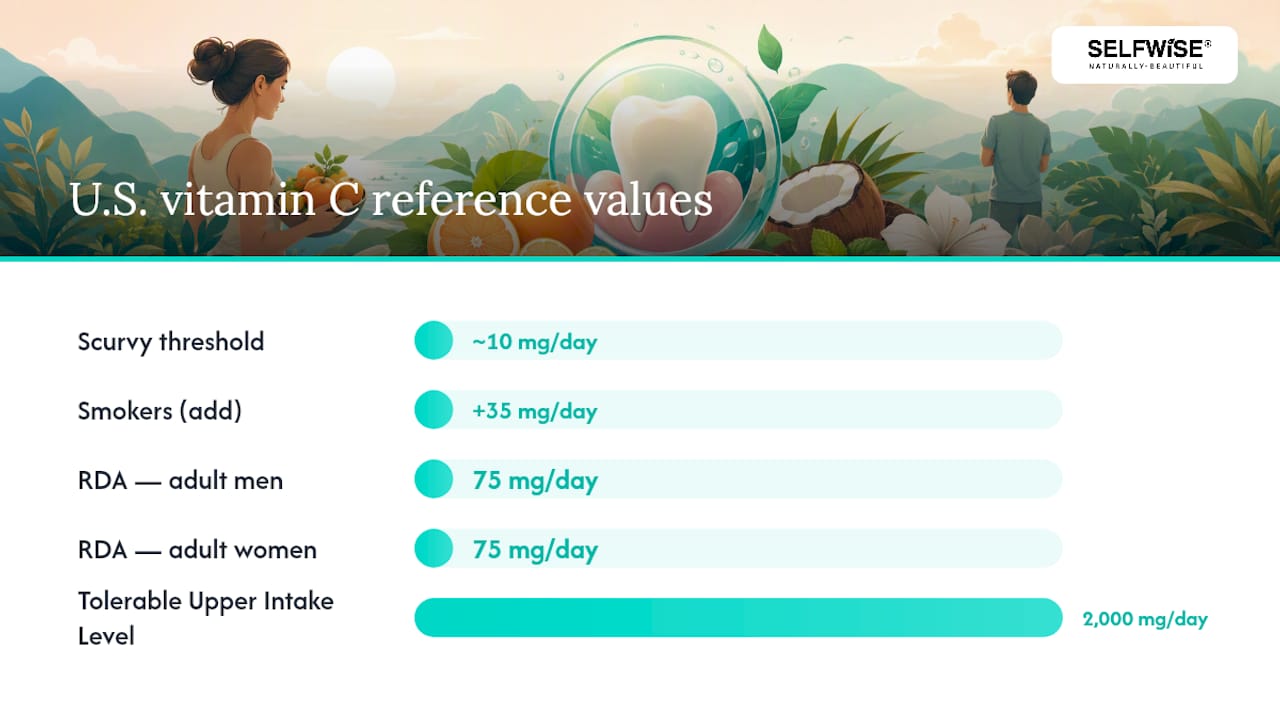
Clinical trials examining vitamin C as a periodontal adjunct have used a range of doses, typically between 250 mg/day and 1,000 mg/day, administered orally for periods of 4–12 weeks. Local delivery studies have used much smaller amounts applied directly to gingival tissue. Neither context implies that higher is better.
Safety considerations:
- Doses above the 2,000 mg/day UL commonly cause GI upset, diarrhea, and nausea
- High-dose supplementation increases urinary oxalate excretion, raising kidney stone risk, particularly in people with a history of calcium oxalate stones or kidney disease
- Vitamin C can enhance iron absorption, which matters for people with hemochromatosis
- High-dose vitamin C may interact with certain chemotherapy agents; always discuss with an oncologist before supplementing during cancer treatment
- Pregnancy: stay at or below the UL (1,800 mg/day for pregnant adults under 19; 2,000 mg/day for adults 19 and older); consult a clinician for doses above the RDA
For most healthy adults, 250–500 mg/day as a supplement is a practical, well-tolerated range when diet is insufficient. Consulting a clinician before exceeding 1,000 mg/day is a reasonable threshold, and anyone with kidney disease should discuss supplementation before starting. For background on how supplement formats and stability affect bioavailability, Onyx Wellness’s overview of beauty supplements covers the practical differences between supplement forms.
How to build vitamin C into your daily oral care routine
Knowing the mechanisms is one thing. Putting them into a daily habit is another.
- Hit your dietary target first. One cup of raw red bell pepper or a cup of strawberries gets most adults to or past the RDA without any supplement. Make one of those a daily default.
- Time supplements away from meals if GI sensitivity is a concern. Taking vitamin C with food reduces the likelihood of stomach upset at moderate doses.
- Add a lozenge or rinse for localized gingival exposure. Systemic vitamin C from food or pills reaches gum tissue through the bloodstream, but local application, via a dissolving lozenge or a stabilized ascorbate rinse, delivers ascorbate directly to the gingival sulcus. In vitro research shows that low concentrations of L-ascorbic acid (10–20 µg/ml) increase gingival fibroblast migration, while higher concentrations (50 µg/ml) can delay wound closure, so brief contact at moderate concentrations is the target, not prolonged soaking.
- Pair vitamin C intake with your brushing and flossing routine. Vitamin C supports the tissue; mechanical hygiene removes the biofilm that drives inflammation. Neither substitutes for the other.
- Use oil pulling or a natural mouthwash after vitamin C intake, not before. This avoids trapping acidic residue against enamel.
- Avoid prolonged contact with acidic vitamin C forms. Chewable vitamin C tablets and undiluted citrus juice held in the mouth for extended periods can contribute to erosive tooth wear. A Frontiers in Nutrition review specifically flags this risk.
- Choose stabilized derivatives in topical products. Plain ascorbic acid in aqueous solutions oxidizes quickly. Stabilized forms like ascorbic acid 2-phosphate salts survive shelf life better and are more practical in mouthwashes and rinses.
Pro Tip: If you use a vitamin C lozenge for gingival exposure, dissolve it slowly against the gum line, then rinse with plain water immediately after to clear residual acidity. Follow with your fluoride-free mouthwash or oil-pulling rinse. That sequence gives you local ascorbate contact without prolonged enamel acid exposure.
For a broader look at non-pharmacologic strategies that complement vitamin C, the natural gum regeneration guide on the Selfwisebrand site covers evidence-based methods that fit naturally alongside dietary and topical vitamin C use.
How long before you see improvement in your gums?
Timeline expectations matter because people who don’t see results in a week sometimes abandon a strategy that would have worked in a month.
Typical improvement windows:
- Bleeding reduction: Often the first sign to improve. In cases of genuine vitamin C deficiency, bleeding on brushing can decrease noticeably within 1–2 weeks of correcting intake.
- Swelling and color normalization: Gum tissue that was swollen or discolored from deficiency typically begins to normalize within 2–4 weeks of consistent adequate intake.
- Structural healing (collagen remodeling): Deeper connective tissue repair takes longer. Expect 4–12 weeks for meaningful structural improvement, depending on the severity of the deficit and whether professional treatment is also underway.
- Pocket depth and attachment level: These are clinical measurements that require a dental visit to track. Changes at this level, when they occur with adjunctive vitamin C, typically emerge over 8–12 weeks in trial settings.
What to track at home: bleeding when you brush or floss, visible swelling or puffiness along the gum line, color changes (healthy gums are coral pink, not red or purple), and any pain or sensitivity that worsens rather than improves.
When to escalate: If bleeding hasn’t improved after 2–4 weeks of consistent dietary correction and good hygiene, book a dental appointment. Worsening symptoms at any point, including new pain, increasing mobility, or pus, warrant prompt professional evaluation rather than continued self-management.
The dual-action case for vitamin C in periodontal care
Vitamin C functions as both a structural cofactor and an anti-inflammatory agent in gum tissue, and that duality is what makes it clinically interesting as an adjunct. Most nutrients do one or the other. Vitamin C does both: it builds the collagen matrix that gives gum tissue its mechanical integrity, and it quenches the oxidative stress that drives chronic inflammation. That combination explains why correcting deficiency can produce visible improvements in tissue quality relatively quickly, and why it’s being studied as an adjunct to non-surgical periodontal treatment.
The evidence is strongest for the association between low vitamin C and worse periodontal outcomes, and for the mechanistic plausibility of supplementation. Where the literature is thinner is in large, well-controlled RCTs that isolate vitamin C’s contribution from other treatment variables. The Journal of Periodontology review and the Frontiers in Nutrition expert commentary both call for more rigorous trials to define optimal doses and delivery methods before clinical protocols can be standardized.
Clinical implication: In non-surgical periodontal treatment, some clinicians use adjunctive vitamin C, either oral supplementation or local delivery, to support soft-tissue healing after scaling and root planing. The rationale is sound: vitamin C supports fibroblast activity, capillary formation, and immune resolution. The 2016 local delivery study reported marked decreases in inflammatory cells and increased capillary formation at treated gingival sites, which aligns with the mechanistic prediction. Clinicians using this approach treat it as an adjunct, not a replacement for mechanical debridement or, where indicated, antimicrobial therapy.
When do gum symptoms need professional care?
Self-management with dietary changes and better hygiene is appropriate for mild, early symptoms. These signs mean it’s time to call a dentist or physician instead.
Red flags requiring professional evaluation:
- Gum bleeding that persists despite 2–4 weeks of improved nutrition and consistent oral hygiene
- Any tooth that feels loose or has shifted position
- Pus or discharge around a tooth or along the gum line
- Severe or worsening gum pain
- Fever, unexplained fatigue, or swollen lymph nodes alongside oral symptoms (these suggest systemic involvement)
- Gums that are receding visibly or pulling away from teeth
When you see a dentist or physician, tell them: what supplements you’re taking and at what dose, any dietary changes you’ve made, when symptoms started, and whether anything has improved or worsened. That context helps them distinguish nutritional deficiency from active periodontal infection, which requires different treatment. For guidance on preventing further recession, Florida Special Care Dentistry’s gum recession prevention guide offers practical clinical context.
Urgent vs. routine: Pus, severe pain, fever, or tooth mobility warrant an urgent appointment, ideally within 24–48 hours. Persistent bleeding without those features is a routine appointment, but don’t delay past 2–4 weeks of self-management without improvement.
An evidence-first perspective on vitamin C and natural oral care
The evidence for vitamin C in gum health is genuinely compelling, and it fits naturally into a food-first, low-intervention approach to oral wellness. What stands out from the research is that vitamin C isn’t a supplement you take to compensate for poor hygiene. It’s a nutrient that supports the tissue quality that makes good hygiene effective. Healthy collagen means gums that resist bacterial invasion. Adequate antioxidant status means inflammation resolves rather than smoldering chronically.
At Selfwisebrand, the philosophy is the same: simple, effective ingredients that support what your body already does well. Dietary vitamin C is the foundation. A stabilized topical adjunct, whether a rinse, a lozenge, or a natural mouthwash that complements ascorbate’s tissue-support role, is a sensible addition for people who want localized gingival exposure or who are in a healing phase after dental work. What neither replaces is professional care. If your gums are bleeding consistently or you’re seeing structural changes, a dentist needs to assess the situation. Supplements and natural products are adjuncts, not substitutes.
Selfwisebrand natural mouthwash as a complement to your vitamin C strategy
Getting your vitamin C intake right is a meaningful step for gum tissue health. Pairing that with a mouthwash that protects enamel and reduces cariogenic bacteria makes the strategy more complete, especially during periods when gums are healing or when you’re using topical vitamin C adjuncts that introduce temporary acidity.
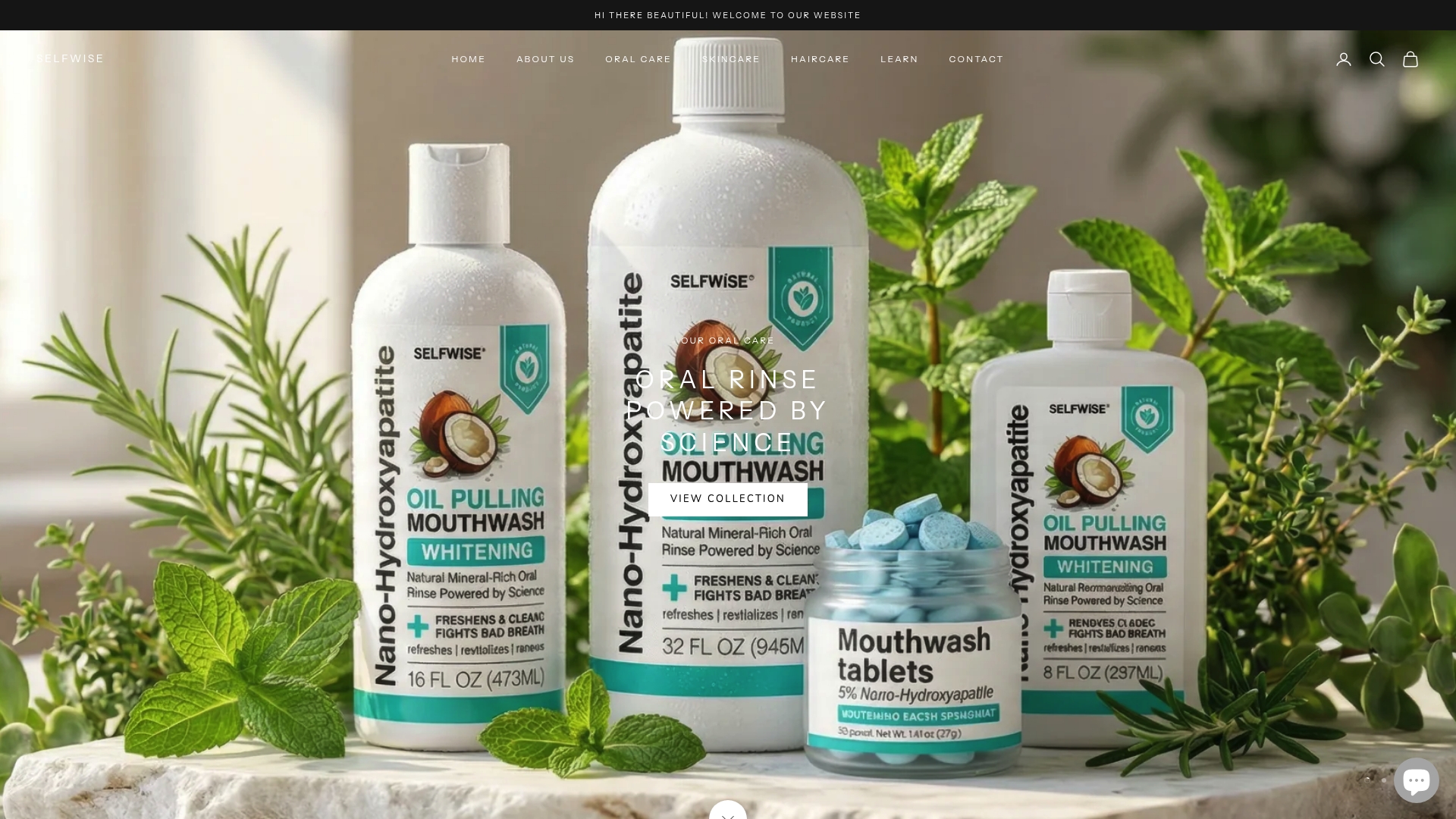
Selfwisebrand’s nano hydroxyapatite mouthwash tablets are fluoride-free, alcohol-free, and formulated to remineralize enamel without harsh chemicals. The xylitol mouthwash with nano hydroxyapatite adds xylitol’s bacteria-disrupting effect, which pairs well with vitamin C’s anti-inflammatory support during active gum healing. Browse the full Selfwisebrand mouthwash collection to find the right fit for your routine. For moderate or severe gum conditions, consult your dentist before relying on any adjunct product.
Useful sources for further reading
These sources back the claims in this article and are worth bookmarking if you want to go deeper:
- Beneficial Effects of Vitamin C in Maintaining Optimal Oral Health — Frontiers in Nutrition: expert review covering antioxidant/immune mechanisms and the enamel erosion caution for acidic forms.
- Vitamin C Deficiency — MedlinePlus: consumer-facing clinical summary of deficiency signs and general intake guidance.
- Bleeding Gums? You May Need More Vitamin C — Harvard Health: accessible overview of the bleeding-gums and vitamin C connection.
This article is general information, not a substitute for advice from a qualified doctor. Consult a qualified healthcare professional about your own circumstances before acting on anything here.
FAQ
Can vitamin C alone reverse gum disease?
No. Vitamin C is an effective adjunct that supports collagen repair and reduces inflammation, but it does not remove bacterial biofilm or treat active periodontal infection. Professional cleaning and consistent oral hygiene remain the foundation of treatment.
How much vitamin C do adults need for gum health?
The U.S. RDA for vitamin C is set with differences for men and women, and smokers require a higher intake. Many adults can meet their needs through diet including vitamin C-rich foods such as raw red bell pepper.
What are the first signs of vitamin C deficiency in the mouth?
Swollen, spongy gums that bleed easily on brushing are typically the earliest oral signs. Slow healing of mouth sores and a purple-red gum color can follow. Tooth mobility only appears in severe or prolonged deficiency.
Is it safe to use vitamin C rinses or lozenges on your gums?
Stabilized forms at low concentrations are generally safe and can increase gingival fibroblast activity. The caution is with prolonged contact from acidic chewable tablets or undiluted citrus, which can contribute to enamel erosion. Rinse with plain water after any vitamin C lozenge and follow with a neutral-pH mouthwash.
When should bleeding gums prompt a dental visit?
If gum bleeding persists after 2–4 weeks of improved vitamin C intake and consistent brushing and flossing, book a dental appointment. Tooth mobility, pus, severe pain, or fever alongside gum symptoms warrant an urgent visit rather than continued self-management.