Oregano Oil's Antibacterial Role in Natural Oral Care
Oregano oil, driven primarily by the compound carvacrol, is genuinely antibacterial in lab settings — it inhibits Streptococcus mutans and disrupts biofilm formation at measurable concentrations. That said, it carries no FDA approval as an oral therapy, and raw essential oil applied directly to your mouth can burn mucosal tissue. The practical takeaway: treat oregano oil as a supportive ingredient in properly formulated, pre-diluted products, not a standalone treatment.
- Carvacrol is the active phenolic compound responsible for most of oregano oil’s antimicrobial activity
- NCBI clinical overviews confirm no approved therapeutic indication for essential oils in the U.S.
- Never apply undiluted oregano essential oil to oral tissue
- Selfwisebrand’s nano hydroxyapatite and xylitol mouthwash options offer evidence-backed, mucosal-safe daily alternatives
Table of Contents
- How carvacrol actually kills oral bacteria
- What the lab evidence actually shows
- Safety risks and U.S. regulatory status
- How to safely use antimicrobial natural ingredients in your routine
- Safer, evidence-backed natural options for daily oral care
- What to look for when buying a natural antimicrobial mouthwash
- Key Takeaways
- Why safety-first formulation matters more than potency claims
- Selfwisebrand’s natural mouthwash options for a science-minded routine
- Useful sources
- FAQ
How carvacrol actually kills oral bacteria
The role of oregano oil’s antibacterial activity comes down to one molecule: carvacrol. It’s a lipophilic phenolic compound, which means it inserts directly into bacterial cell membranes. Once embedded, it disrupts bacterial membranes, collapses the proton motive force, and drains intracellular ATP — essentially starving the bacterium of the energy it needs to survive.
That membrane disruption also triggers enzyme dysfunction and pH gradient collapse across the cell wall. The result is rapid cell death in planktonic (free-floating) bacteria, plus a meaningful reduction in the bacteria’s ability to form protective biofilms.
At sub-inhibitory concentrations, carvacrol does something particularly relevant for oral health: it downregulates virulence genes — specifically gtfB, gtfC, gtfD, spaP, and gbpB in S. mutans. Those genes control glucan production, the sticky extracellular polysaccharide scaffold that holds dental plaque together. Less glucan means weaker biofilm architecture and reduced bacterial adhesion to tooth surfaces.
- Membrane permeabilization: carvacrol inserts into lipid bilayers, causing leakage
- ATP depletion: proton motive force collapse starves bacteria of energy
- Biofilm gene suppression: gtfB/C/D downregulation reduces plaque scaffold formation
- Reduced adhesion: lower surface hydrophobicity makes S. mutans less sticky
Pro Tip: Thymol, another phenolic in oregano oil, works synergistically with carvacrol. Products listing both compounds tend to show broader antimicrobial coverage in lab studies.
What the lab evidence actually shows
Strong, reproducible in vitro data supports oregano oil’s antibacterial properties against S. mutans. The human clinical evidence, however, is essentially absent.

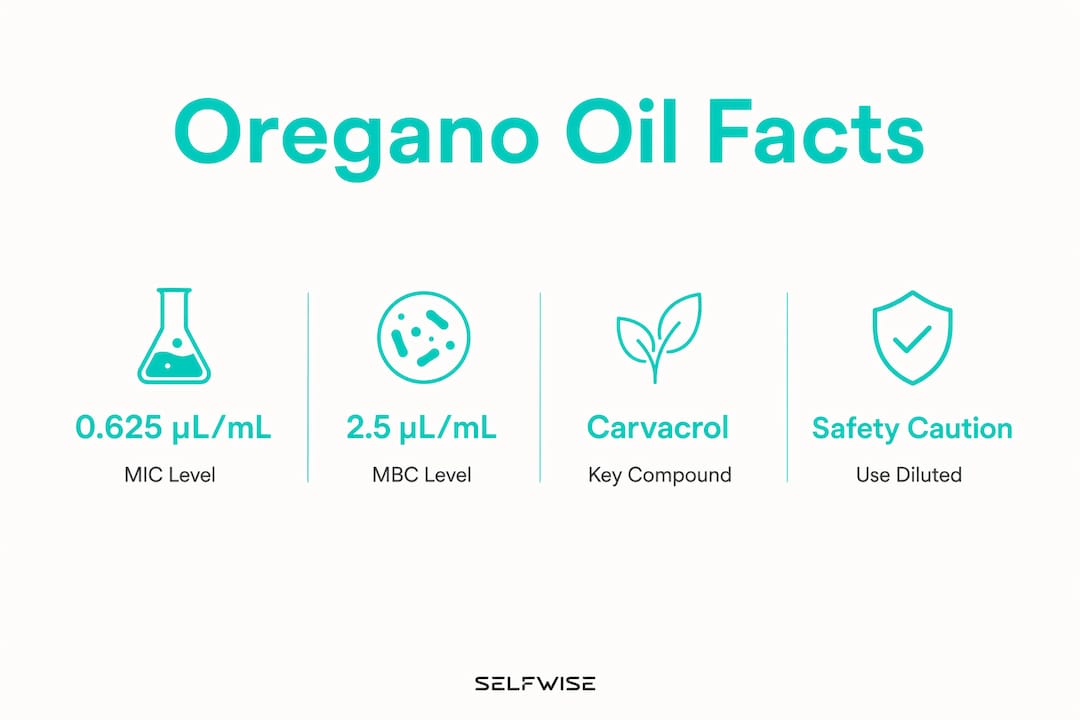
In one well-cited study, oregano essential oil achieved an MIC of 0.625 μL/mL and MBC of 2.5 μL/mL against S. mutans — outperforming the penicillin/streptomycin positive control in inhibition zone diameter. At half the MIC concentration, biofilm formation was inhibited by over 80%.
| Measure | Value | Pathogen |
|---|---|---|
| MIC (OEO) | 0.625 μL/mL | S. mutans |
| MBC (OEO) | 2.5 μL/mL | S. mutans |
| Biofilm inhibition at ½ MIC | over 80% | S. mutans |
| Carvacrol MIC | ~93.4 μg/mL | Streptococcus spp. |
An in vivo mouse model found no tooth decay in OEO-treated animals versus controls — promising, but mouse models don’t translate directly to human oral environments. Saliva flow, pH shifts from diet, and protein binding all affect how antimicrobials perform in a real mouth, and effective lab concentrations may not match what’s safe or achievable in human oral tissue.
The critical gap: Lab MICs are measured in controlled, protein-free media. In a human mouth, saliva dilutes concentrations, proteins bind active compounds, and pH fluctuates constantly. The concentration that kills S. mutans in a petri dish may be unachievable — or unsafe — in your mouth.
No U.S. regulatory body has approved oregano oil as a treatment for dental caries or any oral disease. The NCBI clinical overview classifies it as a supplement ingredient, not a medicine.
Safety risks and U.S. regulatory status
Oregano essential oil is not FDA-approved for treating any disease, and the gap between “antibacterial in a lab” and “safe to use in your mouth” is significant.
Direct contact with undiluted essential oil on oral mucosa can cause chemical burns. At high concentrations, carvacrol is cytotoxic to human cells — the same studies that show antibacterial activity also note this dose-dependent tissue risk. Ingesting large amounts causes GI distress, and there are documented concerns about oregano oil’s potential abortifacient effects during pregnancy.
Safety warning: Applying concentrated oregano essential oil directly to gum tissue or oral mucosa can cause immediate chemical burns. This is not a theoretical risk — it’s the primary reason expert safety guidance consistently advises against DIY essential-oil mouth rinses.
Contraindications and at-risk groups:
- Pregnancy: possible abortifacient effects; avoid entirely
- Children: mucosal tissue is more sensitive; no established safe pediatric dose
- Active mucosal lesions: direct contact worsens tissue damage
- Immunosuppression or chemotherapy: consult a clinician before any antimicrobial supplement
- Medication interactions: oregano oil may affect blood thinners and immunosuppressants; check with your prescriber
This article is general information, not medical or dental advice. Confirm current guidance with a qualified healthcare provider for your specific situation.
How to safely use antimicrobial natural ingredients in your routine
Prioritize commercially formulated, pre-diluted products with labeled concentrations and third-party testing. That single principle covers most of the safety risk.
- Check the ingredient form. “Oil of oregano” (a carrier-oil dilution, often sold as a supplement) is very different from “oregano essential oil” (concentrated phenolics). The former is generally safer for incidental oral contact; the latter requires professional formulation.
- Never DIY an undiluted essential oil rinse. No home dilution method reliably achieves the precision needed for mucosal safety.
- Follow product directions exactly. Manufacturer-specified dilutions are based on formulation testing — don’t exceed them.
- Patch-test topical products first. Apply a small amount to inner forearm skin before oral use if you’re trying a new formulation.
- Avoid swallowing. Even diluted oral rinses with essential oils are designed for rinsing, not ingestion.
- Prefer neutral-pH formulations. Products designed for oral mucosa (mouthwash tablets, pre-diluted rinses) maintain a pH that doesn’t stress tissue.
- Tell your dentist. If you’re combining any essential-oil product with prescription oral treatments, your dental provider needs to know.
Pro Tip: When evaluating a product label, look for a stated concentration of the active compound (e.g., “0.1% carvacrol”) rather than just “contains oregano oil.” Vague labeling is a red flag for inconsistent formulation.
Safer, evidence-backed natural options for daily oral care
For daily natural oral care, xylitol and nano hydroxyapatite have clearer safety and efficacy profiles than DIY oregano essential oil rinses. Both have human clinical data behind them; oregano oil does not, at least not for oral indications.
| Ingredient | Evidence level | Safety profile | Best use case |
|---|---|---|---|
| Nano hydroxyapatite | Human clinical trials | Excellent mucosal safety | Remineralization, daily rinse |
| Xylitol | Human clinical trials | Well-established, safe | Anti-cariogenic, daily use |
| Essential-oil extracts (formulated) | In vitro + limited animal | Mucosal-safe when diluted | Supplementary antimicrobial rinse |
| Oregano essential oil (raw) | In vitro only | Mucosal burn risk | Not recommended for DIY use |
Xylitol works by starving S. mutans of fermentable sugar — the bacteria metabolize xylitol but can’t produce acid from it, which disrupts the caries cycle. Nano hydroxyapatite physically remineralizes enamel by depositing calcium phosphate into micro-lesions, a mechanism with solid human trial support.
Selfwisebrand’s nano hydroxyapatite mouthwash tablets combine remineralization with a formulation designed for oral mucosa — no alcohol, no harsh chemicals, and a concentration you can actually trust. The xylitol mouthwash options add anti-cariogenic activity for daily maintenance. For readers interested in natural anti-bacterial oral ingredients more broadly, the evidence base for these two compounds is substantially stronger than for essential oils used alone.
- Xylitol and nano hydroxyapatite both have human clinical data; oregano oil does not for oral indications
- Formulated essential-oil rinses are safer than raw oils but still require concentration transparency
- Third-party testing separates credible natural products from marketing-only claims
Pro Tip: If you want the antimicrobial benefit of essential oils without the mucosal risk, look for a formulated essential oils oral rinse that lists tested concentrations and carries a third-party safety certificate.
What to look for when buying a natural antimicrobial mouthwash
Choose products with transparent labeling, third-party testing, and formulations specifically designed for oral mucosa. Here’s the checklist:
- Stated active concentration: the label should name the compound and its percentage, not just the plant source
- Ingredient form clarity: “nano hydroxyapatite,” “xylitol,” or “carvacrol” — not just “natural extracts”
- pH information: oral rinses should be near-neutral (pH 6–8) to protect enamel and tissue
- Third-party microbiology or contaminant testing: a certificate of analysis from an independent lab
- Pregnancy and pediatric warnings: their presence signals the manufacturer takes safety seriously
- Dosage and frequency guidance: clear instructions, not vague “use as needed”
- Return or quality assurance policy: a brand confident in its formulation stands behind it
Questions worth asking any manufacturer directly:
- What is the concentration of the active compound in the finished rinse?
- Has this formulation been tested on oral cells or in human safety studies?
- What are the recommended dilution and frequency instructions?
The core trade-off in natural antimicrobial products is potency versus mucosal safety. Higher concentrations of phenolics like carvacrol kill more bacteria in a lab — but they also increase tissue irritation risk in a real mouth. Products that acknowledge this trade-off and publish their formulation rationale are worth more than those claiming maximum potency with no safety context. For a broader look at oral care ingredients to avoid, Selfwisebrand’s guide covers the most common labeling red flags.
Key Takeaways
Oregano oil (carvacrol) is antibacterial in lab studies but not an approved oral therapy in the U.S. — always use it in properly formulated, pre-diluted products, never raw.
| Point | Details |
|---|---|
| Carvacrol mechanism | Disrupts bacterial membranes, depletes ATP, and suppresses biofilm genes (gtfB/C/D) in S. mutans. |
| Lab evidence | MIC of 0.625 μL/mL (OEO) and ~93.4 μg/mL (carvacrol), and over 80% biofilm inhibition at half MIC; no human clinical trials for oral disease. |
| Safety limits | Undiluted essential oil causes mucosal burns; contraindicated in pregnancy, children, and active lesions. |
| Regulatory status | Not FDA-approved as a therapy; classified as a supplement ingredient by NCBI clinical guidance. |
| Selfwisebrand options | Nano hydroxyapatite mouthwash tablets and xylitol mouthwash offer evidence-backed, mucosal-safe daily alternatives. |
Why safety-first formulation matters more than potency claims
The conversation around oregano oil in oral care tends to split into two camps: enthusiasts who cite the lab data as proof it works, and skeptics who dismiss it entirely. Both miss the point.
The lab data is real. Oregano essential oil showed an MIC of 0.625 μL/mL against S. mutans, while carvacrol itself exhibited MIC values around 93.4 μg/mL for Streptococcus strains, with over 80% biofilm inhibition at sub-inhibitory concentrations — that’s not marginal activity. Carvacrol genuinely disrupts the molecular machinery that makes dental plaque dangerous. The problem isn’t the compound; it’s the delivery. Concentrated essential oil applied to oral mucosa is a different product than a carefully formulated rinse with a tested, stable carvacrol concentration. Treating them as equivalent is where most DIY advice goes wrong.
What the natural oral care space actually needs is more products that take formulation seriously: stated concentrations, pH-appropriate carriers, third-party safety testing, and honest labeling about what the evidence supports. Xylitol and nano hydroxyapatite already meet that standard. Oregano-derived ingredients could, with proper development — but “could” and “does” are not the same thing yet.
Selfwisebrand’s natural mouthwash options for a science-minded routine
If you’ve read this far, you already know the answer isn’t “use oregano oil” or “avoid it entirely.” The answer is: use ingredients with real evidence behind them, in formulations you can trust.
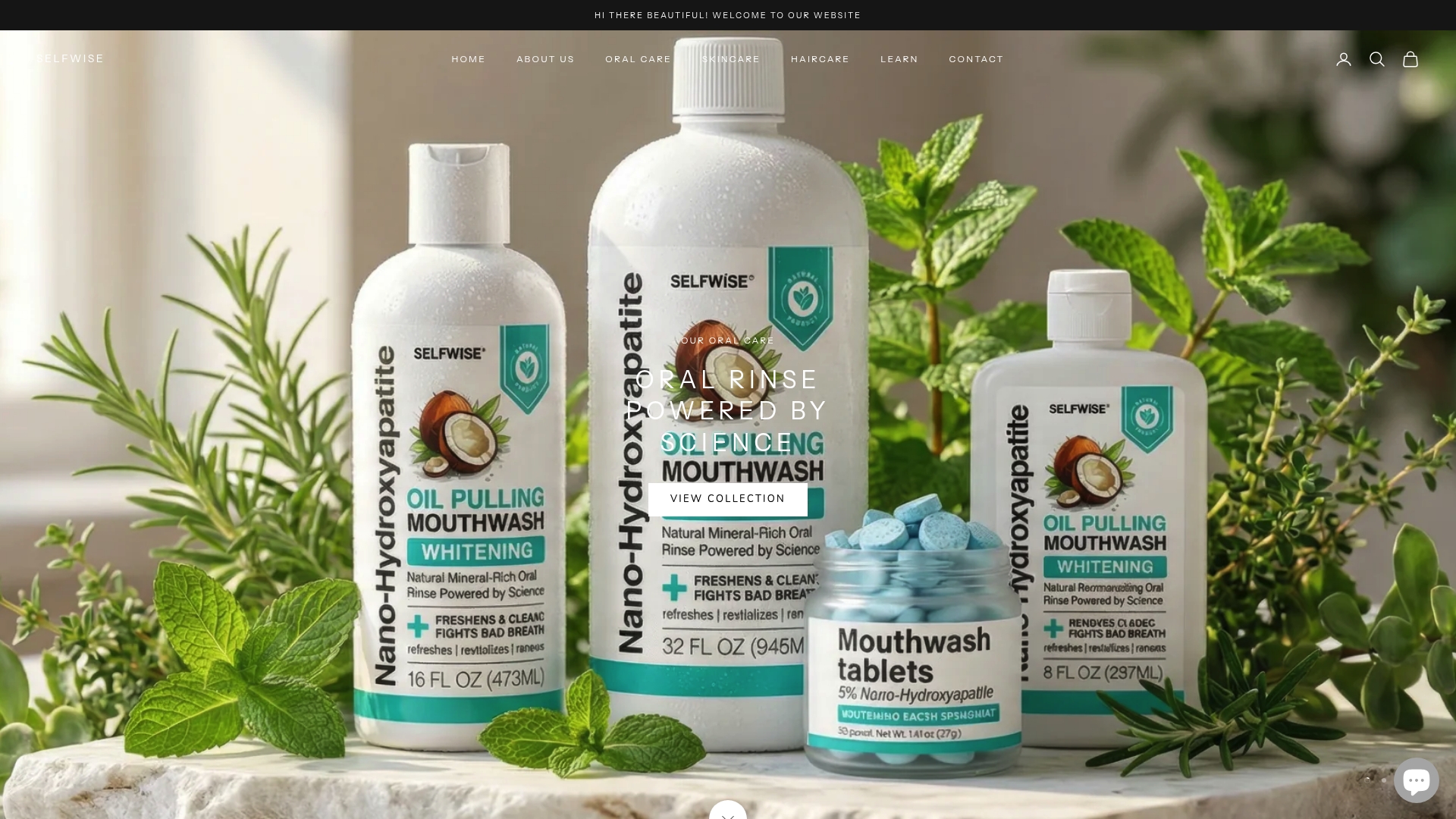
Selfwisebrand’s oral care collection is built around exactly that standard. The nano hydroxyapatite mouthwash tablets remineralize enamel using a compound with human clinical backing, in a fluoride-free, alcohol-free format that’s gentle on oral tissue. The xylitol mouthwash options add anti-cariogenic activity for daily maintenance without the mucosal risk of essential-oil rinses. Every product lists its active ingredients clearly, and the formulations are designed for the oral environment specifically — not adapted from general-purpose essential oil products.
If you want to build a natural oral care routine that goes beyond marketing claims, browse the full collection and check the ingredient labels yourself. That’s exactly the kind of scrutiny good formulation can withstand.
Useful sources
The claims in this article draw from peer-reviewed lab studies and clinical overviews. These are the primary sources worth reading directly:
- Antibacterial activity of oregano essential oils against S. mutans in vitro — MIC/MBC data, biofilm inhibition figures, and gene expression analysis (Springer Nature / PMC)
- Antibacterial and Antibiofilm Activity of Carvacrol against Oral Pathogenic Bacteria — carvacrol MIC values against Streptococcus spp. and mechanism detail (MDPI)
- NCBI clinical overview on essential oil safety — regulatory status, contraindications, and safety guidance for essential oil use
- Anti-Biofilm Activity of OEO against S. mutans in vitro and in vivo — mouse model data and biofilm inhibition results
When evaluating any natural oral-care product, prefer brands that reference third-party testing and human safety data over those citing only in vitro studies as proof of efficacy.
FAQ
Is oregano oil actually antibacterial in the mouth?
Yes, in lab studies — oregano oil and its primary compound carvacrol show strong antibacterial activity against S. mutans and Candida albicans. No human clinical trials have confirmed these effects translate to oral disease prevention.
Can you put oregano oil directly in your mouth?
Never use undiluted oregano essential oil on oral tissue — it can cause chemical burns to the mucosa. Only use commercially formulated, pre-diluted products designed specifically for oral use.
What concentration of oregano oil is safe for oral rinses?
Lab studies used MICs around 0.625 μL/mL for antibacterial effects, but safe in-mouth concentrations depend on the finished formulation, carrier, and pH. Follow manufacturer instructions; don’t attempt to dilute raw essential oil yourself.
Is oregano oil FDA-approved for oral health?
No. The FDA has not approved oregano oil as a treatment for any oral condition. It’s classified as a supplement ingredient, and therapeutic claims about it are not recognized by U.S. regulatory bodies.
What are safer daily alternatives to oregano oil rinses?
Xylitol and nano hydroxyapatite both have human clinical data supporting their use in daily oral care. Selfwisebrand’s mouthwash collection includes both options in formulations designed for mucosal safety.