Peppermint Oil in Oral Care: Benefits and Safe Use
Peppermint oil is defined as a natural antimicrobial and anti-inflammatory agent derived from Mentha piperita, and its role in oral care centers on freshening breath, inhibiting harmful bacteria, and soothing gum tissue. Its two primary active components, menthol and menthone, drive most of these effects. Both herbal medicine research and dental science recognize peppermint oil as a credible adjunctive ingredient in natural oral hygiene routines. Products like natural mouthwashes, mouth sprays, and oil pulling formulas increasingly rely on it for good reason.
What is the role of peppermint oil in oral care?
Peppermint oil acts as a natural antimicrobial agent that targets the bacteria responsible for bad breath, plaque, and gum disease. Unlike synthetic mouthwash ingredients, it works through multiple mechanisms at once, attacking bacterial cell membranes and disrupting quorum sensing, the process bacteria use to coordinate and form biofilms. This multisite antimicrobial action reduces the likelihood of bacterial resistance, which is a real advantage over conventional single-target antibiotics.

Menthol, the dominant compound in peppermint oil, delivers the familiar cooling sensation that signals freshness. Menthone contributes additional antimicrobial strength. Together, they make peppermint oil one of the most recognized essential oils for oral care across both traditional herbal practice and modern dental research.
The oil also functions as a breath freshener through two distinct pathways. First, it directly inhibits the anaerobic bacteria that produce sulfur compounds, the actual cause of bad breath. Second, its volatile compounds provide an immediate cooling effect that masks residual odor. This dual action explains why peppermint has been a staple flavoring in oral care products for over a century.
How does peppermint oil fight oral bacteria and freshen breath?
Peppermint oil shows significant inhibitory activity against Streptococcus mutans, the primary bacterium responsible for tooth decay and plaque formation. Laboratory studies confirm dose-dependent inhibition of oral pathogens including Streptococcus mutans and Candida albicans, meaning higher concentrations produce larger zones of bacterial growth inhibition. That finding matters because it gives formulators a clear basis for setting effective concentrations in rinses and sprays.
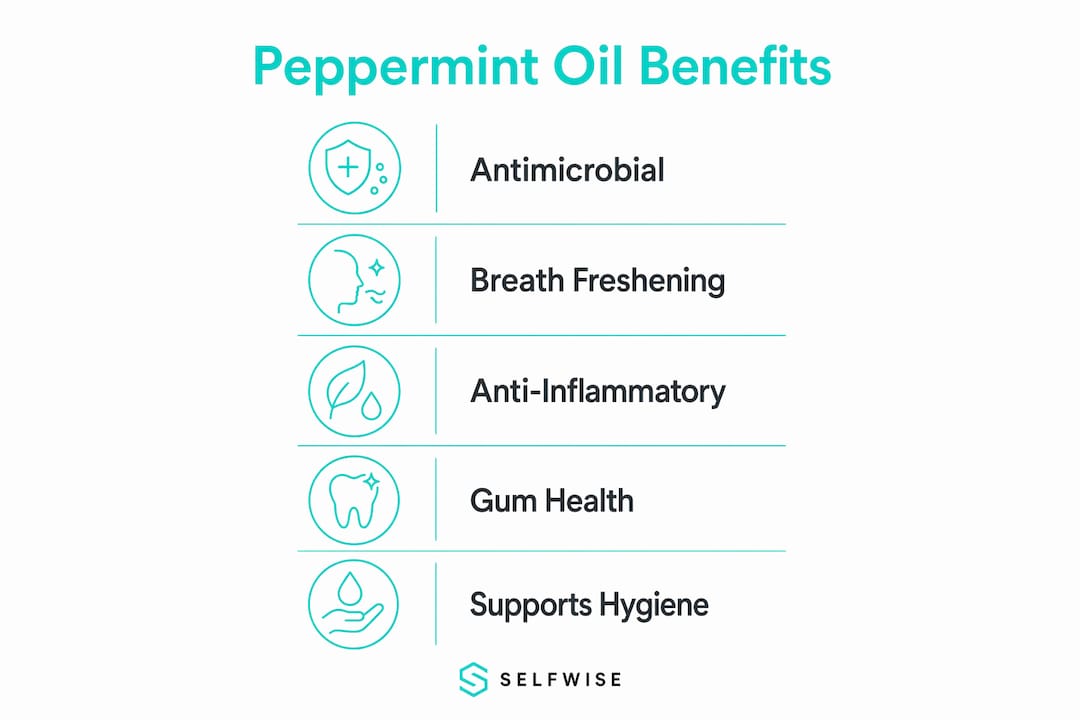
Peppermint oil also targets the bacteria linked to halitosis, gingivitis, and periodontitis by inhibiting biofilm formation before it can anchor to tooth surfaces. Biofilm is the sticky precursor to plaque. Stopping it early reduces the bacterial load that causes both decay and gum inflammation.
Key bacteria that peppermint oil acts against include:
- Streptococcus mutans (primary cavity-causing pathogen)
- Porphyromonas gingivalis (linked to periodontitis)
- Fusobacterium nucleatum (associated with gum disease progression)
- Candida albicans (oral yeast linked to thrush and inflammation)
As a natural breath freshener, peppermint oil provides immediate freshness and conceals odor-causing bacteria without causing the dryness or irritation that synthetic mouthwash ingredients often produce. That makes it particularly well-suited for people who find alcohol-based rinses harsh or drying.
Pro Tip: When choosing a peppermint-based mouth spray or rinse, look for products that list peppermint oil as a named ingredient rather than “natural flavor.” Named ingredients indicate a deliberate concentration, not a trace flavoring.
Does peppermint oil support gum health?
Peppermint oil reduces gum inflammation through direct anti-inflammatory action on irritated tissue. Studies report reduced gum swelling and plaque levels when peppermint oil is used as an adjunctive mouth rinse ingredient. That reduction in swelling matters because chronic low-grade gum inflammation is the starting point for gingivitis and, if untreated, periodontitis.
The oil’s soothing properties come from menthol’s ability to activate cold-sensitive receptors in gum tissue, which temporarily reduces the sensation of pain and irritation. This is not just a masking effect. Menthol also inhibits certain inflammatory signaling pathways at the cellular level, providing a genuine, if modest, anti-inflammatory benefit.
Peppermint oil fits naturally into several gum care formats:
- Mouth rinses: A few drops in water or as part of a formulated rinse, used after brushing
- Mouth sprays: Convenient for on-the-go gum soothing and breath freshening between meals
- Oil pulling blends: Combined with carrier oils for a longer-contact antimicrobial treatment
- Natural toothpaste: As a flavoring and active ingredient that contributes to plaque reduction
Pro Tip: Always dilute peppermint essential oil before oral use. Undiluted essential oil applied directly to gum tissue can cause irritation or chemical burns. A concentration of 1–2% in a carrier oil or water-based rinse is a safe starting point for home use.
What are the limitations and safety considerations?
Peppermint oil’s effectiveness is not uniform across all products or studies. Antimicrobial efficacy varies significantly depending on the plant’s genotype, growing conditions, and extraction method. Two bottles labeled “peppermint essential oil” can have meaningfully different chemical profiles and therefore different potency against oral pathogens. This variability explains why some studies show strong results while others show modest effects.
Safety and responsible use require attention to the following points:
- Dilute before use. Undiluted peppermint oil is too concentrated for direct oral application. Use it in a formulated product or dilute to 1–2% in a carrier.
- Avoid swallowing. Peppermint oil is not safe to ingest in large amounts. Rinse and spit, do not swallow.
- Keep away from young children. Menthol can cause breathing difficulties in children under two years old. Keep peppermint oil products out of reach.
- Do not replace professional dental care. Clinical evidence supports peppermint oil as adjunctive care only. It does not replace brushing, flossing, or professional cleanings.
- Check for sensitivities. Some people experience mild allergic reactions to Mentha piperita. Discontinue use if you notice unusual irritation, swelling, or redness.
The lack of standardized dosing protocols in essential oil oral care is a real gap. No universally agreed concentration or frequency has been established for clinical use. That means choosing products from brands that formulate with specific, tested concentrations is more reliable than DIY approaches using raw essential oil.
Peppermint oil works best as a supportive agent between dental visits, not as a standalone treatment. Think of it as a daily maintenance tool that keeps bacterial load lower between professional cleanings, not a substitute for them.
How to use peppermint oil in your daily oral hygiene routine
Integrating peppermint oil into your routine is straightforward when you choose the right product format. The most practical options are formulated products where the concentration and delivery are already optimized, rather than raw essential oil you dilute yourself.
Peppermint oil works well alongside proven oral care ingredients. Combination formulations with standard antiseptics can reduce required doses and improve tolerance, which means you get effective antimicrobial coverage with less chemical exposure overall. Pairing peppermint oil with nano hydroxyapatite, for example, addresses both bacterial control and enamel remineralization in a single routine step.
The table below shows practical formats and their primary oral care benefits:
| Format | Primary benefit | Best use time |
|---|---|---|
| Peppermint mouth rinse | Antimicrobial, breath freshening | After brushing, morning and night |
| Peppermint mouth spray | On-the-go freshness, gum soothing | Between meals |
| Oil pulling with peppermint | Biofilm reduction, gum support | Morning, before brushing |
| Peppermint toothpaste | Plaque control, flavor | Twice daily brushing |
| Peppermint mouthwash tablets | Portable freshness, enamel support | Travel or on-the-go use |
For fresh breath and oral health, the most consistent results come from daily use of a peppermint-infused rinse or spray paired with regular brushing and flossing. Occasional oil pulling with a peppermint-based formula adds a longer-contact antimicrobial treatment that reaches areas a toothbrush misses.
Pro Tip: Use a peppermint mouth spray immediately after meals when brushing is not possible. It reduces the bacterial surge that follows eating and keeps breath fresh without requiring water or a sink.
Key Takeaways
Peppermint oil delivers genuine antimicrobial, anti-inflammatory, and breath-freshening benefits in oral care, but it works best as a daily adjunct to professional dental hygiene, not a replacement for it.
| Point | Details |
|---|---|
| Antimicrobial action | Peppermint oil inhibits Streptococcus mutans, Candida albicans, and biofilm-forming pathogens. |
| Gum health support | Anti-inflammatory properties reduce gum swelling and plaque when used in rinses or sprays. |
| Breath freshening | Menthol targets odor-causing bacteria and delivers immediate cooling freshness without dryness. |
| Variability in potency | Efficacy depends on plant genotype and extraction method; choose formulated products over raw oil. |
| Adjunctive use only | Peppermint oil supports professional dental care but does not replace brushing, flossing, or cleanings. |
Peppermint oil in natural oral care: my honest assessment
I have followed the natural oral care space for years, and peppermint oil is one of the few ingredients that consistently earns its place in the conversation. The research is real. The antimicrobial activity against Streptococcus mutans and biofilm-forming bacteria is documented across multiple independent studies. The anti-inflammatory effect on gum tissue is modest but genuine. And the breath-freshening experience is immediate and noticeable in a way that builds daily compliance.
What I find underappreciated is the resistance advantage. Because peppermint oil attacks bacteria through multiple mechanisms at once, it is much harder for oral pathogens to adapt to it than to a single-compound antiseptic. That is a meaningful long-term benefit for people who use it consistently.
The part that gets oversold is the idea that peppermint oil can replace professional dental care. It cannot. No essential oil can reverse active gum disease or remineralize a cavity on its own. The honest framing is this: peppermint oil is a strong daily maintenance tool that keeps your mouth in better condition between dental visits. Used that way, it genuinely earns its place in a natural dental products routine.
My advice is to skip the DIY dilution experiments and choose products where the concentration is already formulated and tested. The variability in raw essential oil quality is too high for consistent results. A well-made peppermint-infused rinse or oil pulling formula gives you the benefits without the guesswork of measuring drops at home.
— Viktor
Selfwisebrand’s natural peppermint oral care line
Selfwisebrand builds its products around the same principle this article covers: simple, effective ingredients that work with your biology, not against it. Peppermint oil features in several formulas designed for people who want real antimicrobial and breath-freshening benefits without synthetic additives or fluoride.
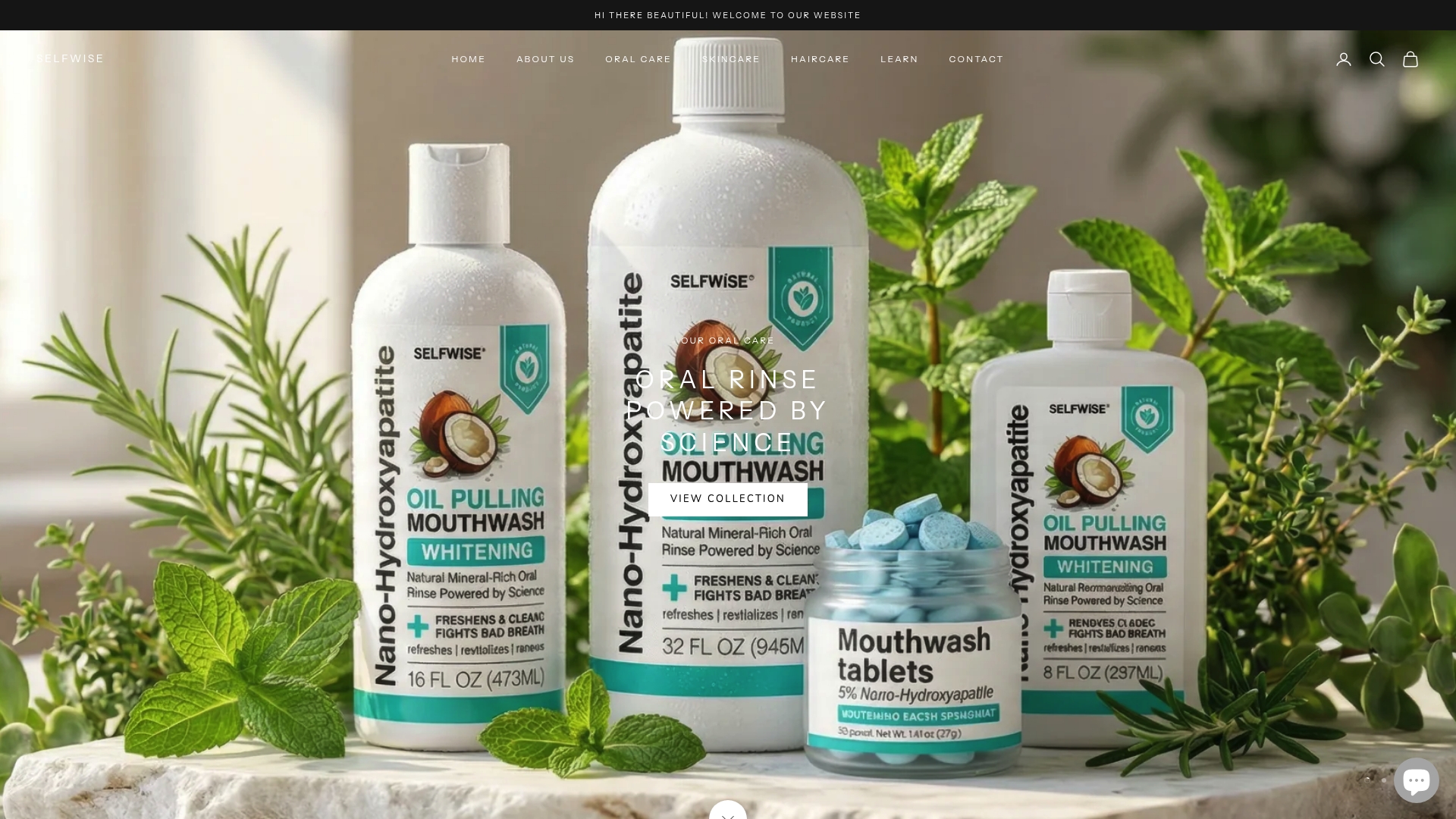
The fluoride-free collection includes peppermint-infused options formulated with nano hydroxyapatite and xylitol for enamel support alongside bacterial control. The natural mouthwash range covers daily rinses and oil pulling formulas that put peppermint oil’s antimicrobial properties to work in a ready-to-use format. If you want peppermint oil’s benefits without the variability of raw essential oil, these products give you a consistent, tested starting point.
FAQ
What does peppermint oil do for your teeth and gums?
Peppermint oil inhibits bacteria like Streptococcus mutans that cause plaque and decay, and its anti-inflammatory properties reduce gum swelling associated with gingivitis. It also freshens breath by targeting the anaerobic bacteria that produce sulfur compounds.
Is peppermint oil safe to use in your mouth every day?
Yes, when used in a properly formulated and diluted product. Undiluted peppermint essential oil is too concentrated for direct oral use and can irritate gum tissue, so always choose a formulated rinse, spray, or toothpaste.
Can peppermint oil replace mouthwash?
Peppermint oil can be a key ingredient in a natural mouthwash, but it is an adjunctive tool, not a replacement for brushing, flossing, or professional dental care. Clinical evidence supports its use as supportive care alongside established oral hygiene practices.
Why does peppermint oil vary in strength between products?
Peppermint oil’s antimicrobial potency depends on the plant’s genotype, growing conditions, and extraction method. These variables affect the concentration of menthol and menthone, which is why formulated products with tested concentrations deliver more consistent results than raw essential oil.
What oral care ingredients work well with peppermint oil?
Peppermint oil pairs well with nano hydroxyapatite for enamel remineralization, xylitol for additional bacterial inhibition, and carrier oils for oil pulling. Combination formulas allow lower concentrations of each ingredient while maintaining broad-spectrum oral health benefits.