Article: Castor Oil for Beard Growth: What It Does and Doesn't
Castor Oil for Beard Growth: What It Does and Doesn't
Castor oil is a good conditioner for the beard you already have: it adds softness and shine, and many men use it as part of a grooming routine. What decides how thick your beard grows is mostly genetics, age and your sensitivity to androgens, the hormones that drive facial hair. So the useful way to use castor oil is as a care step, with realistic expectations, a patch test first, and a clean routine around the mouth and chin, where a beard meets your daily oral care.
This guide covers what shapes beard growth, what castor oil can reasonably do, how to apply it safely, and how to keep your teeth, gums and breath in good shape while the beard fills in.
TL;DR
- Beard density is set mainly by genetics, age and androgen sensitivity, so no oil rewrites it.
- Castor oil is best used as a conditioner for softness, shine and a groomed look. Judge it after a full 90 days, not a few weeks.
- Patch test first, keep it away from your eyes, and skip broken or irritated skin.
- A beard also needs an oral care routine: food, oil and moisture collect around the mouth, so rinse and clean thoroughly.
Table of Contents
- What actually decides how your beard grows
- What castor oil can do for a beard
- What results to expect, and when
- What about a patchy beard or little growth?
- How to apply castor oil to a beard
- Skin care around the beard
- The part most beard guides skip: your mouth
- A natural oral care routine that suits a beard
- Ready to build your routine?
- Our perspective
- FAQ
- Sources
What actually decides how your beard grows
Before you spend money on any oil, it helps to know what drives beard growth. Beard hair responds to androgens, which include testosterone and DHT (dihydrotestosterone, a more potent form of testosterone). Dermatologist Dmitri Wall told USA Today that genetics, age and androgen sensitivity are the most important factors, and that there is a limit to what can be changed if you are not genetically programmed for a dense beard.
Two practical points follow from that:
- Your follicles set the pattern. The number of beard follicles on your face and how they respond to hormones is largely built in. Patchy areas often reflect that pattern rather than a lack of moisture.
- Growth is slow and uneven. Beard hair is commonly estimated to grow about a centimeter a month, and individual hairs cycle at different times. A calculator such as this beard growth time estimate gives a rough picture, but your own rate will vary.
That is why two men using the same product for the same time can get very different results. The oil is not the variable. The follicles are.
What castor oil can do for a beard
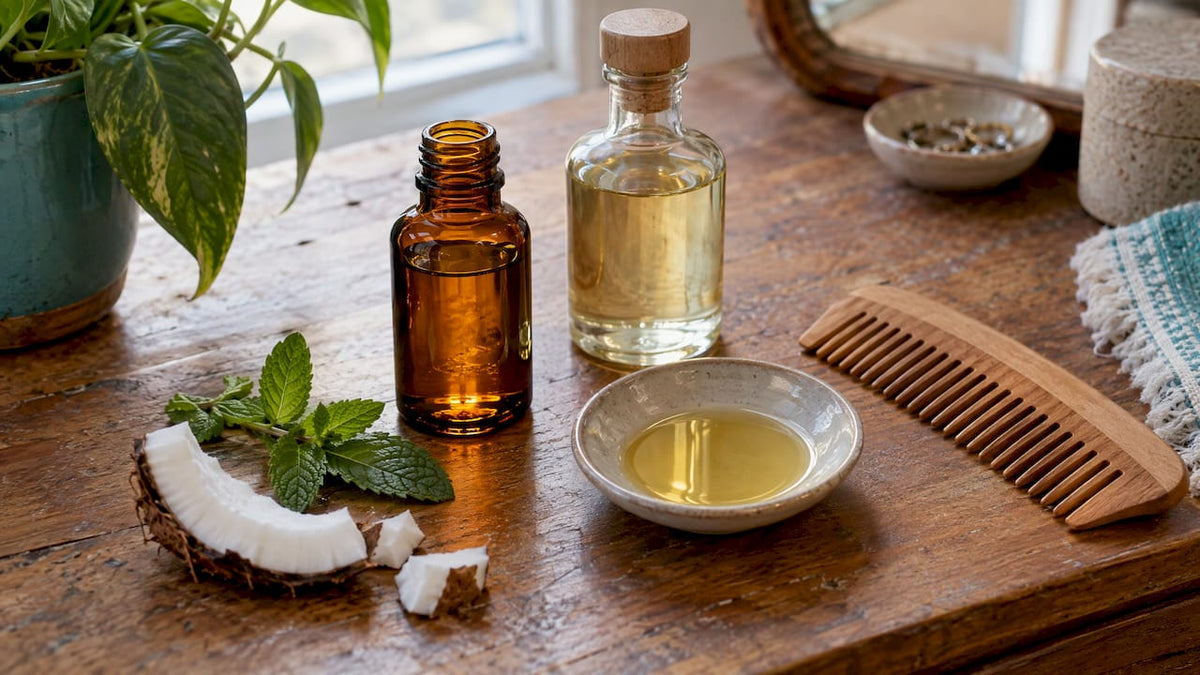
Castor oil is a thick, sticky plant oil pressed from castor beans. Jamaican black castor oil is a darker version made by roasting the beans first. Both are popular in hair care because they coat the hair and feel rich.

That coating is where the real benefit sits. Research on plant oils for hair has looked at this closely. A 2022 systematic review in the Journal of Drugs in Dermatology covering 22 articles found weaker evidence that castor oil improves hair luster. In plain terms, the clearest benefit is how the hair looks and feels.
For a beard, that can mean:
- Softer hair. Coarse beard hair can feel wiry, especially in the first weeks. A conditioning oil makes it easier to comb and shape.
- More shine. Light reflects more evenly from a smooth, coated hair shaft.
- A fuller look. When ends break less and hairs lie more evenly, a beard can look thicker even though the number of hairs has not changed.
That last point is worth holding onto. Growth, density, retention and shine are four different outcomes, and before-and-after photos tend to blur them together. If your beard looks better after a month of oil, it probably is better groomed. That is a real result, and it is the one castor oil is suited to.
If you want the longer background on castor oil and hair in general, our guide on what castor oil does for hair growth walks through it, and our overview of what castor oil is and how it is used covers lashes, brows, face and skin.
What results to expect, and when
You may have heard of the “three-month beard rule.” It says to leave a new beard alone for about 90 days before judging it. Wall describes it as a sensible practical idea rather than a biological threshold: beard hairs grow at different rates, and trimming early can make you judge your beard before it has had a fair chance to show its density.
This matters for castor oil because the two timelines overlap. If you start an oil and a beard looks fuller at three months, some of that is simply the beard maturing. Without a comparison, you cannot credit the oil for it.
A sensible way to set expectations:
| Timeframe | What you can reasonably notice |
|---|---|
| First days to a few weeks | Softer feel, more shine, easier styling |
| About one to two months | Smoother texture, fewer flyaways, a neater edge when combed |
| Around 90 days | Your beard’s natural density, which is what you are really judging |
| Six months and beyond | Final length and fullness, set mainly by genetics and age |
Take a photo in the same light on day one, and again at 30, 60 and 90 days. It is the easiest way to judge your own progress honestly.
What about a patchy beard or little growth?
This is the question most men searching this keyword are really asking. The honest answer is that patchiness is usually a follicle and hormone question, and a conditioning oil does not create follicles that are not there.
What you can do is:
- Give it time. Some patches fill in gradually, and the 90-day window exists for that reason.
- Groom around it. Keeping hair soft and well shaped makes thinner areas less noticeable. This is where oil helps.
- Look after the skin underneath. Healthy, exfoliated skin is more comfortable and avoids ingrown hairs.
- Talk to a dermatologist if growth is much lower than expected for your age, or if you notice sudden patchy loss. They can look at the underlying cause, which an oil cannot.
How to apply castor oil to a beard
Castor oil is thick, so less is better. Most beard guidance for oils comes down to a small amount worked in evenly.
Step 1: Patch test first
Castor oil can cause itching, redness or rashes in people with sensitive skin or allergies. Health.com advises a patch test before broader use and stopping if redness, itching or swelling develops. Apply a small amount to a small patch of skin, such as the inner forearm or the side of your jaw, and wait. Our 48-hour patch test guide explains who is more likely to react and how to test properly.
Step 2: Start with clean, dry skin and beard
Wash your face with a gentle cleanser and pat dry. Oil applied over dirt and dead skin sits on the surface and can leave the skin feeling congested.
Step 3: Use a small amount
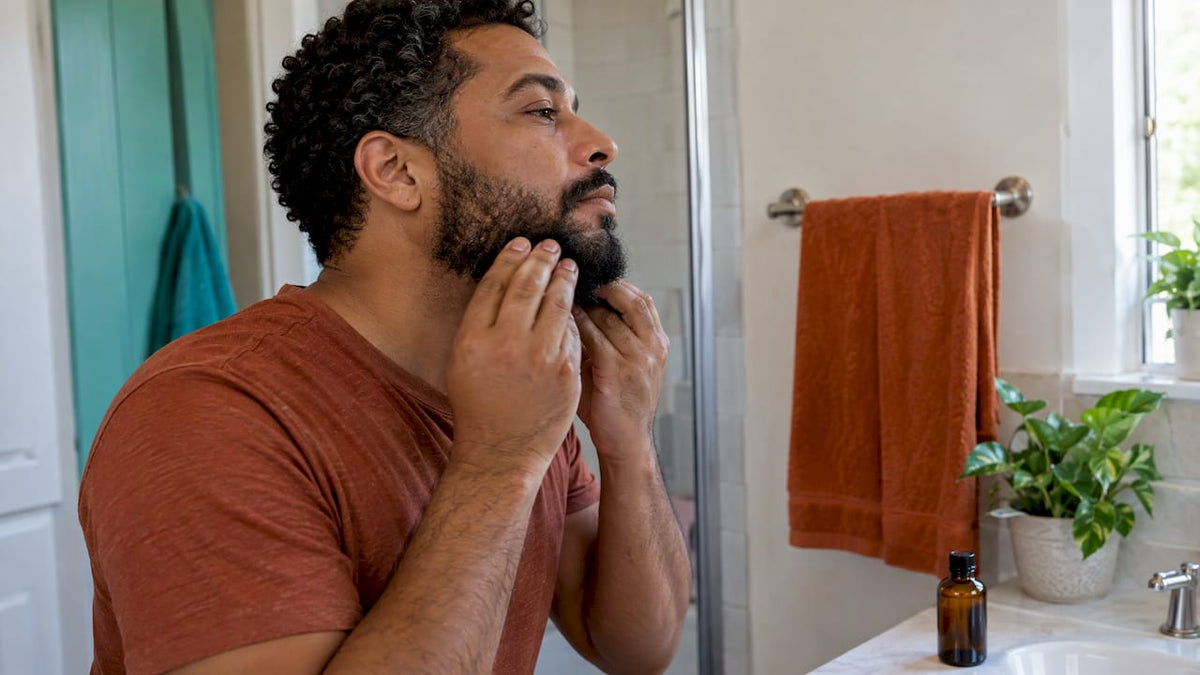
Start with two or three drops warmed between your palms. If you are using a thick castor oil, you can blend it with a lighter oil, which makes it easier to spread. Work it through the beard from the roots outward, then massage the skin underneath gently. The massage helps spread the oil and feels good, and that is its main purpose.

Step 4: Keep the schedule modest
More oil is not better. Using too much or too often can cause side effects, and Healthline notes that castor oil may irritate skin with dermatitis or an active rash. Beginning with a few evenings a week and watching how your skin responds is a reasonable approach. Use it on healthy skin only, and avoid open cuts or irritated patches.
Step 5: Protect your eyes and mouth
Castor oil can irritate the eyes if it gets in them. It is also not meant to be swallowed: ingesting it can cause stomach cramping, nausea or vomiting. Wipe your hands before touching your face, and apply it with care around the lips.
Skin care around the beard
The oil is only one part of a healthy beard. The American Academy of Dermatology (AAD) recommends a gentle exfoliating scrub once or twice a week during the stubble phase to help prevent ingrown hairs, plus a moisturizer with SPF 30 or higher. Once the beard covers the skin, the AAD suggests a beard conditioner for acne-prone skin, beard oil for normal to dry skin, and a fragrance-free, non-comedogenic moisturizer for sensitive skin.
That last point deserves attention. Castor oil is thick, and some dermatology clinics describe it as highly comedogenic, meaning it tends to clog pores. If you have oily or acne-prone skin, use it sparingly, concentrate it on the beard hair rather than the skin, and watch for new breakouts. If breakouts appear, stop and see a dermatologist.
If you do get a reaction, our guide on what to do if you react lays out the next steps.
The part most beard guides skip: your mouth
When you grow a beard, the area around your mouth changes. Hair now sits at your lip line, where food, drinks and moisture reach it every day. A beard oil routine adds one more thing to that zone. A good beard routine therefore includes good oral care.
Here is a simple approach that fits around an oil routine:
- Brush twice a day and clean between your teeth, as you would without a beard.
- Rinse after meals and drinks so nothing lingers in the beard or on your teeth. A rinse that is alcohol-free is gentler on the lips and the skin around them.
- Wash your hands after applying oil, before brushing or touching your lips, so oil does not carry into your mouth.
- Keep the mustache area clean. Hair at the lip line catches coffee, sauces and oils, and can hold on to odor. Comb it and rinse it dry after eating.
- Apply beard products away from your lips. Keep oil on the beard and cheeks rather than directly at the lip line.
Fresh breath is a part of the picture too. A beard on its own does not cause bad breath, but food and moisture trapped in it can add to what you smell, so a regular rinse and a clean beard go together.
A natural oral care routine that suits a beard
Many men who are careful about what goes on their face are equally careful about what goes in their mouth. If that sounds like you, we make mouthwashes without fluoride or alcohol, built around ingredients such as nano hydroxyapatite and xylitol.
Nano hydroxyapatite is a form of the mineral that makes up most of your tooth enamel, ground into very small particles. Xylitol is a plant-derived sweetener often used in oral care products. Together they are the base of a gentle, alcohol-free rinse that fits a routine you do once or twice a day.
Our range includes:
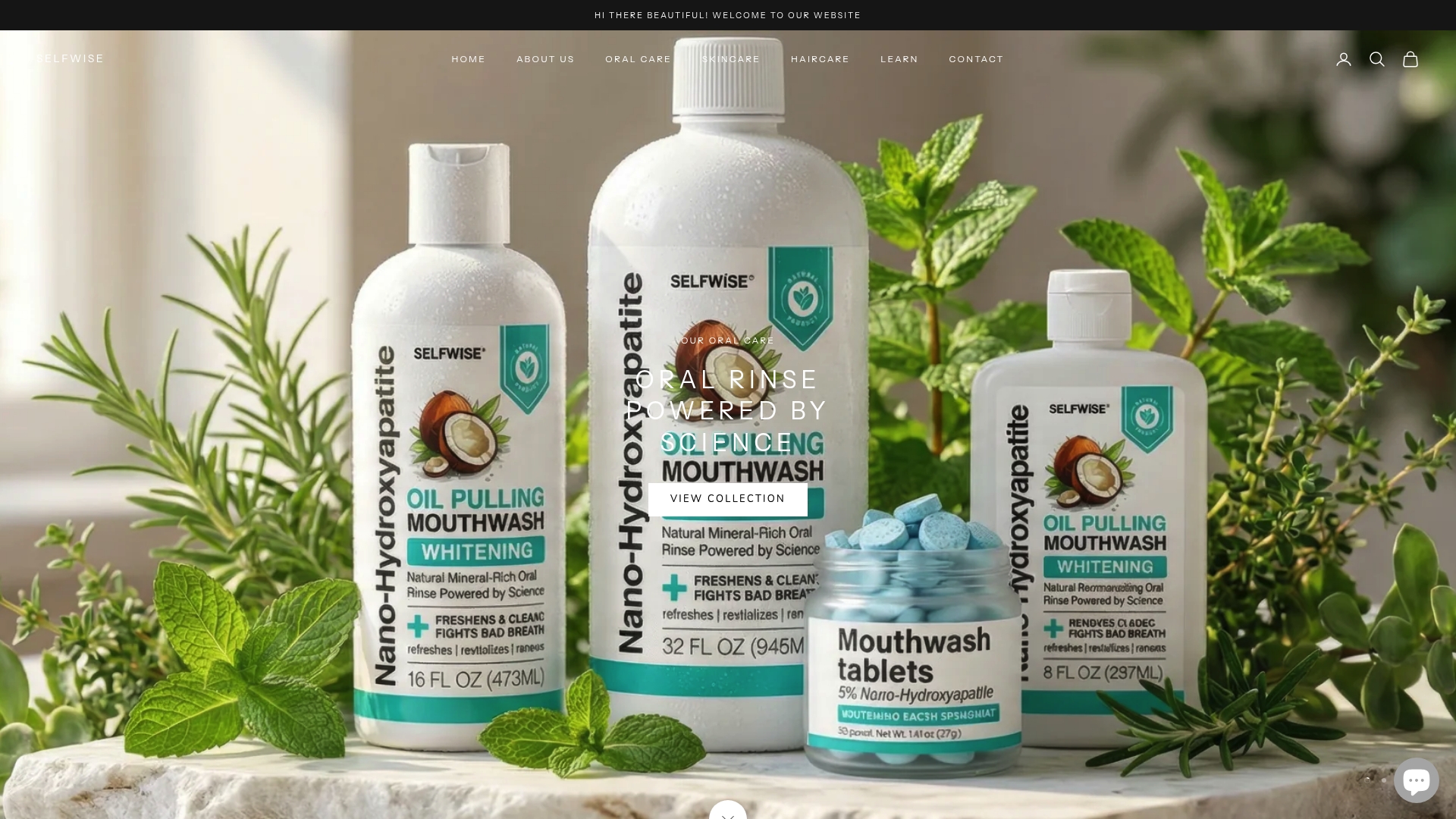
- Nano hydroxyapatite oil pulling mouthwash, a fluoride-free option that combines oil pulling with nano hydroxyapatite.
- Nano hydroxyapatite mouthwash tablets, a fluoride-free solid mouthwash that is easy to take with you when you travel or want a rinse after lunch.
Oil pulling is the traditional practice of swishing oil in the mouth. If you are already comfortable working a conditioning oil into your beard, it is a short step to a morning routine that covers both.
Ready to build your routine?
If you want your mouth care to match the rest of your grooming, start with our natural mouthwash collection. It brings together our alcohol-free and fluoride-free rinses in one place, and the oral care range shows everything else we make for teeth and gums.
If you are specifically looking at castor oil for your hair, our hair growth collection has our castor oil formulas.
Our perspective
We make natural oral care, and we also make castor oil formulas, so we get this question often. Our view is simple: castor oil earns its place as a conditioning step, and it deserves honest expectations. Your genetics set the shape of your beard. The oil helps you care for what grows.
We think the best routines are the ones you can keep up. That means a patch test, a small amount, a few evenings a week, and a photo every month so you can see for yourself what is changing.
The same thinking applies to your mouth. A beard puts food, moisture and oil right at the lip line, and a gentle, alcohol-free, fluoride-free rinse is an easy way to keep that area fresh. Simple ingredients that you understand, used consistently, tend to beat complicated routines that you drop after two weeks.
That is what we aim to give you: simple ingredients and a routine that fits your day.
Viktor
FAQ
Can castor oil help facial hair growth?
Castor oil is best known for conditioning. Healthline reports that research has not shown it grows a beard, though it can be useful alongside diet and lifestyle habits. Where it helps is softness, shine and a neater look, which can make a beard appear fuller.
What is the three-month beard rule?
It is the habit of letting a new beard grow for about 90 days before trimming or judging it. A dermatologist quoted by USA Today calls it a practical guide rather than a biological rule. Beard hairs grow at different speeds, so patience shows you your true density.
What stimulates beard growth?
The main drivers are genetics, age and how sensitive your follicles are to androgens such as testosterone and DHT. The same USA Today interview names these as the most important factors. Good sleep, a balanced diet and healthy skin support the beard you have.
What happens if I put castor oil on my face every night?
For many people, a small amount is fine, but heavy nightly use can lead to irritation, clogged pores or breakouts, especially on oily or acne-prone skin. Health.com recommends a patch test and stopping if you see redness, itching or swelling. Start with a few evenings a week and see a dermatologist if a reaction continues.
Can I use oil pulling and beard oil in the same routine?
Yes, they do different jobs. Beard oil goes on the hair and skin, while oil pulling is a swish in the mouth. Do your mouth care first, wash your hands, and then apply beard oil away from your lips.
Sources
- Castor Oil for Beard Growth and Other Hair Benefits (Healthline)
- Coconut, Castor, and Argan Oil for Hair in Skin of Color (Journal of Drugs in Dermatology, PubMed)
- How to grow a beard, according to experts (USA Today)
- A dermatologist’s top tips for a healthy beard (American Academy of Dermatology)
- What Are Castor Oil Packs and How Do You Use Them? (Health.com)
- Is Boroline and Castor Oil Really a Beauty Secret? (La Derma Skin Clinic)
- Hair / Beard Growth Time Calculator