Natural Anti-Bacterial Oral Ingredients That Actually Work
Most people switching to natural oral care hit the same wall: shelves full of products with botanical names and zero clarity on what actually kills harmful bacteria. The world of natural anti-bacterial oral ingredients is broader than you might think, and not everything with a green label earns its place in your routine. This article breaks down the science-backed options, from traditional herbs to plant-derived compounds, so you can build a chemical-free routine with real results. You will know exactly what each ingredient does, how to use it safely, and which scenarios each one fits best.
Table of Contents
- Key takeaways
- 1. The best natural anti-bacterial oral ingredients: an overview of the criteria
- 2. Clove, miswak, and honey
- 3. Quercetin, green tea polyphenols, and sumac
- 4. Essential oils with natural antibacterial benefits
- 5. Safe homemade rinse ingredients and usage guidelines
- 6. Comparing natural antibacterial oral ingredients side by side
- My honest take on building a natural oral care routine
- Natural antibacterial oral care from Selfwisebrand
- FAQ
Key takeaways
| Point | Details |
|---|---|
| Miswak leads natural antibacterials | Miswak shows the lowest MIC against Streptococcus mutans among common natural extracts. |
| Quercetin rivals chlorhexidine | A 2% quercetin mouthwash reduces plaque and gingivitis as effectively as the clinical standard. |
| Essential oils need dilution | Terpenoids in clove, cinnamon, and eucalyptus disrupt bacteria but irritate tissue when undiluted. |
| DIY rinses have a short shelf life | Homemade herbal rinses lack preservatives and spoil within one to two weeks. |
| Natural agents work best adjunctively | About 80% of oral biofilm removal comes from brushing and flossing, not rinses. |
1. The best natural anti-bacterial oral ingredients: an overview of the criteria
Before jumping to specific ingredients, it helps to know what separates a genuinely useful natural antibacterial from a marketing ingredient. You want something with a demonstrated minimum inhibitory concentration (MIC) against cavity-causing or gum-damaging bacteria. You also want anti-inflammatory properties, since oral bacteria trigger inflammation that harms gums as much as the bacteria themselves.
Safety and tolerability matter too. An ingredient that works in a petri dish but burns your mouth or disrupts your oral microbiome is not a net win. The best natural antibacterial agents target pathogens without wiping out the protective bacteria your mouth needs.
2. Clove, miswak, and honey
These three have the longest tradition in natural oral care and the most field-tested evidence to back them up.
Clove oil contains eugenol, a phenolic compound with demonstrated antibacterial and anti-inflammatory effects against common oral pathogens. It is used in dental practice as a topical analgesic and antiseptic, which tells you it works. For home use, a single drop diluted in a carrier oil or a rinse base is enough. More is not better here. Undiluted clove oil can irritate gingival tissue and even cause chemical burns with repeated exposure.

Miswak (Salvadora persica) comes from chewing sticks used across North Africa and the Middle East for centuries. Research confirms it is not just tradition. Miswak shows an MIC of 256 mg/mL against Streptococcus mutans, outperforming both honey and sumac in the same head-to-head study. Beyond killing bacteria, miswak also disrupts the biofilm structure that lets plaque stick to enamel. That dual action makes it one of the more useful natural ingredients for people managing early plaque buildup.
Honey is a more nuanced case. It has real antibacterial properties, mainly from hydrogen peroxide release and osmotic action. But honey and sumac show MICs of 512 mg/mL against Streptococcus mutans, meaning they require higher concentrations to achieve the same effect as miswak. Using raw or manuka honey as a rinse base is impractical at therapeutic concentrations, and the sugar content is a concern for cavity risk. Honey works better as a supportive, soothing ingredient in a formulated product than as a standalone antibacterial.
- Clove oil: use 1 drop diluted in 1 teaspoon of base oil or water-based rinse
- Miswak: available as extract in oral care products or as a traditional chewing stick
- Honey: choose formulated products that use medical-grade honey at controlled concentrations
Pro Tip: If you want the antibacterial benefits of clove without the irritation risk, look for it as an ingredient in a formulated mouthwash rather than applying essential oil directly to your gums.
3. Quercetin, green tea polyphenols, and sumac
Plant-derived polyphenols have quietly accumulated some of the strongest clinical evidence in natural oral care research.
Quercetin is a flavonoid found in onions, apples, and capers. A randomized controlled trial found that a 2% quercetin mouthwash reduces plaque and gingivitis comparably to chlorhexidine, which is the clinical gold standard for antibacterial mouthwash. The critical difference: quercetin produces none of the staining, altered taste, or microbiome disruption associated with chlorhexidine. That is a meaningful trade when you are considering long-term daily use.
Green tea polyphenols, particularly EGCG (epigallocatechin gallate), work through several mechanisms at once. They inhibit bacterial biofilm formation, block virulence enzymes that bacteria use to damage gum tissue, and help modulate oral microbiome balance rather than simply nuking everything in their path. That last point matters because aggressive antiseptics can disrupt the protective bacteria that keep opportunistic pathogens in check.
Sumac (Rhus coriaria) is less well-known but equally interesting. It shares the same MIC as honey against Streptococcus mutans but also shows anti-biofilm activity that makes it useful for targeting plaque structure. Its polyphenol content drives both effects.
- Quercetin: most effective as a mouthwash formulation at around 2% concentration
- EGCG: available in green tea extracts and in standardized supplement-grade oral care products
- Sumac: currently more common in research settings, but watch for it in newer organic dental products
Pro Tip: Combining polyphenols that both inhibit bacteria and reduce inflammation, like EGCG and quercetin, may produce better outcomes than using a single-mechanism antiseptic. Combining these mechanisms is an approach gaining traction in evidence-based natural formulations.
4. Essential oils with natural antibacterial benefits
Essential oils show up in almost every herbal mouthwash ingredients list, and for good reason. The terpenoids in these oils, compounds like eugenol, cinnamaldehyde, and 1,8-cineole, disrupt bacterial cell membranes and impair bacterial replication. That mechanism is well-characterized and applies to several key oils used in oral care.
Cinnamon bark oil contains cinnamaldehyde as its primary active compound. It shows strong activity against both gram-positive and gram-negative oral bacteria. The flavor intensity also makes it useful for masking the sometimes bitter taste of other natural ingredients in formulations.
Eucalyptus oil contains cineole, which contributes anti-inflammatory action alongside its antibacterial effect. It is one of the more commonly studied essential oils for oral care, with evidence supporting its use against plaque-associated bacteria.
Clove oil appears again here because its terpenoid content, particularly eugenol, works via the membrane-disruption pathway common to all effective essential oils for oral care.
The practical concern with essential oils is concentration. They are potent at very low levels and irritating at higher ones. Traditional plants like clove and thyme show broad-spectrum antibacterial action but lack standardized dosage for consistent clinical outcomes, which is the honest limitation. Using them as part of a properly formulated product solves this problem because the dilution is done for you.
- Always dilute essential oils in a carrier before any oral use
- Avoid direct gum application unless in a tested, formulated product
- Perform a patch test if you have sensitivities to any botanical ingredients
5. Safe homemade rinse ingredients and usage guidelines
If you prefer to mix your own natural antiseptic mouth rinse, these are the ingredients with the best track record and the clearest safety data.
- Saltwater: Half a teaspoon of salt in 8 ounces of warm water creates a mildly antibacterial and pH-stabilizing rinse. It is gentle enough for daily use and particularly effective after gum irritation or minor oral procedures.
- Baking soda: A quarter teaspoon in 8 ounces of water helps neutralize the acidic environment that cavity-causing bacteria thrive in. Use once daily. More frequent use can theoretically affect enamel at high concentrations, though occasional use at low dilution is well-documented as safe.
- Diluted hydrogen peroxide: Hydrogen peroxide at 3% diluted 1:1 with water offers real oxidative antibacterial action. Limit this to once per week. Overuse strips protective oral tissue and can interfere with the oral microbiome over time. Pair it with safe whitening practices to get the benefit without the risk.
- Aloe vera: A soothing addition with mild antimicrobial and anti-inflammatory properties. It does not provide strong antibacterial action alone but supports gum tissue comfort when added to rinse blends.
- Coconut oil: The basis for oil pulling. Lauric acid, its primary fatty acid, disrupts bacterial membranes and has demonstrated effect against Streptococcus mutans. Use as a stand-alone oil pull rather than mixing into a water-based rinse.
Pro Tip: Homemade herbal rinses lack preservatives and spoil within one to two weeks. Make small batches, store them in the refrigerator, and discard anything older than 10 days.
| Rinse ingredient | Frequency | Main benefit | Key caution |
|---|---|---|---|
| Saltwater | Daily | pH balance, mild antibacterial | Use warm water; avoid excess salt |
| Baking soda | Once daily | Acid neutralization | Do not exceed one week of consecutive daily use |
| Hydrogen peroxide (diluted) | Once weekly | Oxidative bacterial kill | Overuse damages gum tissue |
| Aloe vera | Daily | Gum soothing, mild antimicrobial | Use food-grade aloe only |
| Coconut oil (oil pulling) | Daily | Biofilm disruption, antibacterial | Spit into trash, not sink |
6. Comparing natural antibacterial oral ingredients side by side
Here is how the main options stack up across the factors that matter most for practical oral health decisions.
| Ingredient | Antibacterial strength | Anti-inflammatory | Biofilm disruption | Safety profile |
|---|---|---|---|---|
| Miswak | High | Moderate | Strong | Very good |
| Quercetin | High | Strong | Moderate | Excellent |
| Clove oil | High | Strong | Moderate | Good (diluted only) |
| Green tea EGCG | Moderate | Strong | Strong | Excellent |
| Sumac extract | Moderate | Moderate | Moderate | Good |
| Honey | Low to moderate | Low | Low | Good (limit sugar) |
| Coconut oil | Moderate | Low | Moderate | Excellent |
No single ingredient wins across every category. Miswak leads on antibacterial and biofilm disruption. Quercetin and EGCG lead on combining bacterial control with meaningful anti-inflammatory action. Clove oil is potent but requires careful handling. For most people, a rotation or formulated combination will outperform any single ingredient used alone.
The real limitation with natural oral care ingredients, as standardization challenges in clinical research confirm, is that DIY concentrations are inconsistent. That inconsistency explains why lab results often look better than home-use outcomes. Formulated products solve this by locking in the active concentration.
My honest take on building a natural oral care routine
I have spent a lot of time looking at the evidence behind natural oral care, and the single biggest mistake I see is treating a natural rinse as a replacement for brushing and flossing. It is not. About 80% of biofilm removal happens mechanically, through physical cleaning. Natural antibacterials cover the remaining 20%. That does not make them unimportant. It means the combination is where the value lives.
I also think people underestimate the formulation challenge. The same quercetin or EGCG that performs well in a controlled trial may do very little if it is unstabilized, over-diluted, or sitting in a contaminated DIY blend you made two weeks ago. The science supports these ingredients. It does not automatically support every product or recipe that uses their names.
My real recommendation: look for products where the antibacterial ingredients are standardized, the concentrations are disclosed, and the formula includes supportive agents like xylitol or nano hydroxyapatite that address remineralization and microbiome health at the same time. Consumers increasingly prefer chemical-free alternatives with botanical extracts, and the good news is that the ingredient science is actually catching up to that preference. You do not have to compromise on efficacy to go natural. You just have to be specific about what you choose.
— Viktor
Natural antibacterial oral care from Selfwisebrand
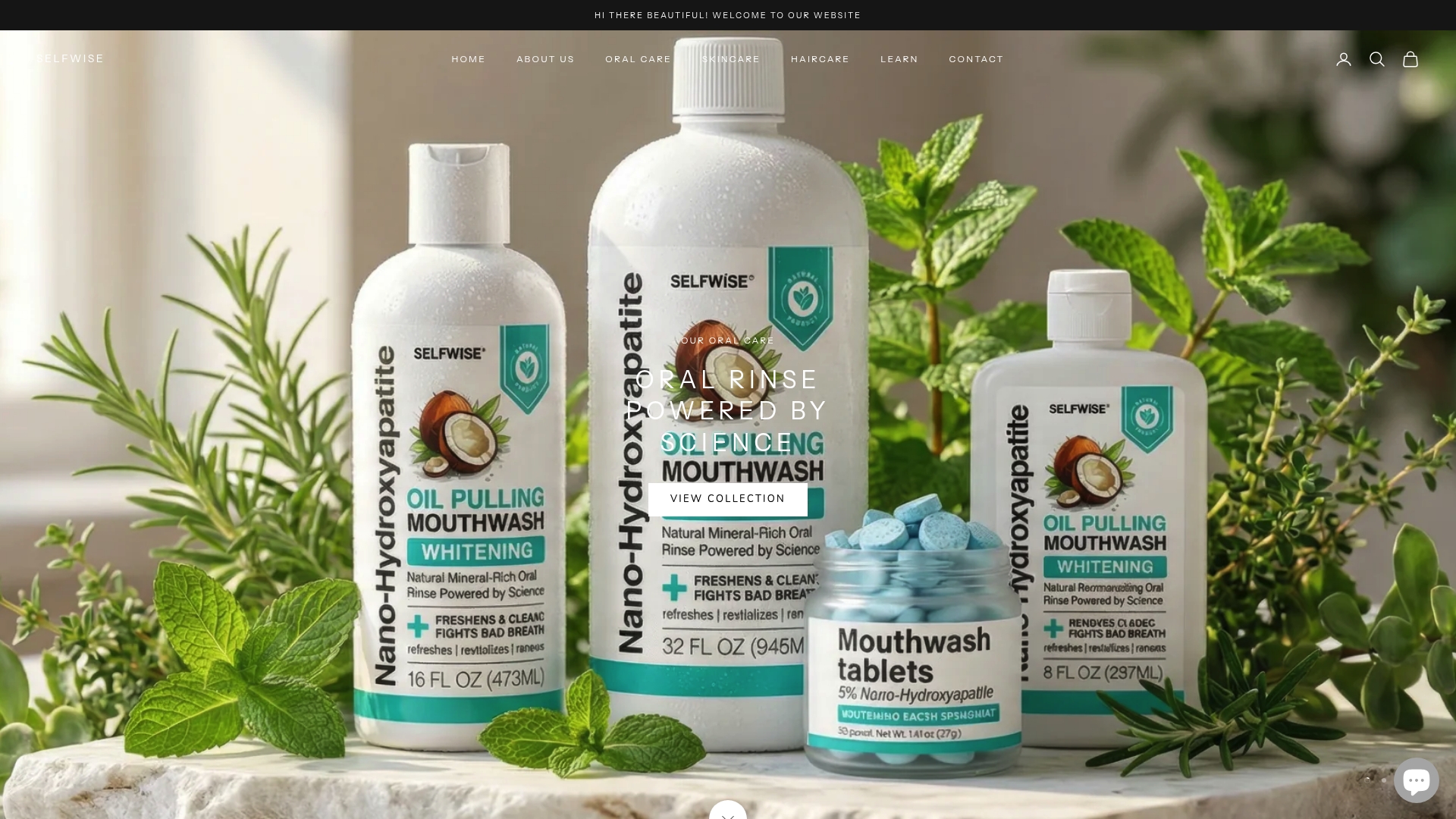
If the ingredients in this article resonate with you, Selfwisebrand has done the formulation work so you do not have to. The natural mouthwash collection includes products built around the same antibacterial and remineralizing principles covered here, with nano hydroxyapatite for enamel support and natural botanical extracts for gum health. No synthetic antiseptics. No artificial preservatives. Just ingredients with a reason to be there.
For a portable, mess-free format, the nano hydroxyapatite mouthwash tablets combine enamel remineralization with natural antibacterial action in a fluoride-free solid formula. If you prefer oil pulling as part of your routine, the oil pulling mouthwash adds nano hydroxyapatite to the traditional coconut oil base for a dual-action approach to clean teeth and healthy gums.
FAQ
What is the strongest natural antibacterial ingredient for oral care?
Miswak (Salvadora persica) shows the lowest minimum inhibitory concentration against Streptococcus mutans among commonly studied natural extracts, making it one of the most potent natural antibacterials for oral use.
Can quercetin replace chlorhexidine mouthwash?
A 2% quercetin mouthwash performs comparably to chlorhexidine for reducing plaque and gingivitis, without the staining and taste side effects. It is not a prescription replacement but is a strong over-the-counter alternative.
How often should I use a homemade natural mouth rinse?
Saltwater and baking soda rinses are safe for daily use. Diluted hydrogen peroxide should be limited to once per week to avoid tissue irritation and microbiome disruption.
Do essential oils actually kill oral bacteria?
Yes. Terpenoids in essential oils like clove, cinnamon, and eucalyptus disrupt bacterial cell membranes and show real antimicrobial activity. The key is proper dilution. Undiluted essential oils can irritate or damage oral tissue.
Are natural oral care ingredients enough to prevent cavities?
Natural antibacterial agents support oral health but cannot replace mechanical cleaning. Approximately 80% of biofilm removal requires brushing and flossing. Natural rinses and ingredients work best as part of a complete routine, not as a standalone cavity prevention strategy.