
Clove Oil and Oral Health: Benefits, Uses, and Safety
Clove oil is a natural oral health aid defined by its high eugenol content, a compound with proven analgesic, antimicrobial, and anti-inflammatory properties. The role of clove oil in oral health spans centuries of traditional use and is now backed by a growing body of clinical and laboratory research. Dentists have used eugenol-based preparations for decades to manage pain, reduce inflammation, and protect against cariogenic bacteria like Streptococcus mutans. This article explains how clove oil works, what the science actually shows, and how to use it safely as part of a natural oral care routine.
What is the role of clove oil in oral health?
Clove oil’s primary role in oral health is as a supportive, adjunctive agent. It does not treat cavities, reverse gum disease, or replace professional dental care. What it does is provide temporary, evidence-backed relief from pain and bacterial load while you address the root cause with a dentist.
The oil comes from Syzygium aromaticum, the clove plant. Its antimicrobial and analgesic activities are well documented against periodontal pathogens and cavity-causing bacteria. That makes it genuinely useful in a natural oral care routine, as long as you understand its limits.

Clove oil fits best as a short-term tool. Think of it the way you would use an ice pack on a sprained ankle. It reduces pain and swelling, but it does not heal the injury. The same logic applies here.
What are the active compounds in clove oil?
Eugenol is the dominant compound in clove oil, typically making up 70–90% of its composition. It works through two mechanisms: blocking sodium channels in nerve fibers to reduce pain signals, and inhibiting prostaglandin synthesis to lower inflammation. Both effects are relevant to toothache and gum discomfort.
Clove oil also contains β-caryophyllene, a compound that activates cannabinoid receptors in the body. Synergistic analgesic effects from β-caryophyllene may contribute to pain relief beyond what eugenol delivers alone. That means the full oil may outperform isolated eugenol in some applications.
Humulene and other minor compounds add antioxidant activity. Antioxidants in the mouth help neutralize free radicals that contribute to gum tissue breakdown. This is one reason clove oil appears in natural mouthwash formulations alongside other botanical extracts.
Here is a breakdown of clove oil’s key active compounds and their oral health roles:
- Eugenol: Blocks nerve pain signals and reduces inflammation. The primary driver of clove oil’s analgesic effect.
- β-caryophyllene: Activates cannabinoid receptors to enhance pain relief. Works alongside eugenol for a broader analgesic effect.
- Humulene: Contributes antioxidant activity. Helps protect gum tissue from oxidative damage.
- Acetyl eugenol: Adds mild antimicrobial activity. Supports eugenol’s action against oral pathogens.
Pro Tip: When choosing a clove oil product for oral use, look for standardized eugenol content on the label. Raw essential oils vary widely in potency, which makes dosing inconsistent and increases the risk of irritation.
How does clove oil help with tooth pain and gum issues?
Clove oil provides measurable, temporary pain relief through direct nerve numbing. Topical eugenol causes local numbness within 5–10 minutes, with effects lasting 30 minutes to 2 hours. That window is enough to manage mild toothache while you arrange a dental appointment.
Clinical evidence supports specific applications. Dentists use clove oil at 2–4% concentration for pre-injection anesthesia, post-operative pain reduction after extractions, and dentinal sensitivity management. These are controlled, short-contact applications. Clinical data confirm that clove oil works best as an adjunct, not a standalone treatment.
For gum issues, eugenol’s anti-inflammatory action reduces redness and swelling associated with mild gingivitis. The antimicrobial effect helps lower bacterial counts in the gingival sulcus, the small gap between your tooth and gum. Lower bacterial load means less irritation and a better environment for healing.
Here is how to apply clove oil for tooth pain and gum discomfort at home:
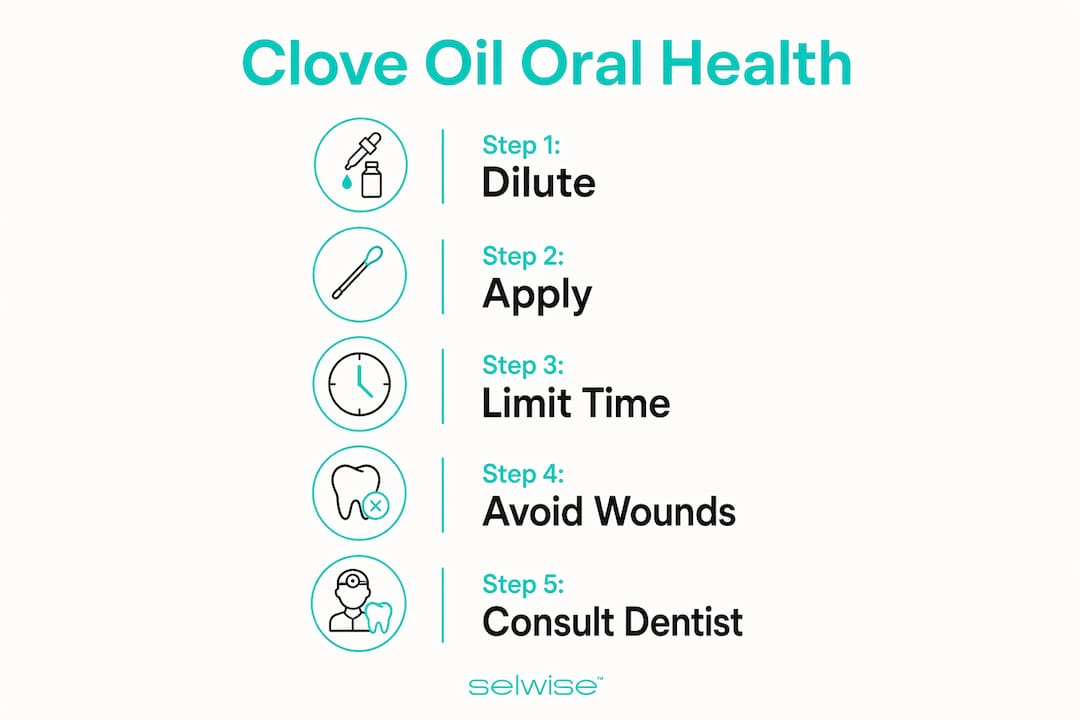
- Dilute clove oil to 1–2% in a carrier oil such as coconut oil or olive oil. One drop of clove oil per teaspoon of carrier oil is a practical starting point.
- Dip a clean cotton swab into the diluted mixture. Do not saturate it.
- Apply the swab directly to the affected tooth or gum area. Hold it gently in place for 1–2 minutes.
- Spit out any excess oil. Do not swallow.
- Repeat no more than twice daily until you see a dentist.
Pro Tip: Never apply clove oil directly to an open wound or exposed nerve without dilution. Undiluted eugenol on soft tissue causes chemical burns that are more painful than the original problem.
What does recent research say about clove oil in dental products?
The most exciting recent development in clove oil dental care is its incorporation into nano-hydroxyapatite composites. A clove extract-loaded nano-hydroxyapatite composite showed strong antibacterial action against Streptococcus mutans and other cariogenic microbes, combined with enamel remineralization benefits. This matters because it pairs clove oil’s antimicrobial strength with nano-hydroxyapatite’s ability to rebuild enamel mineral structure.
Novel dental products increasingly incorporate clove extract into nano-hydroxyapatite matrices to combine antimicrobial and enamel remineralization benefits with safer, sustained eugenol delivery. Controlled release reduces the risk of tissue irritation that comes with raw essential oil use. That is a meaningful improvement over DIY home application.
Herbal mouthwash research also shows strong results. A herbal mouthwash with clove oil demonstrated strong antimicrobial effects against oral pathogens and stable physical-chemical properties across testing. Stability matters for shelf life and consistent dosing in a commercial product.
| Research area | Finding | Implication |
|---|---|---|
| Nano-hydroxyapatite composite | Strong antibacterial action against S. mutans plus remineralization | Combines two benefits in one material |
| Herbal mouthwash formulation | Stable antimicrobial activity against oral pathogens | Supports clove oil in commercial oral care products |
| Clinical pain management | Effective at 2–4% concentration for dental pain | Confirms safe dosing range for adjunctive use |
| Synergistic compounds | β-caryophyllene enhances eugenol’s analgesic effect | Full oil may outperform isolated eugenol |
How to safely use clove oil for oral health at home
Safe use of clove oil comes down to three rules: dilute it, limit contact time, and never use it as a substitute for dental care. Dental safety guidance consistently emphasizes dilution and short application times to avoid mucosal irritation and chemical burns.
The symptom substitution risk is real. Improper use or prolonged contact heightens the risk of soft-tissue burns and mucosal damage. More critically, using clove oil to manage pain from an abscess or deep infection can mask a serious problem that requires urgent treatment. Pain relief is not the same as healing.
Here are the key safety rules for home use:
- Always dilute. A 1–2% dilution in a carrier oil is the safe range for home use. Clinicians work at 2–4% with precise protocols that are difficult to replicate at home.
- Limit contact time. Apply for 1–2 minutes maximum. Do not leave a clove oil-soaked cotton ball on your gum overnight.
- Use a cotton swab. It gives you control over placement and prevents excess oil from spreading to healthy tissue.
- Do not swallow. Clove oil is not safe for internal use at the concentrations used topically.
- See a dentist. Clove oil manages symptoms. A dentist addresses the cause.
Pro Tip: If your tooth pain returns within a few hours of applying clove oil, that is a signal to call your dentist the same day. Recurring pain that needs constant management usually means an infection or structural problem that will not resolve on its own.
For a broader view of how clove oil fits alongside other natural antibacterial oral ingredients, the combination approach tends to outperform any single ingredient used alone.
Key Takeaways
Clove oil is a scientifically supported adjunct for oral health that provides temporary pain relief and antimicrobial benefits through eugenol, but it requires careful dilution and must never replace professional dental treatment.
| Point | Details |
|---|---|
| Eugenol drives the benefits | Eugenol blocks nerve pain and inhibits inflammation, making it the core active compound in clove oil. |
| Dilution is non-negotiable | Use 1–2% dilution in a carrier oil at home to avoid chemical burns and mucosal damage. |
| Relief is temporary | Numbness lasts 30 minutes to 2 hours. Use this window to seek professional care, not avoid it. |
| New formulations improve safety | Nano-hydroxyapatite composites with clove extract deliver sustained eugenol release with added remineralization benefits. |
| Symptom masking is a real risk | Clove oil can mask serious infections. Persistent pain always warrants a dental visit. |
Why I think most people misuse clove oil
Most people reach for clove oil the wrong way. They apply it neat, directly to a sore tooth, and expect it to fix the problem. It numbs the pain for an hour, they feel better, and they skip the dentist. That is the pattern that turns a manageable cavity into a root canal.
The research is clear that standardized, controlled-release products maximize benefits and minimize risks compared to raw essential oil use. A properly formulated mouthwash or composite delivers a consistent dose. A drop of raw clove oil on your finger does not.
What I find genuinely exciting is the nano-hydroxyapatite plus clove extract combination. That pairing addresses two problems at once: bacterial load and enamel weakness. It is the kind of formulation that makes clove oil more than a folk remedy. It becomes a functional ingredient in a modern oral care product.
My honest advice: use clove oil as a bridge, not a destination. It buys you time and reduces discomfort. Pair it with a natural oral care routine that includes remineralizing ingredients and regular dental checkups. That combination actually moves the needle on long-term oral health.
— Viktor
Selfwisebrand’s approach to botanical oral care
Clove oil works best when it is part of a well-formulated product, not a raw essential oil applied at random. Selfwisebrand builds its oral care line around exactly that principle: effective botanical ingredients in stable, science-backed formulations.
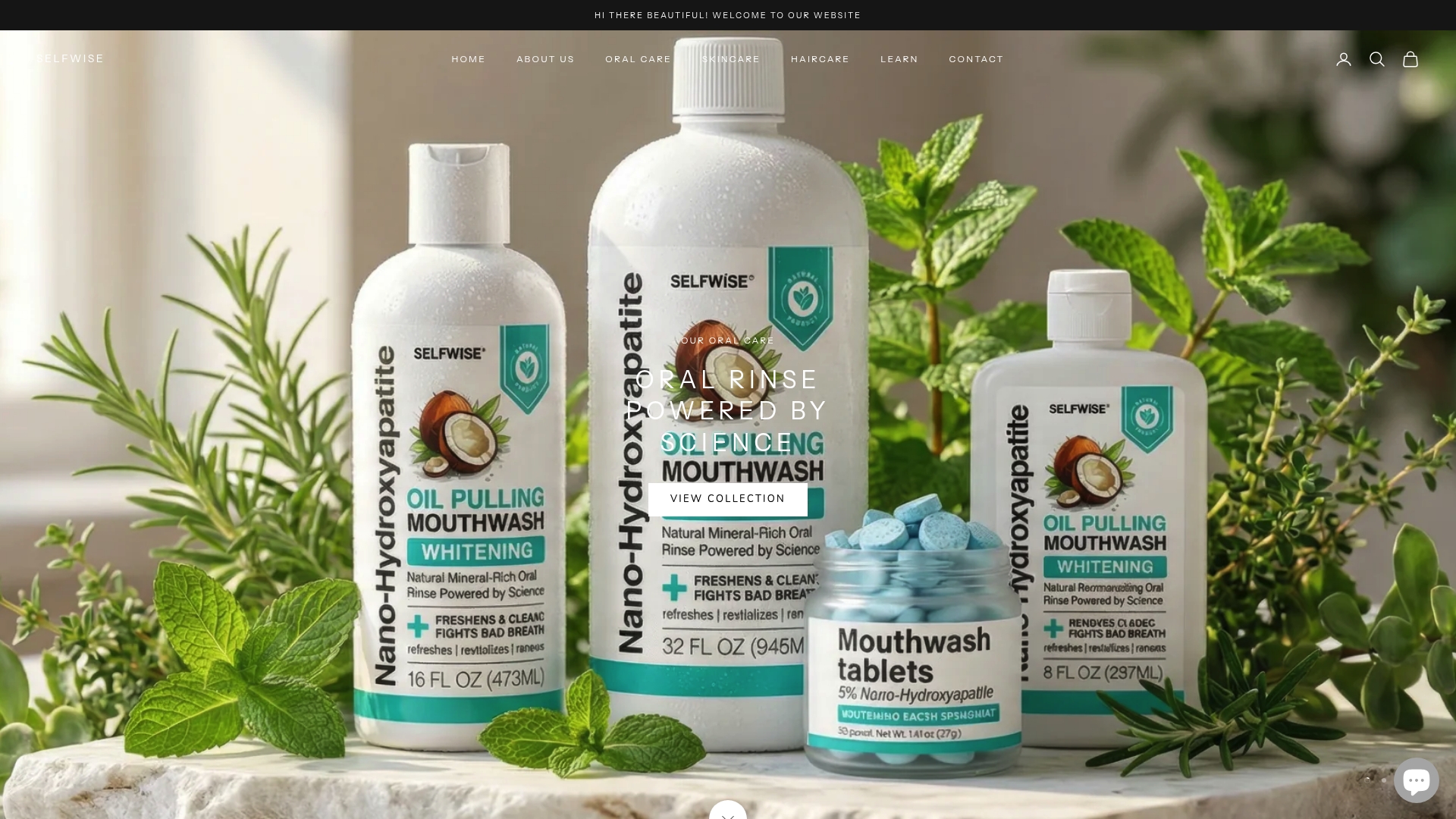
The nano-hydroxyapatite oil pulling mouthwash from Selfwisebrand combines enamel remineralization with natural antibacterial support, giving you the kind of dual-action benefit that recent clove extract research points toward. For a tablet-based option, the nano-hydroxyapatite mouthwash tablets deliver fluoride-free enamel support in a format that is easy to use daily. Both products are formulated without harsh synthetic additives, making them a practical fit for anyone building a cleaner oral care routine.
FAQ
What is clove oil used for in dentistry?
Clove oil is used in dentistry for pain relief, pre-injection anesthesia, and post-operative care. Dentists apply it at 2–4% concentration for short contact times to manage dental pain and reduce inflammation.
How quickly does clove oil relieve tooth pain?
Topical clove oil causes local numbness within 5–10 minutes of application. Relief typically lasts 30 minutes to 2 hours, depending on dilution and the area treated.
Is clove oil safe to use directly on gums?
Undiluted clove oil is not safe for direct gum application. It must be diluted to 1–2% in a carrier oil to avoid chemical burns and mucosal irritation.
Can clove oil replace a dentist visit?
Clove oil cannot replace professional dental care. It provides temporary symptom relief only. Using it to avoid a dental visit risks masking serious conditions like infections or abscesses.
Does clove oil help with gum health?
Clove oil supports gum health by reducing bacterial load and inflammation in the gingival area. A herbal mouthwash with clove oil showed strong antimicrobial effects against oral pathogens in formulation studies.