Toothpaste allergies: Causes, symptoms, and safer options
You brush twice a day, every day, and assume your toothpaste is the least of your worries. But for a growing number of people, toothpaste ingredients trigger real allergic reactions, from lip swelling and mouth sores to persistent rashes around the lips. The tricky part is that these symptoms often get blamed on stress, diet, or random sensitivity when the real culprit is sitting right on your bathroom shelf. This guide will walk you through exactly how toothpaste allergies work, how to recognize them, how to confirm the cause, and what to use instead.
Table of Contents
- How can toothpaste cause allergic reactions?
- Recognizing symptoms: What does a toothpaste allergy look like?
- Diagnosing toothpaste allergies: How to confirm the cause
- Safer alternatives: Toothpaste options for sensitive and allergic individuals
- Practical tips for managing toothpaste allergies and preventing reactions
- Our take: Why most “natural” toothpastes aren’t always allergy-proof
- Explore safer oral care and allergy-friendly options with Selfwise
- Frequently asked questions
Key Takeaways
| Point | Details |
|---|---|
| Hidden toothpaste allergens | Flavorings, foaming agents, and preservatives are common triggers of allergic reactions. |
| Symptoms clear fast | Stopping the offending toothpaste usually leads to quick symptom resolution, often in days. |
| Diagnosis needs caution | Patch testing and careful reintroduction help pinpoint the exact ingredient causing issues. |
| Natural isn’t always safe | Even natural toothpastes can trigger allergies due to plant or food-derived ingredients. |
| Safer choices available | Nano-hydroxyapatite and fluoride-free options offer gentler alternatives for sensitive users. |
How can toothpaste cause allergic reactions?
Most people think of toothpaste as a neutral product. It’s just cleaning foam, right? The reality is more complicated. Toothpaste is a chemically complex formula packed with flavorings, preservatives, foaming agents, and abrasives, each of which can provoke a response in sensitive individuals.
The immune mechanism behind most toothpaste allergies is called Type IV hypersensitivity, also known as T-cell mediated contact dermatitis. Unlike food allergies that hit fast and hard, this type of reaction is delayed, usually showing up 12 to 72 hours after exposure. That delay is exactly why people rarely connect the dots between their toothpaste and their symptoms.
It’s important to separate two things that look similar but work differently. An irritant reaction happens when a chemical physically damages tissue without involving your immune system. An allergic reaction actually involves immune memory and worsens with repeated exposure. Both can cause redness, burning, and peeling, but true allergy is immune-mediated and typically escalates over time.
The most common culprits behind toothpaste allergies include:
- Flavorings, especially mint and cinnamon, which are the top-cited triggers
- Sodium lauryl sulfate (SLS) and cocamidopropyl betaine (CAPB), which are foaming agents
- Preservatives such as parabens and propylene glycol
- Fluoride compounds, though fluoride allergy is extremely rare compared to flavor and foam reactions
- Stannous tin, found in some fluoride toothpastes, which has been linked to cheilitis (inflamed lips)
Don’t assume a “natural” label changes the risk. Essential oils like tea tree, clove, or cinnamon bark used in natural formulas are just as capable of triggering immune reactions as synthetic fragrances. If you’re exploring natural oral care, ingredient awareness matters more than branding.
That last point is worth sitting with. Many people switch to natural toothpaste assuming they’ve eliminated the risk, only to develop a new set of symptoms from plant-derived allergens.
Recognizing symptoms: What does a toothpaste allergy look like?
Understanding the root cause is the first step. Now let’s identify how these reactions show up in real life, because the symptoms are often mistaken for something else entirely.
The most common place you’ll notice a toothpaste allergy is right where the product touches you most. Your inner lips, gum line, tongue edges, and the corners of your mouth are the first to react.
Typical symptoms include:
- Mouth sores or ulcers that keep coming back despite normal oral hygiene
- Itching or burning inside the mouth or across the lips immediately after brushing
- Peeling skin on the inner lip surface, which is easy to dismiss as dryness
- Cheilitis, which means persistent inflammation and cracking of the lips
- Perioral dermatitis, a red or bumpy rash that forms in the skin around the mouth
- Gum redness or swelling that doesn’t respond to improved brushing habits
Symptoms like mouth sores, lip peeling, and perioral rash are all documented patterns in toothpaste allergy cases. One detail that many people overlook is the recurrence pattern. If you get relief when you stop brushing for a day or two (perhaps when traveling and using a different product) but symptoms return when you come back to your regular brand, that pattern is a strong signal.

A 2025 review noted that while toothpaste allergies are underdiagnosed as allergen exposures01118-1/fulltext), preservatives like benzyl alcohol accounted for roughly 17% of identified reactions in one study population. That number is surprisingly high for an ingredient most people have never thought about.
Rare but serious reactions do exist. Anaphylaxis from toothpaste has been documented, though it’s uncommon. If you ever experience throat swelling, difficulty breathing, or hives shortly after brushing, that’s a medical emergency and not a sensitivity to manage at home.
People with sensitive teeth and those prone to eczema or atopic conditions tend to have a higher baseline risk for contact dermatitis from oral care products. If you fit that profile, scrutinizing your toothpaste label is especially worthwhile.
Diagnosing toothpaste allergies: How to confirm the cause
Recognizing symptoms is essential, but proving toothpaste is the culprit requires a methodical approach. Self-diagnosis is a reasonable starting point, but confirmation matters because you don’t want to eliminate safe products unnecessarily or keep using a harmful one.
Here’s how the diagnostic process typically unfolds:
- Document your history. Write down when symptoms started, which products you use, and whether symptoms improve on days you skip brushing or use a different product. A two-week symptom log is often enough to reveal patterns.
- Stop using the suspected toothpaste. Switch to a minimal, unflavored alternative. Symptom resolution after stopping is one of the strongest indicators of an allergy.
- See a dermatologist or allergist for patch testing. A clinician applies diluted concentrations of suspected ingredients to your skin under patches. The test measures immune-mediated reactions rather than irritant ones.
- Confirm with a trigger-retrigger approach. Once symptoms resolve, carefully reintroduce the suspected product. Reintroduction confirming causality is often more definitive than a single patch test result.
- Be aware of the oral mucosal difference. The inside of your mouth reacts differently from skin. The oral mucosa is more permeable, meaning allergen exposure is more intense and test results don’t always translate directly from skin patch tests.
Pro Tip: When you visit a dermatologist, bring photos of your symptoms at their worst and a complete list of every oral care product you use, including mouthwash, lip balm, and dental floss. Allergens in these products can compound or confuse the picture.
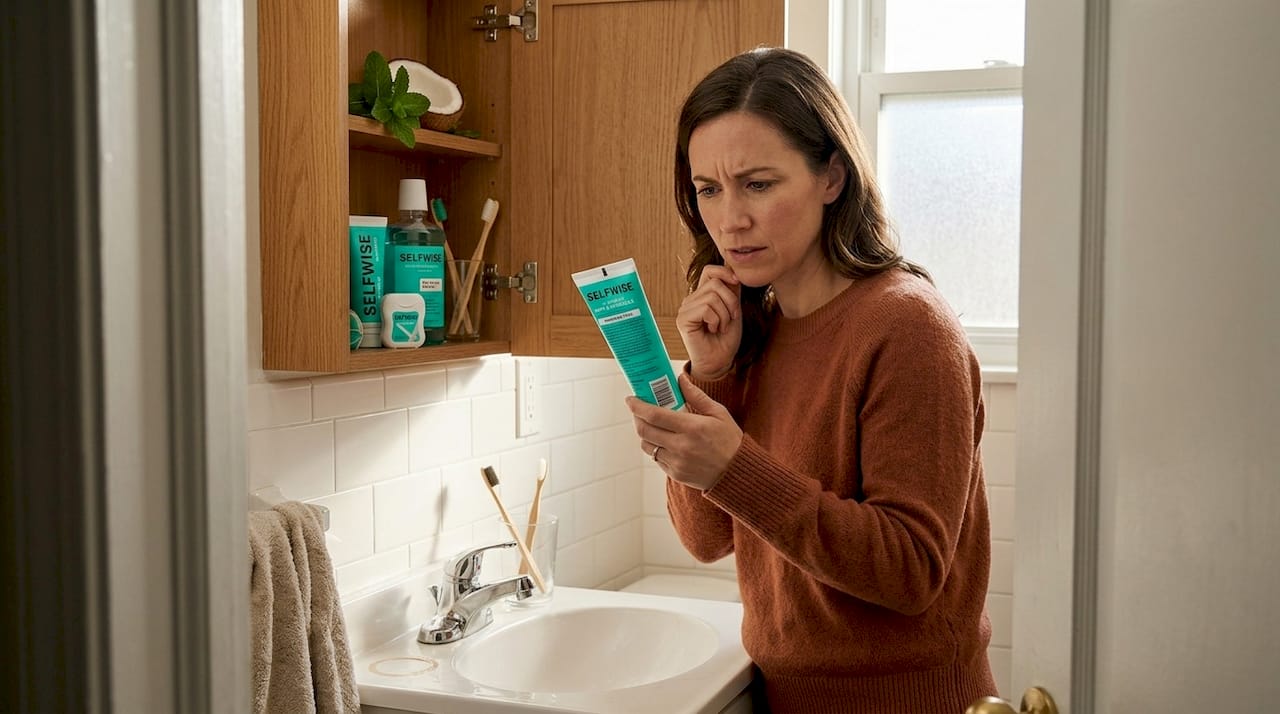
One common mistake is switching to a different flavored toothpaste and calling it an elimination trial. A true elimination means choosing an unflavored, minimal-ingredient product and giving it at least two weeks. Partial changes rarely clarify anything. Review the natural oral care guide for ingredient frameworks that support a clean switch.
Safer alternatives: Toothpaste options for sensitive and allergic individuals
Once you’ve identified a toothpaste allergy, what’s next? The good news is that the market for allergen-aware oral care has grown significantly. The challenge is knowing how to evaluate your options without just trading one problem for another.
Many fluoride-free and minimalist formulas market themselves as safer, and they often are. But plant-based flavorings, activated charcoal, coconut oil, and essential oil concentrates used in these products can still trigger reactions, particularly in people who have existing food or pollen allergies.
Nano-hydroxyapatite (nHA) is one of the most promising alternatives for allergy-prone individuals. This mineral is biocompatible, meaning your body recognizes it as similar to natural tooth enamel. It remineralizes teeth without fluoride, without harsh foaming agents, and without the preservatives most commonly linked to contact reactions.
Here’s a comparison of common toothpaste categories and their allergy risk profiles:
| Toothpaste type | Common allergens present | Risk level for sensitive users |
|---|---|---|
| Standard commercial | SLS, mint flavor, parabens | High |
| Whitening toothpaste | Peroxide, SLS, flavors | High (lichenoid reactions documented) |
| Stannous fluoride | Stannous tin, SLS | Moderate to high (cheilitis risk) |
| Natural/herbal | Essential oils, food extracts | Moderate (cross-reactivity possible) |
| Fluoride-free minimal | Fewer additives, may include oils | Low to moderate |
| Nano-hydroxyapatite | Minimal additives, no SLS/fluoride | Low |
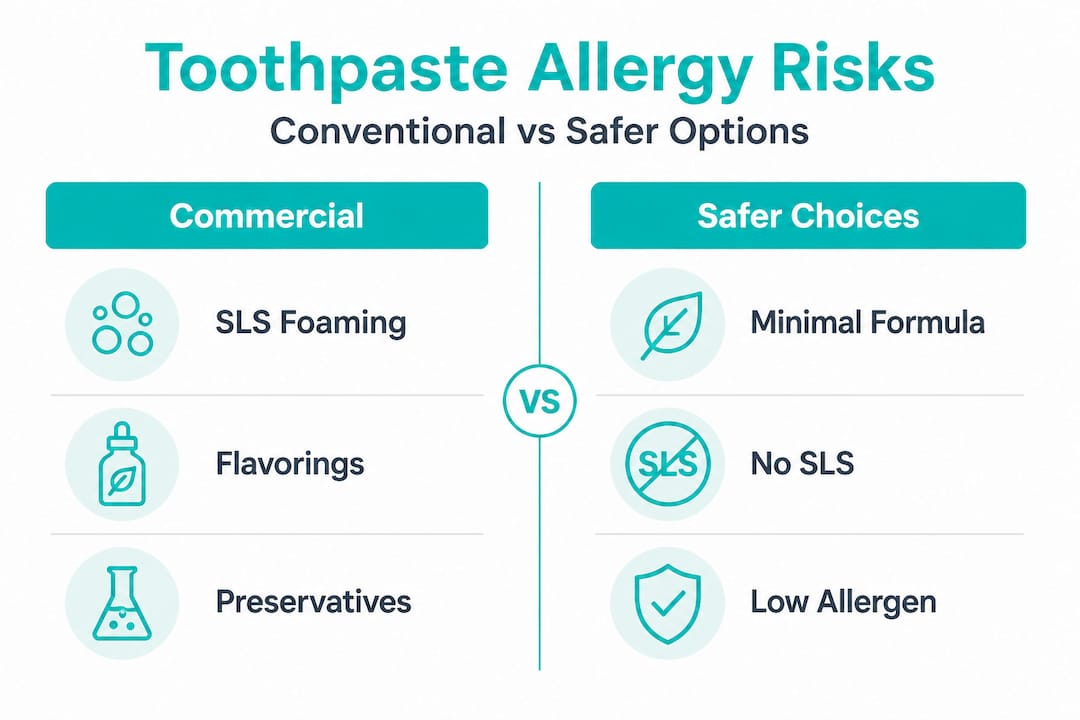
Stannous tin in toothpaste has been documented causing cheilitis, and whitening products have been linked to lichenoid tissue reactions, which mimic symptoms of lichen planus. These are not fringe cases. Even products marketed as gentle can carry significant allergen loads.
What to look for when choosing an alternative:
- Short ingredient lists with recognizable components
- No artificial flavors or fragrance blends
- No SLS or CAPB as foaming agents
- No parabens or benzyl alcohol as preservatives
- Transparent labeling from brands willing to list every ingredient clearly
If you want to explore natural whitening options that skip common allergens, or you’re interested in understanding which cruelty-free toothpaste options also have minimal ingredient profiles, both are worth reviewing side by side. For broader options, organic toothpaste formulas vary widely in ingredient complexity, so always read labels regardless of the certification on the front.
Pro Tip: Homemade toothpaste using baking soda and water is genuinely low-allergen. But without fluoride or nHA, it offers no remineralization benefit. Use it as a short-term elimination option, not a permanent replacement.
Practical tips for managing toothpaste allergies and preventing reactions
After reviewing your alternatives, let’s solidify daily habits and smart shopping strategies to stay allergy-free long term.
Case reports consistently show that symptoms resolve within days of stopping the offending product and return quickly on re-exposure. This predictable pattern gives you a powerful diagnostic and management tool: avoidance works fast, and you’ll know within a week whether a switch was the right call.
Daily habits that reduce your risk:
- Stop using any product that causes even mild burning or tingling and don’t try to “adapt” to it
- Keep a simple symptom log noting product name, ingredients used, and reaction details
- Introduce only one new oral care product at a time, spaced at least two weeks apart
- Rinse your mouth thoroughly after brushing to reduce residue contact time
- Choose products with the fewest ingredients possible as your default baseline
Here’s a simple management framework to help you navigate changes:
| Stage | Action | Timeframe |
|---|---|---|
| Suspected reaction | Stop product immediately | Day 1 |
| Elimination | Switch to minimal formula | Days 1 to 14 |
| Assessment | Monitor for symptom resolution | Days 3 to 14 |
| Reintroduction | Test one new product | Week 3 onward |
| Confirmation | Note return of symptoms | Within 1 to 3 days |
Understanding which natural skincare ingredients overlap with oral care formulas can also help you spot cross-reactive risks before they appear. If you react to an ingredient in a face wash or lip balm, there’s a real chance the same ingredient in your toothpaste is part of the problem.
For shoppers who want transparency and domestic manufacturing standards, reviewing toothpaste made in USA options can help narrow down brands with accessible ingredient disclosures and consistent quality control.
Our take: Why most “natural” toothpastes aren’t always allergy-proof
Here’s something we see constantly: someone switches from a conventional toothpaste to a natural brand, has a reaction, and is completely shocked. The assumption was that “natural” means safe for sensitive people. That assumption is wrong, and the marketing behind most natural oral care products does nothing to correct it.
Plant-derived allergens in toothpaste are just as immunologically active as synthetic ones. Spearmint oil, cinnamon extract, clove oil, and licorice root are all common natural flavoring agents that are also well-documented allergens. If you have a known sensitivity to birch pollen or certain spices, your immune system doesn’t care whether those compounds came from a lab or a plant.
The deeper issue is that branding creates a false sense of safety. A product labeled “organic,” “clean,” or “plant-based” is still complex chemistry. The “natural” claim tells you about ingredient origin, not immune compatibility. Real safety for allergy-prone people comes from ingredient literacy, meaning reading the actual ingredient list and recognizing what each component does, rather than trusting the front-of-package messaging.
We built Selfwise around natural oral care that actually earns that label, not through marketing but through minimal, purposeful ingredient selection. That means using nano-hydroxyapatite and xylitol because the evidence supports them, not because they sound appealing. It also means being honest: even our products may not suit every individual, and anyone with known allergies should check ingredients before switching.
The most empowered move you can make is to stop trusting labels and start reading lists. That shift alone will save you months of unnecessary discomfort.
Explore safer oral care and allergy-friendly options with Selfwise
If you’ve been struggling with mouth symptoms that won’t quit despite good oral hygiene habits, you don’t have to keep guessing.
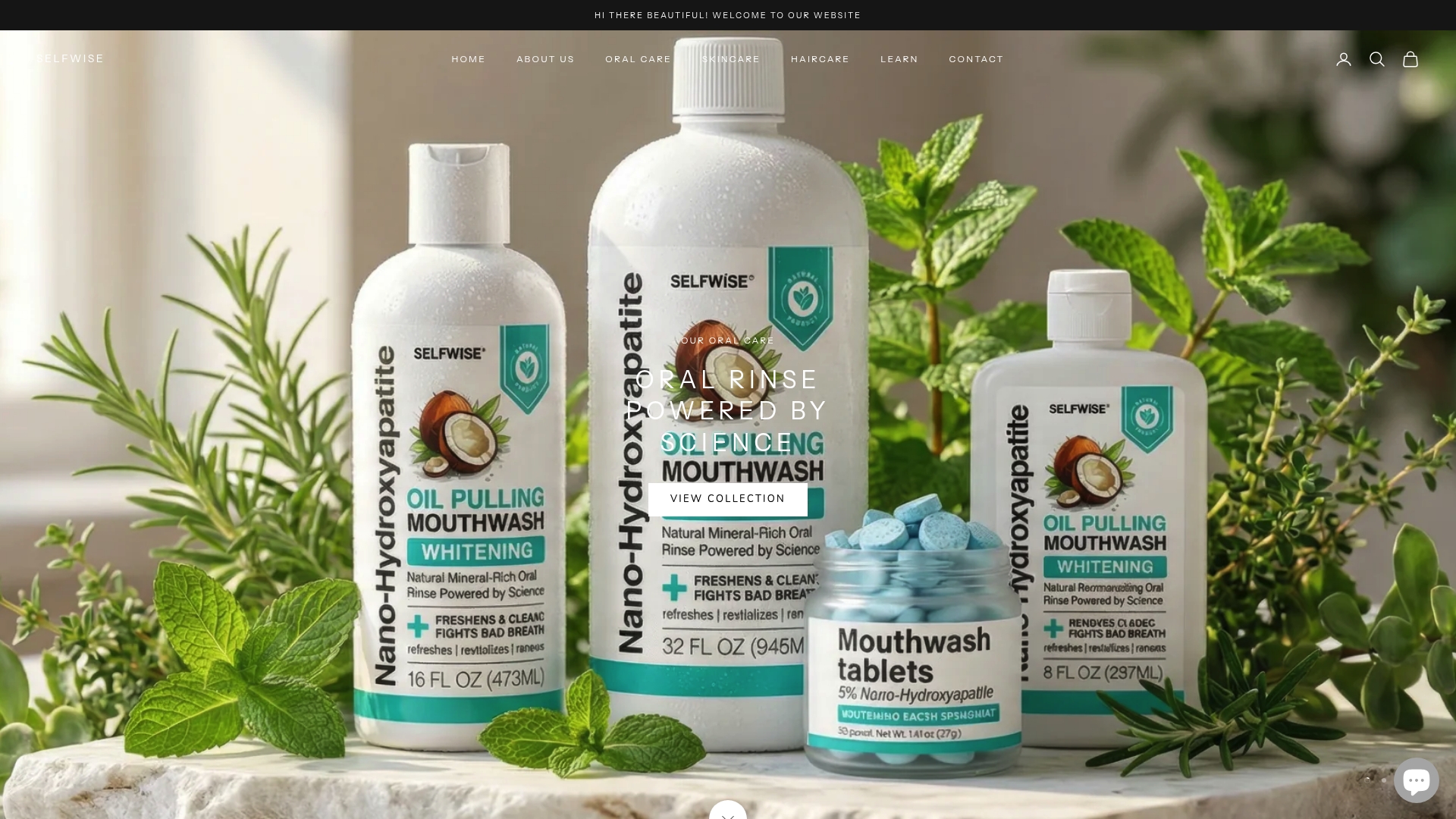
At Selfwise, we formulate our products with the allergy-aware consumer in mind. Our fluoride-free toothpaste options skip the most common triggers, including SLS, artificial flavors, and synthetic preservatives, without compromising on enamel protection. If you want remineralization without the risk, our nano-hydroxyapatite mouthwash delivers biocompatible mineral support in a clean, simple formula. You can also browse our full oral health collection to find gentle daily essentials built around transparency. Simple ingredients, real results, and no guesswork.
Frequently asked questions
What are the most common ingredients that cause toothpaste allergies?
Flavorings like mint or cinnamon, SLS foaming agents, and preservatives such as parabens and propylene glycol are the most frequently identified allergens in contact dermatitis cases linked to toothpaste.
How quickly do toothpaste allergy symptoms appear and resolve?
Symptoms typically appear within 12 to 72 hours of exposure and resolve within days on avoidance, with recurrence usually confirming the culprit product.
Can natural toothpaste trigger allergies?
Yes. Natural toothpastes can trigger reactions through plant-derived allergens like essential oils, which are just as immunologically active as synthetic flavoring agents.
Is fluoride allergy a real concern?
Fluoride allergy is extremely rare, and most suspected fluoride reactions actually trace back to flavoring agents or foaming compounds in the same formula.
What is the safest type of toothpaste for allergy-prone individuals?
Products with short, transparent ingredient lists and biocompatible alternatives like nano-hydroxyapatite are your best starting point, avoiding common sensitizers like SLS, mint, and synthetic preservatives.
Recommended
- Top 3 Natural Toothpaste for Sensitive Teeth 2026
- Top 4 Organic Toothpaste Options 2026
- Top 4 Natural Toothpaste Whitening Options 2026
- Top 6 Cruelty Free Toothpaste Options 2026
Related Selfwise oral care
For users looking for gentler oral care alternatives from Selfwise:
- Fluoride-free oral care
- Alcohol-free oral care
- Nano Hydroxyapatite Mouthwash Tablets
- Natural dental products guide
Note: Selfwise oral care products are designed for daily personal care routines and are not a replacement for dental diagnosis or treatment.