How to Use Mouthwash: Steps, Timing and Mistakes to Avoid
To use mouthwash well, brush and floss first, measure the amount on the label, swish with force for at least 30 seconds, spit it out, and then skip water and food for a while if it is a fluoride rinse. The details matter more than most people think, because the right timing depends on what is in the bottle.
This guide walks through the full routine, explains the before-or-after-brushing debate, and covers fluoride, therapeutic, alcohol-free and oil-based rinses so you can match your habit to your product.
TL;DR
- Brush and floss, measure the dose on the label, swish hard for 30 seconds or more, then spit. Never swallow.
- Fluoride rinses work best at a different time from brushing, and you should avoid eating, drinking or rinsing for 30 minutes afterward.
- Mouthwash adds to brushing and flossing. It does not replace them.
- Children under 6 should not use mouthrinse unless a dentist directs it.
- Check the label of any rinse, natural or conventional, for its own timing instructions.
Table of Contents
- The step-by-step routine
- Before or after brushing?
- Match the method to the type of mouthwash
- How often should you use it?
- Safety: kids, swallowing and storage
- Does mouthwash help with gum disease?
- Common mistakes
- Perspective
- Find a natural rinse for your routine
- FAQ
- Sources
The step-by-step routine
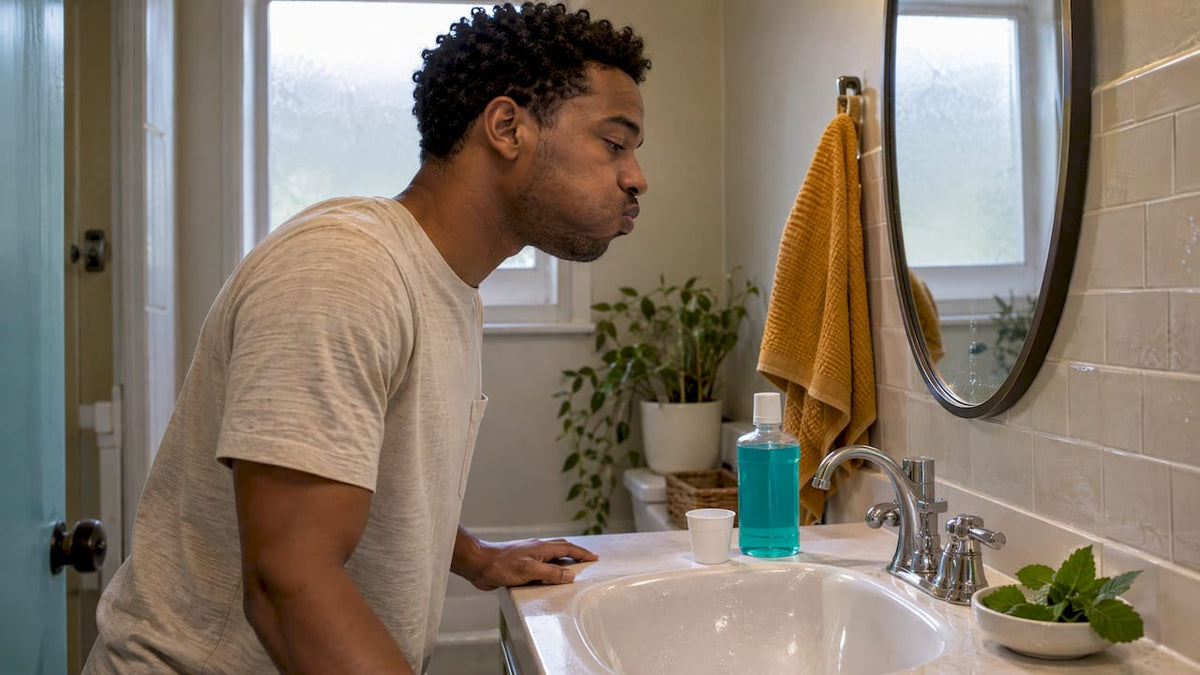
The Academy of General Dentistry advises brushing and flossing well first, then measuring the amount of rinse given on the container or by your dentist, swishing with as much force as possible for 30 seconds or more, and spitting the liquid out thoroughly. Here is that routine in practice.
- Brush and floss. Mouthwash reaches areas a toothbrush misses, but it works on a cleaner surface. The American Dental Association says mouthrinse does not replace brushing and flossing, though it may offer added benefits for bad breath, cavities or gum disease.
- Measure the dose. Use the cap or a cup and follow the label. Healthline reports that a typical amount is 3 to 5 teaspoons. Pouring more does not make it work harder.
- Swish and gargle. Push the liquid between your teeth, along the gumline and across your cheeks. Set a timer or count to 30. Tip your head back briefly to gargle if the label allows it.
- Spit, do not swallow. Spit into the sink.
- Wait. With an anti-cavity (fluoride) rinse, the AGD advises not rinsing, eating or smoking for 30 minutes so the fluoride is not diluted or washed away.
How much is enough?
The label is the rule. Different formulas are concentrated differently, and a therapeutic rinse can be dosed in a smaller amount than a cosmetic one. If you are unsure, read the directions printed on the bottle, or ask your dentist if it was recommended to you.
How long to swish
Thirty seconds is the usual floor. Some products ask for a full minute. Brief rinses of 5 or 10 seconds leave the active ingredients little time in contact with your teeth and gums.

Before or after brushing?
Sources do not fully agree, which is why people get confused. The ADA says the choice may come down to personal preference, but manufacturers may recommend a specific order based on ingredients. It also notes that some toothpaste ingredients can bind with fluoride ions and reduce a rinse’s effectiveness.
The UK’s NHS takes a firmer line: do not use mouthwash straight after brushing, even a fluoride one, because it washes away the concentrated fluoride left from your toothpaste. It suggests choosing another time, such as after lunch. The Oral Health Foundation likewise says fluoride mouthwash should be used as well as brushing, at a different time.
| Situation | Practical timing |
|---|---|
| Fluoride rinse | Separate it from brushing, for example after lunch, then wait 30 minutes before eating or drinking |
| Cosmetic or fresh-breath rinse | Follow the label; after brushing and flossing is common |
| Prescription rinse | Exactly as your dentist directs: dose, frequency and time in the mouth |
| Not sure | Follow the instructions on the bottle |
We cover this in more depth in our guide on mouthwash before or after brushing.
Match the method to the type of mouthwash
Fluoride rinses
The CDC describes over-the-counter 0.05% sodium fluoride (230 ppm fluoride) rinses for daily use by people older than 6. Stronger rinses for people at high risk of decay must be prescribed. If your dentist has prescribed one, follow the dose and time in the mouth exactly. For a patient-focused look at in-office fluoride and aftercare, see this explainer on fluoride treatment at the dentist.
Therapeutic antimicrobial rinses
The ADA lists cetylpyridinium chloride, chlorhexidine, essential oils, fluoride and peroxide as active ingredients in therapeutic rinses. It says the antimicrobial ones help reduce plaque and gingivitis when combined with daily brushing and flossing. Our explainer on cosmetic vs therapeutic mouthwash helps you tell them apart.
Alcohol-free rinses
The AGD notes that habitual use of antiseptic rinses with high alcohol levels (18 to 26 percent) may cause a burning sensation in the cheeks, teeth and gums. Alcohol-free formulas are a sensible choice if that is your experience. A 2025 clinical trial found an alcohol-free CPC and zinc lactate rinse performed on par with an essential oils rinse containing 21.6% ethanol for plaque and gingivitis over six weeks.
Swishing technique is the same: measure, swish for the time on the label, spit.
Xylitol rinses
A 2022 randomized controlled trial found that xylitol and probiotic rinses had antimicrobial efficacy comparable to chlorhexidine in children and elderly people at high risk of caries. Use a xylitol rinse as you would any other: after brushing and flossing, swished for the full time and spat out.
Oil pulling
Oil pulling is a different technique: you swish a spoonful of oil slowly for longer, usually before breakfast, and spit it into the trash rather than the sink. A 2020 systematic review found coconut oil pulling reduced salivary bacteria counts and plaque index scores, though the authors called for better-designed trials. A 2026 review reported moderate reductions in microbial load and improved gingival health with sesame or coconut oil. Step by step instructions are in our beginner’s guide to oil pulling, and we compare the two habits in oil pulling vs mouthwash.

How often should you use it?
Most people use a daily rinse once or twice a day, but frequency should follow the product’s purpose. A fluoride rinse is typically once daily at a separate time from brushing, while a fresh-breath rinse may fit after meals. Our guide on how often to use mouthwash goes through the options.
Safety: kids, swallowing and storage
- Children under 6: the ADA recommends they not use mouthrinse unless a dentist directs it, because swallowing reflexes may not be well developed. See our guide on starting kids’ mouthwash at age 6.
- Accidental swallowing: Poison Control says swallowing a mouthful is not harmful, but a large amount can cause alcohol or fluoride toxicity. If that happens, contact Poison Control.
- Homes with young children: Poison Control suggests choosing an alcohol-free mouthwash and products with child-resistant closures.
Does mouthwash help with gum disease?
The AGD says most rinses curb bad breath and freshen the mouth for up to three hours, and that fluoride anti-cavity rinses are clinically proven to fight up to 50 percent more of the bacteria that cause cavities. It also says initial studies found that most over-the-counter anti-plaque rinses are not much more effective against plaque and gum disease than rinsing with water. If your gums bleed, swell or hurt, or your breath stays bad despite a good routine, see a dentist or periodontist rather than rely on a rinse.
Common mistakes
- Rinsing with water right after a fluoride rinse.
- Swishing for 5 to 10 seconds.
- Using mouthwash instead of flossing.
- Eating or drinking straight after.
- Giving it to young children without a dentist’s direction.
- Ignoring the label on a new product.
Perspective
We built Selfwise around a simple idea: a rinse should be easy to use correctly and gentle enough to use every day. That is why our oral care range is formulated without fluoride, alcohol or harsh chemicals, using ingredients such as nano hydroxyapatite, xylitol and traditional oil pulling.
In our view, the routine matters as much as the formula. Brush, floss, measure, swish for the full time and spit. A natural rinse earns its place when you actually use it consistently, and an alcohol-free formula makes that easier if conventional rinses sting.
We design our products to work alongside good brushing and flossing, including for people with dental work, and we always recommend following the directions on the bottle.
Viktor
Find a natural rinse for your routine
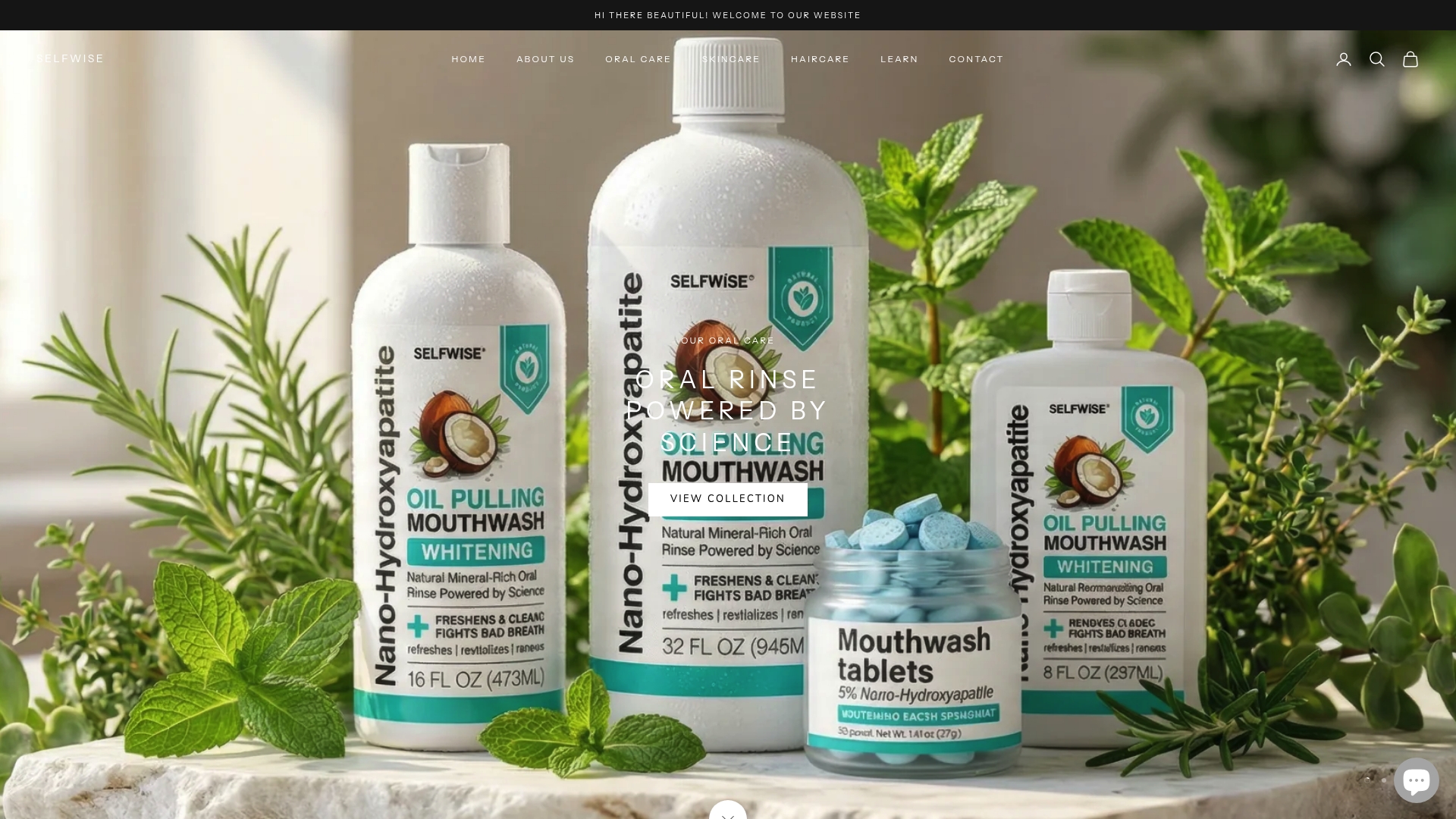
If you are looking for an alcohol-free option, our mouthwash collection includes oil pulling mouthwash, nano hydroxyapatite oral rinse, xylitol mouthwash and mouthwash tablets, all formulated without fluoride, alcohol or harsh chemicals.
Browse the full oral care range, or read our natural oral care guide to build a routine step by step.
FAQ
Should I use mouthwash before or after brushing?
The ADA says it may be a personal preference, but check the label because some products specify an order. For fluoride rinses, the NHS and Oral Health Foundation advise using them at a different time from brushing so toothpaste fluoride is not rinsed away.
How much mouthwash should I use?
Use the amount printed on the container or given by your dentist. Healthline reports a typical dose is 3 to 5 teaspoons, swished for about 30 seconds.
Can I rinse with water afterward?
Not after a fluoride rinse. The AGD advises avoiding rinsing, eating or smoking for 30 minutes so the fluoride is not diluted or washed away. For other rinses, follow the label.
Can mouthwash replace brushing and flossing?
No. The ADA states mouthrinse is not a replacement for daily brushing and flossing, but can be a helpful addition that reaches areas a toothbrush cannot.
Can children use mouthwash?
The ADA recommends that children younger than 6 not use mouthrinse unless a dentist directs it. Older children should be supervised, and an alcohol-free rinse is a reasonable choice for homes with kids.
Sources
- Mouthrinse (Mouthwash), American Dental Association
- Mouth rinses fact sheet, Academy of General Dentistry
- How to keep your teeth clean, NHS
- Fluoride, Oral Health Foundation
- How to Use Mouthwash Safely and Properly, Healthline
- Mouthwash: Swish and spit, Poison Control
- Other Fluoride Products, CDC
- Antiplaque and antigingivitis efficacy of mouthwash, 2025 clinical trial
- Antimicrobial efficacy of xylitol, probiotic and chlorhexidine rinses, 2022
- Oil pulling with coconut oil, systematic review, 2020
- Traditional oral hygiene practices and their effectiveness, 2026
- Fluoride treatment at the dentist