Article: Oil Pulling vs Flossing: 25 Trials, No Proven Floss Substitute

Oil Pulling vs Flossing: 25 Trials, No Proven Floss Substitute
No, oil pulling should not replace daily flossing. Major reviews treat it as an optional adjunct at most, and trials show reductions in bacterial counts but mixed results for plaque and gum scores. The CDC’s advice stays the same: brush twice a day and floss every day.
TL;DR:
- A review of 25 trials found possible improvements in gingival index scores, but rated the evidence very low; chlorhexidine reduced plaque more effectively.
- Properly used floss can remove up to roughly 80% of plaque between teeth, where oil swishing has no strong evidence of reliable removal.
- If string floss is difficult, use clinician recommended interdental brushes, a water flosser, or floss holders daily; water flossers can help around implants and bridgework.
- If you try oil pulling, swish gently for 10 to 20 minutes, spit it into the trash, rinse, and brush; stop if irritation develops.
Table of Contents
- What does the clinical evidence say about oil pulling?
- How does flossing clean between teeth, and why does it matter?
- Can oil pulling reach and remove interdental plaque the way floss does?
- How do you oil pull safely and effectively?
- How can you fit oil pulling into a routine without skipping floss?
- What is our balanced view on oil pulling?
- Which Selfwise products pair well with flossing and oil pulling?
- FAQ
- Sources
What does the clinical evidence say about oil pulling?
The research on oil pulling is real but thin. Reviewers keep reaching the same conclusion: promising signals, weak certainty. A systematic review and meta-analysis of 25 trials found that oil pulling probably improves the gingival index compared with non-chlorhexidine mouthwashes, but chlorhexidine was better at reducing plaque, and the overall quality of evidence was rated very low.
Here is what the evidence adds up to:
- A meta-analysis of randomized trials found that oil pulling lowered salivary bacterial colony counts versus control, with no significant difference in plaque or gingival index scores.
- A review of coconut oil trials found some significant reductions in bacterial counts and plaque indices, but the samples were small and the quality mixed.
- A review of traditional hygiene practices described moderate microbial reductions with sesame or coconut oil, while noting that the studies are heterogeneous and of limited quality.
- An older systematic review reached the same cautious conclusion years earlier: possible short-term benefits, small trials, more rigorous work needed.
Most trials lasted 10 to 45 days, and they used different oils and control rinses. That makes results hard to compare and hard to trust at scale. When oil pulling was tested against plain water, some studies did show better plaque reduction. A randomized trial from Innsbruck found that sesame oil lowered full-mouth plaque scores more than distilled water after eight weeks, though the authors flagged possible bias and asked for more trials. Against chlorhexidine, the antiseptic standard, oil pulling usually lost on plaque.
Bottom line from the reviews: oil pulling may lower the bacterial load in your mouth, but chlorhexidine was superior for plaque reduction and the certainty behind the oil pulling findings is very low.
What you notice may vary. Oil pulling is not a substitute for brushing, flossing, or professional dental care. What you should not expect is reliable removal of the sticky film packed between your teeth.
How does flossing clean between teeth, and why does it matter?
Plaque is a living biofilm. If it stays put, it can harden into tartar, and neither brushing nor rinsing will remove tartar once it forms. The CDC explains that plaque left in place leads to gingivitis and can progress to periodontitis, and that brushing and flossing remove plaque while a professional cleaning is needed for tartar.
Floss works because it touches the surface. Pulled snugly into a C-shape against each tooth, it scrapes the biofilm off the sides of the teeth, exactly where a toothbrush bristle cannot reach. A CDC-hosted report on interdental cleaning notes that floss can remove up to roughly 80% of interdental plaque when used properly. The key words are “used properly.” Technique and consistency decide the outcome, and the same report looks at how many adults floss daily, which is far fewer than the guidance suggests.
If standard floss is hard for you, other clinician-recommended tools do the same job:
- Interdental brushes, small bristled picks sized to the gaps between your teeth
- Water flossers, which use a pulsing stream to flush out debris and are especially useful around implants and bridgework
- Floss holders or picks for people with limited dexterity
The best interdental tool is the one you will actually use every day. The CDC’s adult oral health tips also include practical suggestions for people who find brushing or flossing difficult.
Can oil pulling reach and remove interdental plaque the way floss does?
Not reliably. The two methods work in completely different ways. Oil pulling is a swishing rinse, while flossing physically disrupts biofilm. Floss is mechanical: it physically scrapes biofilm from the tooth surface. Dental professionals point out that oil pulling is not a substitute because floss disrupts biofilm in hard-to-reach areas where oil cannot dependably remove stuck debris.
How the evidence stacks up head to head:
- Bacterial counts: oil pulling often shows a reduction.
- Plaque and gum scores: results are mixed, and chlorhexidine generally outperforms oil.
- Between the teeth: no strong evidence that oil reaches or removes approximal plaque the way floss does.
The practical trade-offs matter too. Some trial protocols used 10 to 20 minutes of swishing, which may make the habit harder to maintain. On the plus side, a dental hygiene commentator noted that oil pulling can be an acceptable supplemental ritual as long as patients do not use it as an excuse to skip brushing, flossing, or dental visits. Some people also tolerate it better than medicated rinses.
The conclusion is simple. If you enjoy a natural step, oil pulling can sit beside your routine. It should not replace daily flossing or any interdental device your dentist prescribed.

How do you oil pull safely and effectively?
If you decide to try it, follow the protocol most trials use. Our beginner’s guide to oil pulling technique goes deeper on troubleshooting.
- Measure about one tablespoon of sesame oil, or choose coconut oil.
- Put it in your mouth and swish gently for 10 to 20 minutes, pushing it around and between your teeth. Keep the motion easy so your jaw does not tire.
- Spit the oil into a trash can, not the sink, since oil can build up in plumbing.
- Rinse your mouth with plain water.
- Brush your teeth as usual afterward.
Many people prefer mornings on an empty stomach, which is also easy to pair with a shower or a commute. For sequencing details, see our morning oil pulling routine and our article on what to do after oil pulling. If you use fluoride toothpaste, brush after oil pulling rather than rinsing it away right after you brush.
Spit out the oil rather than swallowing it. Stop if you notice jaw soreness, nausea, or irritation. For persistent bleeding, swelling, a bad taste that will not go away, or signs of infection, seek immediate emergency care.
How can you fit oil pulling into a routine without skipping floss?
Keep flossing as the main interdental step and layer oil pulling on top. A few simple setups:
- Morning pull, evening floss: oil pull before breakfast, then brush, and floss before bed.
- Floss then brush, pull on weekends: if daily time is tight, floss every day and oil pull when you have a slow morning.
- Water flosser plus oil: if string floss is difficult, use an irrigator or interdental brushes nightly, with oil pulling as the optional extra.
Track results rather than trends. Over time, notice whether your gums bleed less when you brush, whether your breath holds up through the afternoon, and whether your mouth feels cleaner. Ask your hygienist at your next visit whether they see less plaque buildup.
If you have bleeding, receding gums, or loose teeth, consult a dental professional. Oil pulling does not replace professional care; tartar requires professional treatment.
What is our balanced view on oil pulling?
We make natural oral care products, so you might expect us to oversell oil pulling. We won’t. Evidence for oil pulling is limited, and some people may prefer it to a medicated rinse. But mechanical cleaning and professional care are the foundation, and nothing in a bottle changes that. Judge any routine by what you can measure: less bleeding, less visible plaque, steadier breath. Talk to your dentist before changing your routine, and ignore trends that promise to make flossing optional.
— Viktor
Which Selfwise products pair well with flossing and oil pulling?
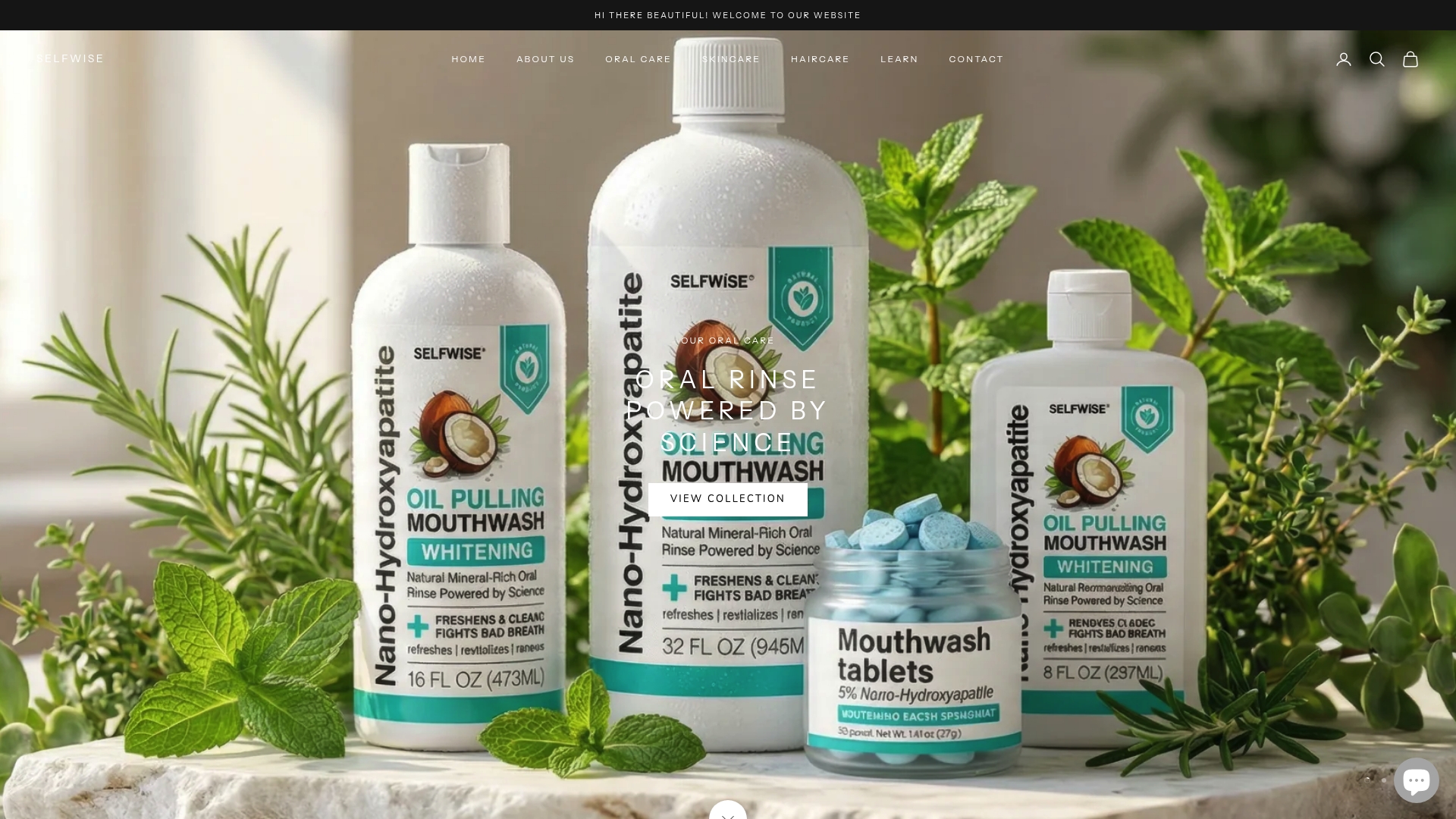
For readers who want a natural step alongside mechanical cleaning, we offer an oral care collection built around simple ingredients without harsh chemicals, fluoride, or alcohol:
- Natural oil pulling mouthwash for a swish-and-go version of the habit
- Nano hydroxyapatite oral rinse
- Xylitol mouthwash
- Mouthwash tablets for a portable option
These are supplements to your routine. Keep flossing daily and keep your dental appointments. When you are ready to try a natural adjunct, start with our mouthwash collection.
FAQ
Why don’t dentists recommend oil pulling over flossing?
The evidence is too weak. Reviews find very low quality evidence for oil pulling’s plaque benefits, while mechanical cleaning is the established standard. Many dentists accept it as an add-on, not a replacement.
Is it better to floss before or after oil pulling?
Either order works, because the two do different jobs. Many people floss at night and oil pull in the morning, then brush afterward so fluoride toothpaste stays on the teeth.
What comes out when you oil pull?
Mostly your own saliva mixed with the oil, which turns thin and milky as you swish. Some of that is loosened bacteria and food debris, which is why you spit it out and never swallow it.
Can oil pulling rebuild gums?
No evidence shows that it regrows receded gum tissue. Some trials suggest it may lower gum inflammation, but gum disease needs professional care, since plaque left in place can progress to periodontitis.
Sources
- The effect of oil pulling in comparison with chlorhexidine and other mouthwash interventions in promoting oral health: A systematic review and meta-analysis - PubMed
- About Oral Health | Oral Health | CDC


