
Can oil pulling cure cavities? How-to guide and real results
You brush twice a day, you floss (most days), and you still end up at the dentist hearing words you were hoping to avoid. It makes sense that people are looking beyond the standard routine for answers. Oil pulling has exploded in popularity as a natural oral care practice, with claims ranging from reducing plaque to outright curing cavities. Before you start swishing a tablespoon of coconut oil every morning, you deserve a straight answer: what can oil pulling actually do for your teeth, what does the science say, and how do you try it the right way?
Table of Contents
- How oil pulling works—and what science says
- What you need to start oil pulling safely
- Step-by-step: How to do oil pulling for cavity prevention
- How to gauge your results: Can oil pulling really cure cavities?
- Why oil pulling is worth trying—but not a miracle cure
- Upgrade your oral care routine with trusted solutions
- Frequently asked questions
Key Takeaways
| Point | Details |
|---|---|
| Oil pulling basics | Oil pulling can support oral hygiene but does not cure cavities. |
| Best practices | Use oil pulling as a supplement, not a substitute, to brushing, flossing, and dental care. |
| Realistic results | You may notice fresher breath or less plaque, but reversing decay needs professional treatment. |
| Product choices | Choose safe, high-quality oils and combine with a robust oral care routine. |
How oil pulling works—and what science says
Oil pulling is not a new wellness trend. It comes from Ayurvedic medicine, an ancient Indian healing system, where it was practiced for centuries under the name “kavala” or “gandusha.” The idea was to swish oil around the mouth to draw out bacteria, improve oral health, and support overall wellbeing. Today, that same concept has made its way into morning routines across the world, dressed up with coconut oil and social media before-and-after photos.
The proposed mechanism is fairly simple. As you swish oil through your teeth and gums, it is supposed to bind to lipid (fat-based) membranes on bacterial cells, pulling them away from tooth surfaces and gum tissue. When you spit the oil out, you take those bacteria with it. There is also a secondary theory that swishing creates a mild cleansing action similar to how mouthwash works.
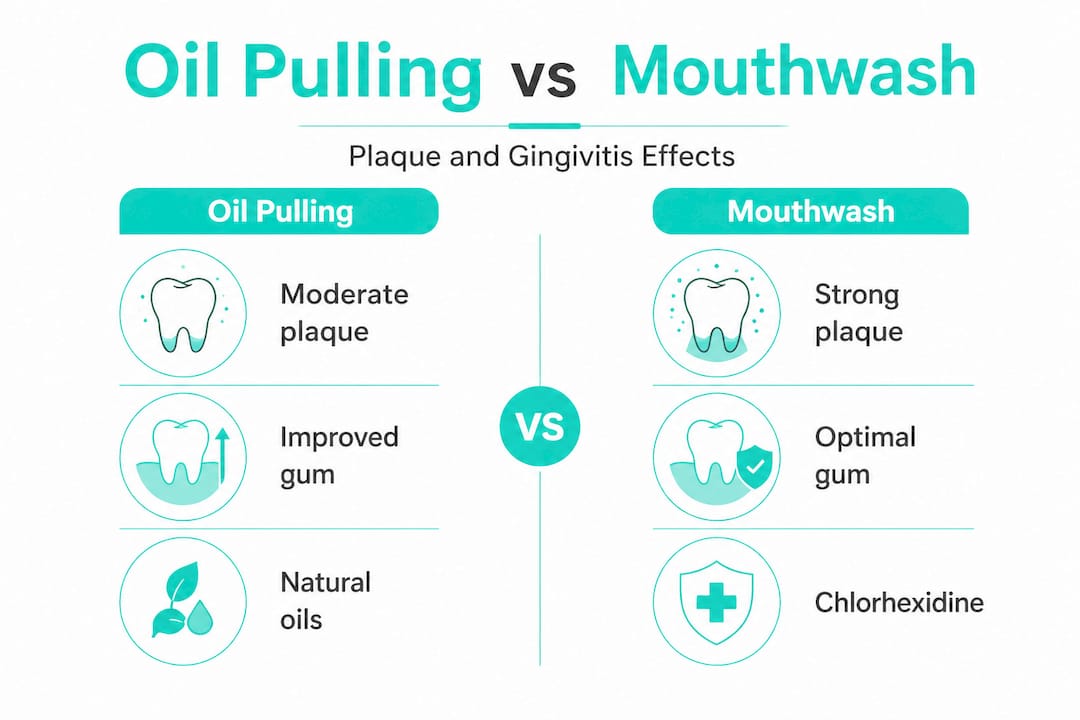
How does it compare to conventional antiseptic mouthwash?
| Feature | Oil pulling | Chlorhexidine mouthwash |
|---|---|---|
| Reduces plaque | Yes (moderate evidence) | Yes (strong evidence) |
| Reduces gingivitis | Yes (moderate evidence) | Yes (strong evidence) |
| Kills bacteria | Mechanical action | Chemical antiseptic |
| Side effects | Minimal | Tooth staining, taste disruption |
| Cavity reversal | No evidence | No direct evidence |
| Costs | Low | Low to moderate |
A systematic review of 14 RCTs found oil pulling comparable to chlorhexidine for reducing plaque and gingivitis scores in short-term studies lasting between 1 and 45 days, though the evidence carried a high risk of bias and was considered low quality. That is important context. “Comparable to chlorhexidine” sounds impressive, but it also means the studies were small and short. We do not yet know what happens after two or three months of consistent practice.
One encouraging study took a closer look at pediatric patients and found that olive oil pulling reduced caries activity comparably or better than chlorhexidine after just one month. Caries activity, for context, refers to how active bacterial acid production is in the mouth. Lower caries activity means less risk of new cavities forming.
The consistent takeaway from these studies is that oil pulling can reduce bacteria and support gum health as an add-on to your existing routine. What it cannot do is cure a cavity that has already formed.
Among the natural brushing tips we recommend, oil pulling fits neatly as a morning ritual before you brush, not instead of it. You can also fold it into a broader natural oral health routine without overhauling everything at once.
The antimicrobial properties in coconut oil, including lauric acid, give it a biological edge over more neutral oils, which is one reason it has become the most popular choice for oil pulling.
Pro Tip: Always use oil pulling as a supplement to your regular dental care, never a replacement. Think of it as a bonus layer, not a substitute for brushing, flossing, or seeing your dentist.
Now that you know why oil pulling is on everyone’s lips, let’s look at what you need to try it yourself.
What you need to start oil pulling safely
Not all oils are created equal for this purpose. The three most commonly used options are coconut oil, sesame oil, and olive oil. Each has a different flavor profile, texture, and set of potential benefits.
| Oil type | Flavor | Key benefit | Texture at room temp |
|---|---|---|---|
| Coconut oil | Mild, slightly sweet | Lauric acid (antimicrobial) | Solid below 76°F |
| Sesame oil | Earthy, nutty | Traditional Ayurvedic use | Liquid |
| Olive oil | Rich, slightly bitter | Antioxidant properties | Liquid |
When choosing your oil, look for unrefined and cold-pressed versions. Refined oils may have fewer active compounds. Most health food stores carry all three, and the price difference between them is minimal for daily use.
Here is what you need to get started:
- One tablespoon of your chosen oil
- A timer (your phone works fine)
- A trash can nearby for spitting (more on that in the next section)
- Your usual toothbrush and toothpaste for after
Safety matters here. The oil you spit out is loaded with bacteria. Swallowing it defeats the entire purpose and could introduce a concentrated mix of oral bacteria into your digestive system. Always spit into a trash can rather than the sink, because oil can solidify in pipes and cause clogs over time.
People with nut or seed oil allergies should check the source of their oil before starting. Coconut oil is technically a tree nut product, so if you have a tree nut allergy, speak with your doctor first. Olive oil and sesame oil have their own potential allergen considerations too.
Important: Oil pulling should never replace fluoride toothpaste, flossing, or professional dental care. Early demineralization may be reversed with fluoride, but not with oil pulling alone. If you think you have a cavity, see a dentist.
If you are exploring natural dental products to pair with oil pulling, look for options that contain nano hydroxyapatite or xylitol. These ingredients support remineralization in ways that oil simply cannot.
The coconut oil benefits extend beyond oral care, but for your teeth and gums, its antimicrobial lauric acid content makes it the most studied and widely recommended option for oil pulling.
Pro Tip: Try unrefined coconut oil for the best taste and comfort, especially if you are new to oil pulling. It is mild enough that most people find it easy to tolerate for the full swishing duration.
Once you have the right oil and know the safety basics, you’re ready to give oil pulling a try.
Step-by-step: How to do oil pulling for cavity prevention
The technique itself is straightforward. The challenge is mostly staying consistent and committing to the time involved. Here is exactly how to do it.
- Do it first thing in the morning, before eating or drinking anything. Your mouth has the highest bacterial load right after waking up.
- Measure one tablespoon of oil. If coconut oil is solid, let it melt in your mouth for a few seconds before you begin swishing.
- Swish gently for 5 to 20 minutes. Start with 5 minutes if you are new to this. Work up to 15 to 20 minutes over the course of a week or two. Swish it between your teeth, around your gums, and across the roof of your mouth. You are not gargling; keep it low and slow.
- Spit into the trash, not the sink. The oil will look white and milky when you spit it out. That is normal and a good sign that the oil has mixed with saliva and bacteria.
- Rinse your mouth with warm water. Some people prefer salt water for an added antimicrobial effect.
- Brush and floss as usual. Oil pulling does not replace brushing. It is a preparatory step.
The most common question is: how long before I see results? Realistically, most people notice fresher breath and a cleaner feeling within one to two weeks. Studies that tested oil pulling lasted up to one month, which is the best timeframe we have for evidence-based expectations. Plaque reduction and gum health improvements were noted at or before the four-week mark in those studies.

What you will not notice is a cavity disappearing. That is not how enamel works. Cavities involve the physical breakdown of tooth structure, and no amount of swishing can rebuild that.
Pro Tip: Try oil pulling in the shower for effortless timing. Set a five-minute timer, start pulling before you step in, and by the time you shampoo and rinse, you’re done. It eliminates the temptation to give up halfway through.
For more structured guidance on building a consistent routine, our oral care guides cover everything from technique to ingredient breakdowns.
After following these steps, you might wonder how to tell if oil pulling is actually working for your teeth.
How to gauge your results: Can oil pulling really cure cavities?
This is where honest expectations matter most. Oil pulling supporters often share dramatic testimonials online, and it is easy to read those and think you have found the missing piece in your oral health routine. The reality is more nuanced.
What users most commonly report after consistent oil pulling:
- Fresher breath in the morning, often within the first week
- Less visible plaque along the gumline
- Reduced gum sensitivity or bleeding when flossing
- A generally cleaner feeling throughout the day
What oil pulling does not do:
- It cannot rebuild enamel that has already eroded
- It cannot heal a cavity that has progressed past the earliest stage
- It does not whiten teeth despite popular claims
- It does not replace the need for professional cleanings
| Area | Oil pulling impact | What actually helps |
|---|---|---|
| Fresh breath | Positive effect | Oil pulling, brushing |
| Plaque reduction | Moderate effect | Brushing, flossing |
| Gum health | Moderate effect | Flossing, dental visits |
| Cavity prevention | Limited, unproven | Fluoride, diet, brushing |
| Cavity reversal | No evidence | Fluoride (early decay only) |
| Enamel rebuilding | No effect | Nano hydroxyapatite, fluoride |
The evidence base for oil pulling is still maturing. Studies are small, short-term, and carry a high risk of bias. There is genuine interest from Ayurvedic medicine circles, and some mainstream dentists now acknowledge that oil pulling is a harmless and potentially helpful adjunct. But harmless and helpful is very different from curative.
“If you suspect a cavity, see a dentist. No oil can heal a real cavity. Waiting and hoping will only allow decay to progress further into the tooth.”
Here is how to use oil pulling intelligently within a complete routine:
- Practice oil pulling in the morning before brushing
- Brush twice daily with a remineralizing toothpaste or nano hydroxyapatite formula
- Floss daily to remove interproximal (between-teeth) bacteria that oil cannot reach
- Use a fluoride or nano hydroxyapatite rinse for targeted enamel support
- Visit your dentist every six months for professional cleanings and early cavity detection
Your natural oral care guide can help you build that full-picture routine step by step, incorporating oil pulling where it adds the most value.
Understanding these limits makes it clear that oil pulling is just one piece of your oral health strategy.
Why oil pulling is worth trying—but not a miracle cure
We have followed this space closely, and what strikes us most is not the scientific debate around oil pulling. It is the way wellness culture frames natural practices as all-or-nothing solutions. Oil pulling gets labeled either as pseudoscience or as the cure the dental industry does not want you to know about. Neither of those narratives serves you well.
The truth we keep coming back to is this: oil pulling has real, modest benefits that are supported by legitimate research. Reduced plaque, improved gum health, fresher breath. Those are worth something. They are not nothing. But the moment any natural practice is sold as a cavity cure, it crosses from empowerment into misinformation.
There is also something worth acknowledging about the ritual itself. Building a morning habit that involves a mindful, intentional act, even just swishing oil for ten minutes, creates a psychological commitment to oral health. People who oil pull tend to be more consistent with their broader dental routine. That behavioral effect may matter as much as the antimicrobial one.
What the wellness world often gets wrong is the leap from “this helps” to “this heals.” Early demineralization may be reversible with fluoride, but oil alone cannot do that work. If you have been using oil pulling hoping to reverse a cavity while skipping your dentist, that is a risk to your long-term dental health. The ritual is valuable. The miracle claim is not.
We always recommend starting with the basics: brushing with a quality toothpaste, flossing daily, and keeping your dental appointments. Once those are locked in, oil pulling becomes a genuinely worthwhile addition. It fits naturally alongside other supportive practices, like using coconut oil for gum health, where the evidence also shows real but limited benefits.
The goal is to build your own oral care pathway, one that is informed by evidence, aligned with your values, and not dependent on any single miracle ingredient. Browse our oral care essentials to see how simple, purposeful products can support that kind of routine.
Upgrade your oral care routine with trusted solutions
If this article convinced you that oil pulling is worth adding to your morning routine, the next step is making it easy and effective from day one.
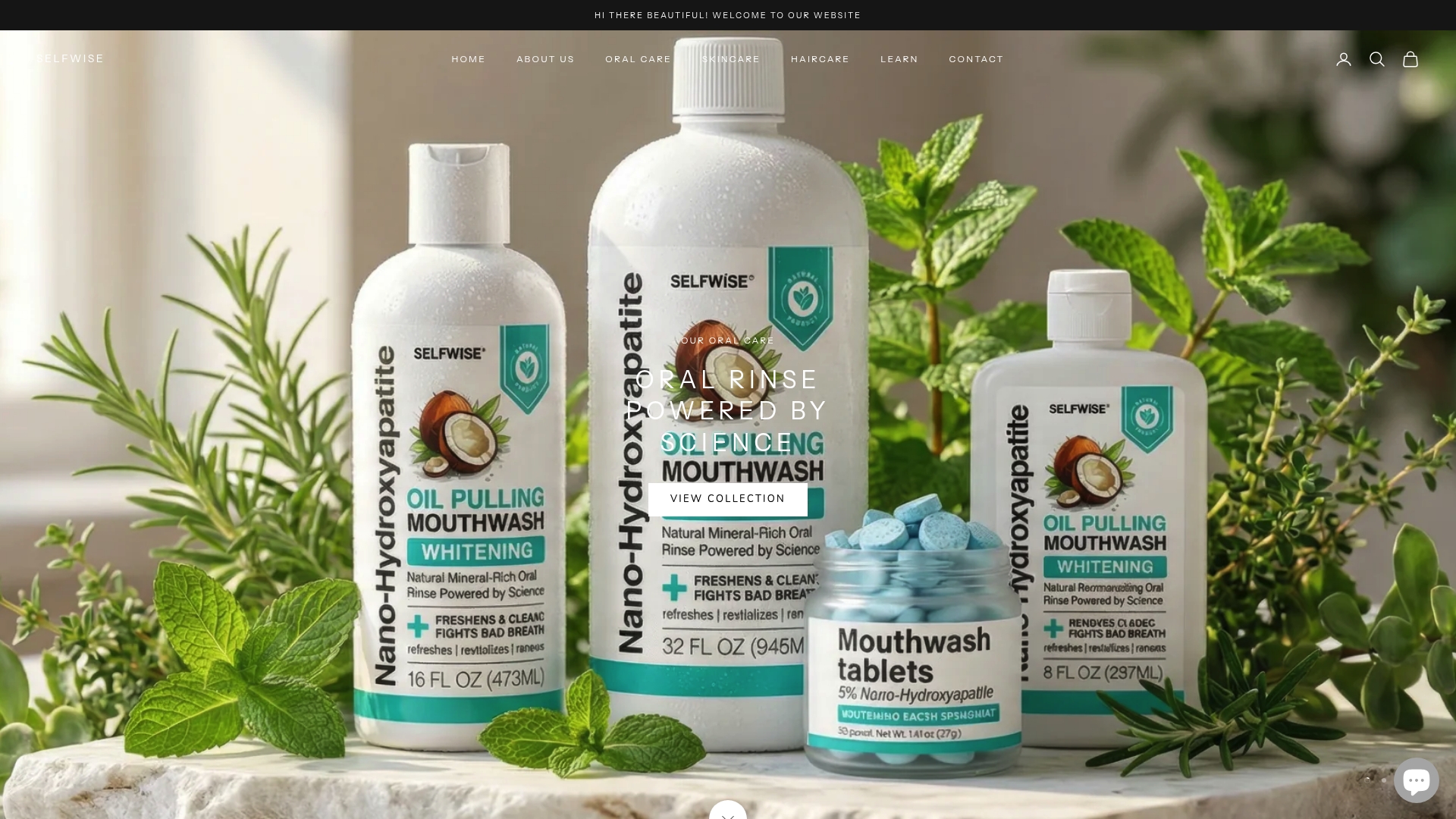
At Selfwise, we formulated our nano hydroxyapatite oil pulling mouthwash to take the benefits of traditional oil pulling further. It combines the bacterial-binding action of oil pulling with nano hydroxyapatite, an ingredient clinically shown to support enamel remineralization. You get the ritual you want with the science-backed support your teeth actually need. You can also explore our full range of natural mouthwashes designed to complement brushing and flossing without harsh chemicals or artificial additives. Simple ingredients, real results.
Frequently asked questions
Can oil pulling reverse existing cavities?
Oil pulling cannot reverse or heal cavities; only fluoride (or nano hydroxyapatite) can sometimes reverse very early tooth demineralization, and only before a cavity has fully formed.
How long should I practice oil pulling to see results?
Most studies test oil pulling for 1 to 4 weeks, and users may notice fresher breath or reduced plaque within that time, though the evidence from short-term RCTs is still considered low quality due to small sample sizes and study design limitations.
Is there a risk in using oil pulling daily?
Daily oil pulling is considered safe for most people as long as you do not swallow the oil and continue to follow a complete dental care routine that includes brushing, flossing, and regular dental visits.
Which oils are best for oil pulling?
Coconut, sesame, and olive oil are the most popular choices, with one study showing that olive oil reduced caries activity comparably or better than chlorhexidine after one month in pediatric patients.


,%20and%20you%20still%20end%20up%20at%20the%20dentist%20hearing%20words%20you%20were%20hoping%20to%20avoid.%20It%20makes%20sense%20that%20people%20are%20looking%20beyond%20the...)