1–2 Minute Oil Pulling With Braces Backed by Trials
Yes, oil pulling is generally safe for people with braces, but only with a gentler technique than the standard routine. Swish for a shorter time than you would without brackets, never bite down or gyrate aggressively, spit into the trash instead of the sink, and never swallow the oil. If you notice a loose bracket, unusual soreness, or an allergic reaction, stop and call your orthodontist, and natural oral care products can pair with that kind of adjusted routine.
TL;DR:
- Gentle swishing for 10 to 20 minutes is recommended, with only 1 to 2 minutes initially, to minimize mechanical stress on braces and soft tissues.
- Using sesame, coconut, or sunflower oil in moderation is safe, but vigorous movements or pushing against brackets can cause tissue irritation or dislodge components.
- Post-oil pull cleanup should include thorough rinsing, brushing, and interdental cleaning to remove oil residue from brackets and wires.
- Oil pulling has shown short-term benefits in reducing plaque bacteria, especially Streptococcus mutans, but larger and longer studies are needed for definitive proof.
- Avoid oil pulling if you have nut or seed allergies, experience bracket loosening, or notice soreness, and always consult your orthodontist if you observe problems.
Table of Contents
- What Is Oil Pulling, and Which Oils Work Best?
- Is Oil Pulling Safe With Braces? Mechanical and Appliance Concerns
- How to Oil Pull Safely When You Have Braces
- What Does the Clinical Evidence Actually Show?
- When Should You Avoid Oil Pulling or Stop and Get Help?
- A Note From Our Editorial Team on Balancing Natural Care With Orthodontic Needs
- Does Oil Pulling Change the Oral Microbiome Around Brackets?
- Post-Oil Pulling Oral Care Steps for Braces Wearers
- Will Oil Pulling Interfere With Your Toothpaste or Mouthwash?
- How Often and How Long Should You Oil Pull With Braces?
- Can Oil Pulling Damage Elastic Bands or Bracket Adhesive?
- Where Conventional Advice on Oil Pulling Falls Short
- Gentle, Brace-Friendly Oral Care Products Worth Trying
- Sources
- FAQ
What Is Oil Pulling, and Which Oils Work Best?
Oil pulling means swishing edible oil around your mouth, typically for 10 to 20 minutes in most published protocols, to loosen plaque and reduce the bacteria that cause bad breath and gum irritation. It is not a modern wellness trend. Practitioners have used it in Ayurvedic medicine for centuries, and modern clinical trials have started testing whether the practice holds up under scrutiny for orthodontic patients specifically.
Three oils dominate the research and the market:
- Sesame oil: the traditional choice, cheap, doesn’t stain teeth, and used in most of the orthodontic trials.
- Coconut oil: contains lauric acid, which shows antimicrobial activity in lab settings, and tastes better to most people than sesame.
- Sunflower oil: less studied in braces contexts but sometimes used as a neutral, low-cost alternative.
Oil pulling is an adjunct. It supplements brushing and flossing (or, with braces, interdental cleaning around wires). It doesn’t replace either one.
Is Oil Pulling Safe With Braces? Mechanical and Appliance Concerns
The real risk with braces isn’t chemical, it’s mechanical. Vigorous swishing, the kind where you’re really working your cheeks and jaw, can stress the soft tissue around brackets or put unnecessary strain on wires and elastic ligatures. The fix is simple: swish gently, in slow side-to-side motions, and skip the aggressive gargling you might do with a mouthwash.
An in vitro study on orthodontic elastomeric chains measured exactly this kind of mechanical stress. Researchers tracked force decay after soaking chains in chlorhexidine, sesame oil, or distilled water. By day 28, chlorhexidine chains held the most force at 0.572 kg, sesame oil chains measured 0.460 kg, and distilled water chains dropped to 0.435 kg, with statistically significant differences across all three groups.
What this means practically: oil exposure caused less force decay than plain water, though chlorhexidine outperformed both. For most patients, this is a minor mechanical difference, not a reason to avoid oil pulling. Elastic chains get replaced at routine adjustment visits anyway, so a modest shift in force retention between appointments rarely changes your treatment timeline.
As for the brackets and wires themselves, no evidence points to oils corroding metal or ceramic components. The real issues are residue (oil clinging to brackets and needing a thorough brush-through afterward) and technique, not chemical damage to the appliance.
How to Oil Pull Safely When You Have Braces
Braces change the mechanics of oil pulling more than most people expect. Wires and brackets create extra surface area for oil to cling to, so cleanup matters as much as the swishing itself.
- Pick your window: first thing in the morning, before eating or brushing, on an empty stomach.
- Measure the oil: start with 1 teaspoon, working up to 1 tablespoon once you’re comfortable managing the volume around your appliances.
- Swish gently: short, slow, side-to-side movements for 1 to 2 minutes if you’re new to this, building toward the 10 to 20 minute range used in most clinical trials as your comfort and jaw stamina allow.
- Avoid vigorous gyrating or gargling: this is the step that separates a brace-safe routine from a standard one.
- Spit into the trash, not the sink: oil solidifies at room temperature and clogs drains over time.
- Rinse thoroughly with warm water: this clears the initial oil film before brushing.
- Brush as usual, angling the brush to clean along the gum line and bracket edges.
- Clean under the wires: use interdental brushes or a water flosser to reach spots a toothbrush can’t.
Pro Tip: Test any new oil on a small area first, like the inside of your cheek, and wait a few hours to rule out a reaction before committing to a full swish. Keep interdental brushes or a water flosser within reach in the bathroom so the post pull cleanup takes seconds, not minutes.
If oil clings stubbornly to a bracket, don’t try to dislodge it with your tongue or fingers. A quick pass with an interdental brush after rinsing handles it without touching the wire.
What Does the Clinical Evidence Actually Show?
The research on oil pulling for orthodontic patients is genuinely encouraging, though it comes with real caveats worth understanding before you consider it a proven fix.
A randomized cross-over trial in orthodontic patients ages 14 to 25 found that coconut oil pulling produced plaque and gingival index reductions similar to 0.12% chlorhexidine mouthwash when used as an adjunct over 15 days. Both interventions worked. Neither one dramatically outperformed the other in that short window.
A separate prospective clinical study looked specifically at bacteria around brackets. It found that sesame oil pulling significantly reduced Streptococcus mutans concentration in plaque around orthodontic brackets after 30 days compared to a control group, with a reported significance level of P = 0.000.
That’s a real signal, but here’s the honest caveat:
- Sample sizes in these trials tend to be small.
- Follow-up periods run short, typically weeks, not months or years.
- Patient adherence varies, and researchers themselves call for longer, larger trials.
Chlorhexidine also carries known downsides for long-term use: tooth staining, taste alteration, and licensing restrictions that make it unsuitable as a daily routine for years at a time. Oil pulling doesn’t share those side effects, which is part of why it appeals to patients wearing braces for 18 months or longer.
When Should You Avoid Oil Pulling or Stop and Get Help?
Oil pulling isn’t risk-free for every mouth, and braces raise the stakes on a few specific fronts.
- Skip it if you have a nut or seed allergy relevant to your chosen oil (coconut and sesame both carry allergy risk for some people); switch oils or stop immediately at the first sign of swelling, itching, or hives.
- Wait 24 to 48 hours after a major adjustment, when tissue around new wires or brackets is tender and more easily irritated.
- Stop and call your orthodontist if you notice a loosened bracket, persistent soreness that doesn’t fade, increased gum swelling, or any difficulty breathing or swallowing.
- Never swallow the oil. After several minutes of swishing, it’s carrying concentrated oral bacteria, and professional dental guidance is explicit that swallowing can trigger nausea, diarrhea, or other gastrointestinal upset.
If anything about your case feels outside the norm, ask your orthodontist before adding oil pulling to your routine. They know your appliance setup better than any general guide can.
A Note From Our Editorial Team on Balancing Natural Care With Orthodontic Needs
Practical balance matters more than purity here. Oil pulling with braces works best treated as a supporting habit, not a hero routine, and consulting your orthodontist about your specific appliance setup beats guessing based on a general guide. Some natural oral care lines, including oil pulling mouthwash and remineralizing rinses, are formulated with that adjunct role in mind rather than as a replacement for brushing, flossing, or professional checkups.
Does Oil Pulling Change the Oral Microbiome Around Brackets?
Braces create more surface area for bacteria to colonize, since brackets and wires give plaque extra nooks to build up in that a smooth tooth surface never would. That’s part of why the clinical trial on S. mutans concentration around brackets matters: the bacteria measured in that study are among the most common cariogenic species that thrive in exactly those hard to reach spots.
Reducing S. mutans doesn’t mean sterilizing your mouth, and that’s not the goal. A healthy oral microbiome includes a mix of bacteria, and disrupting it entirely isn’t realistic or advisable. What the 30 day trial on sesame oil around brackets actually showed was a shift in balance, fewer cariogenic bacteria relative to control, not a wholesale wideout.
Clinical authors studying these outcomes have noted that technique and consistency drive the bacterial shift more than which oil you pick. Skipping days or swishing halfheartedly blunts the effect regardless of whether you’re using sesame, coconut, or sunflower oil. That’s worth remembering if you’re expecting a dramatic before and after in a week. The microbiome responds to sustained habit, not a single session.
Post-Oil Pulling Oral Care Steps for Braces Wearers
What you do in the five minutes after spitting out the oil matters as much as the swish itself when you’re wearing brackets and wires. Skipping the cleanup step is the single most common mistake among people with braces.
Rinse with warm water first. This clears the bulk of the oil film before it has a chance to redistribute across your teeth and gums as you brush. Then brush as you normally would, but angle the bristles toward the gum line and the edges of each bracket where oil tends to pool. A standard toothbrush stroke misses the space directly under an archwire, so follow up with an interdental brush or a water flosser to clear anything a bristle can’t reach.
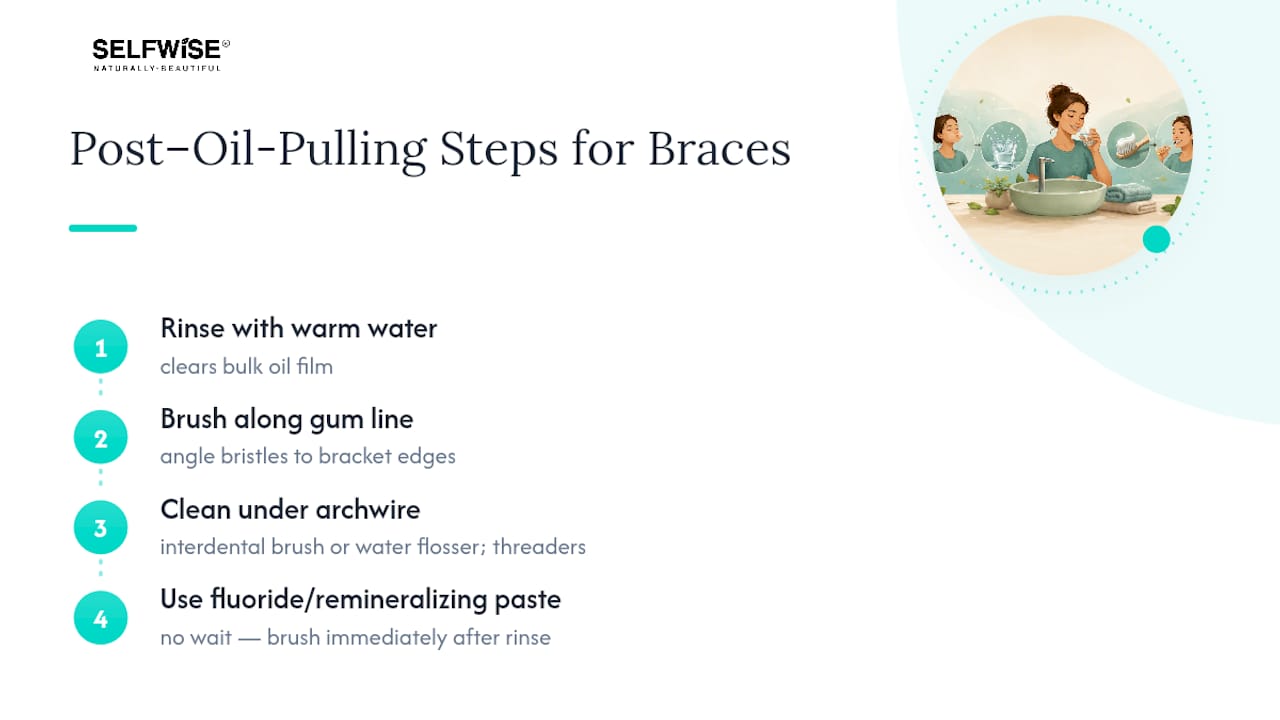
Trial protocols studying bacterial reduction around brackets specifically instruct participants to brush and clean interdentally right after oil pulling, which tells you this isn’t an optional extra step, it’s built into how the practice is meant to work. Floss threaders or orthodontic flossers help here too, since regular floss can’t get under a wire without extra maneuvering.
If you use a fluoride or remineralizing toothpaste afterward, there’s no need to wait between the oil pulling rinse and brushing. The two steps are sequential, not conflicting.
Will Oil Pulling Interfere With Your Toothpaste or Mouthwash?
No meaningful chemical conflict exists between oil pulling and the toothpaste or mouthwash you already use, but timing and order still matter for getting the full benefit of each.
Oil pulling works best done before brushing, on an empty stomach, before your toothpaste or mouthwash touches your teeth. Doing it in the reverse order, brushing first and then oil pulling, undoes some of the point, since you’d be swishing oil across teeth that are already clean rather than using the oil to loosen plaque before your toothbrush removes it.
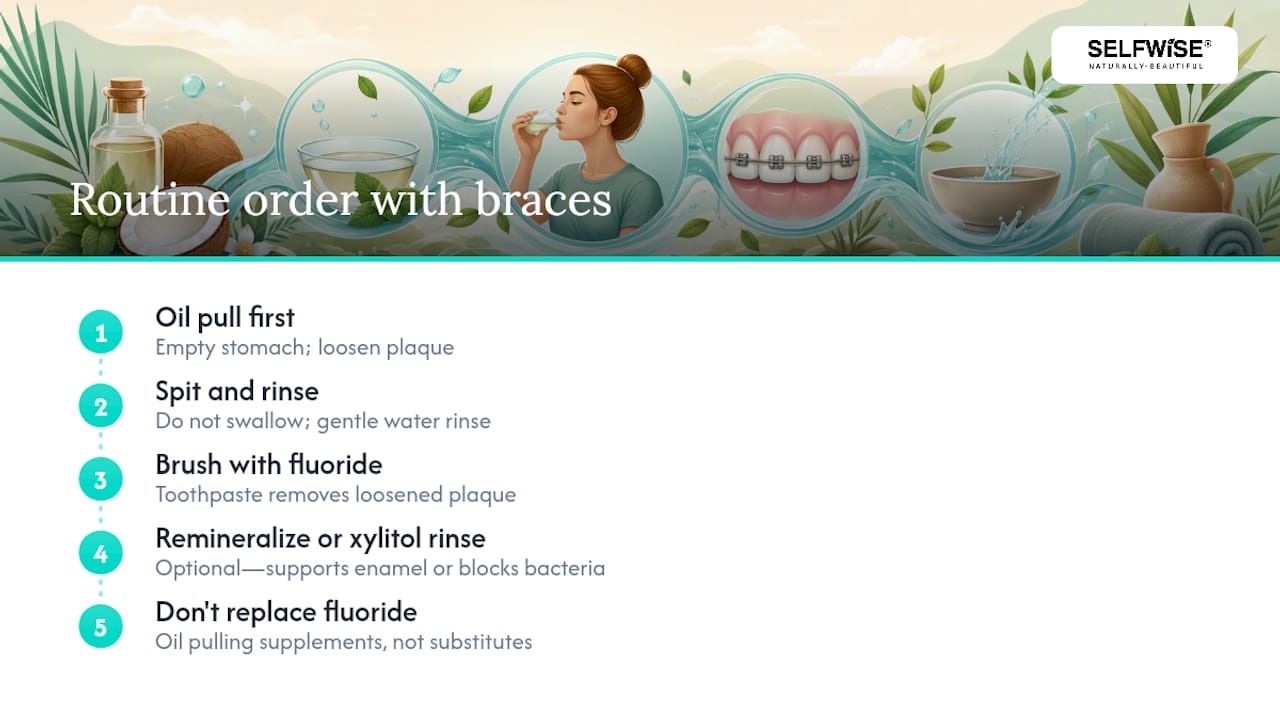
If your daily routine includes a fluoride toothpaste, a remineralizing rinse with ingredients like nano hydroxyapatite, or a xylitol mouthwash, none of these conflict with oil pulling chemically. They serve different functions: oil pulling targets bacterial load and plaque loosening, while a remineralizing rinse works on enamel strength, and xylitol mouthwash disrupts the sugar metabolism that feeds cavity-causing bacteria. Layering them in a morning routine, oil pull, rinse, brush, then a remineralizing or xylitol rinse if you use one, covers different angles of oral health rather than duplicating effort.
The one thing to avoid is treating oil pulling as a replacement for either fluoride or remineralizing products, particularly with braces in place. Brackets trap plaque in spots your toothbrush struggles to reach, and enamel under and around brackets is at higher risk for the white spot lesions that show up after braces come off. Oil pulling supports the routine. It doesn’t substitute for the products doing the enamel-level work.
How Often and How Long Should You Oil Pull With Braces?
Most orthodontic trials tested daily oil pulling, but starting daily from day one isn’t necessary and, for a lot of people, isn’t sustainable either.
A reasonable ramp-up looks like this: three to four sessions a week for your first two weeks, then daily once the technique feels automatic and you’re not fighting jaw fatigue. Duration follows the same logic. Clinical trials generally used sessions in the 10 to 20 minute range, but pragmatic protocols that shortened the swish time for better patient compliance still showed measurable benefit, particularly among teen patients who struggled to sit through a full 20 minutes.
Start at 1 to 2 minutes if you’re new to this. Add a minute or two every few sessions as your jaw adjusts. There’s no evidence that hitting exactly 20 minutes outperforms a well-executed 10-minute session by a meaningful margin, and a shorter session you actually complete beats a 20 minute goal you abandon halfway through.
Morning, before breakfast and before brushing, remains the best window based on how these trials were structured. If mornings don’t work with your schedule, consistency at any time of day beats sporadic attempts at the “ideal” time.
Can Oil Pulling Damage Elastic Bands or Bracket Adhesive?
The elastomeric chains and ligatures holding your archwire in place are the components most exposed to repeated oil contact, which is exactly why the in vitro force decay study matters here.
That study found sesame oil produced measurably less force decay in elastomeric chains than distilled water did, though chlorhexidine outperformed both at the 28 day mark. Translated into real terms: oil pulling isn’t accelerating the natural degradation of your elastics beyond what water exposure alone would cause, and elastics get swapped out at routine visits regardless of what’s swishing past them between appointments.
Bracket adhesive, the cement bonding the bracket to your tooth, faces a different question: does oil weaken that bond? No published evidence points to oils breaking down orthodontic bonding agents chemically. The adhesives used in bracket bonding are engineered to withstand exposure to food oils, saliva, and the full range of substances that pass through your mouth daily. A loosened bracket after oil pulling is far more likely to trace back to swishing too aggressively, biting down on the oil, or an existing weak bond than to any chemical interaction with the oil itself.
If a bracket does come loose, don’t try to reseat it yourself or blame the oil pulling outright. Call your orthodontist, describe your routine honestly, and let them assess whether the bond itself needed attention regardless of your oral care habits.
Where Conventional Advice on Oil Pulling Falls Short
Most guides treat oil pulling as either a miracle cure or a waste of time, and both extremes miss what the actual research supports. The evidence shows a real, measurable reduction in plaque bacteria around brackets, comparable in the short term to chlorhexidine, without the staining and taste disruption that comes with long-term chlorhexidine use. That’s a meaningful finding for someone wearing braces for a year or more.
Where conventional advice falls short is technique. Most articles describe oil pulling the same way regardless of whether the reader has braces, ignoring the mechanical realities of wires and brackets entirely. Vigorous swishing, treating a 20 minute session as mandatory from day one, and skipping the post pull brush-through are the mistakes that actually cause problems, not the oil itself.
Prioritize gentle technique and consistent cleanup over chasing the exact duration used in a clinical trial. A shorter session done correctly, every day, beats a longer one done sporadically or aggressively. And if something feels off, a loose bracket, unusual soreness, don’t wait it out. That’s a conversation for your orthodontist, not a forum thread.
— Viktor
Gentle, Brace-Friendly Oral Care Products Worth Trying
Some natural oral care brands offer adjunct products suited for a braces routine without harsh chemicals. Such lineups may include oil pulling mouthwash formulated for daily use, nano hydroxyapatite oral rinses aimed at supporting enamel strength around brackets, and xylitol mouthwash that targets bacteria feeding on sugar, often formulated without fluoride, alcohol, or taste disruption associated with long-term chlorhexidine use.
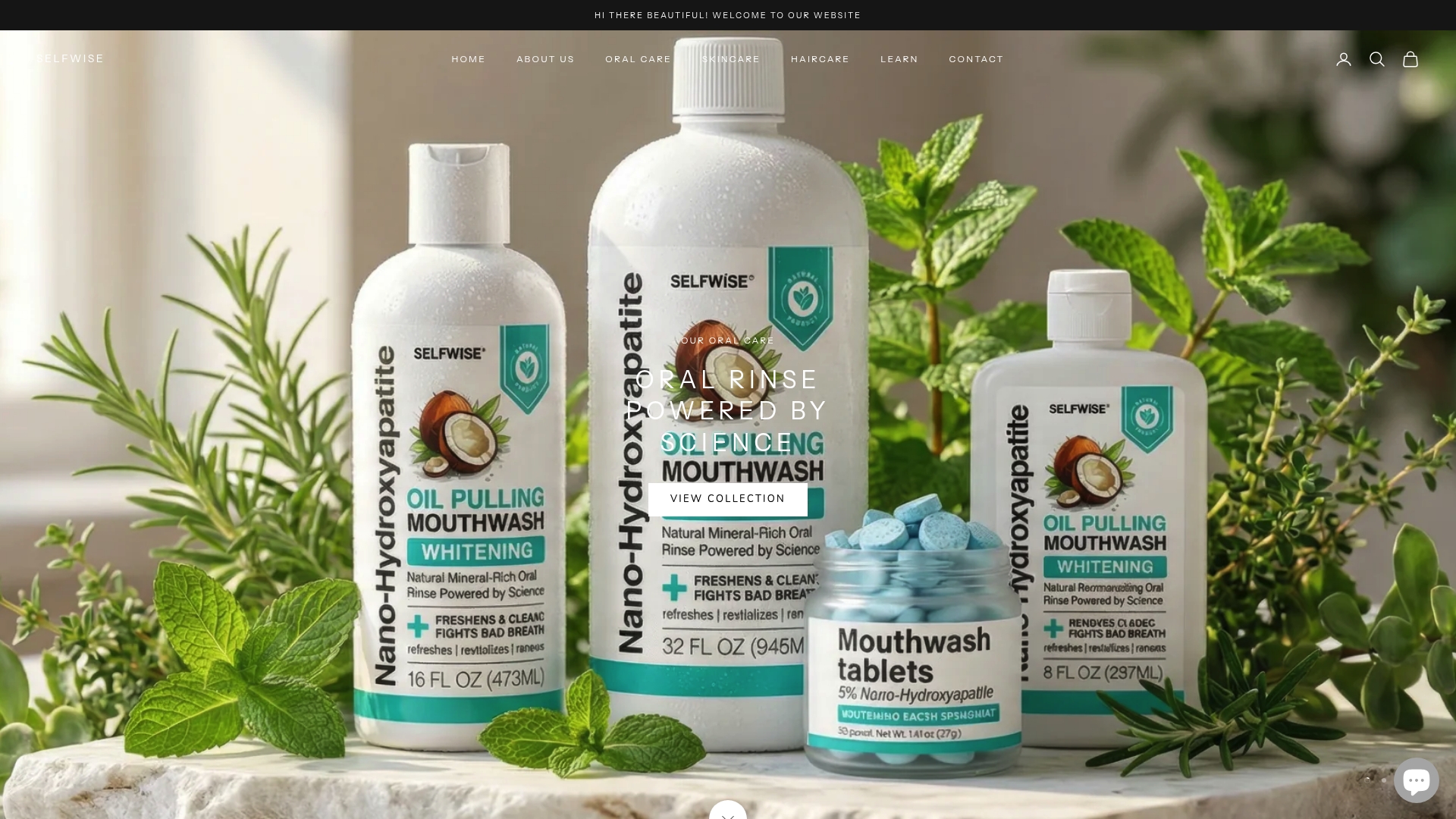
None of these replace brushing, flossing, or your orthodontist’s instructions, but they’re built as simple, ingredient-forward additions for people already managing wires and brackets who want a gentler alternative to conventional rinses. If you’re curious about what’s actually in these formulations and how they fit into a brace-adapted routine, the natural oral care guide walks through the daily sequence step by step. Ready to see the full lineup? Browse the oral care collection and find the product that matches where you are in your routine.
This article is general information, not a substitute for advice from a qualified doctor. Consult a qualified healthcare professional about your own circumstances before acting on anything here.
Sources
- Effects of Oil Pulling and Chlorhexidine Mouth Rinse on the Force Decay of Orthodontic Elastomeric Chains: A Comparative In Vitro Study
- Comparative efficacy of oil pulling and chlorhexidine on oral hygiene maintenance among orthodontic patients with plaque induced gingivitis: A randomized cross-over study
- Effect of oil pulling on the Streptococcus mutans concentration in plaque around orthodontic brackets - A prospective clinical study
- Oil pulling versus chlorhexidine mouth rinse — is one better than the other?
FAQ
Can You Do Oil Pulling While Wearing Braces?
Yes, oil pulling is generally safe with braces if you swish gently, avoid vigorous jaw movements, and follow up with thorough brushing and interdental cleaning to clear residue from around brackets.
Is Oil Pulling Good for People With Braces?
It can help. A cross-over trial found coconut oil pulling reduced plaque and gingival indices about as effectively as chlorhexidine when used as an adjunct over 15 days, and a separate study found sesame oil pulling significantly reduced cavity-causing bacteria around brackets after 30 days, with statistically significant reduction in Streptococcus mutans.
Why Do Some Dentists Not Recommend Oil Pulling?
Some dentists remain cautious because most trials are small and short-term, and oil pulling has never been shown to replace fluoride treatment, brushing, or professional cleanings, only to support them as an adjunct.
Can I Do Oil Pulling With Invisalign?
Yes, and it’s actually simpler than with traditional braces since you remove your aligners before swishing, eliminating any concern about oil residue clinging to brackets or wires. Just avoid oil pulling with your aligners in, and rinse your mouth thoroughly before putting them back in.
What Should I Do if Oil Pulling Loosens a Bracket?
Stop oil pulling immediately, avoid touching or trying to reseat the bracket, and contact your orthodontist to have it evaluated, since a loosened bracket usually points to an existing weak bond rather than a reaction to the oil itself.